| Author |
 Replies: 9 / Views: 1,234 Replies: 9 / Views: 1,234 |
|
|
Valued Member
United States
418 Posts |
There is a gouge at the bottom obverse, but that looks like 'damage', not 'graffiti'. I like this coin, it's the best I can see at the moment for the price. But of course 'graffiti' is about the worst details tag you can get. Am I missing something? https://www.ebay.com/itm/313976284698 |
|
|
|
Bedrock of the Community
United States
94367 Posts |
Good question. Looks pretty nice to me as well.
Edited by Coinfrog
05/01/2022 11:18 am
|
|
Valued Member
 United States
418 Posts |
Found it - I pulled up the PCGS lookup, and you can see an 'F' carved under the right branch of the tree. Can see it in the ebay pics too, now that I know where to look. What a shame. |
|
Bedrock of the Community
Canada
21712 Posts |
Your right, looks dark on supplied photo but by making it a bit brighter it is easy to see. Looks like a more modern font, wonder what the purpose was? 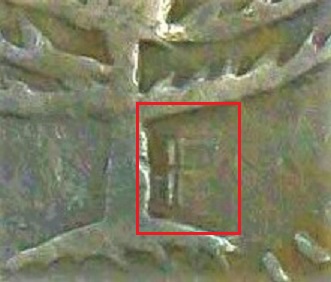 Edited by JimmyD
05/01/2022 12:26 pm
|
|
Pillar of the Community
United States
1694 Posts |
pretty nice coin none the less though I don't know the value of this coin.
|
|
Moderator
 United States
15648 Posts |
Thats a shame on such a lovely coin
|
|
Moderator
United States
100540 Posts |
With the obvious damage at the bottom, this is a very nice looking coin - I wonder why someone would stamp a 'F' on it..
|
|
Pillar of the Community
United States
4422 Posts |
Granted that stamping coins, akin to branding them to indicate ownership, was a rare occurrence, I've run across a few instances back in the 1800's where this was done. One early newspaper account reported a suspected thief was once caught when he was found to have some coins, stamped by the victim, in his pocket. Thus, a stamped coin was rendered a security device.
Many early silversmiths stamped coins, including silver ones, that were intended for melting. Then too, there was a collector I discovered who branded many of his rare collector coins with his name in script! Furthermore, museums were known to brand or mark coins in some fashion or another.
Edited by ExoGuy
05/02/2022 11:17 am
|
|
Bedrock of the Community
United States
12057 Posts |
Collectors of ancient / medieval coins and museums alike used to (and some might still do) apply a blob of paint with lot/cabinet/tray numbers inked on it to the coin's obverse or reverse.
Member ANA - EAC - TNA - SSDC - CCT #890 "Most of the things worth doing in the world had been declared impossible before they were done." -- Louis D. Brandeis |
|
Bedrock of the Community
United States
17884 Posts |
Museums also used to ink an acquisition number on their coins. I have a couple of conder tokens that have inked numbers on them and at least one where the ink was removed but the number is still visible due to differential toning. Back in the 18th and 19th century it wasn't uncommon for collector to ink variety numbers on their coins as well.
Stamping is a bit extreme though.
Edited by Conder101
05/03/2022 09:44 am
|
| |
Replies: 9 / Views: 1,234 |
|







 Posted 05/01/2022 11:51 am





