| Author |
 Replies: 5 / Views: 1,106 Replies: 5 / Views: 1,106 |
|
|
Pillar of the Community
Russian Federation
1559 Posts |
I want to sell these German coins, but I have a problem when putting them on the trading floor. I have them listed as coins of the German Empire. But just now I saw that the Empire existed only until 1918, and then coins and 1920, 1921. 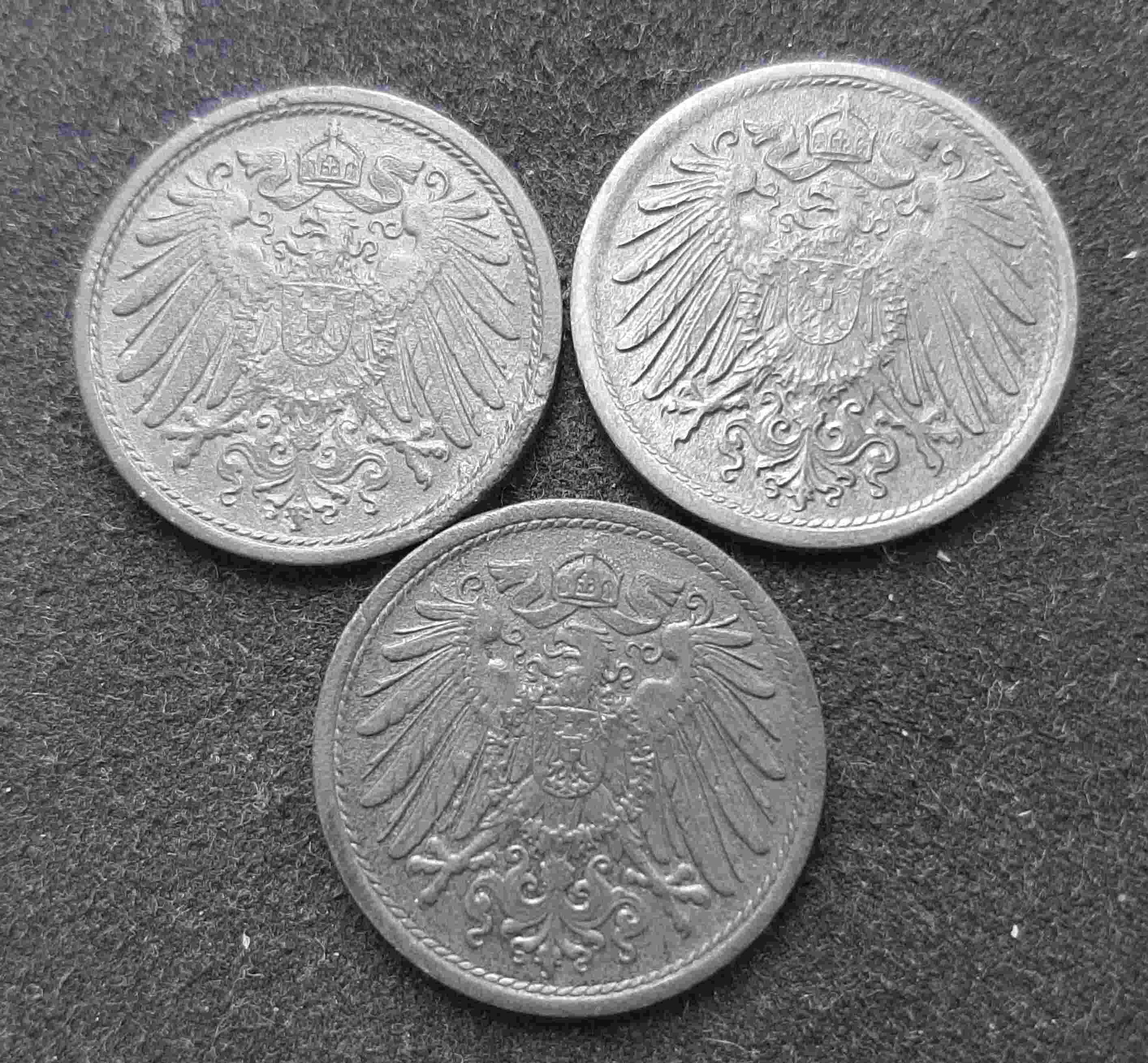 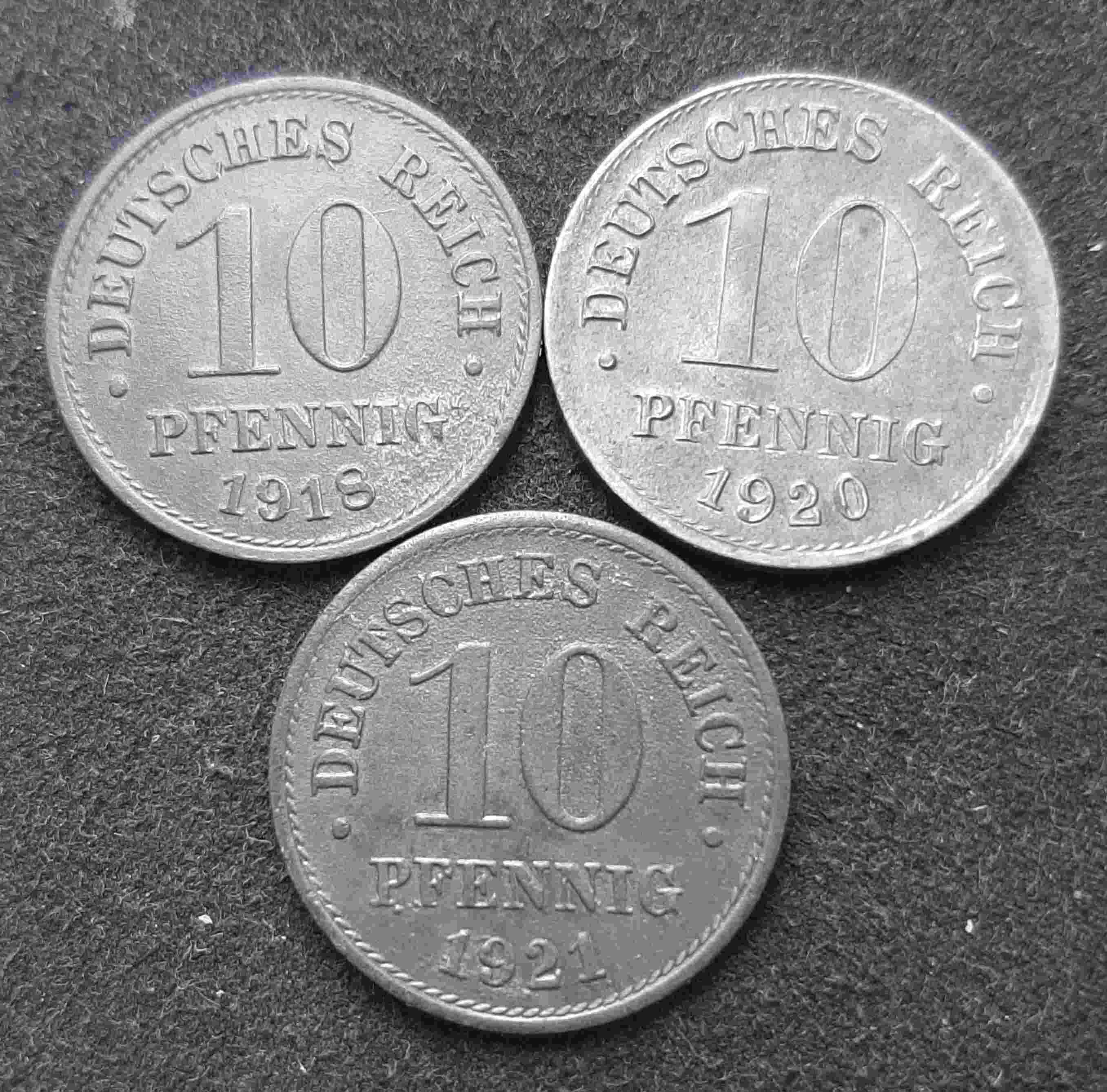 |
|
|
|
Pillar of the Community
 United States
3807 Posts |
As you also likely saw, the Weimar Republic was from late 1918 to 1933. However, the NGC World Coin Explorer has all the coins you show listed under the German Empire. Numista doesn't include them in the issues of the Weimar Republic, either. I know very little about German coinage, so I'll be interested in hearing what the experts have to say!
Edited by hokiefan_82
05/05/2022 01:46 am
|
|
Valued Member
Hong Kong
176 Posts |
The official name for Germany during the Weimar period was still the same from before, Deutsches Reich, which was often translated as "German Empire" in English.
Maybe you could categorise them as Weimar period Germany, or German Reich.
Edited by Wandering Circle
05/05/2022 02:08 am
|
|
Pillar of the Community
 Sweden
2124 Posts |
5 and 10 pfennig coins didn't get a new design until 1923, so the "imperial design" coins, with the imperial crowned eagle and minted since the 1870s (with some variation in design), were minted until 1922. New coin designs, with the Republic's uncrowned eagle, or with no eagle at all, were successively introduced for different denominations from 1919 and on.
So these coins could be labeled either as "German Empire" because they are of the type used during the Empire, or they could be labeled "Weimar Republic" because they are from that era (although the 1918 coin is most likely minted during the empire, since the republic wasn't proclaimed until November).
You could of course evade the problem by just listing them as "Germany 1918-1921."
|
|
Pillar of the Community
 Russian Federation
1559 Posts |
The Imperial eagle on the reverse side makes me think that these coins are Imperial after all.
erafjel, Thank you so much for revealing a piece of German history to us.
|
|
Moderator
Australia
17002 Posts |
The eagle on these coins is the Imperial German eagle, still wearing the Imperial crown and bearing the coat of arms of Prussia. The eagle of the Weimar Republic resembled that of the modern German Republic, plain and unadorned. Thus, these coins are usually ascribed to the Imperial period, even though the Empire was long gone by then.
The name "Deutsches Reich" was the official name of the country, as per the Weimar Constitution, though practically nobody in Germany prior to 1933 was proud of that name or used it in everyday speech. For monarchists and other right-wingers, they hated the attachment of the word "Reich" to the republican government they loathed; the Nazis reckoned themselves as the "Third Reich", but the Weimar Republic didn't count - the first two Reichs being the Holy Roman Empire and the German Empire. Moderates and Leftists, on the other hand, saw "Reich" as an anachronism and a reminder of Germany's inability to move on from past failures. Which name you used instead of "Reich" depended on your political alignment, though most people used "Deutsche Republik" (German Republic) or some variant thereof. The term "Weimar Republic" is actually a derogatory phrase invented by the Nazis.
Putting "Das Deutsche Reich ist eine Republik" as Article 1 of the Weimar Constitution was, like much of the content of the Weimar Constitution, a classic case of "a good compromise that made nobody happy and everybody mad".
Speaking for myself, and largely because of the whole confusion over exactly when "Weimar" coins begin and end, I subdivide "Germany" in my coin database by the name that appears on the coin - so Empire, Weimar, Nazi and Allied Occupation coins all get filed under the one entity: "Germany - Reich". The other two subcategories for Germany being "Germany - East" and "Germany - Federal".
Don't say "infinitely" when you mean "very"; otherwise, you'll have no word left when you want to talk about something really infinite. - C. S. Lewis
|
| |
Replies: 5 / Views: 1,106 |
|










 Posted 05/05/2022 02:07 am


