| Author |
 Replies: 10 / Views: 1,779 Replies: 10 / Views: 1,779 |
|
|
Valued Member
United States
98 Posts |
Things like this are a bit confusing to me. The coin has a deep crack directly across the Obverse from just below the G of GOD and runs across the top of the 1 from the date. I feel like the term Die Crack is used to describe it, but I don't feel like that is correct since the crack is on the coin not the Die. Otherwise it would be raised where the metal fills in the Die Crack on the strike as opposed to the fault being on the coin itself, yes? Coin is obviously circulated, but displays one of the best strikes I've seen on a nickel and near mirror luster on the bust but with the majority of the wear on the reverse, primarily (of course) on the steps. So personally unable to tell if it is a circulated Proof coin or not...but I know a few of y'all here will have a better idea than I. Of note: coin is not bent at all, and there does not appear to be any impact damage at the edges of the crack. There are some faint odd lines that run across the coin horizontally and I see about 8-9 of them, but they get so faint my camera only picked up about 4 of them across the bottom portion of the coin and starting with the one that the crack follows across. They remind me of the lines from when the waffle a coin, but very faint, guaging them at roughly 1/10th as raised as the MD on the coin to almost a ghost image, but feel like the one the crack follows is responsible for the weakness that caused it. Hopefully photos show what I mean, any input is greatly appreciated!  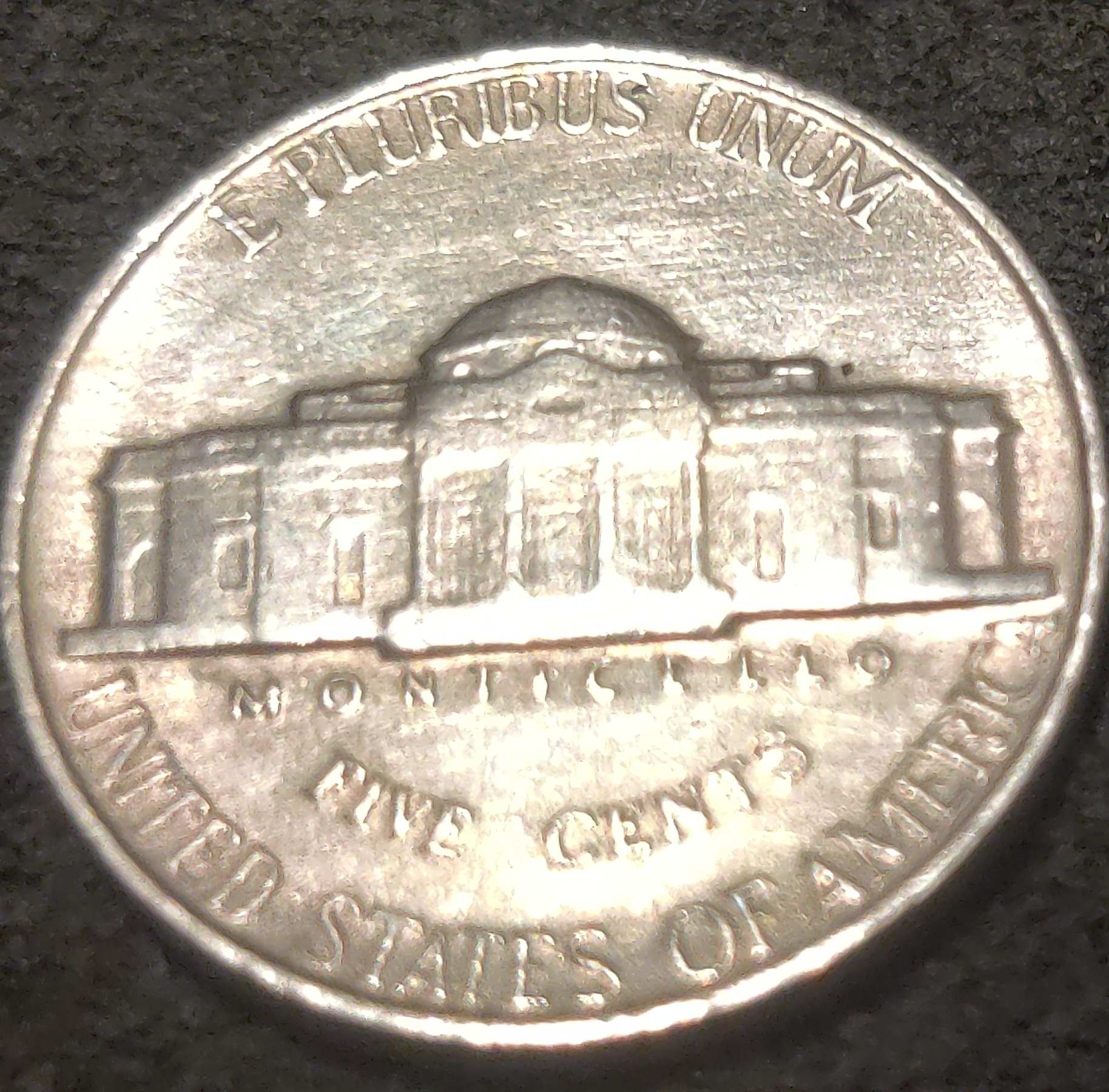  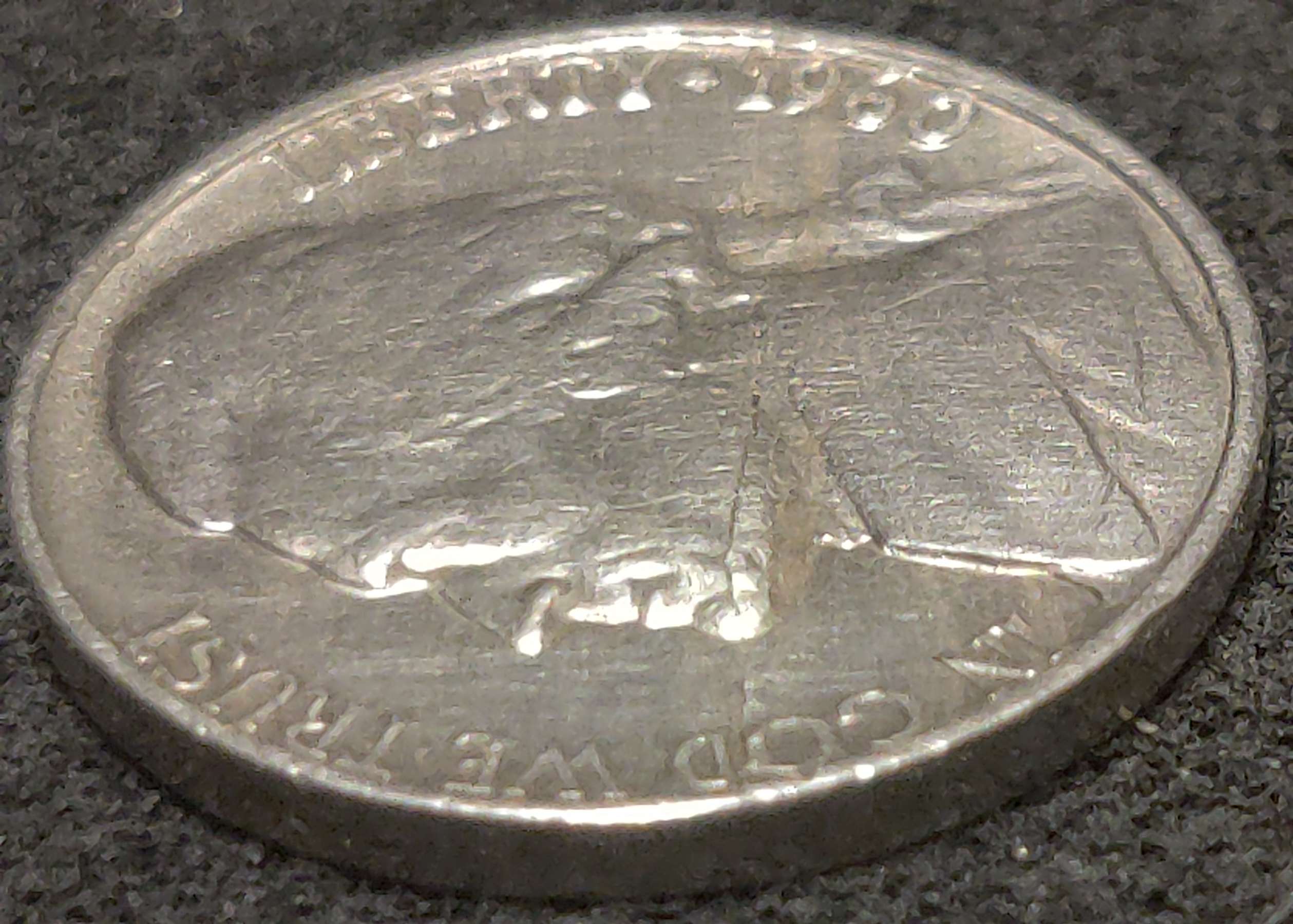 |
|
|
|
Moderator
 United States
108190 Posts |
Could be a RRDC (Rim to Rim Die Crack) But it starts just under the D of GOD not the G
|
|
Valued Member
 United States
98 Posts |
Correct on the D, thank you Dearborn! Yes this was my original thought too, so researched at the Cuds on coins website and think for rrdc it should be a raised line across the top. Since technically the Die wouldn't have to display any wear at all for the coin to display an eventual crack. Heck, I can't say that it is even mint damage, though I do believe the raised lines are the eventual cause, just no idea what they are or where they came from lol |
|
Bedrock of the Community
United States
62064 Posts |
Well die cracks seldom happen on new dies. They are die events that happen as the die ages. Looks like this one has been polished twice already. The fields are just starting to show flow lines, but when you look at the devices this is not a fresh die. They devices are starting to show die wear on them. Not a proof nickel. Just a Philadelphia Nickel. (The 'P' wasn't added to the BS normal nickels until 1980) Looks like a medium circulated coin.
|
|
Bedrock of the Community
United States
19632 Posts |
Given the images posted, I'm wondering if we have a lamination feature showing. Would love to view the coin in-hand.
|
|
Pillar of the Community
United States
2817 Posts |
I agree, from the photos provided, that this looks more like a lamination issue than a die crack.
|
|
Moderator
United States
108190 Posts |
Could be a lam, but with the coin in such a worn condition, it is hard to tell. If it is a crack - most of the details would have been rubbed off long ago.
|
|
Moderator
United States
34564 Posts |
Looks a bit more like lam than a die crack to me, but I'm not sure. With regard to this coin potentially being an impaired proof, I think this looks like a business strike instead.
"If you climb a good tree, you get a push."
-----Ghanaian proverb
"The danger we all now face is distinguishing between what is authentic and what is performed."
-----King Adz
|
|
Pillar of the Community
United States
7174 Posts |
|
|
Bedrock of the Community
United States
10635 Posts |
I too am leaning towards a lam on a very worn die.  |
|
Valued Member
United States
98 Posts |
@Ijn1944 I've often wished there was a way to send a coin to loop through the community here, I know exactly what you mean! Thank you all, lamination makes a lot of sense to me, as does it being regular Business strike. I had only recently learned that Proof coins from '64 back were minted in Philadelphia, and like you said @coop the P wasn't added to coins higher than 1c until 1980, but researched all that when I found a gem '64 with full steps and a mirror finish lol. I thought that with no mint mark it had to be either a Proof no s, or a regular strike Philadelphia...either of which I would have been very happy with! Sadly, neither was the case as it goes, but learned a lot from that research at least. But it has the unfortunate side effect that any coin dated 1964 or earlier with any hint of luster and no mint mark looks like a Proof coin to me lol. Thank you all for your time and responses! |
| |
Replies: 10 / Views: 1,779 |
|








 Posted 06/10/2022 11:33 am


