| Author |
 Replies: 14 / Views: 1,286 Replies: 14 / Views: 1,286 |
|
|
New Member
United States
3 Posts |
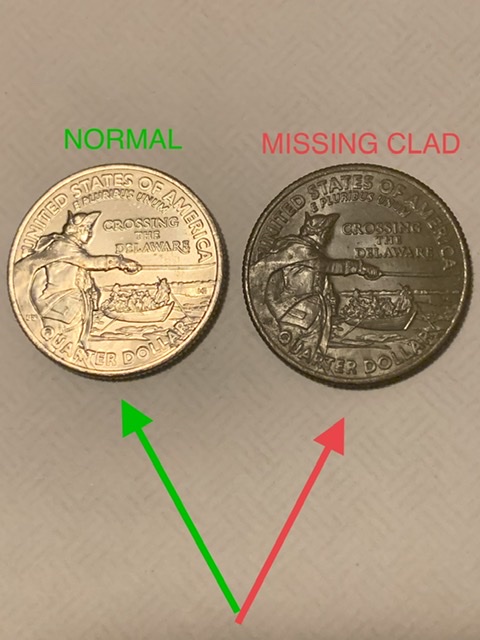 Just really curious of this anomaly, and haven't found much of any other examples to speak of. I'd love to hear what anyone has to say as far as what I can do to be sure Clad is only (suspected of) missing on the Reverse Weight is lighter than a "standard" example. (Left: 5.67g Right:5.49g) 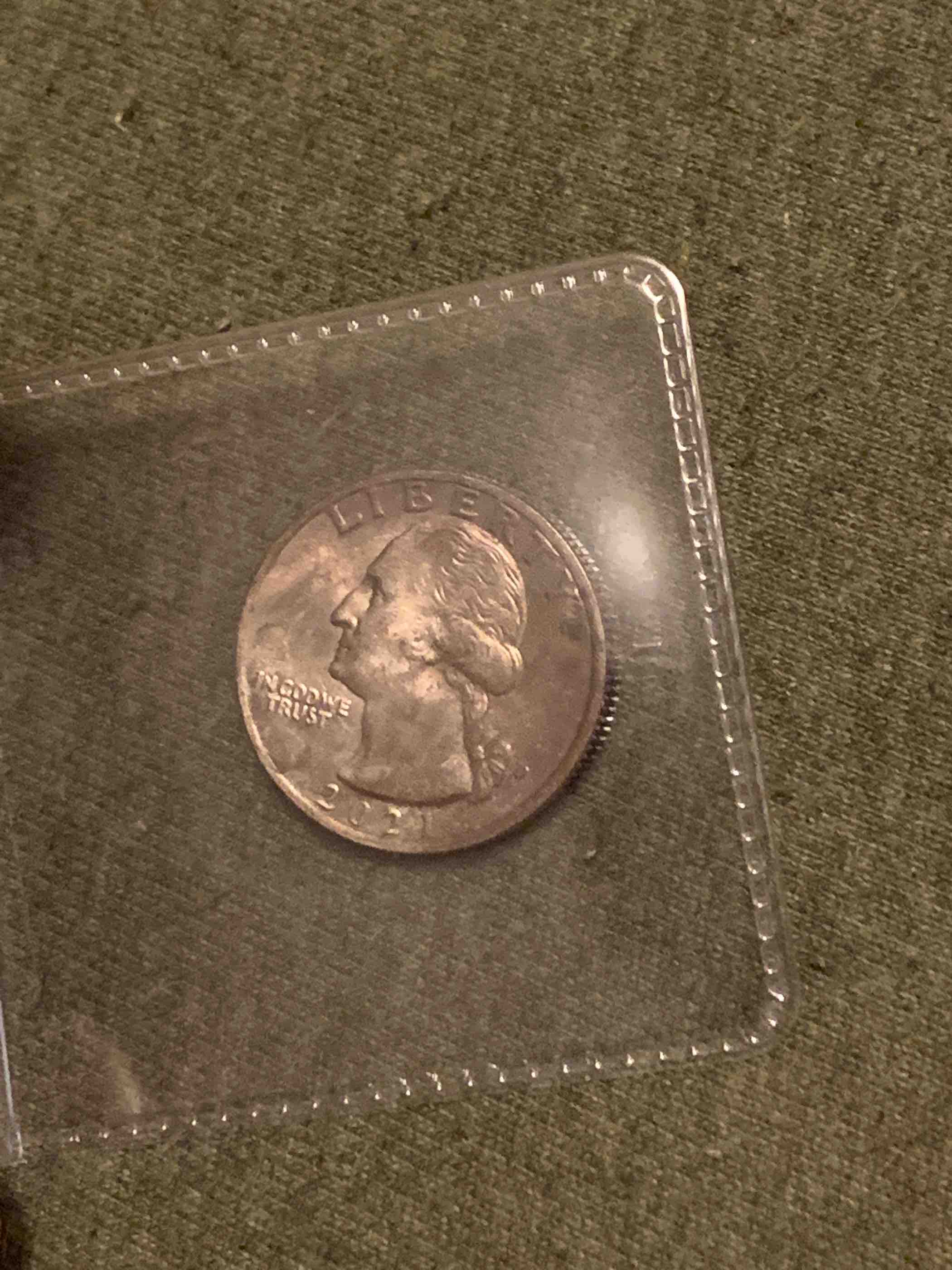 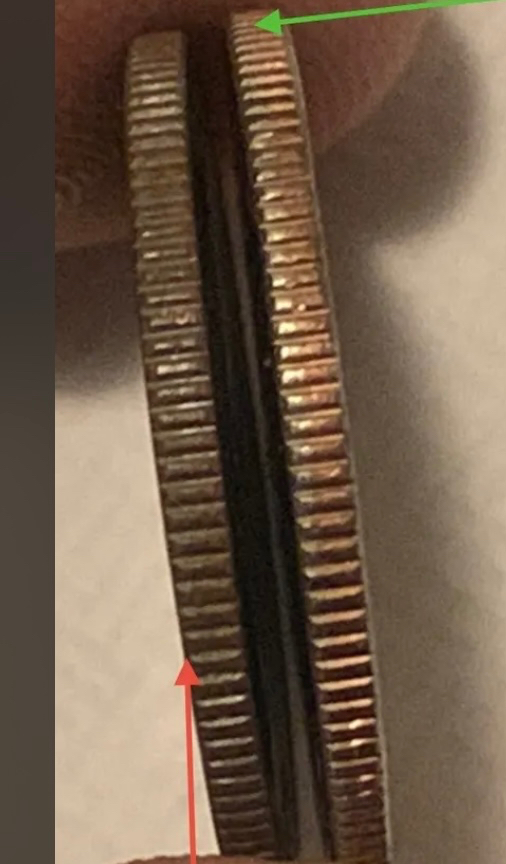 Edited by GunsmithCoins
06/17/2022 04:42 am
|
|
|
|
Moderator
 United States
56855 Posts |
Weight? Pic of other side. John1  |
|
New Member
 United States
3 Posts |
Sure thing, still figuring out this UI
|
|
Bedrock of the Community
Australia
21789 Posts |
Nickels when buried in the right pH conditions, can take a copper tone on recovery. Same with clad coins
|
|
Moderator
United States
194507 Posts |
 to the Community! |
|
Bedrock of the Community
United States
62064 Posts |
The missing clads will be red in color, not dark. This can be a partial missing clad or one side or both sides. Partial missing cladding: 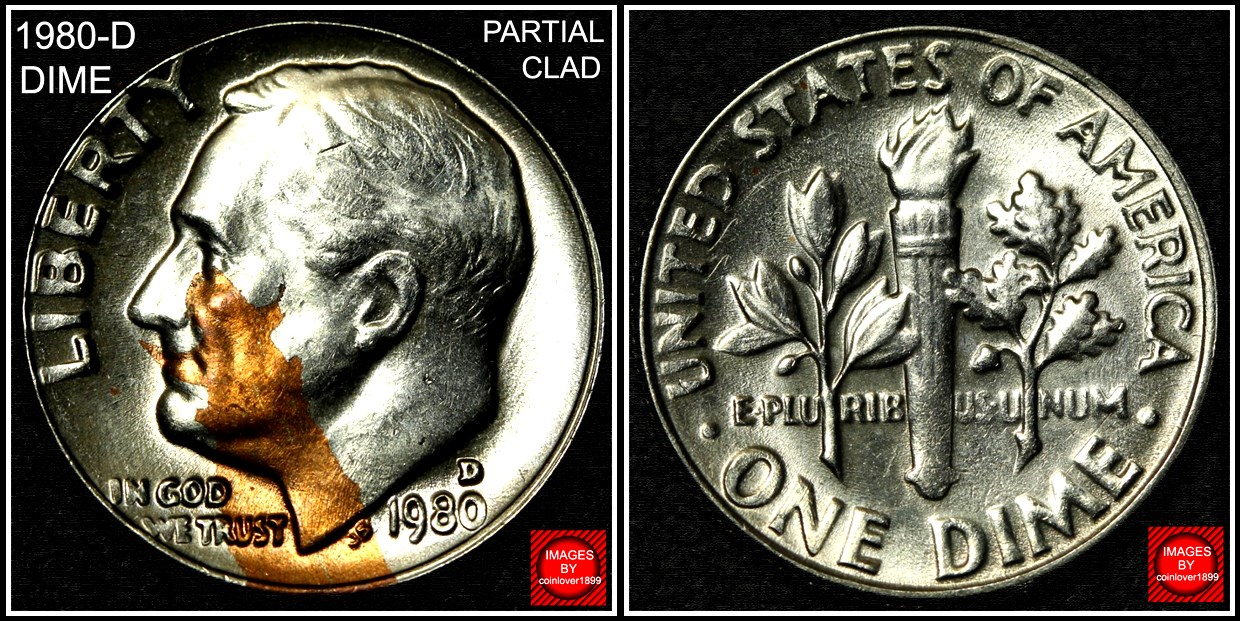 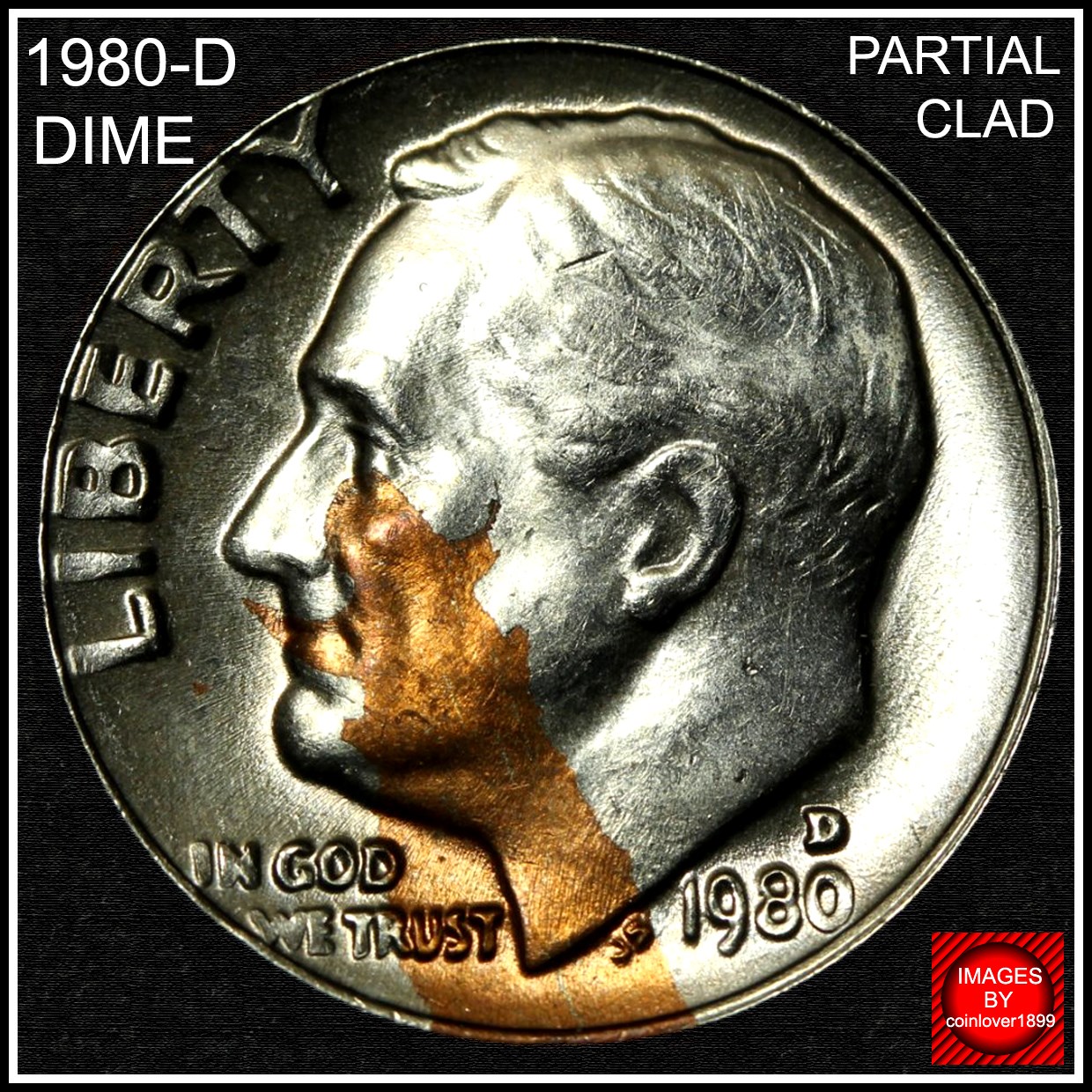 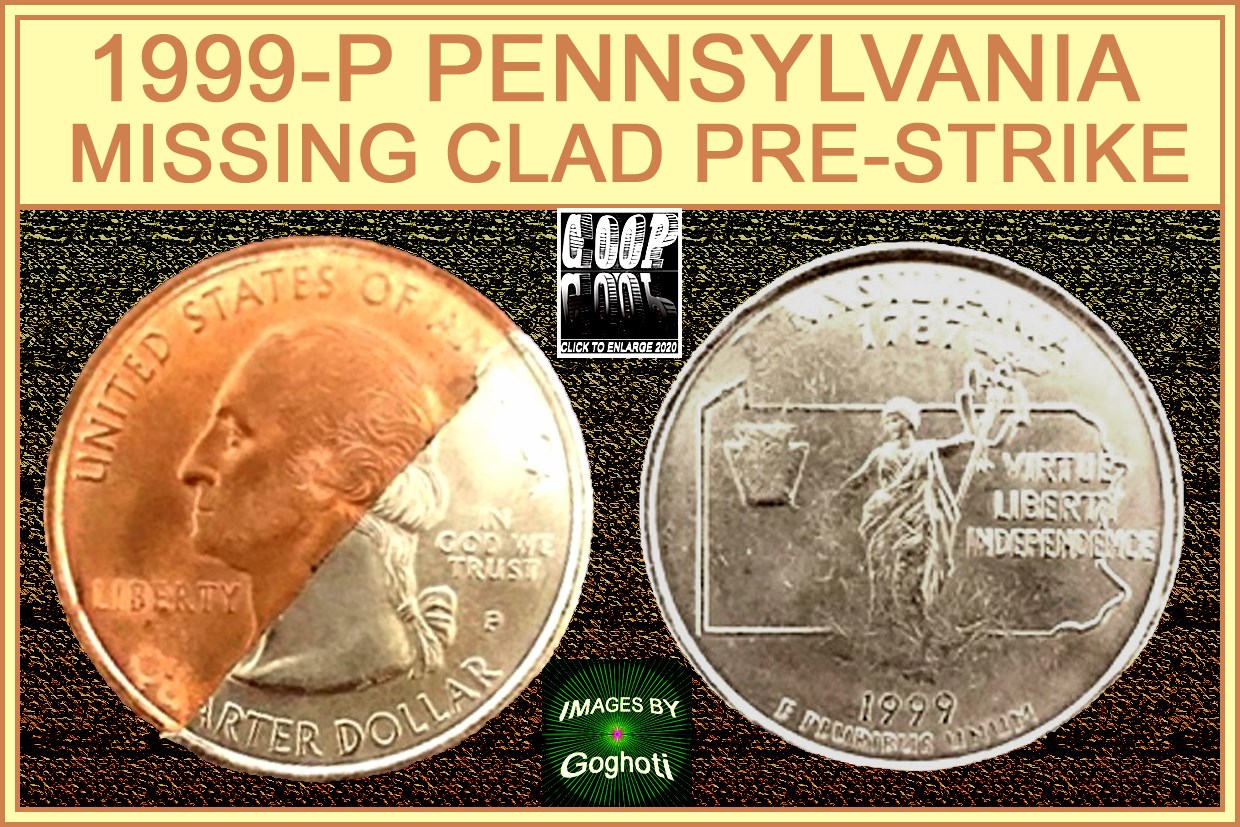 Often just small areas are affected. The weakness can show a weaker strike, but where the missing clad is the strike is full on those areas. Single missing clad: 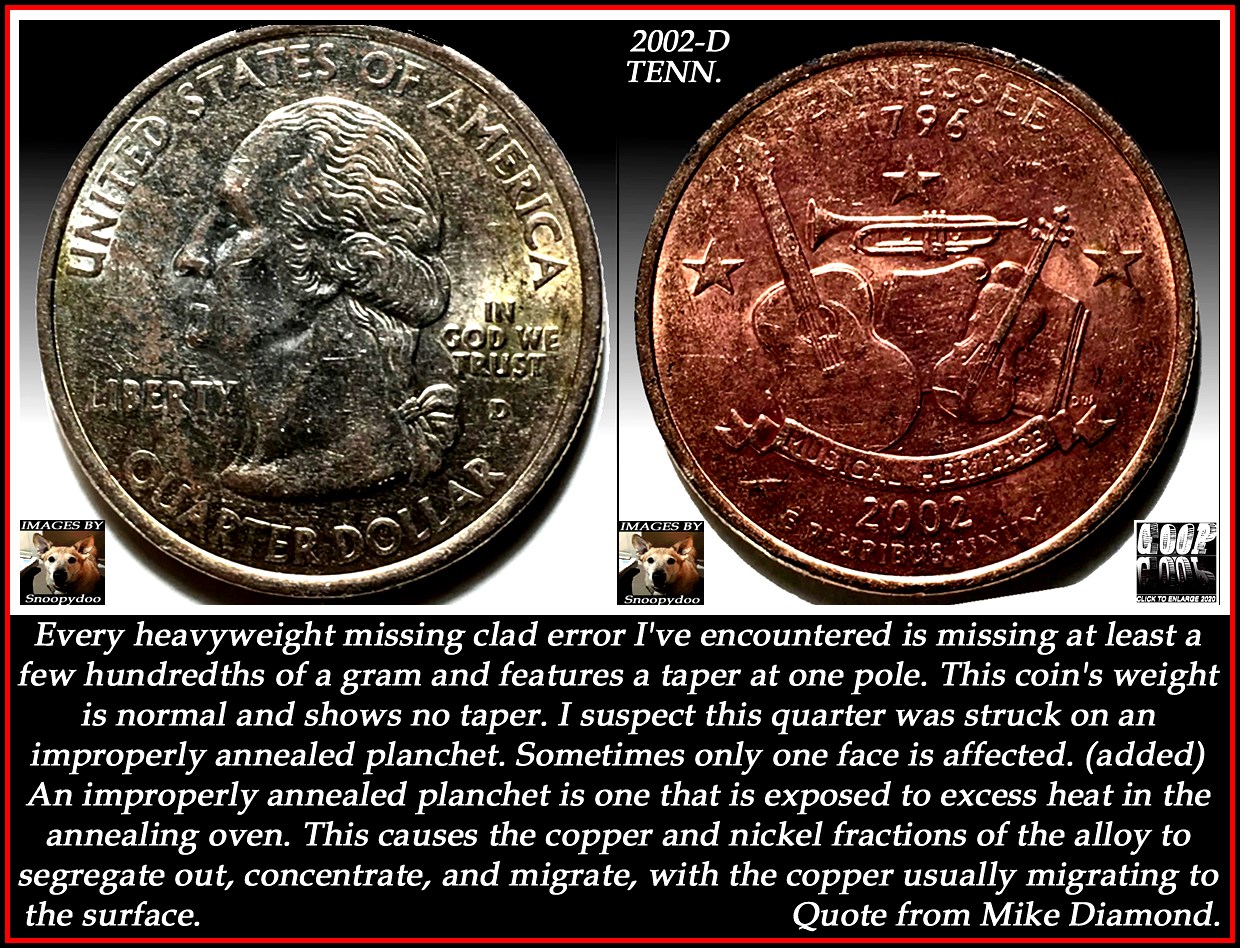 Single missing clad. Note on these we see a weakness when the missing area is not a tall as the normal strike planchets. The weakness is seen on the devices. Note the red color like the outside edge of the coin. The weight will be slightly less than normal Double missing cladding: 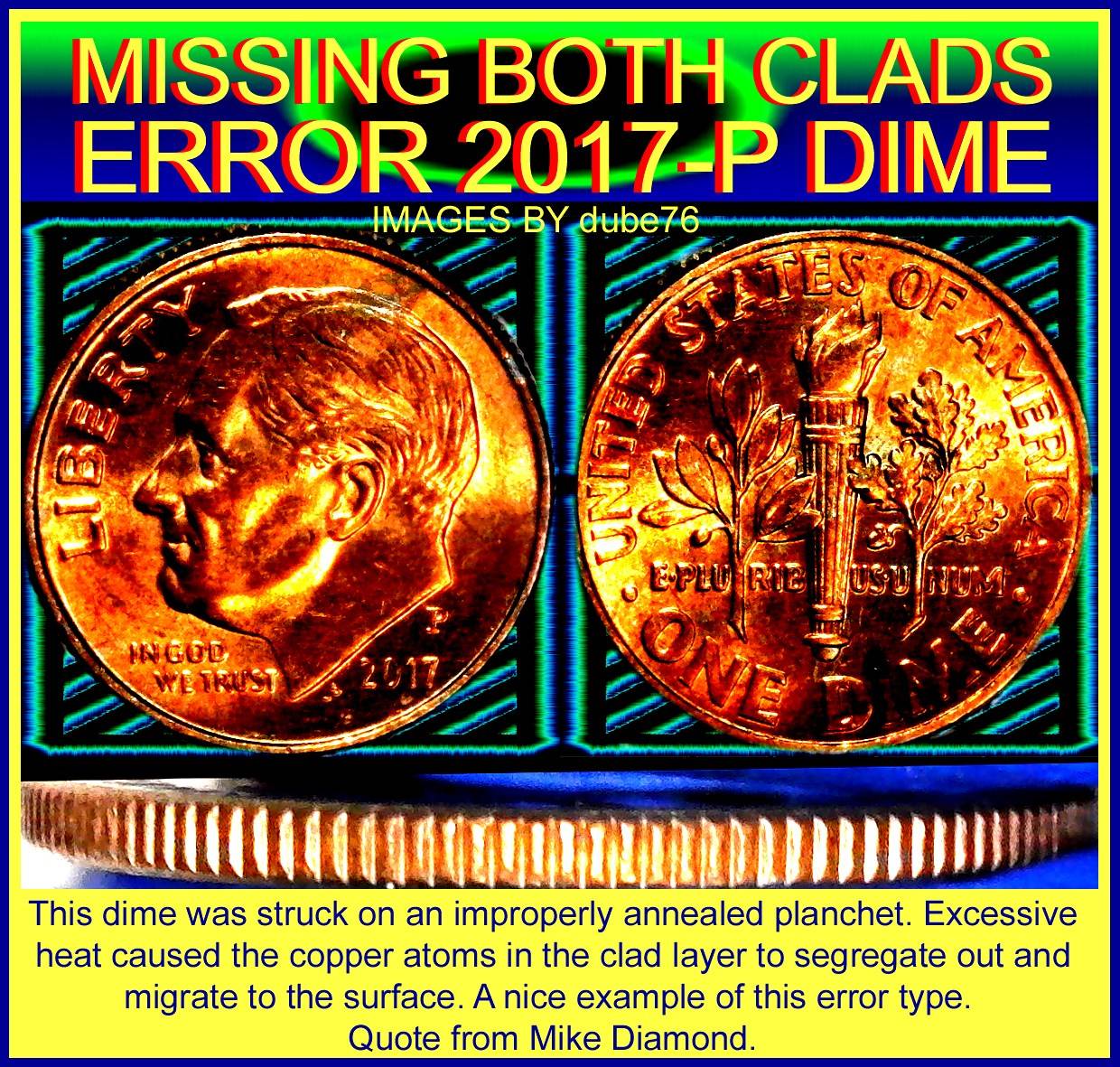 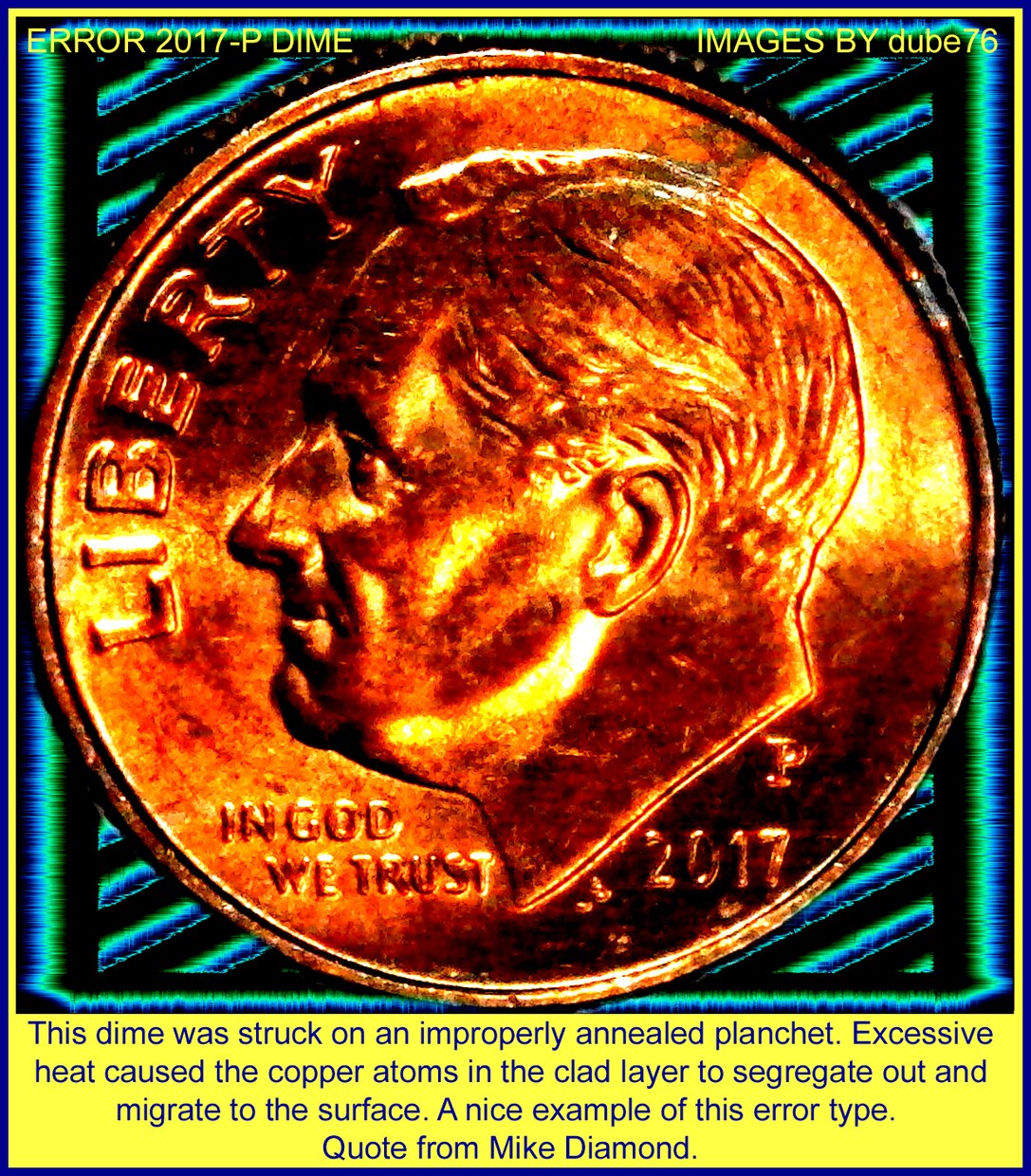 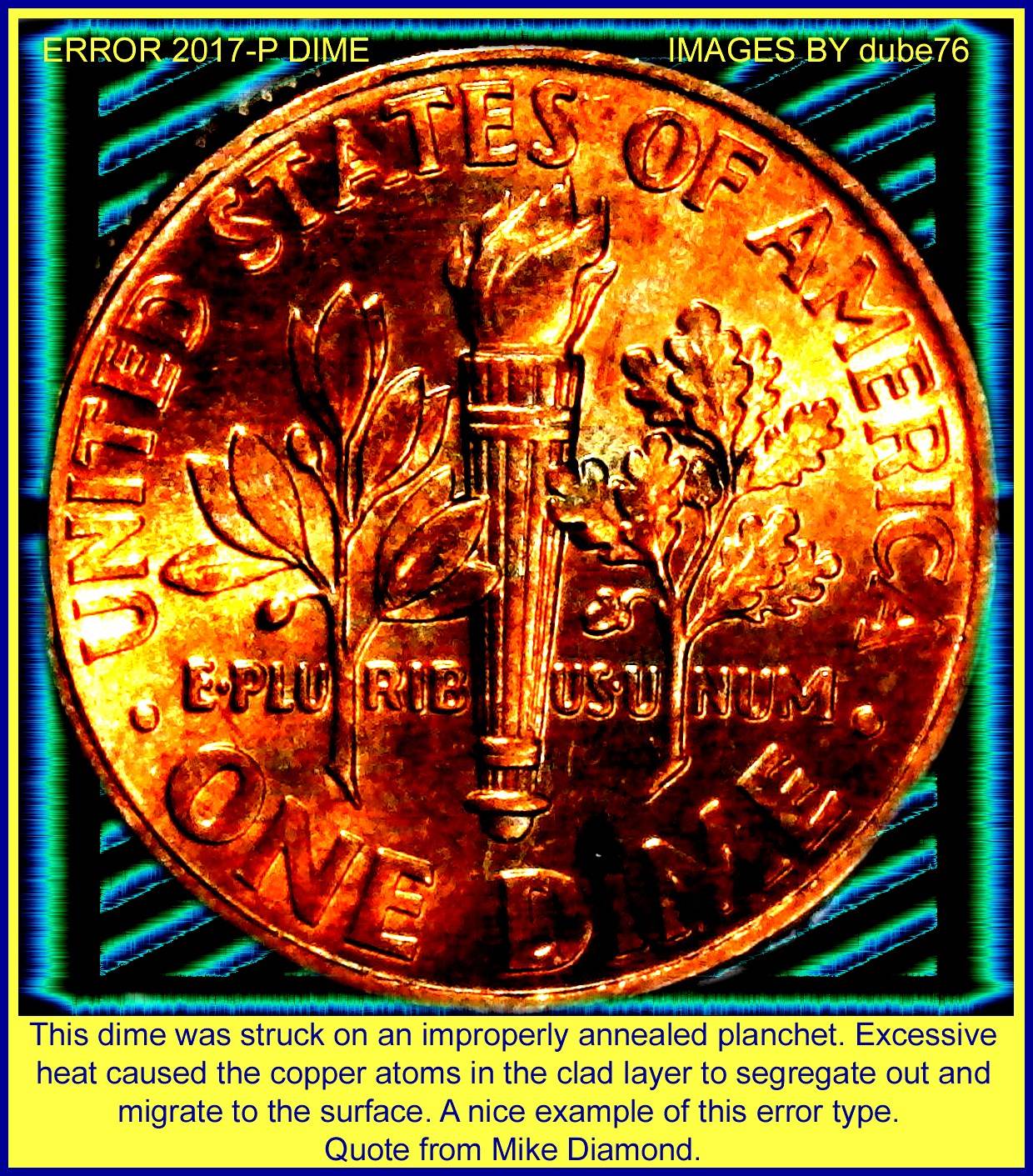 On these the weakness this one is not noiticed. It is possible that the weight maybe full on this example. But most times the weakness is also missing as the coin is not the normal height. Sometimes the cladding is pulled off of the coin, leaving a ghost image of the area where the cladding was removed. 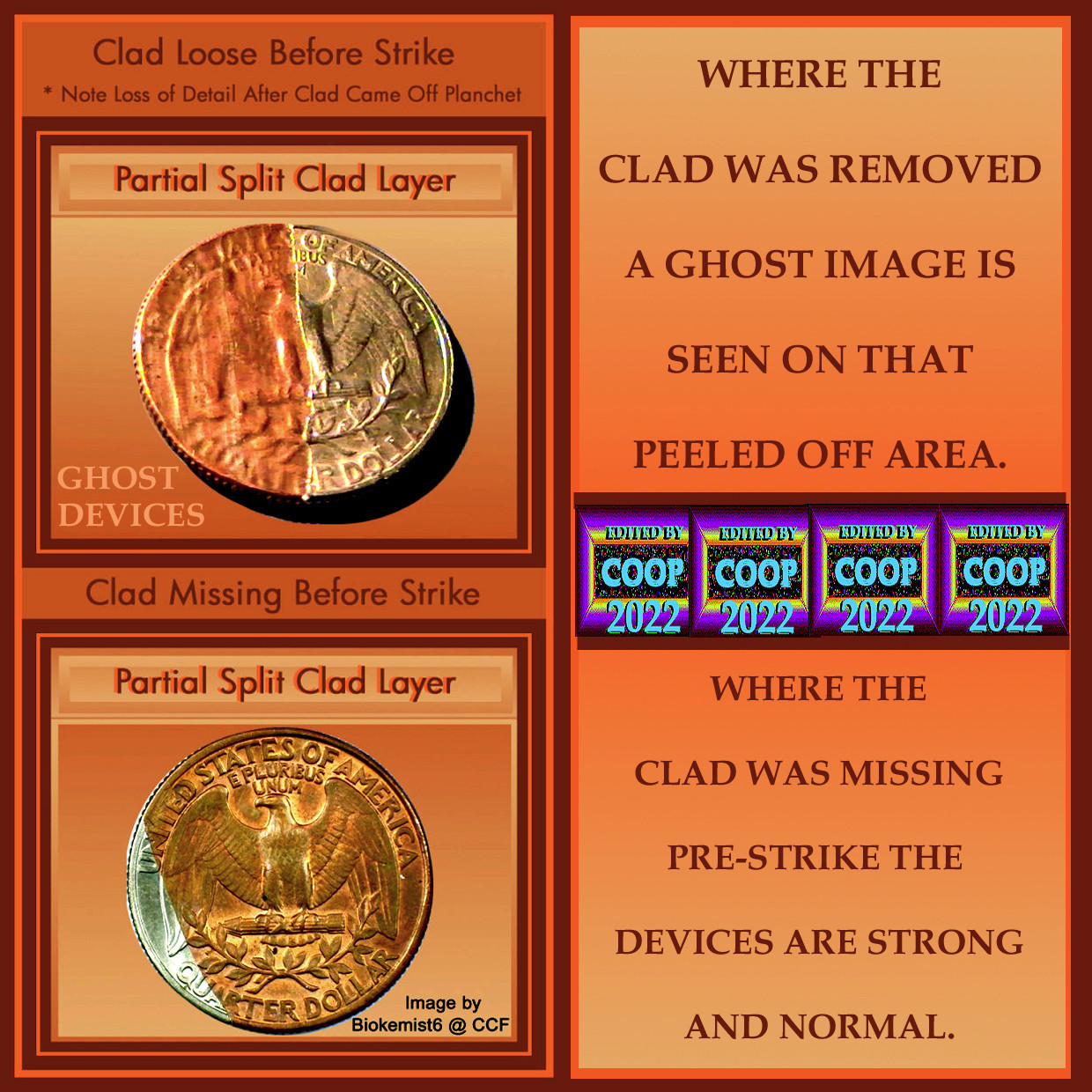 CoopHome CoopHome: How to tell if a clad event happened to your coin? |
|
Moderator
United States
105202 Posts |
 with above, just a stained coin from the environment. |
|
Bedrock of the Community
United States
62064 Posts |
Note the devices with the highest part of the design:
1. Where color is on these is now wearing off on that area area. So it is rubbing off of the coin.
2. Same for the rims. If this were an annealed planchet issue, then the color would not change, as the metal color is affected, not just on the surface of the coin. (seen by the removal of the color by circulation)
|
|
Bedrock of the Community
United States
94367 Posts |
Staining for sure. to the CCF! |
|
Moderator
United States
56855 Posts |
Quote:
The missing clads will be red in color, not dark I would think that a true missing clad layer would tone dark or brown if it was circulated,no? I am not saying the ops' coin is missing a layer. John1 |
|
Bedrock of the Community
United States
10635 Posts |
Environmental tarnishing/toning/staining/damage, post mint.  |
|
Moderator
United States
105202 Posts |
I think that Merclover just covered all the bases here. and She is correct, one or a combination of them caused this coloring you see.
|
|
Pillar of the Community
United States
586 Posts |
Weight is the key diagnostic criteria on a missing clad layer error and although your coin is slightly lighter, the acceptable tolerance for quarters is +/- .227 grams so your quarter, at 5.49 grams, is actually still within mint tolerances with 5.67 grams being the target weight. http://goccf.com/t/362119Here's a recent post with a quarter missing a clad layer that had a weight of 4.7 grams and evidence of a weak strike on the other side. |
|
New Member
United States
3 Posts |
Thank you everyone! I'll keep everything in mind moving forward. I appreciate everything and am happy to have found an insightful community as this one!
|
|
Moderator
United States
105202 Posts |
Well, keep looking 'they are out there'
|
| |
Replies: 14 / Views: 1,286 |
|







 Posted 06/17/2022 04:59 am





