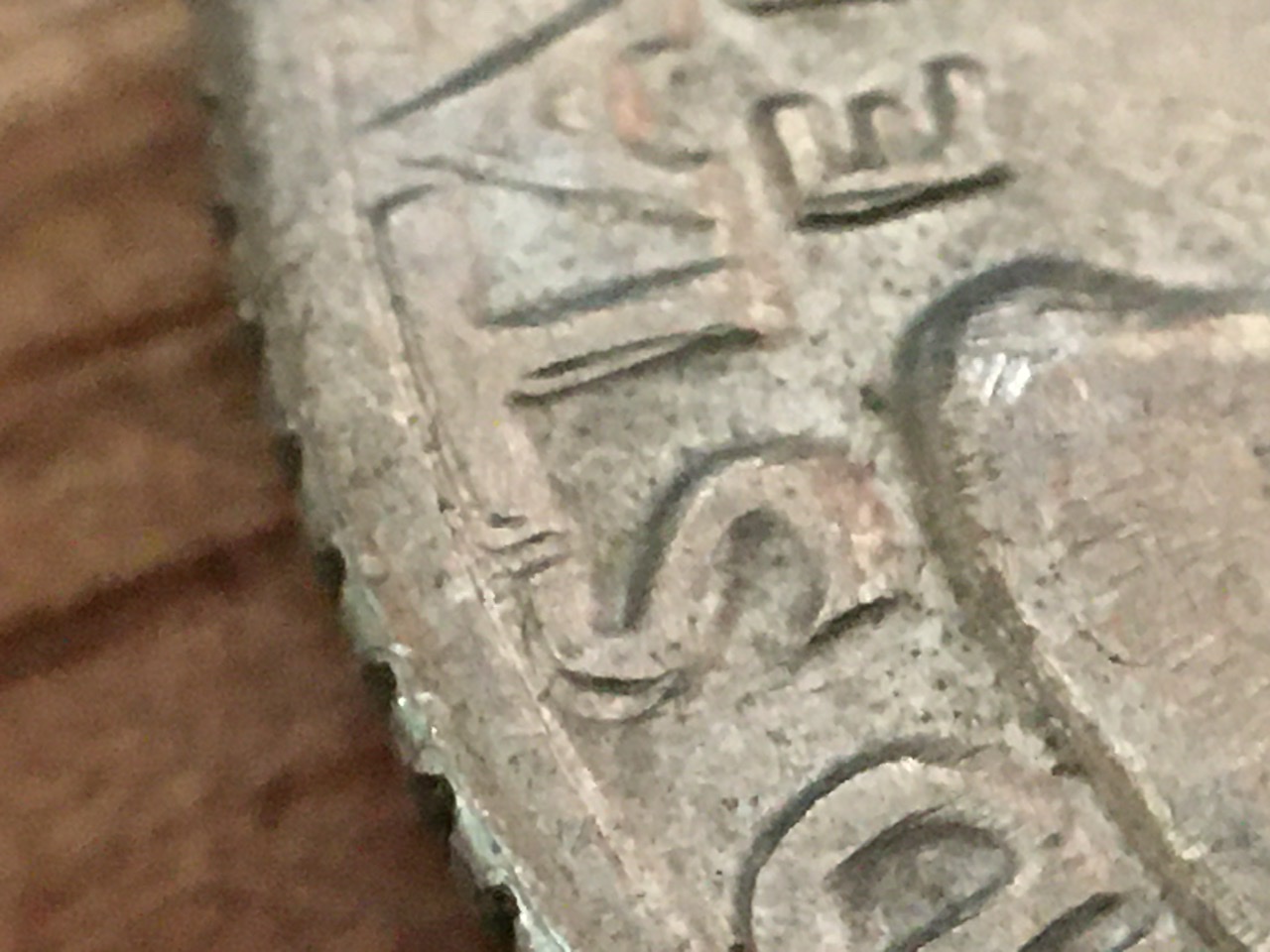
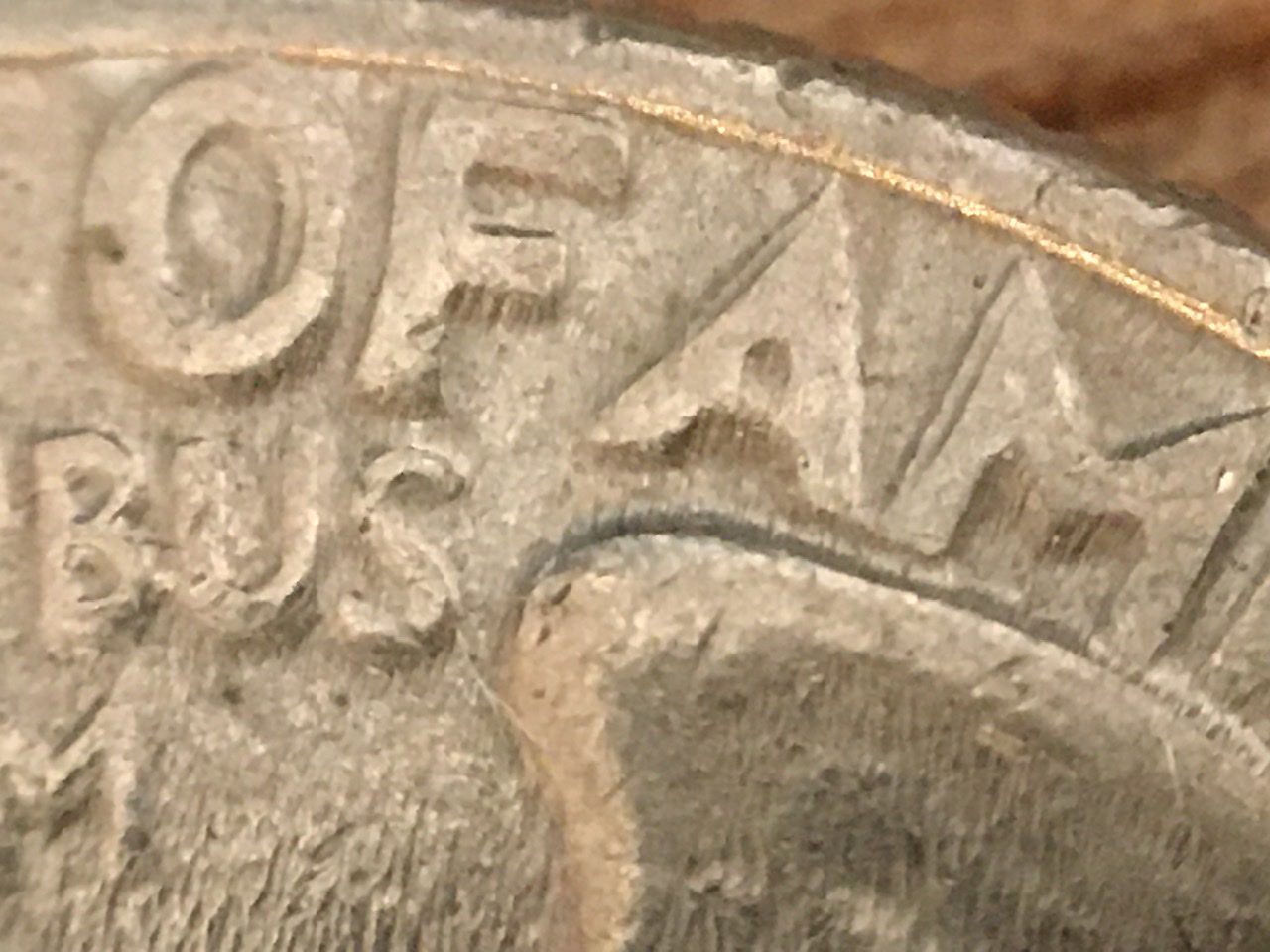
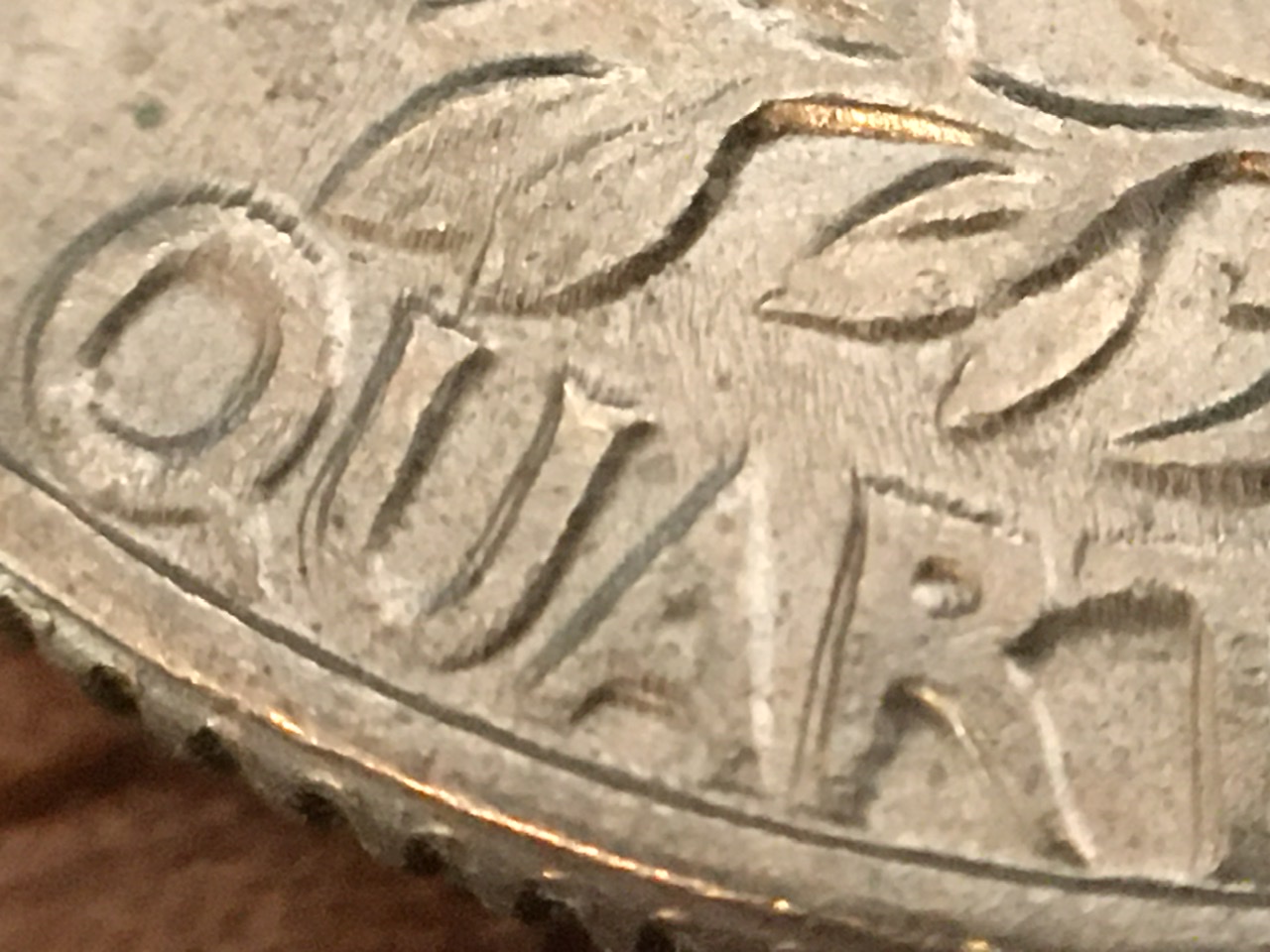
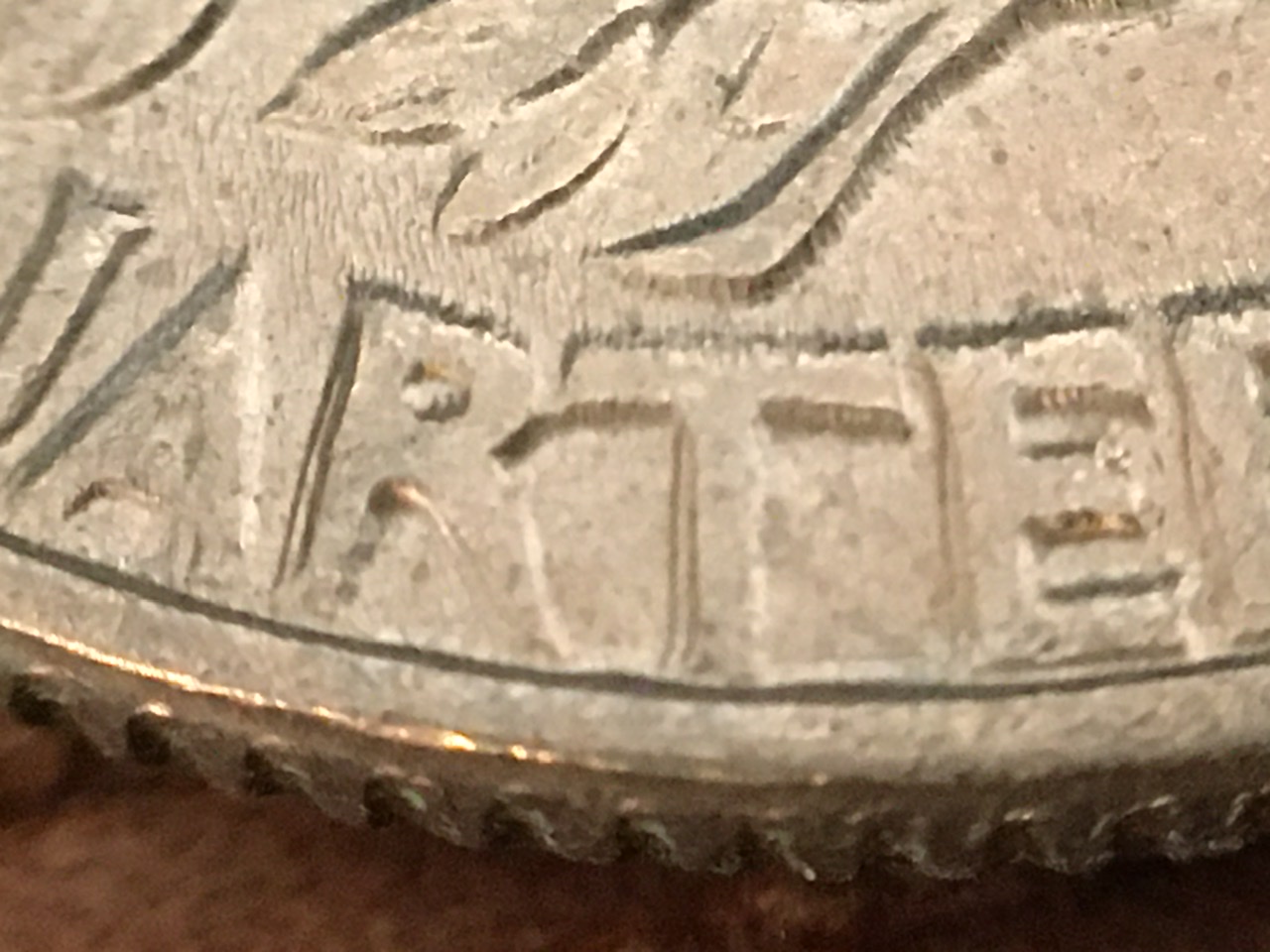
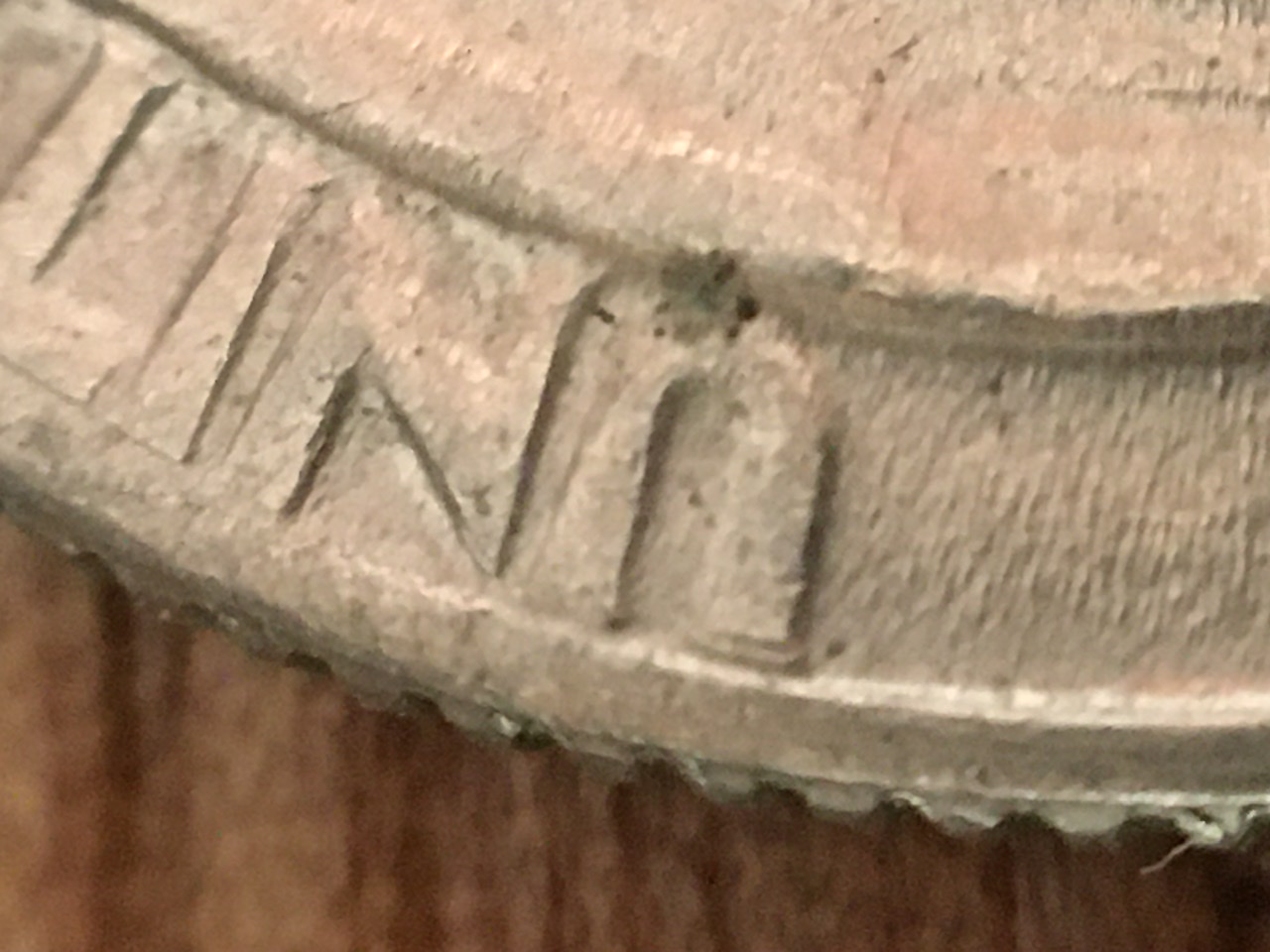
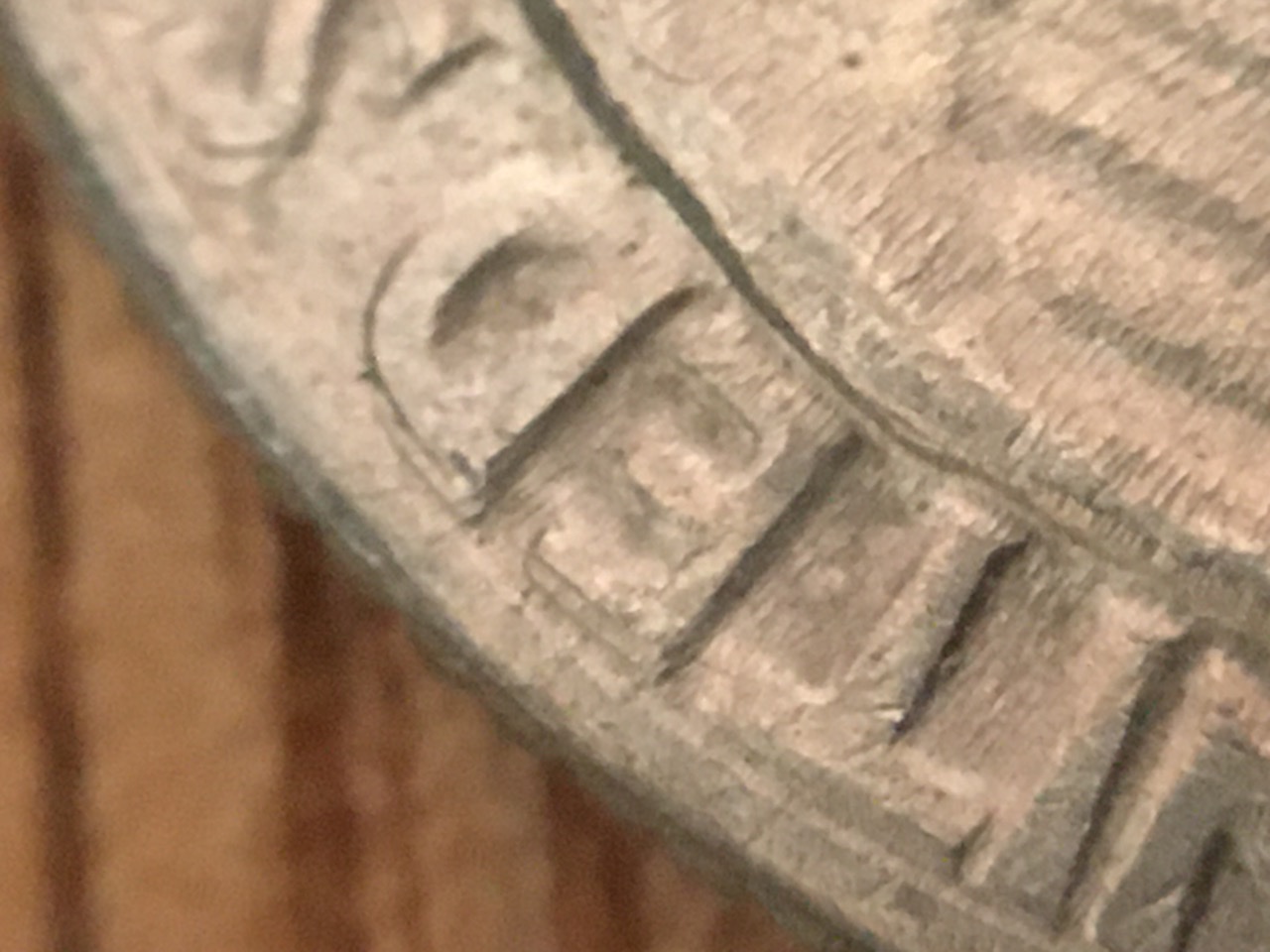
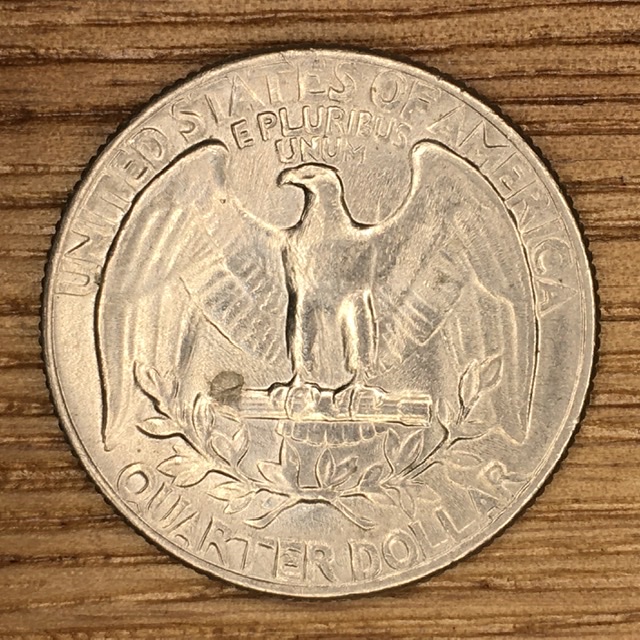
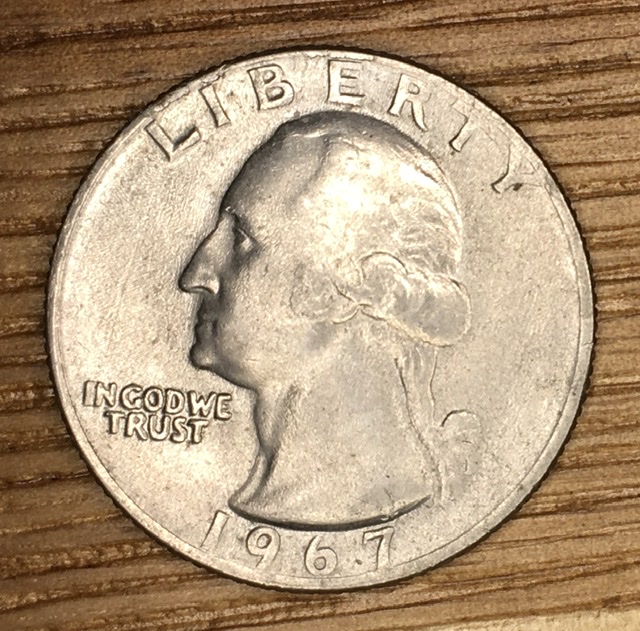
The die state is a later die state example. Judging by the extreme flow lines this one was on it's third polishing because the raised devices are starting to loose their shape.
What you are looking at on the devices is
Machine Doubling. So this is an extreme die wear example. This is not
DDD as the die creation of the
DDD is the single squeeze dies. So it is not
DDD. This is the old fashioned multi hub die process. The single squeeze dies show the die wear on the fields first. On these dies the outside edge towards the rim, are affected first. So this is just die wear, not
DDD. Both are wear, but the die wear patterns are different. Also the profile heights are different. The single squeeze dies have the lower profile. The old fashioned multi hub dies have the higher profile. (Thus I feel why the fields are affected first on the single squeeze dies with the
DDD)
Die wear on a normal die with
Machine Doubling is you are seeing on your coin. If this were a
DDR, then the devices would be enlarged:
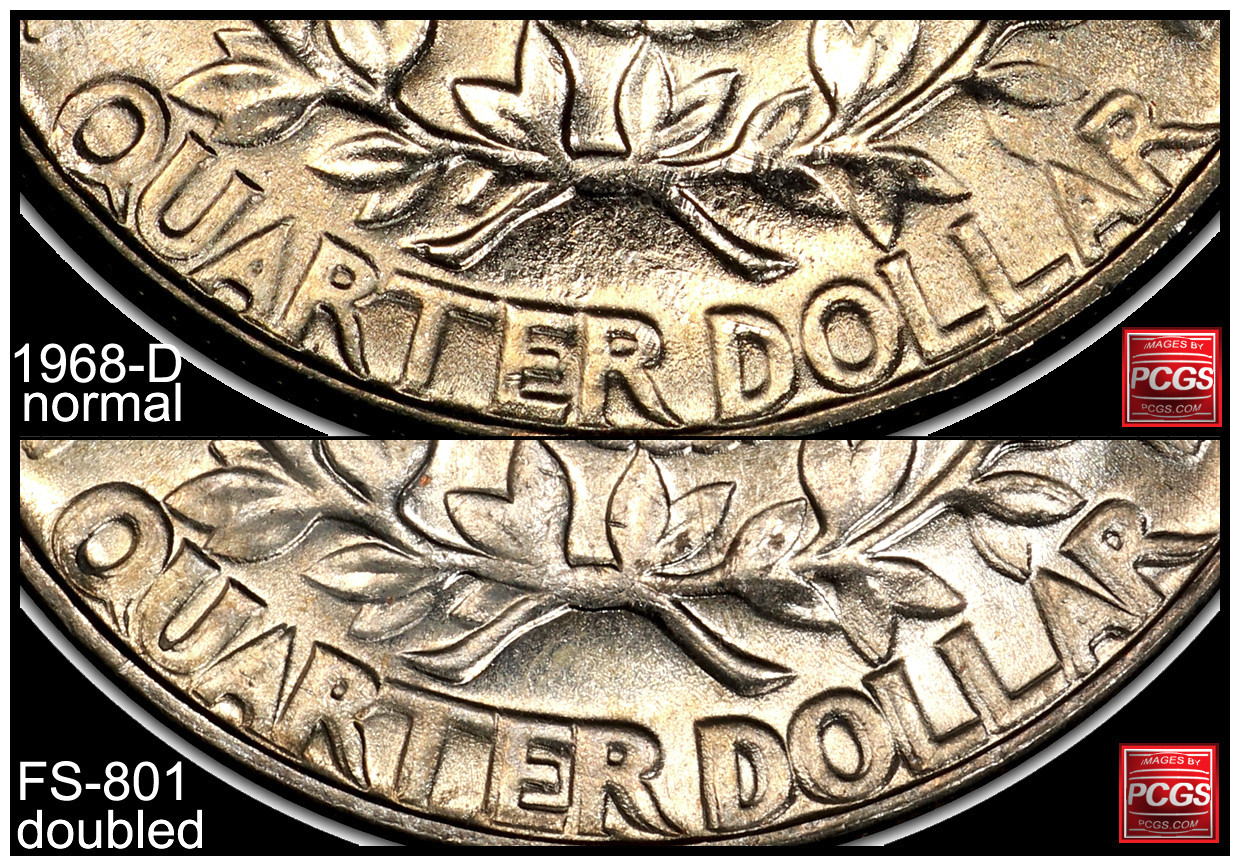
Note on the top image, this is a normal die example. On the lower example it is a
DDR. That is how much of a difference a strong
DDR will enlarge the devices. Not the spread? That is what to look for on a doubled die. Look at the centers of the devices, not on the outside edges of the devices. The outside edges is where you will find
Machine Doubling and die wear. So when looking at the devices, look at the centers of the devices. No spread there? Move on to the next coin. To continue looking will find you what you found on your coin.
Not a doubled die. CoopHome:
Doubled dies are harder to find. What am I missing during my searches? 








 Posted 07/02/2022 4:16 pm


 with JimmyD



