| Author |
 Replies: 15 / Views: 1,287 Replies: 15 / Views: 1,287 |
|
|
New Member
United States
2 Posts |
Edited by Jjoy
07/12/2022 01:03 am
|
|
|
|
Pillar of the Community
 United States
4618 Posts |
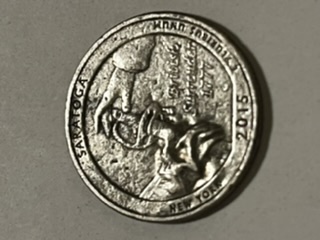
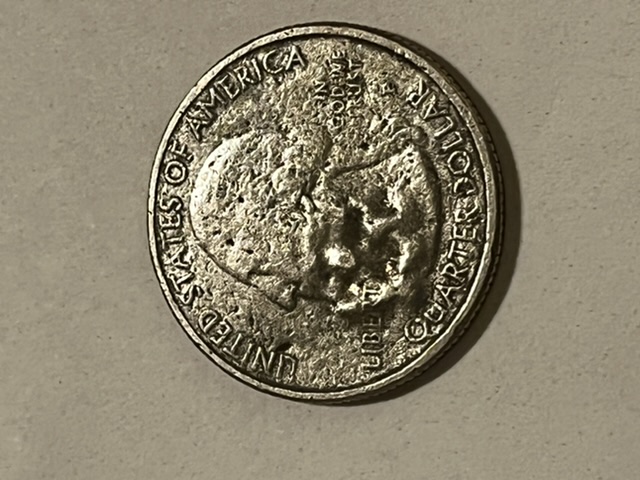
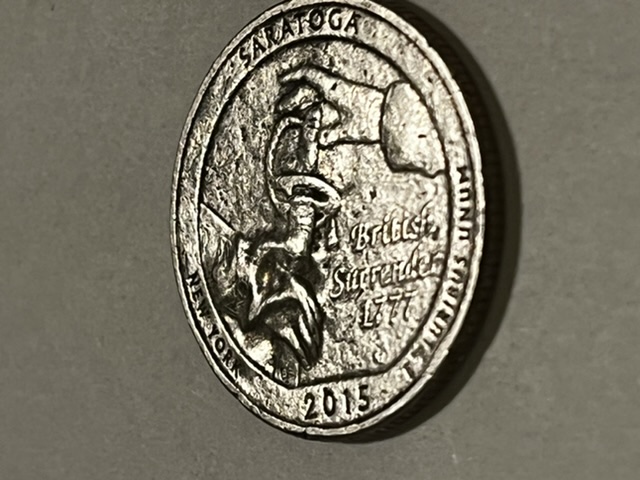
 to the CCF! It looks like this coin was damaged in a fire. The clad layer has separated and bubbled up from the copper core. The devices have soot and discoloration around the edges which is often seen with fire damaged coins. Not an error or collectable this time, just Post Mint Damage. PMD ANA ID: 3203813 - CONECA ID: N-5637 Clean a coin that may be worth collecting? Please DON'T! When in doubt, leave it dirty!! 
|
|
Pillar of the Community
Canada
3328 Posts |
 bad heat damage, if you would like to learn more about errors there is some great info in this site. Just type in errors in the search bar and you will be able to educate yourself in what to keep an eye out for. |
|
Moderator
United States
56855 Posts |
and I agree,fire damaged. John1  |
|
Moderator
United States
106051 Posts |
that heat could be the culprit in damaging this coin. |
|
Pillar of the Community
United States
1173 Posts |
to the Community. Heat damaged. |
|
Moderator
United States
195183 Posts |
to the Community! |
|
Bedrock of the Community
United States
10635 Posts |
head damaged post mint. no mint error, sorry.  to the CCF! |
|
Bedrock of the Community
United States
94367 Posts |
to the CCF! |
|
Pillar of the Community
United States
2295 Posts |
|
|
Bedrock of the Community
United States
62064 Posts |
|
|
Pillar of the Community
United States
7174 Posts |
to the CCF and |
|
New Member
 United States
2 Posts |
I know I'm new to the community and thank you for the welcome, but I'm not new to the melting of metals. If heat did this then there would be visible damage other the shown in the pictures, no warped areas, the letter engravings are not damaged other then following the protrusion " liberty engraving on heads side" as well as the " New York engraving on the tails side " are perfectly legible, again "Liberty" the R and Y follow the contour and are legible. If there is a way to localize the heat to produce this type of damage to opposite areas please point me in the direction to where I find this. Please remember photography is not my area so the pictures probably aren't positioned to where this is a visible feature to another
|
|
Bedrock of the Community
Canada
21873 Posts |
It doesn't really matter if it is heat damage, corrosion or anything else. The fact that it could not happen during the striking of the coin automatically makes it PMD. Damage is damage. |
|
Pillar of the Community
United States
5875 Posts |
Quote:
... If there is a way to localize the heat to produce this type of damage to opposite areas please point me in the direction to where I find this.... Butane or propane torch can localize the heat. (cigarette lighter or plumbers torch) Words of encouragement are one of the major food groups.
We need to consume them regularly to thrive and grow.
|
|
Pillar of the Community
United States
586 Posts |
The coin is clad, which means there is a thin core of copper sandwiched between two even thinner layers of a copper nickel alloy.
Inevitably, during the cladding process, a little bit of gas is trapped in between they layers.
When heat is applied, the trapped gas expands and has to go somewhere, so the bubbles you see are produced. Because the gas expands at a lower temperature than the the metals, you often won't see heat damage to the metals.
However, because the outer clad layer is so much thinner than the center core, it frequently softens in the heat, allowing the expanding gas bubbles to cause the distortions you are seeing.
As to it being localized, that can depend on the heat source. A soldering iron or a wood burning tool or even a small hot coal in a camp fire can cause a localized temperature increase that produces these bubbles.
Put a blow torch to a solid, non clad coin, such as a nickel or a pre 1982 cent and you'll see an entirely different effect. Instead of bubbles forming, because there's no trapped gas, you'll see waves on the coin's surface, caused by the melting metal interacting with the heat source.
Different coin construction results in different responses to heat application.
Edited by HGK3
07/16/2022 10:08 am
|
| |
Replies: 15 / Views: 1,287 |
|









 Posted 07/12/2022 03:22 am


