| Author |
 Replies: 11 / Views: 1,483 Replies: 11 / Views: 1,483 |
|
|
Valued Member
Canada
200 Posts |
Edited by recollector
07/22/2022 05:31 am
|
|
|
|
Pillar of the Community
United States
3005 Posts |
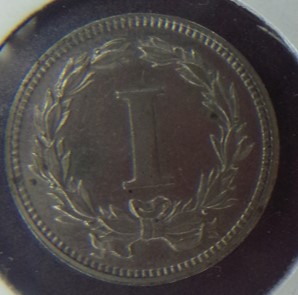
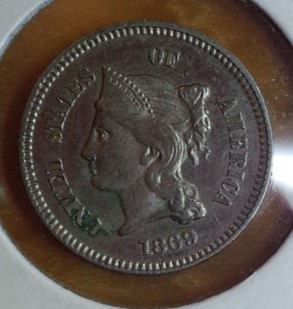
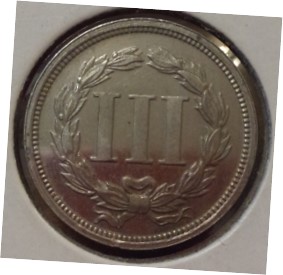
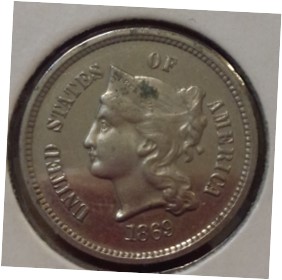
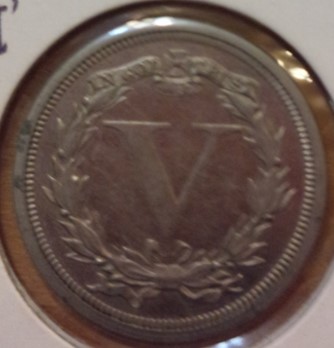
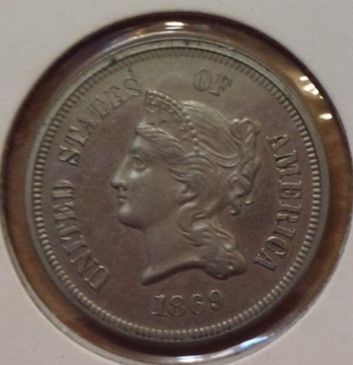
Well, these look like knock-offs of our Three Cent pieces from 1869, could have been used as play money somehow, kinda strange trio.  |
|
Bedrock of the Community
Canada
21885 Posts |
Non are genuine coins, they are all some sort of a fantasy coin.
Example is the one cent, in 1869 is should be an Indian Head.
|
|
Pillar of the Community
United States
797 Posts |
I agree, all counterfeit.
|
|
Moderator
 United States
34549 Posts |
Could be spiel munze rather than counterfeits.
"If you climb a good tree, you get a push."
-----Ghanaian proverb
"The danger we all now face is distinguishing between what is authentic and what is performed."
-----King Adz
|
|
Pillar of the Community
United States
2760 Posts |
|
|
Pillar of the Community
United States
2760 Posts |
|
|
Pillar of the Community
United States
5825 Posts |
Like @robbudo said, they are either patterns or copies of patterns.
Authentication would be required.
If they are REAL patterns then their values are in excess of $1000 each.
The first looks like J-666 or J-667.
The second looks like J-676 or J-677.
The third looks like J-684 or J-685.
The "J" stands for J. Hewett Judd, the person who created the cataloging and numbering system.
The catalog is titled, "United States Pattern Coins/Complete Source for History, Rarity and, Values" by J. Hewett Judd.
|
|
Bedrock of the Community
United States
94367 Posts |
Pics aren't very good, but they sure look realistic.
|
|
Pillar of the Community
United States
2760 Posts |
On the plus side, you probably just have to pay for certification for ONE of them, because if one is real, they're probably all real, and if one is fake, they're all fakes.
However, there are die markers on the real ones, and if you provide close ups of the coins, we can give better advice.
|
|
Pillar of the Community
United States
3798 Posts |
I about spit my coffee when I opened this topic; I sure wasn't expecting to see patterns when I did!
While I don't know the key markers to look for on these specific coins to try and determine authenticity, there are folks here that do. As robbudo mentioned, closer and clearer images would help. Also, please remove the coins from the 2x2 holder before taking the pics.
Member of SPMC, FCCB, ANA and ANS. My U.S. Classic Commemorative Complete Set: https://www.NGCcoin.com/registry/co...sets/278741/ |
|
Pillar of the Community
United States
3848 Posts |
I don't see any direct evidence that would lead me to believe that these are not genuine. The damage and spotting could be a clue to the age of these coins. Quote:
On the plus side, you probably just have to pay for certification for ONE of them, because if one is real, they're probably all real, and if one is fake, they're all fakes. I generally disagree with this statement. If you are going to send them in, send them all in. It won't be worth assuming the coins are genuine. There are cheaper services, like ANACS, that can be used to certify the coins. Just make sure the coins are in a state so they won't be bodybagged. No active residue that would further damage the coin once it is in a holder. Suffering from bust half fever. Want to learn how to attribute early half dollars by die variety? Click Here: http://goccf.com/t/434955Shoot me a PM if you are looking to sell bust halves. |
| |
Replies: 11 / Views: 1,483 |
|









 Posted 07/22/2022 06:14 am





