

 Posted 08/02/2022 02:30 am


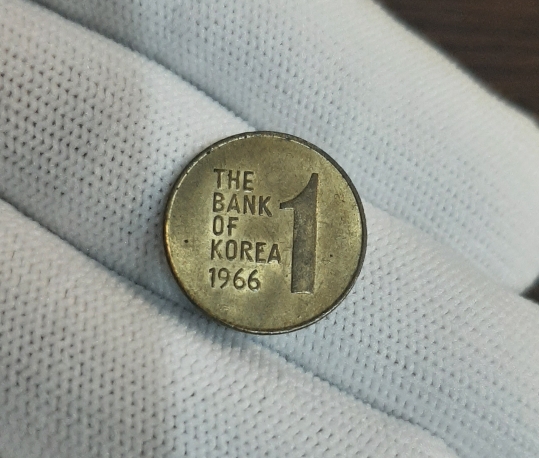
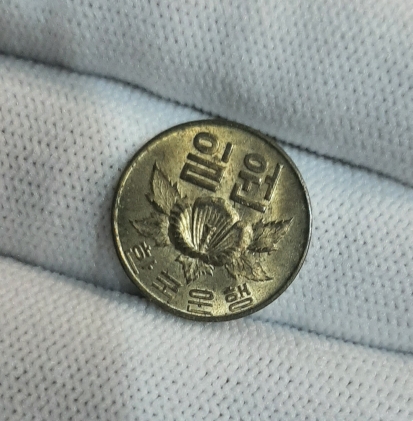
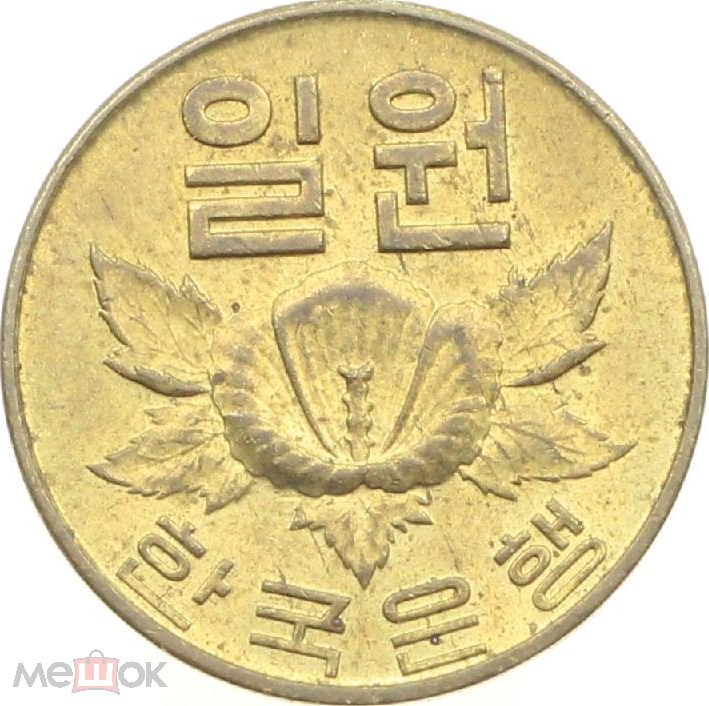
Very Fine, the rose is very worn.
I remember when I was in South Korea (2002/3), I would occasionally get the 10, 50 and 100 won coins of this old series in change (Used 1966 to 1982), but never 5 or 1 won coins.
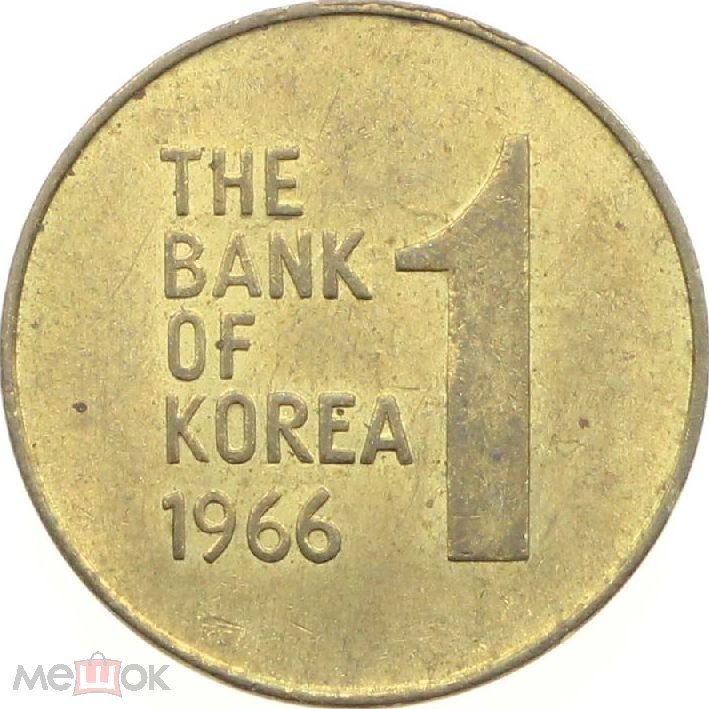
Even in 1966, its buying power was maybe 1 or 2 cents. It is an interesting coin, but would only be worth about 10 cents and a "starter coin".
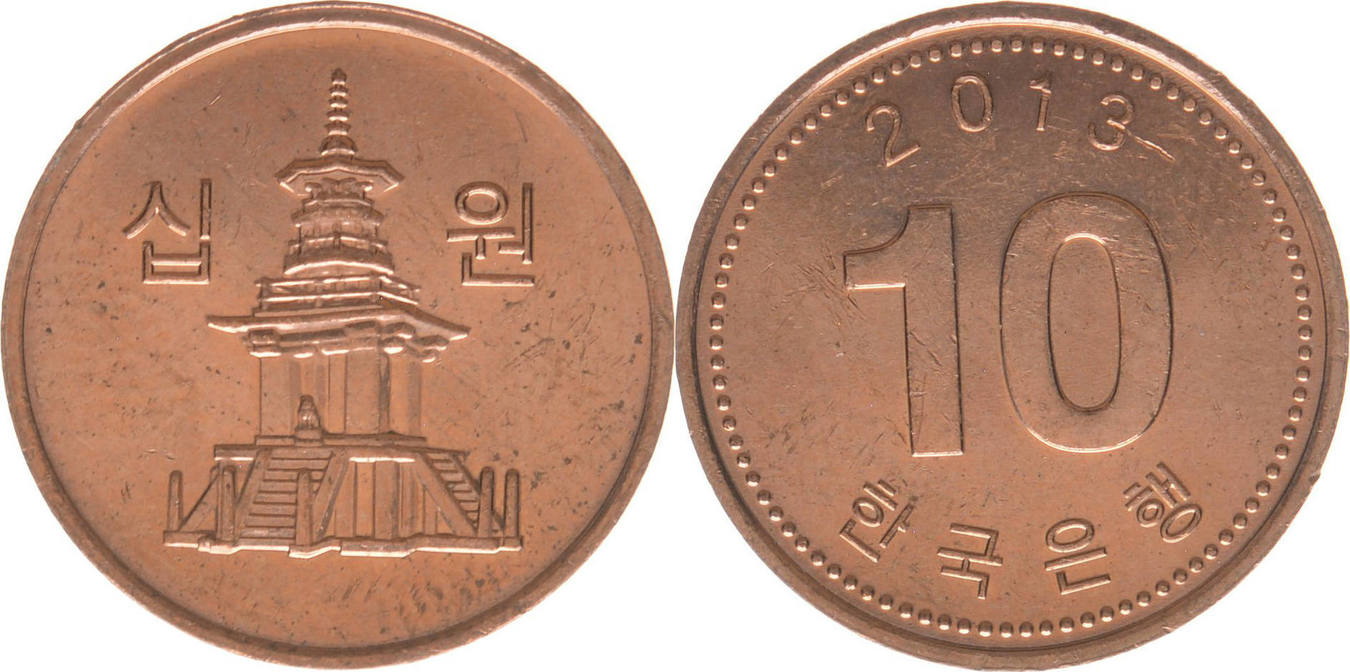
The design shows Pulguksa an ancient temple from the Shilla era (600AD) at the World Heritage site of Kyongju near Daegu in the southern part of the country. I have been there and its beautiful, especially around cherry blossom time (Early April).
The Hangeul translates to "il Won" and Han Guk Dae Han (1 won - Republic of Korea) Hanguk = Korea, Dae Han (Republic or Great)
The other side shows the Mugunghwa flower or Rose of Sharon, this is the national flower of South Korea, like the 5 yen of Japan,
the 1 won coins of South Korea are seen as luckly talismans by some Korean people.
I remember when I was in South Korea (2002/3), I would occasionally get the 10, 50 and 100 won coins of this old series in change (Used 1966 to 1982), but never 5 or 1 won coins.
Even in 1966, its buying power was maybe 1 or 2 cents. It is an interesting coin, but would only be worth about 10 cents and a "starter coin".
The design shows Pulguksa an ancient temple from the Shilla era (600AD) at the World Heritage site of Kyongju near Daegu in the southern part of the country. I have been there and its beautiful, especially around cherry blossom time (Early April).
The Hangeul translates to "il Won" and Han Guk Dae Han (1 won - Republic of Korea) Hanguk = Korea, Dae Han (Republic or Great)
The other side shows the Mugunghwa flower or Rose of Sharon, this is the national flower of South Korea, like the 5 yen of Japan,
the 1 won coins of South Korea are seen as luckly talismans by some Korean people.
Edited by Princetane
08/02/2022 02:35 am
08/02/2022 02:35 am