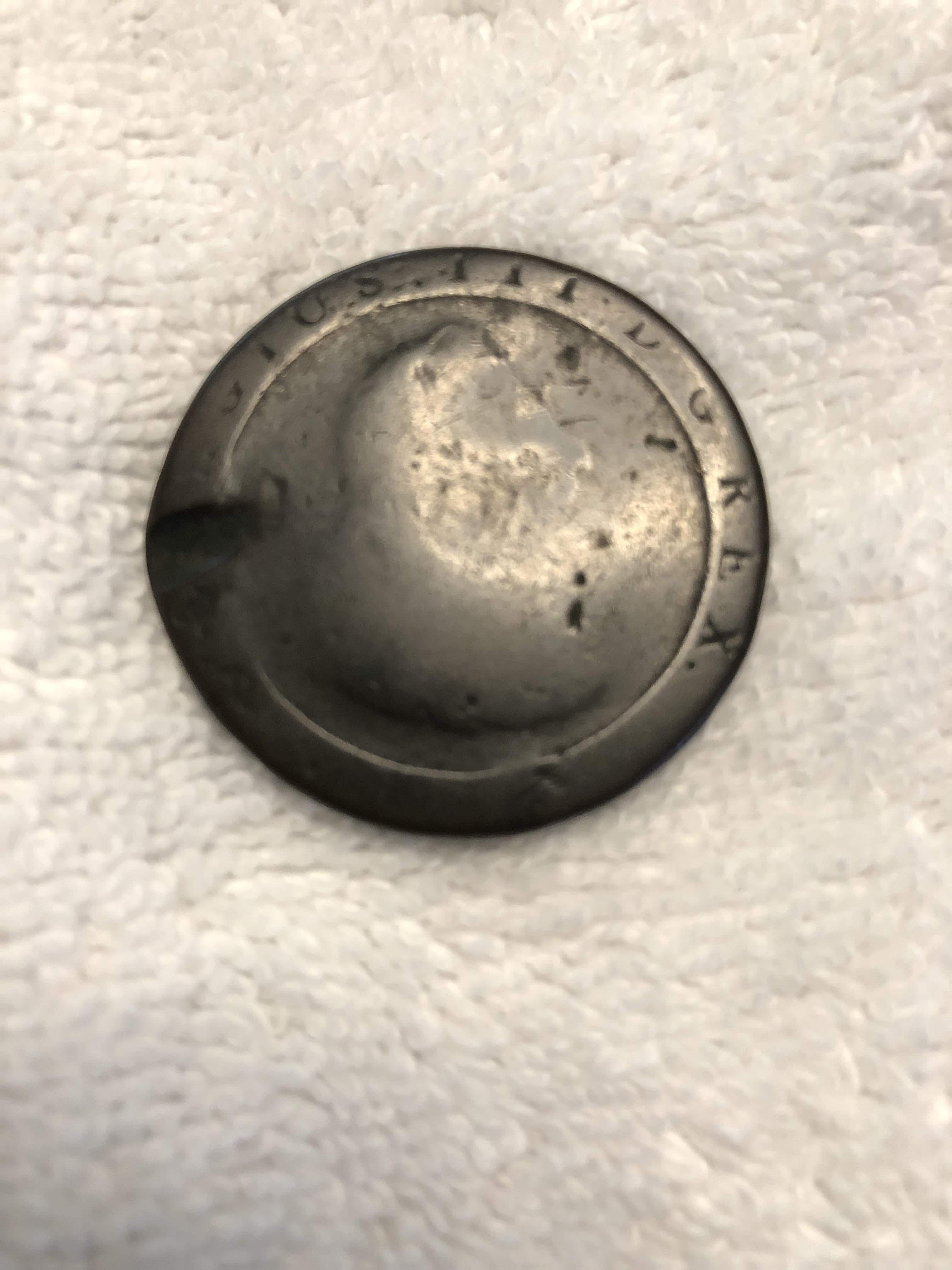
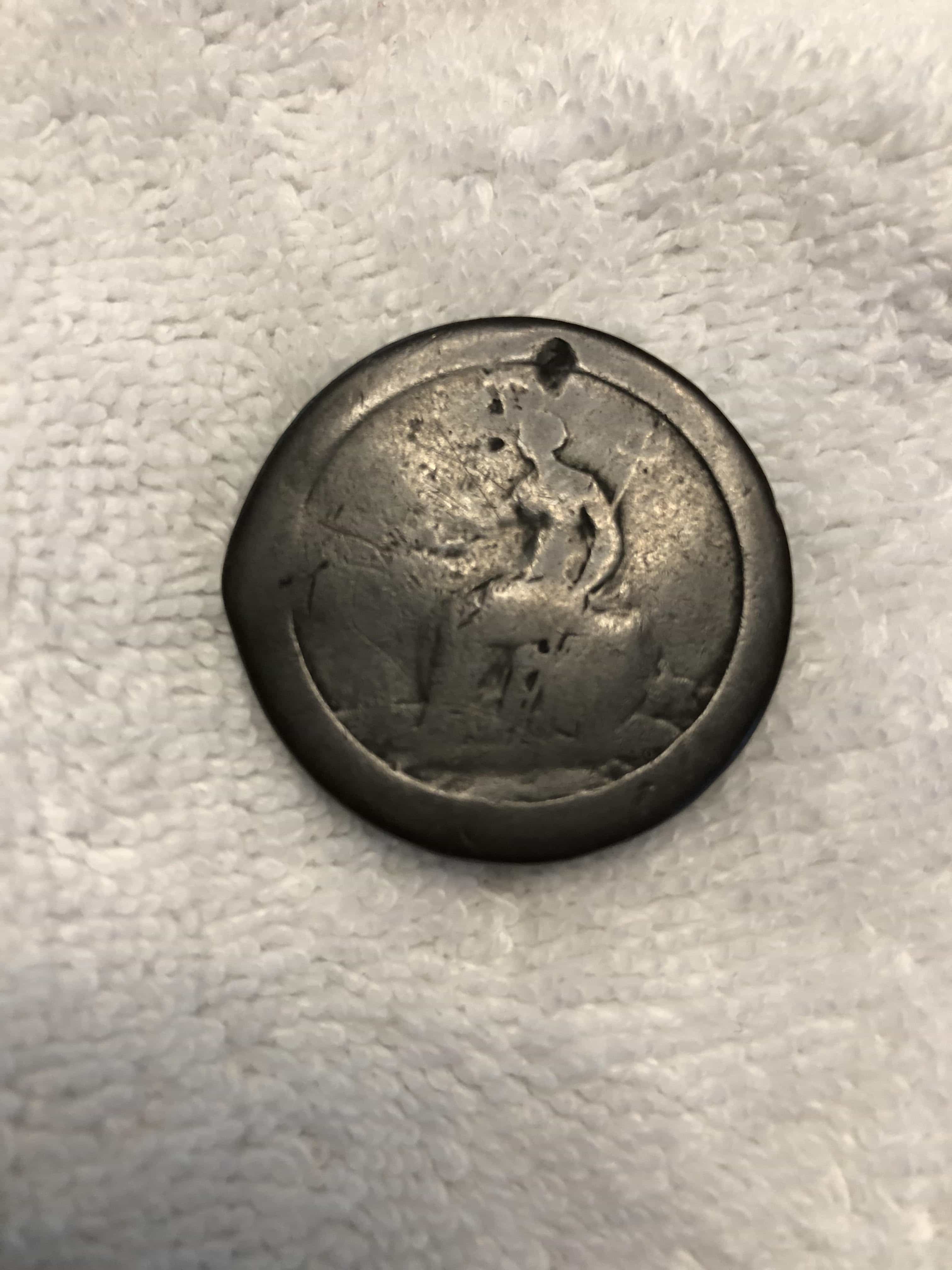
As they were issued after the Revolution, and indeed after the 1787 treaty and 1792 Coinage Act, they are not regarded as "colonial coins used in the US". America had already moved away from pounds, shillings and pence and onto the dollar standard by then. "Foreign coins" were still widely used in the US up until the 1830s, but these were mainly gold and silver coins; foreign bronze coins were rarely needed or used.
As for the denomination, the usual markers that tell the difference between the penny and twopence coins are worn away on this example, so the only way to tell is by weight. Does it weigh about 1 ounce, or about 2 ounces? They were originally struck to 1 avoirdupois ounce (not troy ounce) per penny. They did make handy standard weights, as Princetane noted; shopkeepers would often use them as shop weights. I suspect any cartwheels that made it to the US would end up being used as shop weights, rather than as money.
Don't say "infinitely" when you mean "very"; otherwise, you'll have no word left when you want to talk about something really infinite. - C. S. Lewis










 Posted 08/06/2022 2:24 pm


