PCGS - It's often the case that the abundance of something is not appreciated until it is no longer abundant. This is especially true with nature and its wildlife. The elephants of Sri Lanka or Elephas maximus maximus represent such a story of an animal in abundance that saw its population decimated. Today, people work to conserve and restore its population.
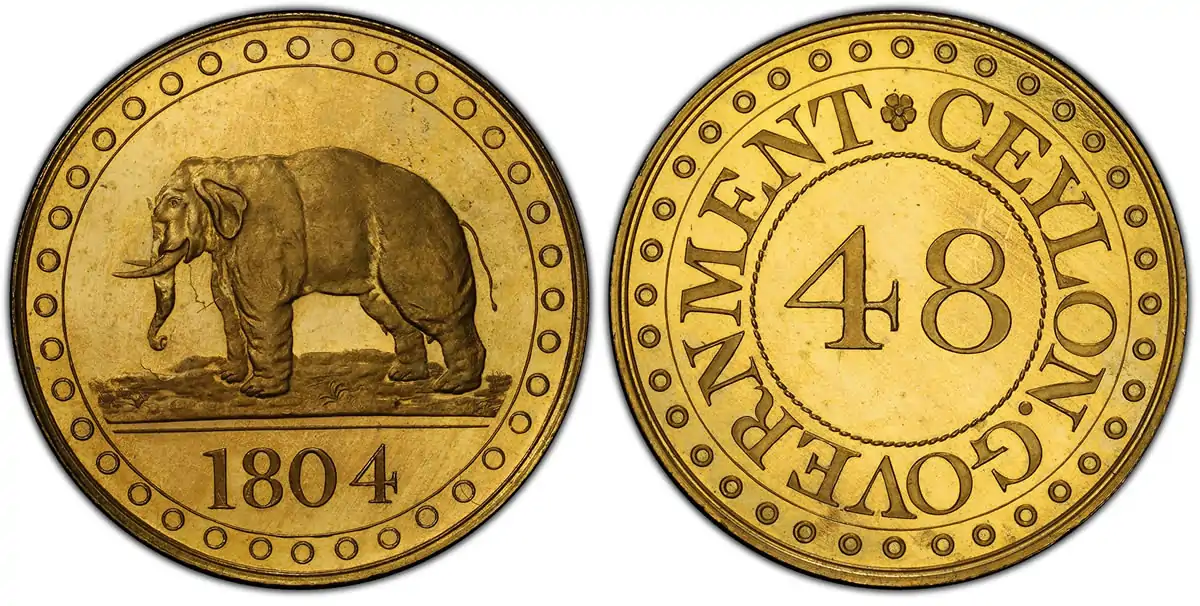 Ceylon 1804 1/48R Gilt Proof, PCGS PR64
The nation of Sri Lanka, formerly known as Ceylon, once had elephant populations covering more than half of the entire island. With such a large population of elephants on the island, they had major significance to the culture and people of Ceylon. This included both mythology and religious traditions with elephants taking part in processions, festivals, and ceremonies. These likely stemmed from the importance of elephants within Ceylon for domestication and training for uses such as transportation, labor, and warfare. The pachyderm also represented economic significance in the ivory trade, which is now banned and recognized as one of the many reasons elephant populations plummeted.
Sri Lanka's colonial past goes back to the Portuguese and Dutch, but it wasn't until the British colonial reign began that the land occupied by elephant colonies was looked at for economic gain in the development of tea and coffee cultivation, which led the elephant population to plummet. Over 6,000 documented elephant captures or deaths occurred between 1829 and 1855.
Ceylonese coinage produced by the British government largely featured the elephant. Using the rixdollar monetary system in which 4 duit equaled 1 stiver, and 48 stivers equaled 1 rixdollar, coins were produced in numerous denominations. There are two distinct types of coins from during this time: those made in Ceylon and pieces struck in England. The Birmingham Mint issues began in 1794 with patterns for the 1/48-rupee coins for the United East India Company. In 1802 the Birmingham Mint produced circulation-issue coins for Ceylon. These coins carry the inscription "GOVERNMENT CEYLON" along with the denomination on one side and an elephant above the date on the other. Issued in denominations of 1/192, 1/96, and 1/48 rixdollar, they entered circulation. Along with the circulation coinage, collector coinage was also produced in the form of proofs with examples being both bronzed and gilt.
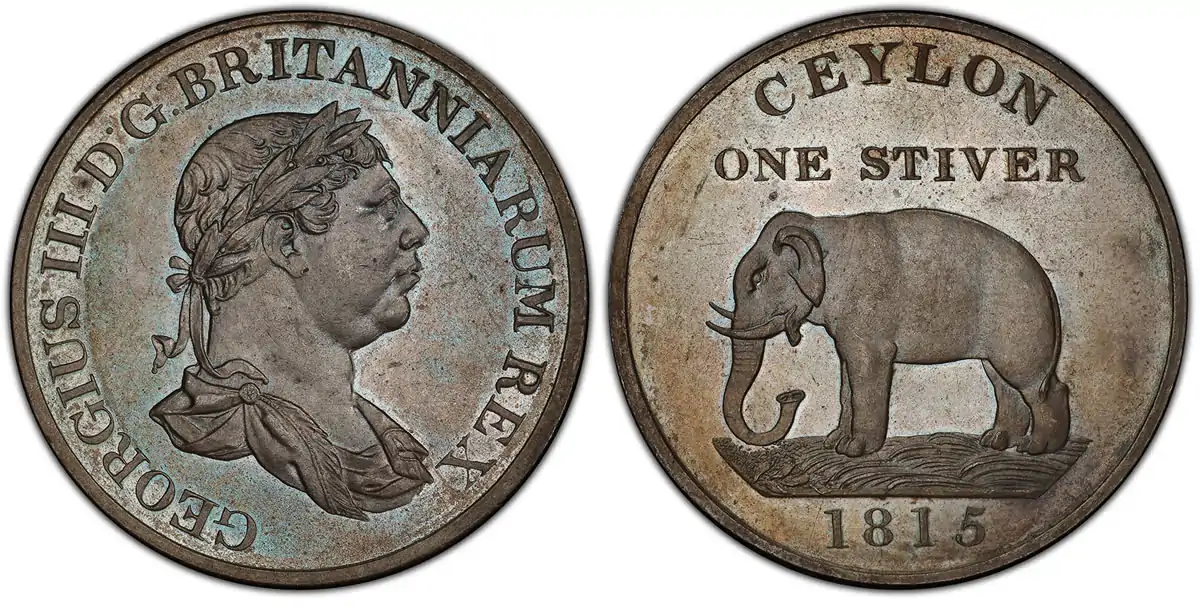 Ceylon 1815 Stiver, PCGS PR63BN
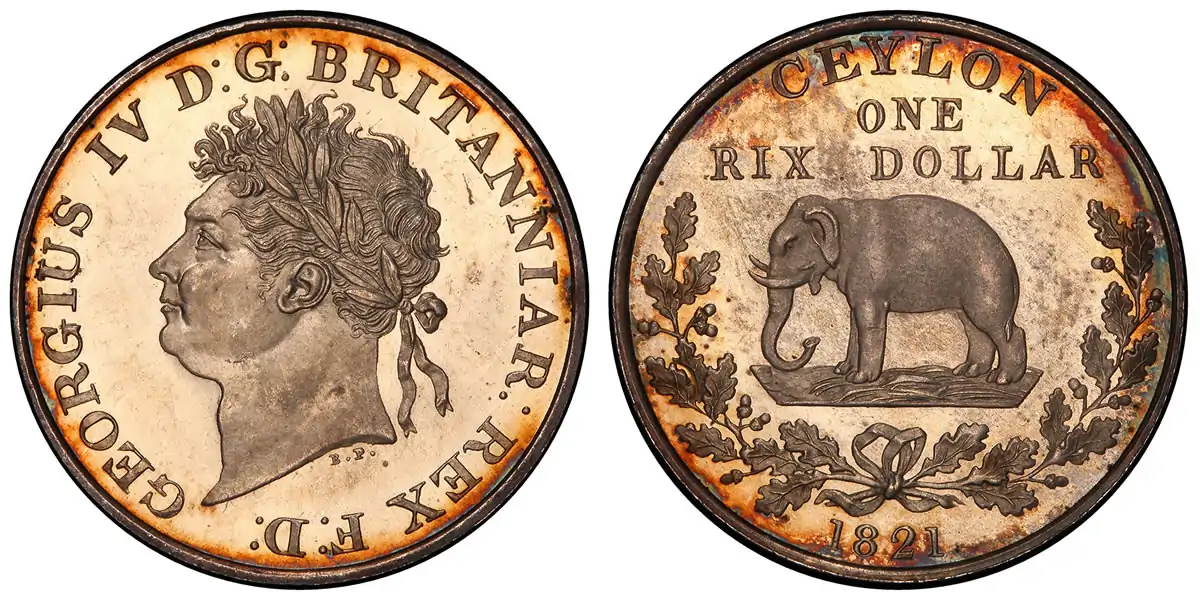 Ceylon 1821 Rixdollar Proof, PCGS PR64
In 1815,
The Royal Mint struck two circulation coins for Ceylon. These feature an obverse of George III and the reverse is anchored by an elephant. Issued in the denominations of 1 and 2 stiver, both coins were composed of copper. Proofs were again produced of each denomination. A pattern of a silver rixdollar was produced in the same year but never issued for circulation. In 1821, a silver rixdollar coin was finally produced with a mintage of 400,000 coins and released into circulation with an updated design on both sides.
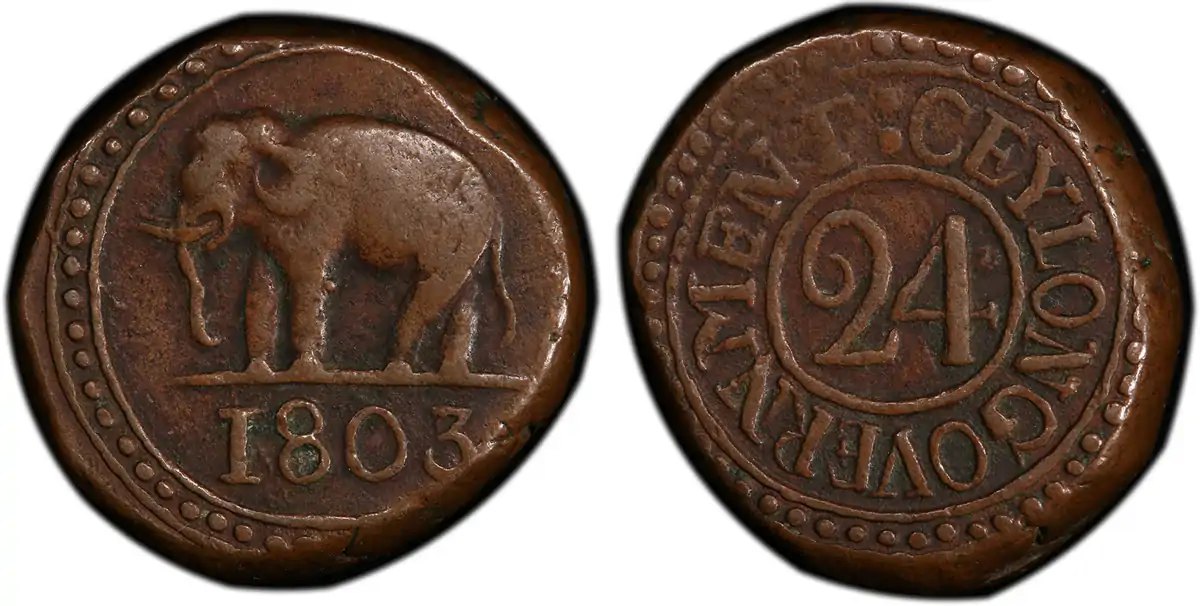 Ceylon 1803 1/24R, PCGS XF40
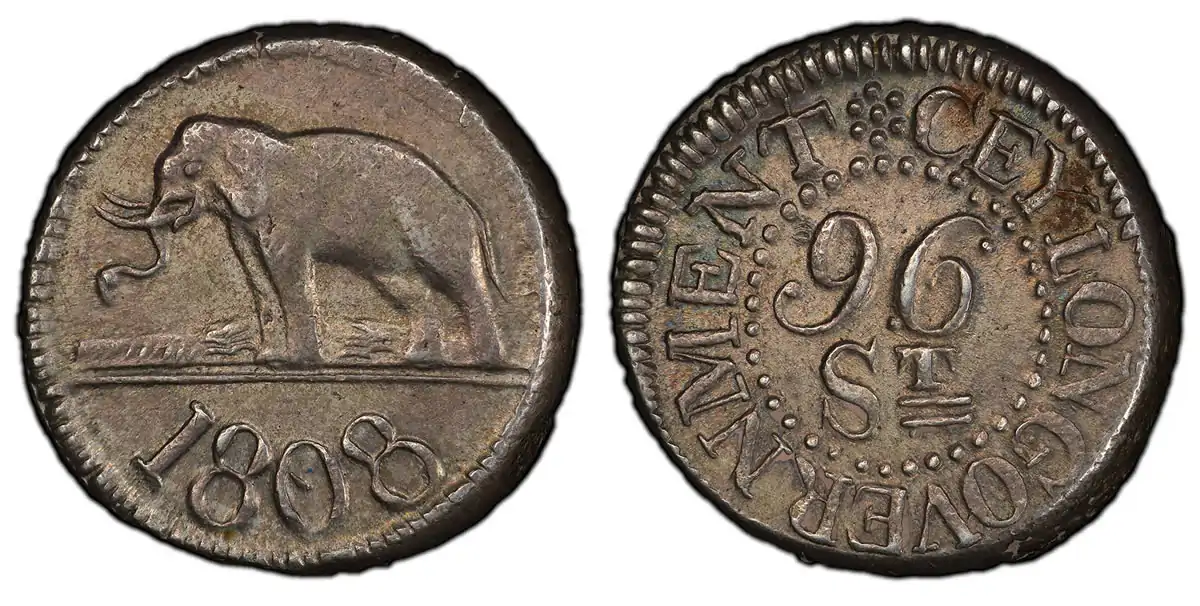 Ceylon 1808 96 St, PCGS AU53
Along with the coinage produced in England, hammered coinage was produced domestically as well. These coins, while still minted under British Colonial rule, were a copy of the design seen on the piece produced at the Birmingham Mint again featuring "GOVERNMENT CEYLON" encircling the denomination on one side and an elephant above the date on the other. These dies, however, were hand-produced and hand-hammered, creating variations from piece to piece. Denominations of 1/48, 1/24, and 1/12 rixdollar were produced in weights of 9, 18, and 36 grams of copper, and were produced between 1801 and 1816, depending on the denomination. Silver denominations of 24, 48, and 96 stivers were produced between 1803 and 1809.
Collecting these elephant coins from Ceylon has always been a challenge. The machine-struck examples from England are more readily available but often more expensive especially in higher grades due to collector demand. The hammered coins are a challenge as they do not seem to be frequently encountered in the United States from personal experience and that are often lacking in condition and quality. Yet when holding a 1/12 rixdollar or 96 stiver in hand they are impressive coins for their size and weight and do not last long in dealers' inventory for that reason.
It seems darkly ironic that the coinage of Ceylon beautifully depicts the elephants of the nation while at the same time, the British government was culling the population. However, there is another phenomenon in which the next generations try to preserve what the previous generations have destroyed. Today, many conservation groups work exceptionally hard to protect the elephants of Sri Lanka. While this can be difficult with human-caused deaths by elephants, poaching, and habitat loss, the government today has created elephant reserves and national parks to protect and hopefully increase the population of elephants. One can look at the coinage of this time and glimpse back to when the land was full of elephants and see how the symbol of the country was the elephant. At points in history, the population of elephants was fewer than 2,000. Today, the population is over 7,500 and the efforts for their protection and survival continue.
 Check out Ceylon's Elephant Coins on ebay
.







 Posted 08/15/2023 11:53 am





