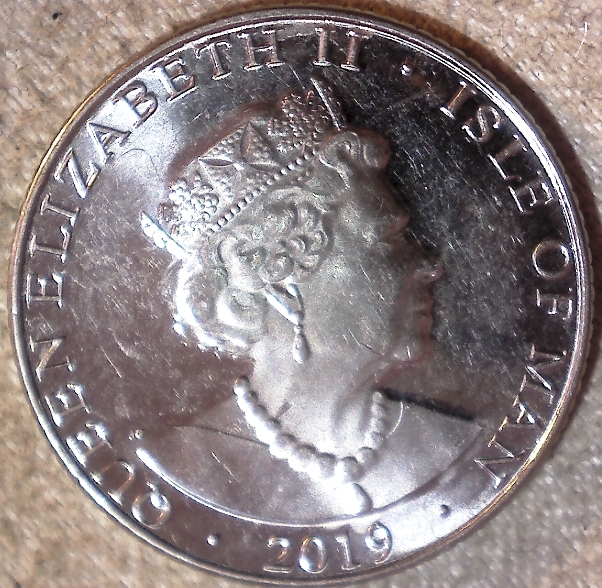
It is a genetic mutation that makes the Manx a beloved cat from the small British island of the Isle of Man a unique breed. This naturally occurring genetic trait which causes cats to be sometimes born without a tail can spontaneously arise in various populations, however with the cat's isolation on the island, this trait continued to be passed on, and it became a definition of a new breed of cat - the Manx.
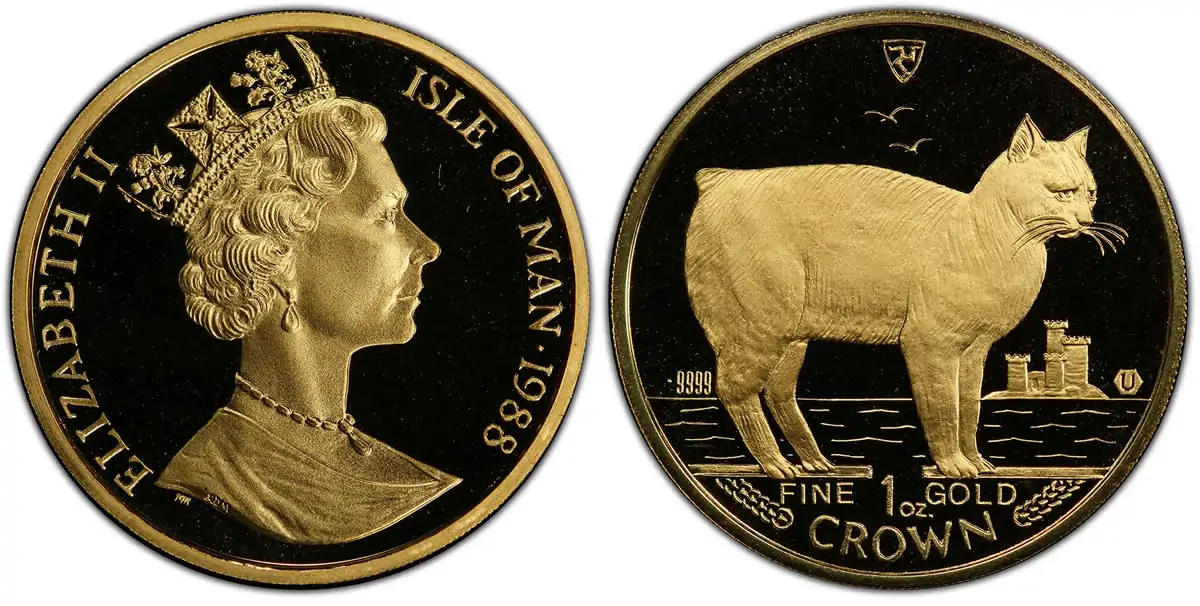 Isle of Man 1988 Gold Crown Manx Cat, PCGS MS69
This Manx tailless cat breed can come in three varieties: "rumpy" (no tail), a "rumpy riser" (a small knob), and a "stumpy" (a small tail). Besides the lack of tail, the Manx cats are defined with a robust build and are excellent hunters, and are known to be a playful and affectionate breed of cat. The Manx can be traced as early as the 1700s in writings, but it was the development and popularity of cat shows and exhibitions that made the breed popular in the 1800s. The uniqueness of not having a tail turned into legends from stories, as the cat was the last animal to arrive on Noah's Ark and lost its tail by getting caught in the closing of the door of the ark. Other origin stories suggest the cats came from a Spanish Armada shipwreck and the cats swimming to the Isle of Man came from that ship.
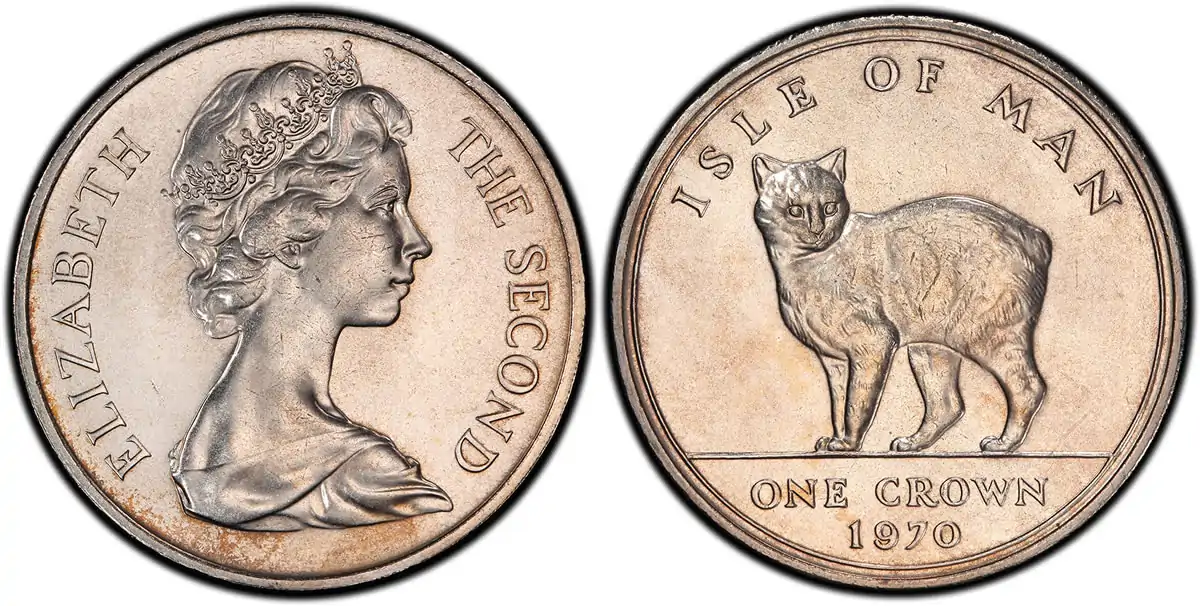 Isle of Man 1970 Crown Manx Cat, PCGS MS65
With the rise of coinage being struck for collectors, the Isle of Man was one such location that would fill the demand for this numismatic market. The popularity of this unique cat breed and the fact it was traced to originate on the island made a 1970 Isle of Man crown a perfect canvas for the coin, featuring the cat on the reverse, opposite an obverse portrait of Queen Elizabeth II.
The coin was struck in copper-nickel and silver, and it became an instant hit with its cat-themed design. With the Pobjoy Mint taking over production for the Isle of Man coinage line, the Manx was once again featured on a 25 Pence (crown) coin in 1975. The cat coins did well enough to inspire the Pobjoy Mint to launch a series of coins in 1988 featuring cats.
This series began with the Manx cat in 1988 and was produced as a crown in copper-nickel, silver, and gold with fractional gold issues also produced in the size of 1 ounce, 1/2 ounce, 1/5 ounce, 1/10 ounce, and 1/25 ounce. The coin gained instant popularity as a premium collectible coin and in sequential years other breeds followed in a series now called the Isle of Man Cat Coins. In 2012, the Manx cat would once again be featured in this series but now as 25th-anniversary issue.
The Isle of Man also offered decimal coinage, and with this, the penny denomination also featured a reverse design of the Manx cat. These penny coins were struck from 1980 until 1983 and were made in bronze, silver, gold, and platinum.
The cat coins of the Isle of Man are still very popular. The coins straight from their mint packaging often have condition issues, along with the fact that many found their way into jewelry or were mishandled by presumably non-numismatic owners. Finding superb-quality pieces can be a challenge. Yet, putting a set together can be fun - and it all started with the Manx and its tailless trait.
 Isle of Man 2012 Silver Crown Manx Cat, PCGS PR66DCAM
 Check out Isle of Man Cat Coins on ebay
.










 Posted 08/15/2023 1:04 pm