I'm still warpping my head around the MD VS DD and how to tell the difference. so far everything ive found had been MD and I think I'm beginning to understand what to look for. people say that in older examples when the "line is blurred" you look for extra thickness. so ive taken an example photo. in this image I have two 1995 quarters. the thop quarter in the "tail" of the 5 of 1995, it has what id think is the "extra thickness" of DD. (im not saying I think this is a DDO.) if the extra thickness pictured went all the way to the tip and had "double serifs" aswell, would that be more likely to be a DDO? I've been looking at MD and thinking this is it, but every time the MD was about half the "depth" of the actual strike. in this example, the thickness is about the same depth but it doesn't seem to be strong enough throughout the whole piece to be considered a DD. am I one the right path or just losing it? normal "thinner" 1995 on the below quarter. again, I'm focusing on the "5" and NOT saying this is a DDO but a close example (closer than your average MD) any input is always appreciated. I'm just trying to understand the difference. the last thing I want is to start selling what I think are DD's and end up disappointing.
@dcj, I'm glad you are looking to hone your identification skills. The number five to me looks like it has taken a couple hits and this damage down on the bottom part looks a little like doubling.
"If you climb a good tree, you get a push." -----Ghanaian proverb
"The danger we all now face is distinguishing between what is authentic and what is performed." -----King Adz
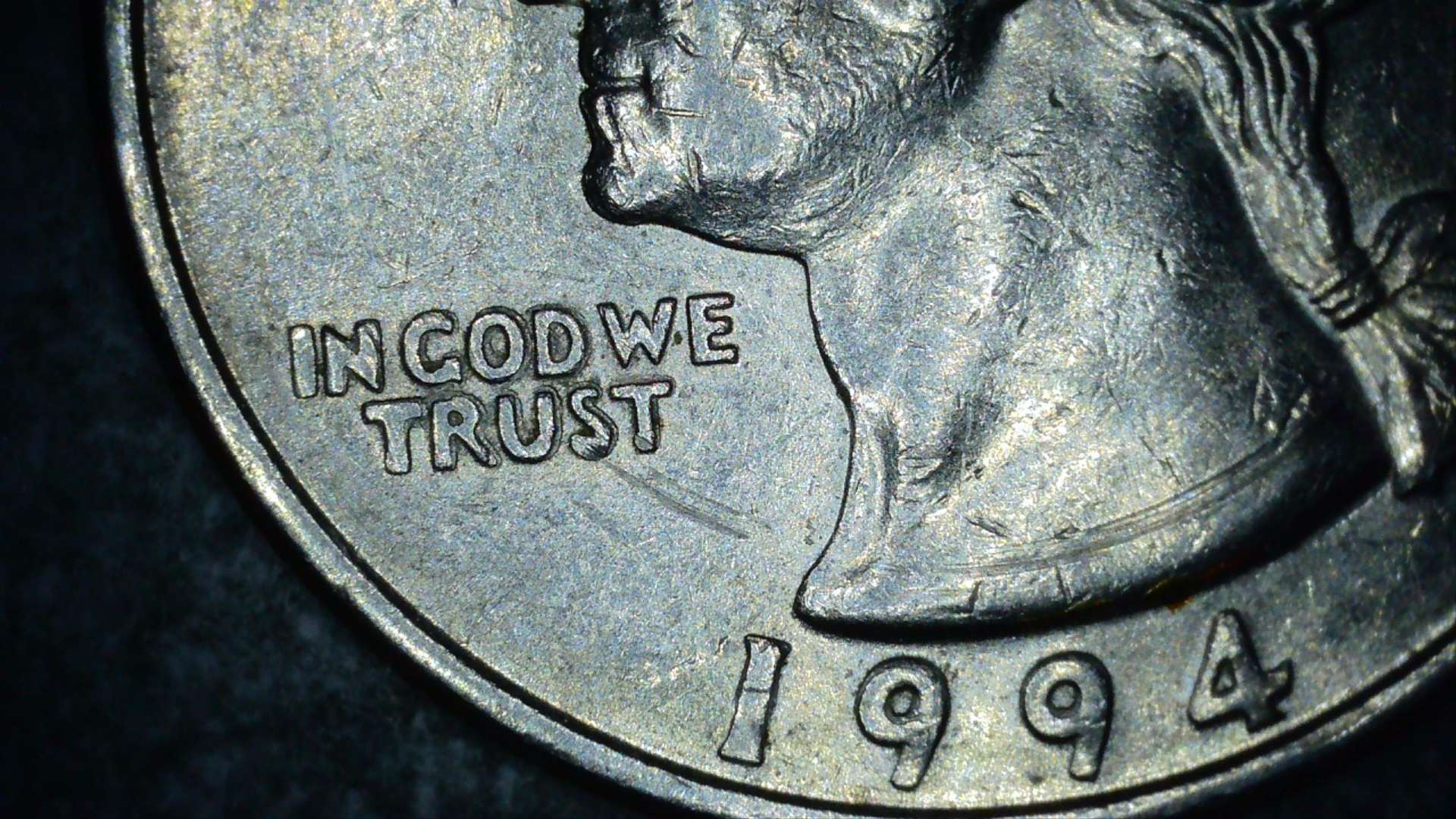
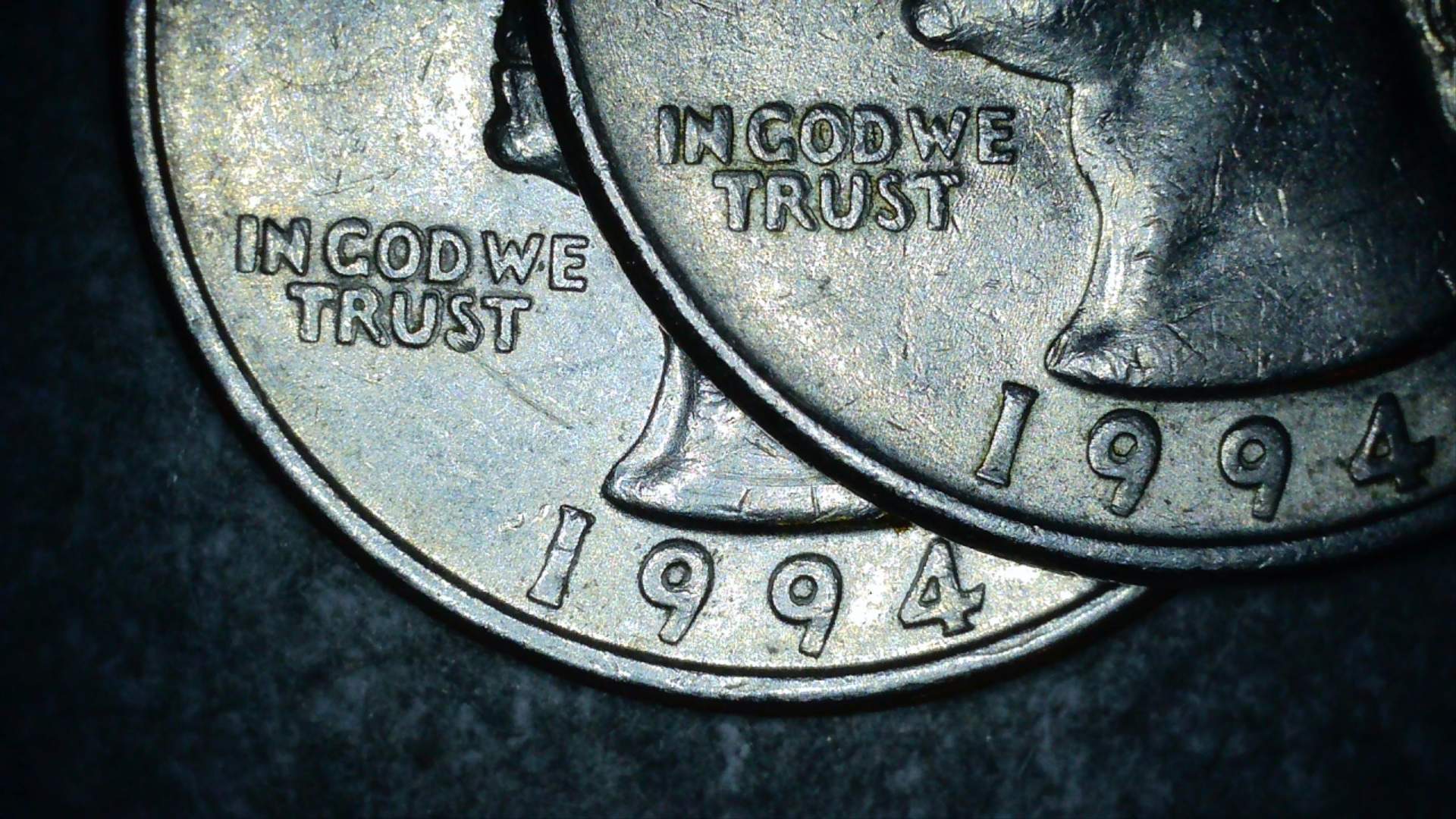
so that would be a closer axample than say, the classic MD on "IGWT" in this 1994? because when I began, i'd take one glance at this, increase blood pressure by 10psi and be like "AWH MAH GOT! lOoK aT ThaT DoUbLiNg! now, my intuition tells me the planchet slipped to the east during the strike. but still, the MD on "1994" is in the other direction... now I'm at a loss... is the date a second strike?
First I would pick up a guide, currently the best value for a first book is Strike it Rich with Pocket change 5th edition to help you focus in on how to identify some of the coins to look for while searching, that way your not searching everything and just looking for known specific ones to start. There are free online sites such as doubleddie.com if you find something that isn't in the book as you get better or to view more photos of something you found (or come to this site and post).
Next as far as doubled dies, start with the obvious ones, for example This is a 1969-S Lincoln CentDDO to look for. These will be in the book. Notice the doubling is found on all the numbers and the letters on the front of the coin and not just the date. Its quite striking so not too hard to identify.
There is also Machine Doubling found on a 1969-S. The date and S appear to be flat on the coin surface. An actual 1969S DDO does not look flat. Both the date and S are raised and rounded and all the letters and numbers are also doubled, not just the date. This type of doubling occurs when the die strikes a planchet. If the die is not properly seated, it can move slightly or bounce during the moment of striking, creating a flat, shelf-like doubling. This effect will be different on all coins struck, so it is technically not a variety, but rather more of a striking error.
Machine and Mechanical Doubling looks flat and shelf-like, as seen in this video:
i do have Strike it rich and the cherry picker's guide fifth edition volume II but most of those examples I can't really spot the differene between what I'm seeing (MD) and the DD's pictured. granted, I have yet to find an exact variety from either of those or variety vista that I can reference in person. this is far more difficult than I imagined. but I'm sure once I find that first real DD i'll be extatic and I wont stop until I do!
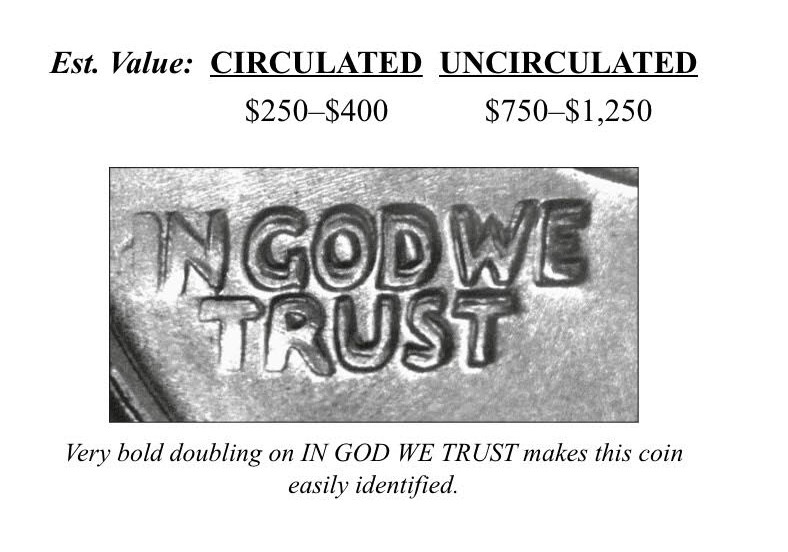
No worries, if you have the guides your far ahead of most people because you can look up the coin and see if such a variety might exist to start for that coin. Yes there are others besides in those guides you will find online but for awhile its best to first focus on whats in the guides which contain a nice mix of coins worthwhile to search out and might keep you at first from looking for obscure varieties that have little value which are also in the online guides outside the reference books. This will prevent frustration looking for all kinds of things that might not even be a recognized variety or doubled die. In your example is this 1994 in the strike it rich as a doubled die, if not that would have kept you from wasting time (although I understand you are trying to learn). The 1965 is in the guide if you had a 1965 you could try to match it, and further its also in the online guides with extra photos https://www.doubleddie.com/980499.html while the 1994 is not and flat in the doubling to start. The guide says to have a 1965 and look at the in god we trust for a sign of doubling that matches what the photos show.
Once you have that specific potential coin then you will use the photos in the guide and online sites can add to that such as the websites and PCGS price guide for certain varieties which have photos of the coins. You are also welcome to come post when you think you found something and many here will respond.
in the time of this query, I've already found another exact example of this 1994 MD and that tells me this is nothing special. but would that mean this is a variety although likely worthless?
Correct, the Machine Doubling is flat and has no added value normally for learning. And as mentioned its not in the guide to look for. There are some exceptions such as the 1955 and 1969-s that still sell for low amounts despite being Machine Doubling.
Doubled dies have doubling on the die itself that will strike the coin image, that is why its called a "doubled die". In the years 1953-1957, the mint had a habit of keeping the Lincoln Cent dies in use too long trying to increase the life of the Lincoln Cent dies and when the dies wore, it can create what is called " Die Deterioration Doubling" like what you see on the 1955 poorman's doubled die and those other dates. This type of die wear doubling is very common, serious error collectors view this as a type of damage to the coin and were considered generally worthless, however certain dates like the 1955 have also become popular, possibly due to only having something like 15,000 of the true popular doubled die and its high cost to obtain, helping to fill albums that have a slot for the 1955 doubled die. The only problem is when people might sell one of them as a true doubled die and a buyer pays a much higher premium which would be far beyond its true value range if listed accurately.
Also note on the Variety Vista listings, there are no DDO's listed on the Business strike coins: http://www.varietyvista.com/09b%20W...Listings.htm The only ones listed for the decade are only on the 'S' mint coins. http://www.varietyvista.com/09b%20W...Listings.htm Nothing listed post 1983 on the reverses for DDR's from all three mints. Pretty much duds during the 1990's quarters. The 1999 start with the States quarters are showing more DDO's and DDR's: http://www.varietyvista.com/09c%20W...Listings.htm Note which ones to look for. (Wexler probably will list a lot more to see on his site) http://www.varietyvista.com/09c%20W...Listings.htm Several States have a lot of listings on the Reverses. Take a view of these so you will know the new locations of where the Doubled will be found. (The start of the Single squeeze dies on DDO and DDR's. (Know what to look for and where to find the doubled dies)
Disclaimer: While a tremendous amount of effort goes into ensuring the accuracy of the information contained in this site, Coin Community assumes no liability for errors. Copyright 2005 - 2026 Coin Community Family- all rights reserved worldwide. Use of any images or content on this website without prior written permission of Coin Community or the original lender is strictly prohibited. Contact Us | Advertise Here | Privacy Policy / Terms of Use










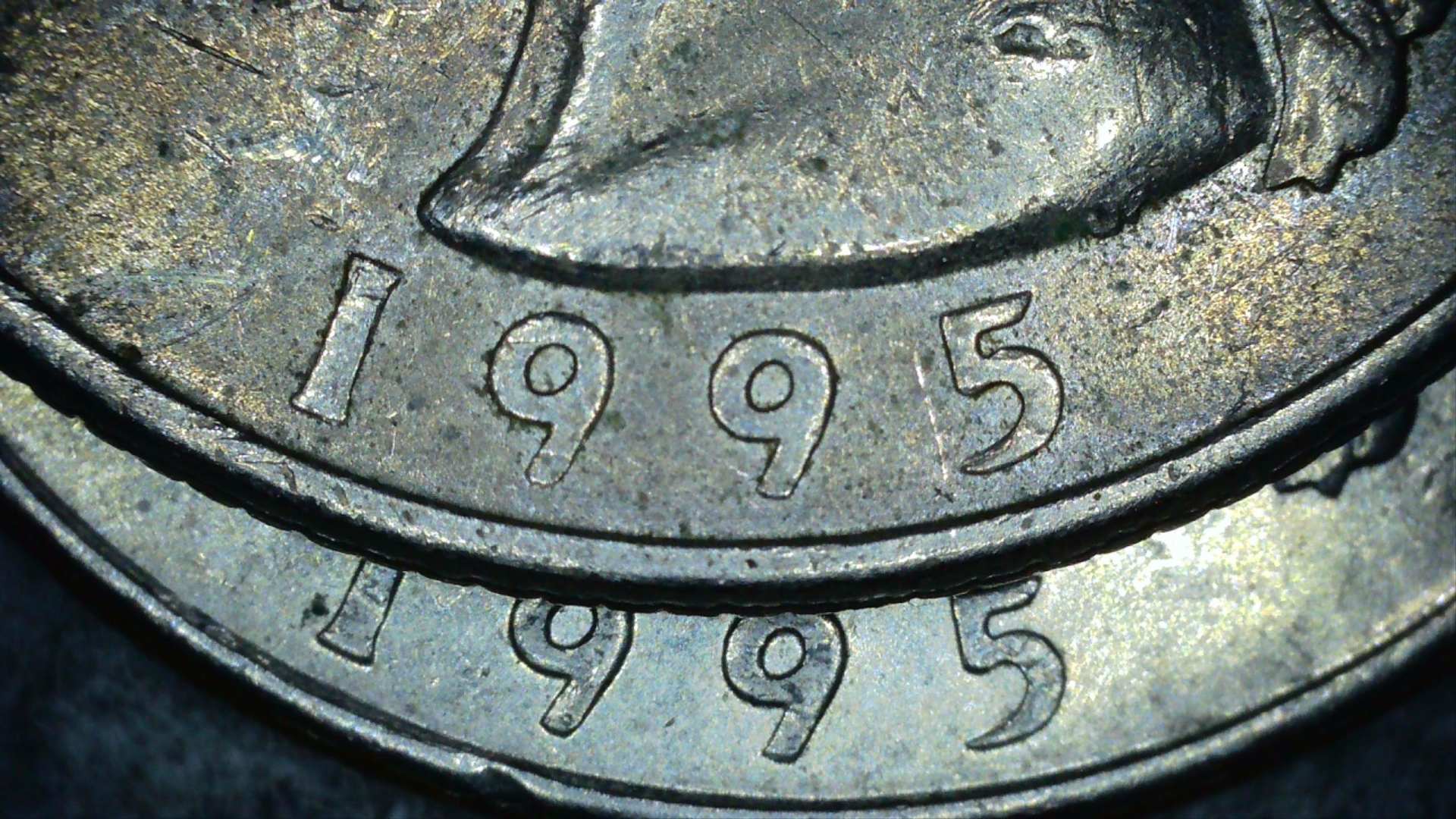 any input is always appreciated. I'm just trying to understand the difference. the last thing I want is to start selling what I think are DD's and end up disappointing.


 Posted 09/14/2022 11:13 pm