| Author |
 Replies: 9 / Views: 1,666 Replies: 9 / Views: 1,666 |
|
|
Pillar of the Community
United States
986 Posts |
This one is distinctly overweight at 11.96. Checked the scaled using several other clad Kennedy halves. All are right on 11.34..... Nothing appears unusual and edge seems normal. Any thoughts? 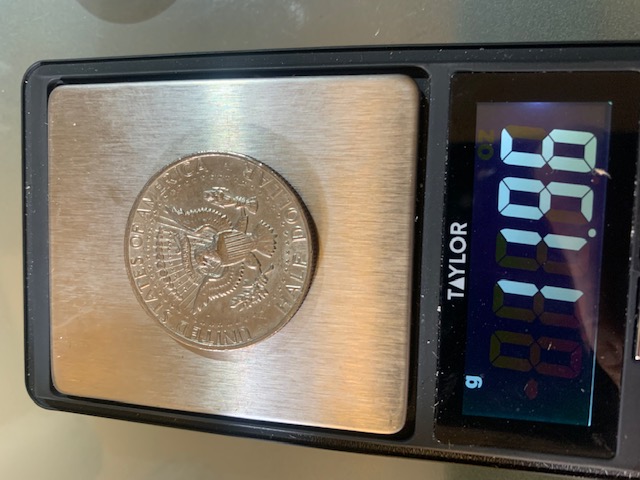 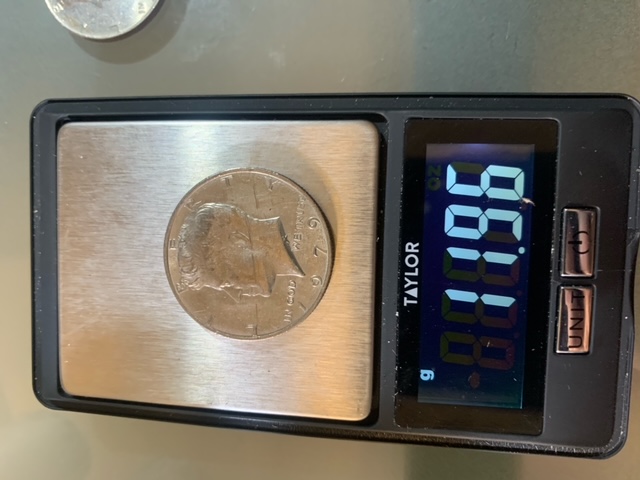 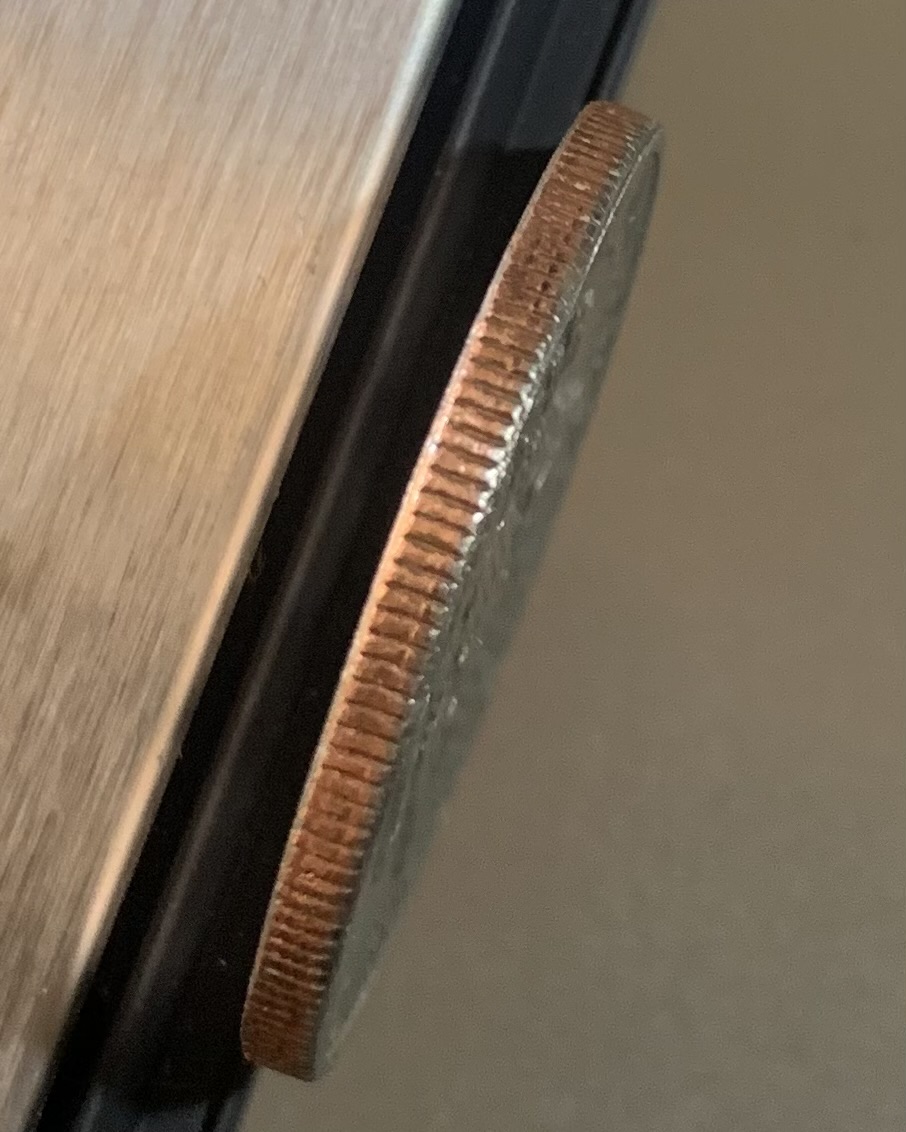 "We are all flawed, some MD and some PMD." NYI |
|
|
|
Bedrock of the Community
United States
94367 Posts |
Guessing that's within tolerance.
|
|
Pillar of the Community
United States
668 Posts |
Weight SHOULD be 11.340 gms plus/minus 0.26 gms (11.08 to 11.60 gms) Definitely out of tolerance for a clad Kennedy half. Sorry, no clue as to why. Diameter should be 30.61 mm Thickness should be 2.15 mm Edited by fplagge
01/13/2023 09:49 am
|
|
Moderator
 United States
15894 Posts |
Please report on the diameter and thickness. One of those parameters needs to be oversized.
I bet it's thickness of the planchet strip since the planchet punch diameter can not change.
|
|
Pillar of the Community
 United States
986 Posts |
Diameter is spot on... But thickness is 2.37.
"We are all flawed, some MD and some PMD." NYI |
|
Moderator
United States
15894 Posts |
And that explains the overweight coin. Follow my logic: The weight of any coin is a direct function of the volume and density of the metal it is made from. In this case the quarter is composed of two metals with different densities - the pure copper core plus the nickel-copper clad layer. Ignore for the moment the densities, since you did not report on the thickness of the three layers - let's just focus on the volume. The equation for Volume is: Phi*(Diameter/2) squared *thickness For a 'normal' quarter meeting exactly the nominal mint planchet spec, this would be: 3.14*(30.61/2)squared *2.15 which is 1581.3 cubic mm For your quarter at 2.37mm thick we get: 3.14*(30.61/2)squared *2.37 which is 1743.2 cubic mm So, your quarter contains 10.2% more metal by volume that a nominal spec quarter - and that accounts for the additional weight. What we can't explain is how a quarter planchet roll was delivered and accepted that is so far off spec in thickness.  |
|
Pillar of the Community
Canada
6244 Posts |
I see this more the end of the rolling band. In general the rolls go 0,2 mm decrease in order to achieve the desired thickness. If the last roll (in fact 3) are de-calibrate, so we will have a portion of the roll different. A mention here: The core will be thicker and not the clad.
It is a coin on a thicker planchet and that is.
|
|
Bedrock of the Community
United States
62064 Posts |
Check the tare setting to set it before weighting this coin. (Give a more accurate reading if it was not not set before the weight) I see the copper layer there. So the weight might be heavy, but not a wrong planchet issue. (Planchets are not weighed on common business strike coins, only gold coins are weighed at the mint)
|
|
Pillar of the Community
United States
2775 Posts |
Half Dollar 1971 to date - (excluding 1976 40% silver)
Grams weight - 11.340
Tolerance +/- 0.454 grams
Diameter 30.61 mm
Thickness 2.15 mm
Seems rolled a bit thick. Thanks, Doug.
|
|
Moderator
United States
106396 Posts |
With the information listed above, I would also say that the blank was rolled out a bit thick. May be a bit out of tolerance, but not too bad for a clad coin.
Now if it were to be a silver or even gold coin - this would be a huge issue as precious metals are monitored very closely.
|
| |
Replies: 9 / Views: 1,666 |
|









 Posted 01/13/2023 09:40 am


