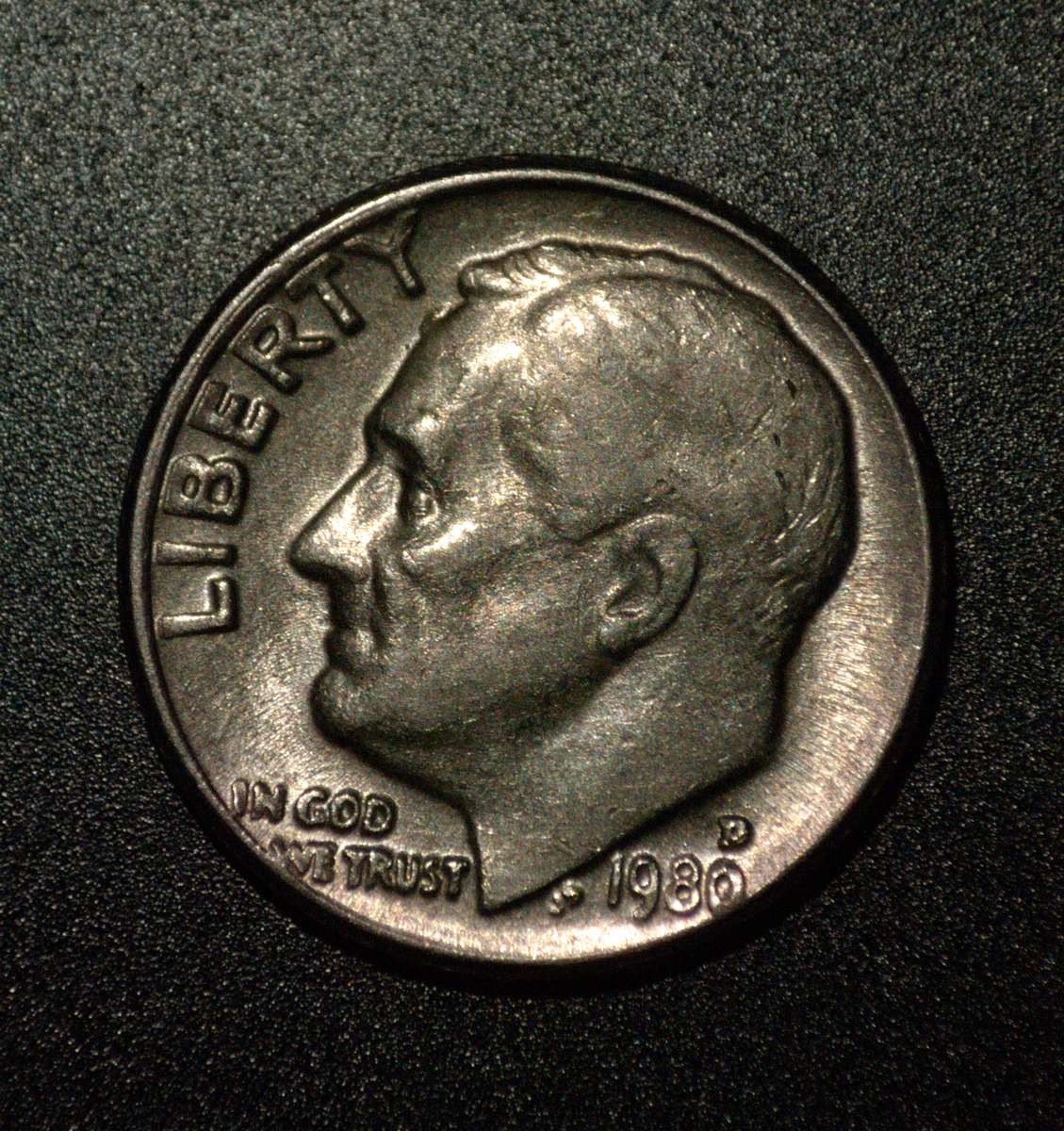
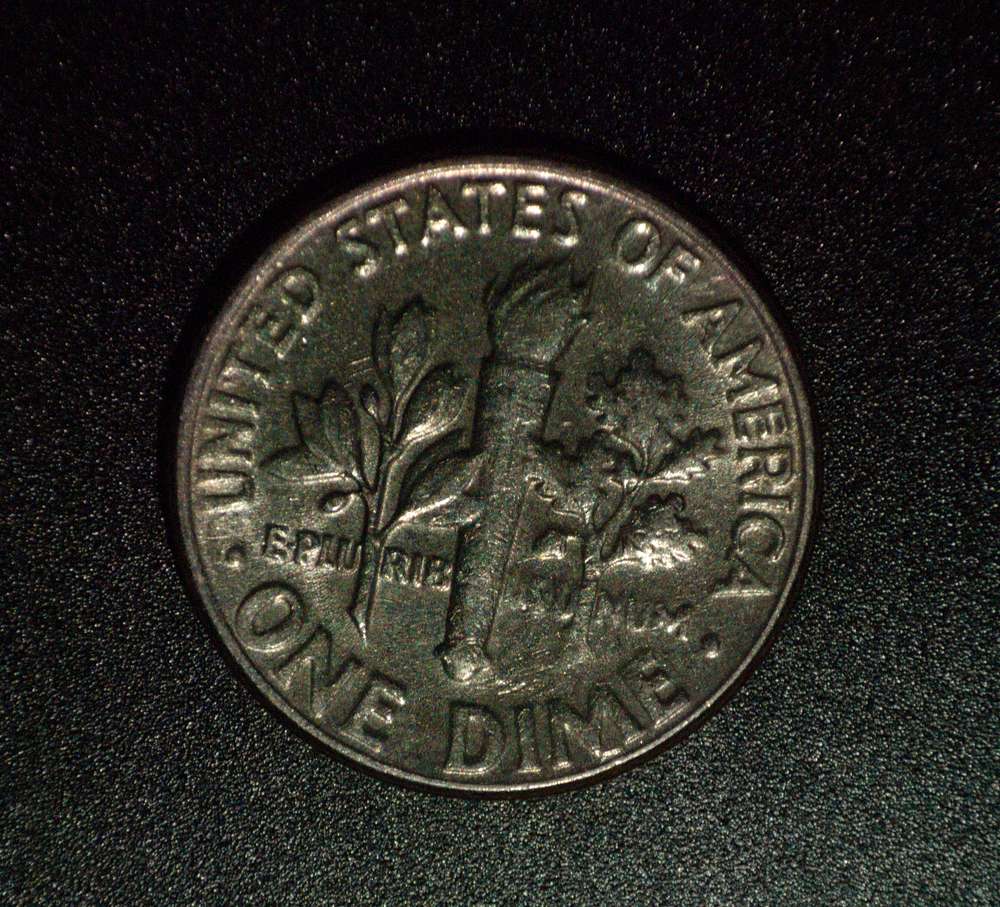
Also note the fields on your dime. Note the lines on the field areas? Those lines are called die flow lines. This happens as a die ages. These are from the same motion several hundreds of thousands of times of striking coins. Why does this die wear show up on a coin? Just like wrinkles are seen on Seniors, this is true for coins struck with an aging die. How? The planchet is slightly smaller than the dime design. Thus when the coin is struck, the coins will expand during the strike. So all the outer surface metal is moved. This movement, conforms to the shape of the two dies, and also to the collar that forms the outside edge of the coin. These reeds are seen on the coin denominations that used to be silver denominations.

When this process happens over an over on each strike, the dies suffer. Showing die wear. This is often seen in the direction to the closest rims. So if you see distortion of the devices in the direction towards the nearest rim, it is die wear and can vary depending on how Senior the die is becoming. On dimes, you don't see this distortion/die wear that much. But on the larger denominations it is seen a lot more. So if you are looking for a doubled die on a coin, study the web sites to see what to look for on doubled dies and RPM. Thus you are training you eyes as to what to look for. Obverses on the dimes are pretty slim pickings post 1972.
http://www.varietyvista.com/07%20Ro...Listings.htmNote the listing post 1972? Note the underlining of these devices? They are missing on this site. Showing that there are no listing of
DDO on these coins. But on the Reverse the story is different:
http://www.varietyvista.com/07%20Ro...Listings.htmNote they cut off date in the same range, but on the reverse on the newer dimes there is a section that shows
DDR's happening on these coins. But look at each one to see what is a listed
DDR. It is part of the single squeeze die process, and these show
DDR's different than the ones in the past showed. So most people do not see these, and think there is not
DDR on their coin. But look up each example to see what is the
DDR, so you can train your eye as to what to look for on these mostly post 1999 dimes. Consider these listings like a map. If you plan on getting to a destination, knowing where/how to get there, will get you there. Striking out on your own with no direction, will probably
not get you there. So train your eyes and then you will know what to look for. (I always figure on the doubled dies, if they can happen differently on one of the years, it could happen to all of these dimes post 1999) So training the eyes will help you find what you are look for. Guessing is like guess where you need to go without a map. You may or may not get there.
CoopHome:
Why training your eyes are more helpful? Knowing what you are looking for. study the sites to see what is listed, and look for these on that year and years around that year. view each coin was a previous listed coin. what am I seeing?









 Posted 01/18/2023 11:20 am


 to the Community!



 MAD.
MAD.


