| Author |
 Replies: 8 / Views: 1,515 Replies: 8 / Views: 1,515 |
|
|
Valued Member
United States
210 Posts |
So I have some general questions about old cleanings/dipping of some early US quarters. In a type set album, I have the gamut of conditions but I honestly don't know about these ones in particular. Is their dark coloring from old cleanings that have tarnished back over time to super dark, or from using a certain dipping method? Can anything be done to improve them or should they just stay the way they are? Sometimes I have seen holdered very dark/blackish coins so I'm curious if I'm missing something. Would acetone or conservation do anything to improve their look/value? Number 3 is different from the others and the toning looks more like hammered metal, but I assume that look can be from dipping too so I added it. Would these still hold some value above their junk silver worth? 1- 1837, 2-1851, 3-1841, 4-1859O for instance, #1 looks scrubbed and dipped? others maybe just dipped? As always I'm super grateful for all your opinions and words of wisdom. 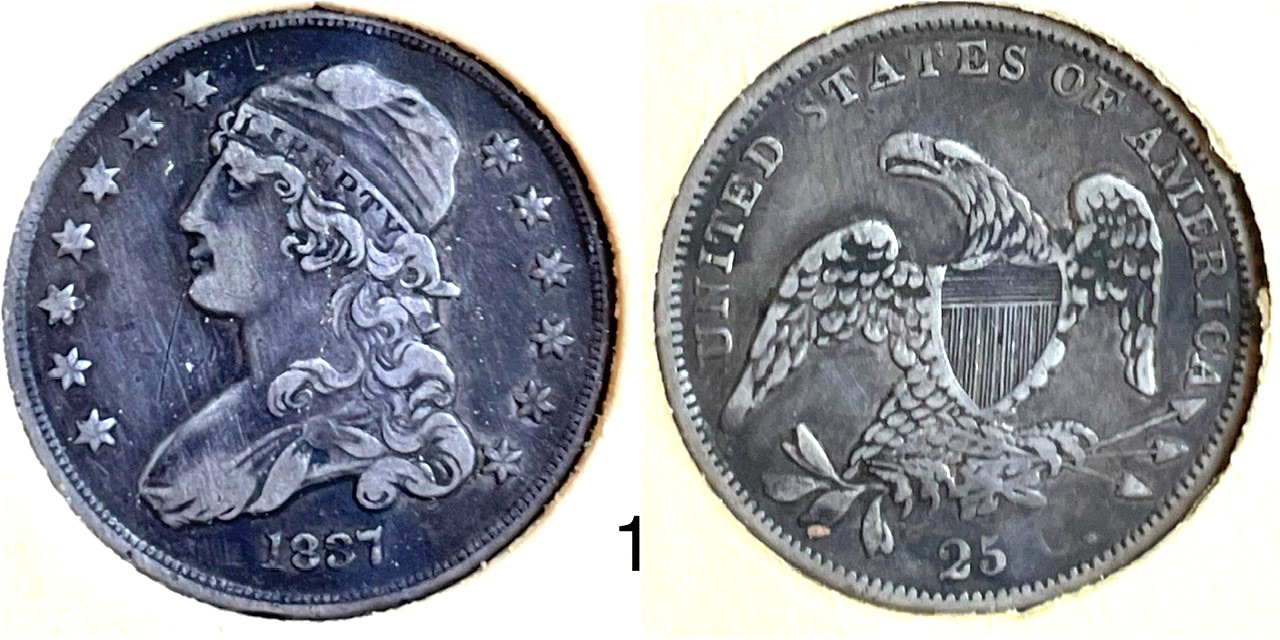  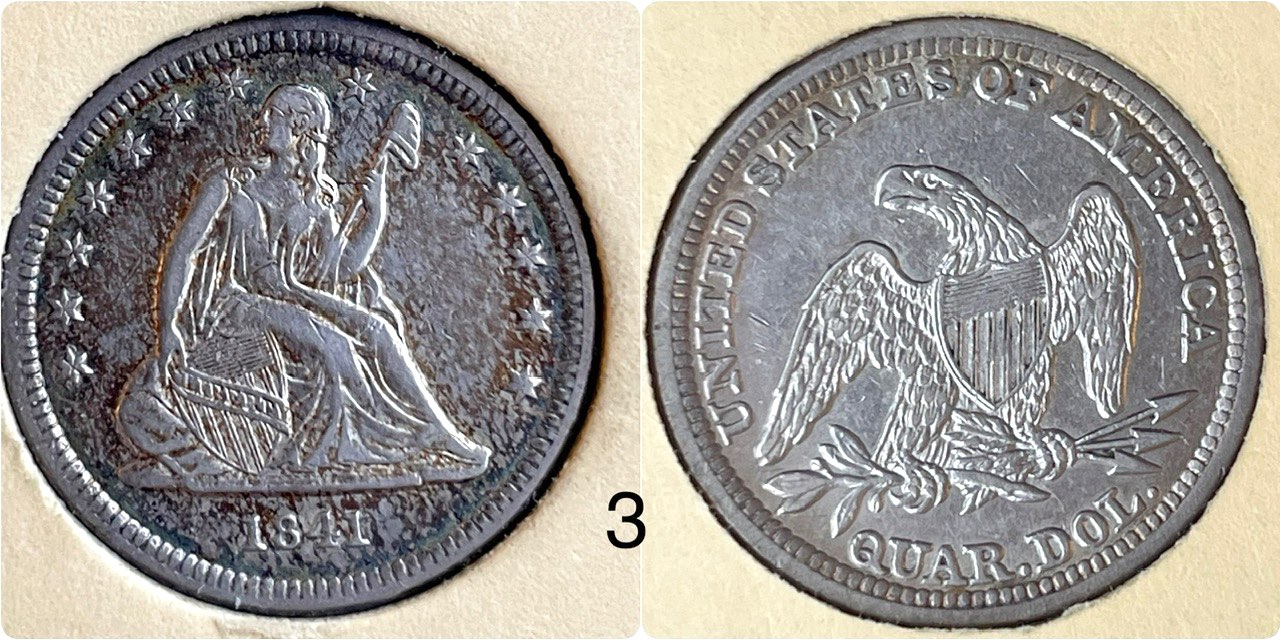 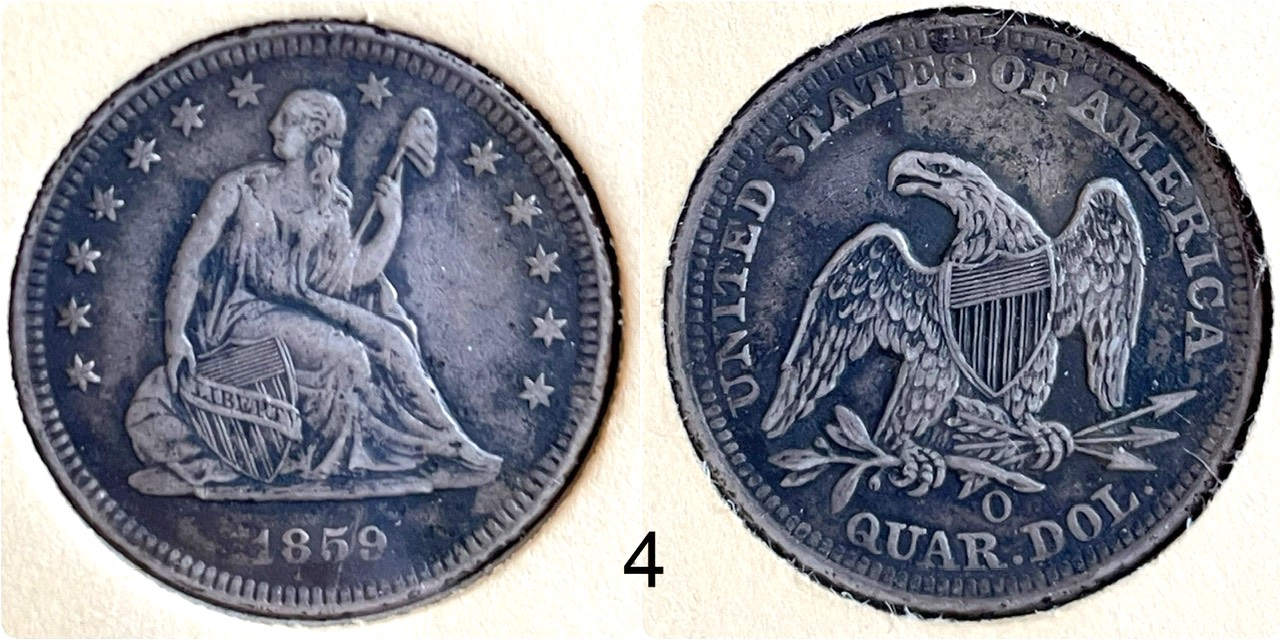 Edited by Jester
02/17/2023 08:54 am
|
|
|
|
Pillar of the Community
United States
5825 Posts |
Coin 1 screams "cleaned" on the obverse.
The other three I'd need to see in-hand.
As for pricing cleaned coins, my technique is to grade them, look up their value in those grades and then start at 50% of that price.
I would then go lower (never higher) depending on other problems I might see.
|
|
Pillar of the Community
United States
2365 Posts |
#1, definitely cleaned. The scratches on the obverse are your first clue. The others look pretty good!
|
|
Pillar of the Community
United States
4476 Posts |
Dipping removes toning and has little to do with the future toning color of a dipped coin.
The toning color of a dipped coin is a result of its environment and exposure to sulfur.
Unless the coin is in a air tight environment with no sulfur, the toning can and will most likely darken in time.
|
|
Pillar of the Community
United States
3848 Posts |
The bust has been abrasively scrubbed. The 1841 was dipped. I would not mess with them further because they still hold substantial value above melt. Quote:
Dipping removes toning and has little to do with the future toning color of a dipped coin. I disagree with this statement because there are some toning progressions that come after cleaning, most are particularly obvious. Dipping doesn't just strip the originality, but it adds a "protective layer" which definitely affects future toning. Correct me if I am wrong. Suffering from bust half fever. Want to learn how to attribute early half dollars by die variety? Click Here: http://goccf.com/t/434955Shoot me a PM if you are looking to sell bust halves. |
|
Pillar of the Community
United States
2287 Posts |
Of course they hold value above their silver melt worth, that's in Numismatics 101. But if you want to sell them for melt I have my pocketbook ready  You realize when you know how to think, it empowers you far beyond those who know only what to think.
-Neil deGrasse Tyson
|
|
Pillar of the Community
United States
4476 Posts |
Dipping strips a thin layer of metal off the coin. It does not leave a protective layer that will cause dip toning. The dipped coin may get uneven toning because it was not rinsed correctly. Toning comes from sulfur not from dipping.
Edited by Slider23
02/18/2023 10:02 am
|
|
Pillar of the Community
United States
6405 Posts |
In spite of the cleaning (#1) and dipping (#3) these are decent-looking type coins. The "1851" looks like an 1861 with damage to the date. Maybe someone altered the date deliberately; the 1851 is much more valuable than the 1861.
Most metals develop a surface patina over time (consisting of oxide, sulfide, or carbonate compounds) which tends to protect against further chemical change. An aggressive dip removes the patina leaving a bright metal surface. This exposed metal is more reactive and often re-tones fairly quickly. The new toning can be blotchy and unattractive. As a rule it's not a good idea to dip circulated coins since the final result is unlikely to be an improvement.
|
|
Valued Member
 United States
210 Posts |
Quote:
The "1851" looks like an 1861 with damage to the date. Maybe someone altered the date deliberately; the 1851 is much more valuable than the 1861. You are absolutely correct, it is an 1861 with damage to the date. Good eye! |
| |
Replies: 8 / Views: 1,515 |
|







 Posted 02/17/2023 11:24 am





