| Author |
 Replies: 9 / Views: 1,622 Replies: 9 / Views: 1,622 |
|
|
Valued Member
United States
71 Posts |
Hello everyone, My dad passed away back in July, and I have finally started going through his possessions. I came across this and have no idea what it is. I see conflicting information when I search on google and unfortunately, I don't understand the translation. I will post pictures and would appreciate any feedback you may have to offer. Thanks so much! 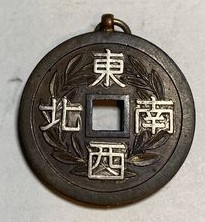 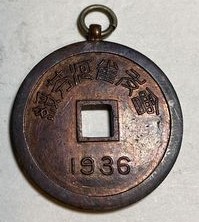 |
|
|
|
Pillar of the Community
Canada
5293 Posts |
It's a token/ medal. I can't read the inscription, though.
|
|
Valued Member
 United States
71 Posts |
I don't know how to translate them either.
|
|
Moderator
 Australia
17006 Posts |
As Oriole said, it is a medal or charm, rather than a coin for use as money.
The inscription on the obverse (top pic) is "dong nan xi bei", which are the four cardinal directions (east, south, west, north, in their "correct" compass orientation but with east at the top).
The bottom pic is a little bit too unclear for me to attempt a translation.
Don't say "infinitely" when you mean "very"; otherwise, you'll have no word left when you want to talk about something really infinite. - C. S. Lewis
|
|
Valued Member
United States
71 Posts |
that's actually pretty cool. I am going to upload a better picture of the reverse side. How were you able to translate it? I have been trying to find an app. 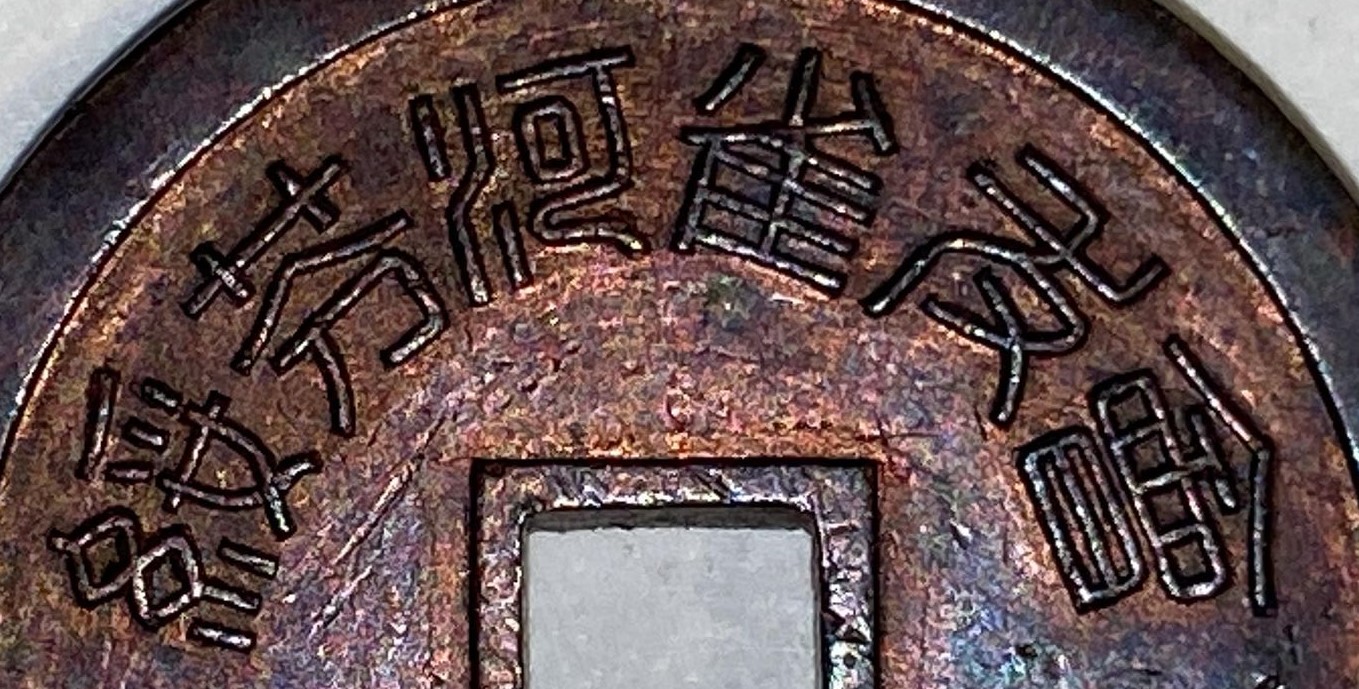 |
|
Moderator
Australia
17006 Posts |
I use various sources; Google Translate, and a Chinese dictionary: https://www.zhongwen.com/s/bushou.htmIt helped in this case that many of those characters on the obverse are used in Chinese province-names (many Chinese provinces have geography-derived names), and so are familiar to me from their appearance on regular Chinese coins. Specifically, "dong" (east) is part of the name for Guangdong province. Once I saw the in the dictionary that "dong bei" was Chinese for "Northeast", and saw that "bei" was to the "north" of Dong on your medal, I wondered if it was a cardinal-directions thing, and went from there. Unfortunately, the script used in the reverse of the medal is a somewhat obscure one, a form of seal script popular on medals in the early 1900s but rarely seen in Asia these days. Regular Chinese readers can struggle with it; my methods don't help much at all. Don't say "infinitely" when you mean "very"; otherwise, you'll have no word left when you want to talk about something really infinite. - C. S. Lewis
|
|
Valued Member
United States
71 Posts |
I really appreciate all of your help.
|
|
Pillar of the Community
United States
878 Posts |
I think it's Japanese, not Chinese. It looks like it says Suifen River on the year side. This river is on the border between China and Russia, which at that time was the scene of conflict between Japanese controlled Manchuria and the Soviet Union. I might be totally wrong, but it might be best to ask a Japanese speaker who can read older kanji system.
|
|
Pillar of the Community
United States
878 Posts |
Or from Manchukuo (Japanese controlled Northeast China). Maybe more of a badge than a medal.
|
|
Pillar of the Community
United States
878 Posts |
There's also a town called Suifenhe, which just means Suifen River.
|
| |
Replies: 9 / Views: 1,622 |
|






 Posted 02/20/2023 4:09 pm





