| Author |
 Replies: 40 / Views: 5,182 Replies: 40 / Views: 5,182 |
|
|
|
Bedrock of the Community
United States
62064 Posts |
The quarter is showing extreme die wear. Not hub doubling: 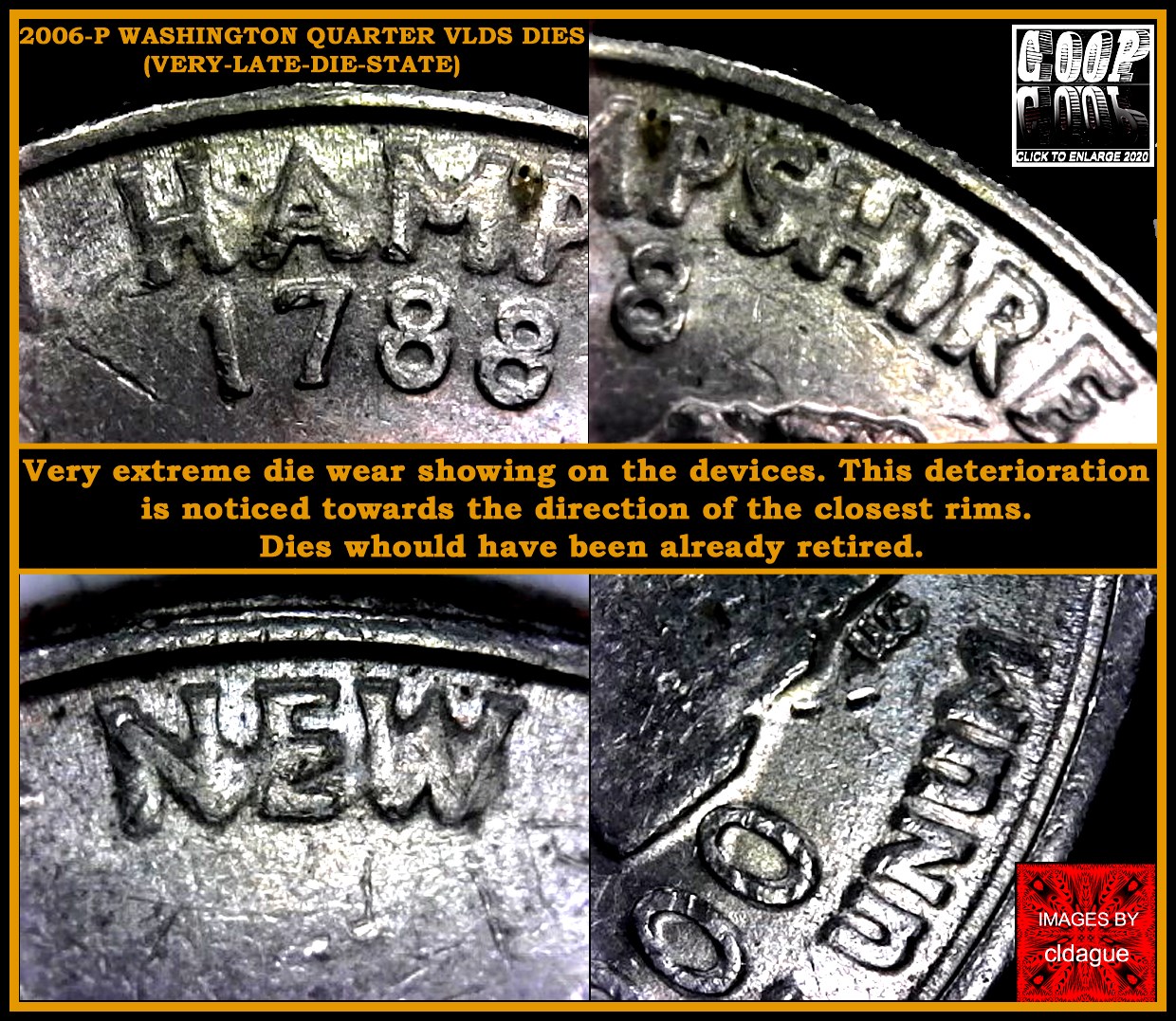 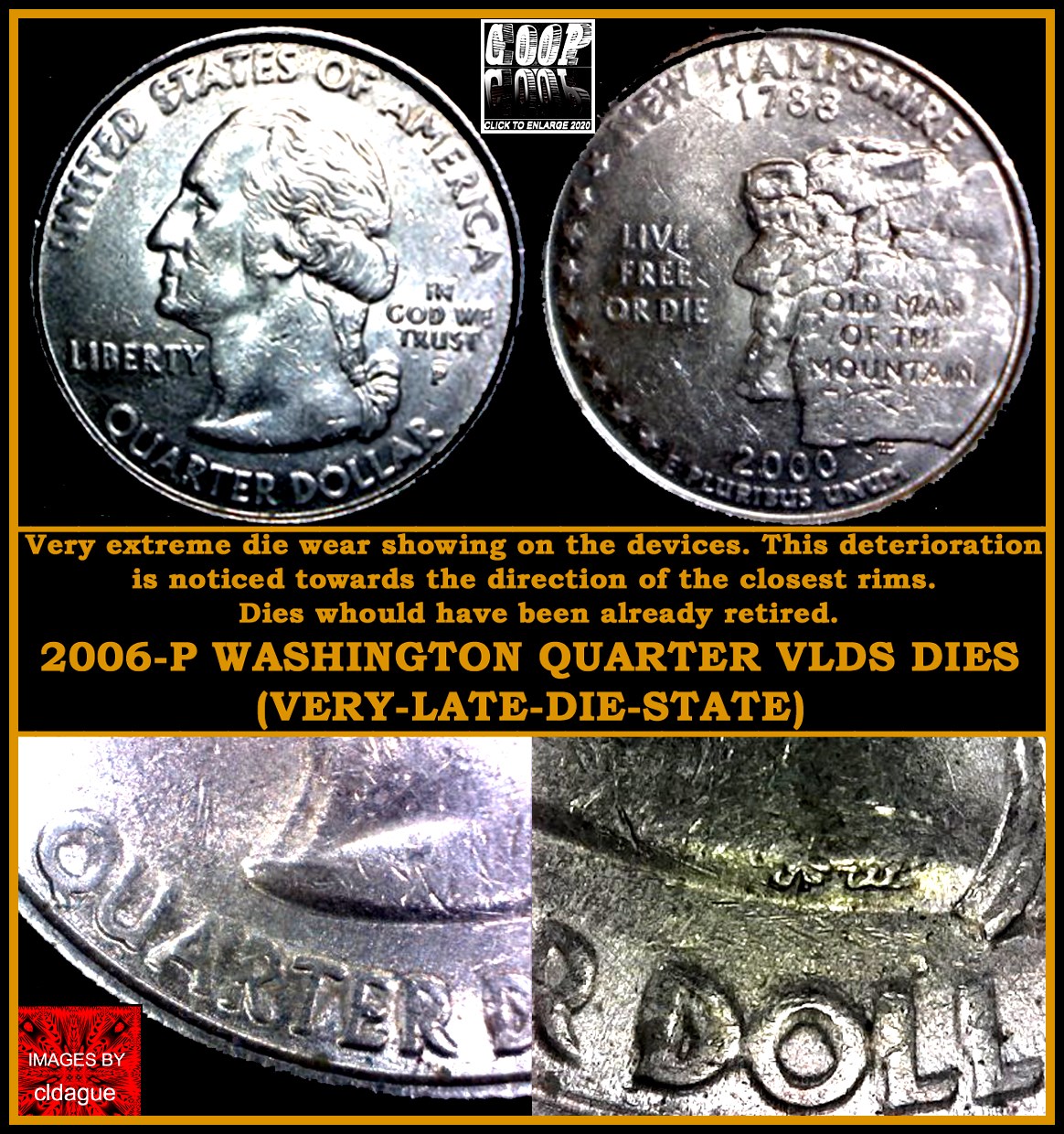   These are the beginnings of the Single Squeeze dies that started on 1999. They are showing die wear, not hub doubling. The hub doubling (doubled dies) are seen on the center of the devices on the earlobes, Motto and designs on the reverses. In order to find these, you need to look up on the Exler site where to find the doubled dies. on those post 1999 quarters. Other wise you will not be looking on the correct areas to find these doubled dies. States 25¢ Doubled Dies :http://www.doubleddie.com/179401.htmlD.C. & Territorial 25¢ Doubled Dies http://www.doubleddie.com/228464.htmlAmerica The Beautiful 25¢ Doubled Dies http://www.doubleddie.com/719755.htmlThe doubled dies are in different areas on the different ways the dies are created. Thus on the ATB Quarters, there will never be a DDR on the devices that are incuse on that design on the outer ring. (the DDR's are only on the center areas of the designs) |
|
Valued Member
United States
177 Posts |
Hey numidan, Glad you could find one. Just wondering, based on all the fine pics you have provided, do you have a full pic of both obverse and reverse. When asking what folks think it is important to present the entire coin. Ever part of a coin determines the die which created the coin.
Be well!
|
|
Valued Member
 Canada
219 Posts |
Thank you Coop for the complementary information provided. Here are the extra pictures of the entire coin some of you have been asking for. 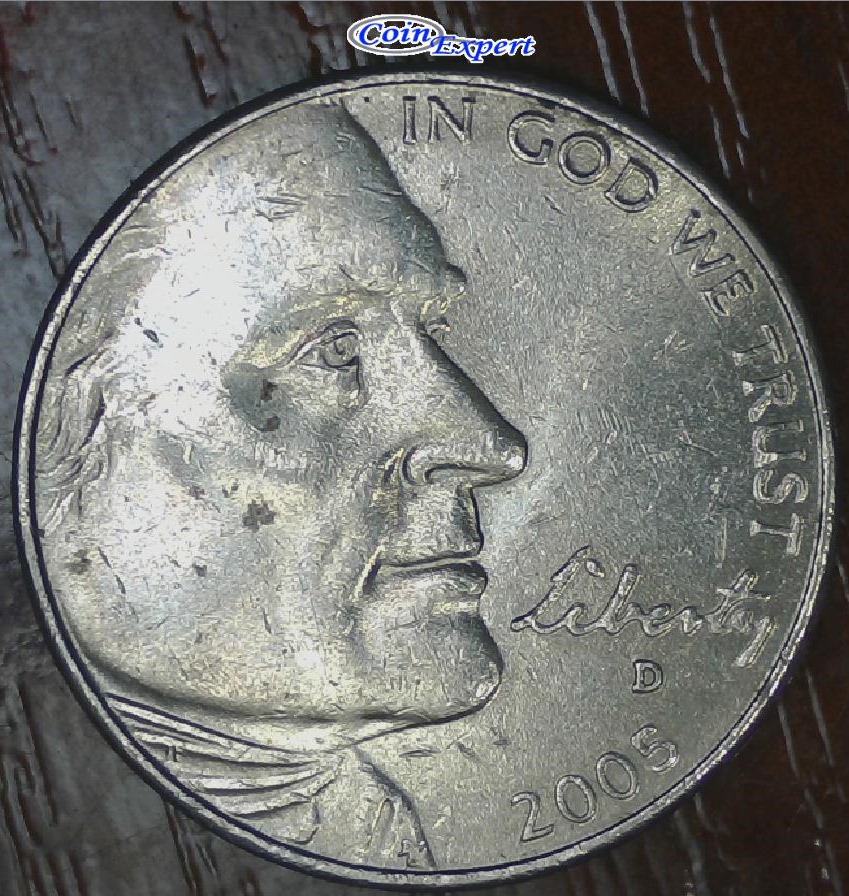  |
|
Valued Member
Canada
219 Posts |
While searching for other types of doubling, I realized that it will be impossible for me to prove my point. It is like telling someone the earth is not flat.  What!!! The earth is not flat! Guards imprison this fool. We have such a diverging opinion of what a flat, shelf-like appearance of the lowest design elements represents. For most of you, it automatically represents Mechanical Doubling. Here is the published article, I've stumbled upon last night that made me realize it all. It analyzes the doubling of the coin shown below. 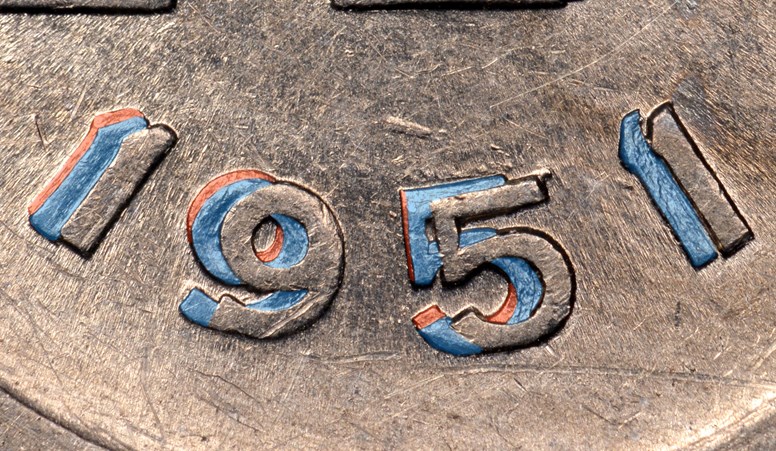 source: https://www.ngccoin.com/news/articl...ne-Doubling/Quote:There is very pronounced doubling on all the numerals in the date. However, this coin also has mechanical doubling! In the second photo, the doubled die has been shaded blue, whereas the mechanical doubling is red. As you can see, the die doubling looks exactly like the primary numeral only shifted to the west. There is clear separation between the two, including split serifs. On the other hand, the red-shaded Strike Doubling is much flatter in appearance, and there is no separation between it and the main number. Here is my analysis: This is an example of a triple die. The illustration below shows the three location where the punch hit. The red arrow does show a slight separation between the numerals. The yellow arrows demonstrates that the last numeral looks like a single numeral but it is two overlapping ones. I think the author was mislead by the flatter appearance of the first set of numerals (lower design elements) and the fact that the last numeral one was not tripled. If the author took some time to think how a working die forms Mechanical Doubling, he would have realized that it was impossible to create a third set of numerals by either shifting or pushing the working die. 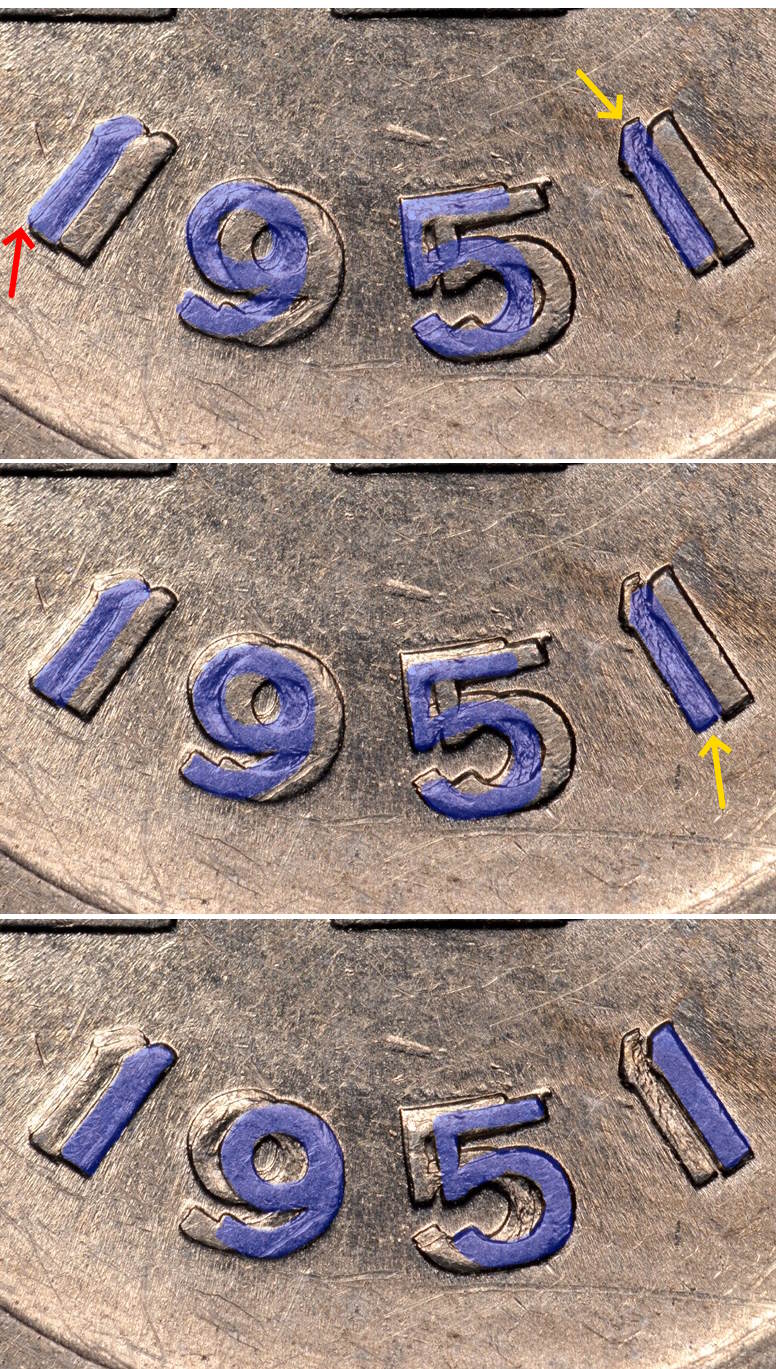 Here are a few points not to forget: 1) The blank contains the only metal available for the minting process. 2) The press propels the working die into the blank. This forces the metal from the blank into the cavities of the die forming the coin's design. 3) Mechanical doubling will either flatten or slide the design as shown in the illustrations below. Note there is not metal left to fill up the void when the die moves sideways. 4) Do not overlook the edge geometry as shown in illustration shown below and in previous reply. 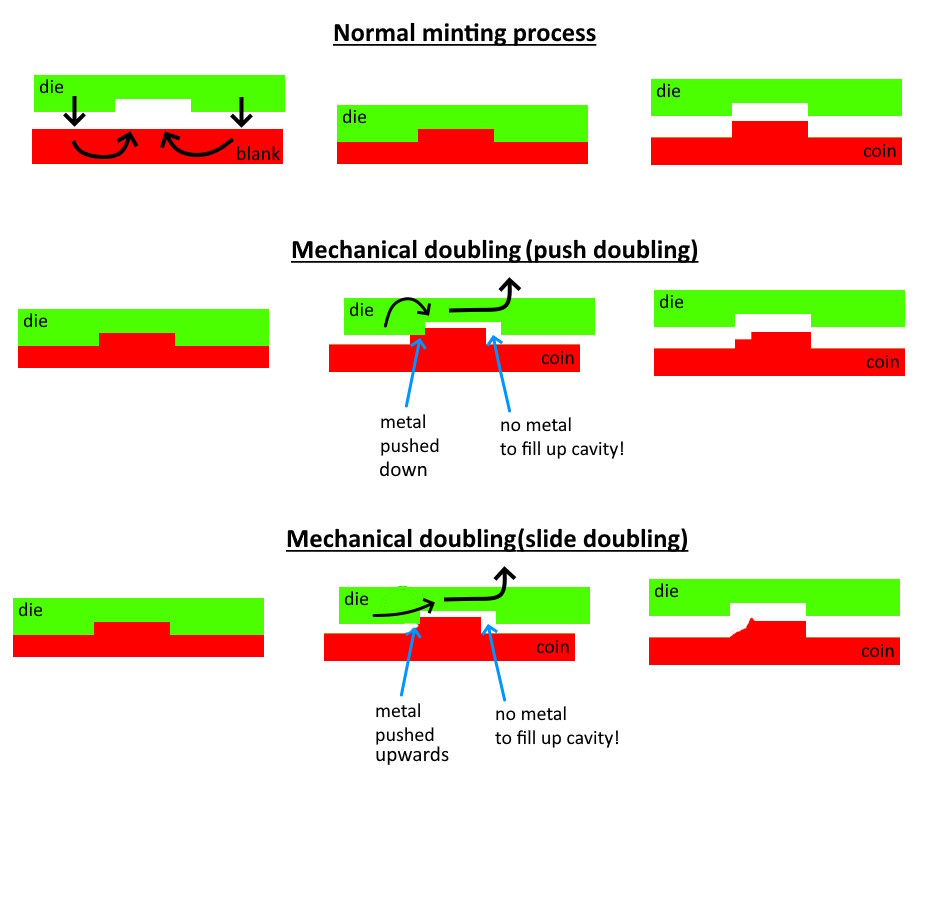 Mechanical Doubling Mechanical Doubling: 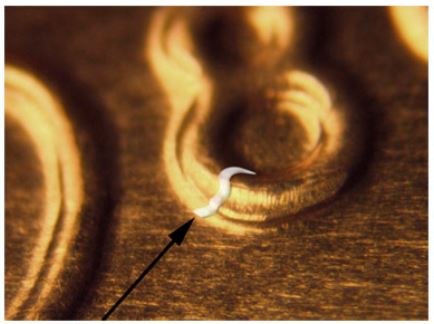 source: https://www.error-ref.com/push-doubling/Double die: 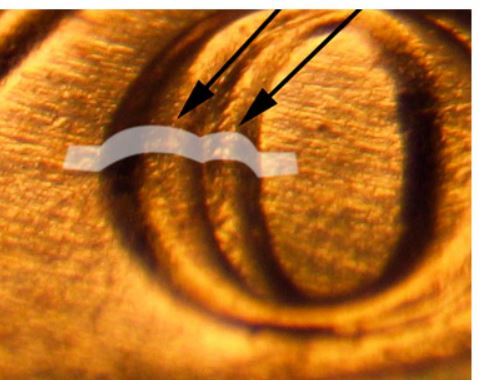 source: https://www.error-ref.com/push-doubling/Edited by numidan
03/27/2023 9:02 pm
|
|
Valued Member
United States
177 Posts |
Well Numidan it looks like you were busy last night. LOL Good information! Thank you for sharing.
|
|
Valued Member
Canada
219 Posts |
Thank you.
Don't worry for the late night, it's all about the learning.
If you not in for a quick buck, you realize that the numismatic field touches so many disciplines;
History, Arts, Mathematics/Statistic, Metallurgy/Mineralogy, Physics, Chemistry, Engineering, Photography/Lighting, Economics, etc... just to name a few.
Just one coin can amount to several hours of research and discussions over days ;) and yes, sometimes years before someone else finds a similar coin or cause.
I am so grateful that people share their stories, opinions, time, and/or expertise continuously nourishing my and hopefully other peoples' passion.
Happy hunting and learning.
P.S. During your hunting, if you find an exact copy of this coin, please add it to this post. Thanks.
Edited by numidan
03/29/2023 11:13 am
|
|
Valued Member
United States
177 Posts |
Well Numidan,  There are so many aspects which encompass numismatics. Every single day I learn something new. Happy hunting to you as well. Curly |
|
Pillar of the Community
 United States
5896 Posts |
Just saw this thread and haven't really had time to digest all of the replies.
I'm not a nickel guy but your image on page 1 with yellow diagonal lines shows MD, IMHO.
I have also seen devices that show erratic secondary lines someone pointed out.
I have seen dense mint grease sticking to the edges of the devices and design. This can interfere with the metal flow into the devices and can have a jagged appearance. (The overall width of any device affected in this way will be reduced, similar to MD.)
Words of encouragement are one of the major food groups.
We need to consume them regularly to thrive and grow.
Edited by Petespockets55
03/30/2023 09:12 am
|
|
Valued Member
Canada
219 Posts |
Quote:
I'm not a nickel guy but your image on page 1 with yellow diagonal lines shows MD, IMHO. What characteristic(s) did you use that makes you think it is Mechanical Doubling? Quote:
The overall width of any device affected in this way will be reduced, similar to MD. Good, we are getting somewhere. The keyword here is reduced! I will stop here and will wait for your answer. |
|
Valued Member
Canada
219 Posts |
When I decided to include varieties and errors to my coin collection, I struggled to fully understand the difference between Mechanical Doubling and double die. It was inconceivable having so few double dies discovered on Canadian coins. After several lively discussions with club members and many technical exchanges with forum members ( thank you Castor and SPP), I came to the conclusion that some clarification was needed. So, I decided to write an article. I began to write a guide as shown below, and after bouncing the idea to some of my friends, I abandoned that method. The format was not unanimous and once all exceptions/images included, it would have been too overwhelming. Although I have not completed the guide, I do apply these criteria when evaluating the type of doubling. Follow the replies in this post and you will see it being applied. Therefore, I decided to use illustrations instead (as shown throughout this post) and concentrate on the first criteria of the guide; "Examining the overall width of the upper design element". Published in "The HUB" in 2012, to sum up the article (Revising Mechanical Doubling), I concluded that all coins with Mechanical Doubling have the width of the upper design element reduced and if it was the same or enlarged, it was another type of doubling. The main issue in applying this criteria is that when members present their findings, they rarely provide a reference (a normal coin taken under same lighting and camera conditions) to properly evaluate the width of upper design element. Therefore, people are relying on other characteristic(s) to determine the type of doubling. Yes it is true that when evaluating doubling on US pennies, having a flat, shelf-like doubling can automatically be considered as mechanical doubling, it is not always true for other types of coins. 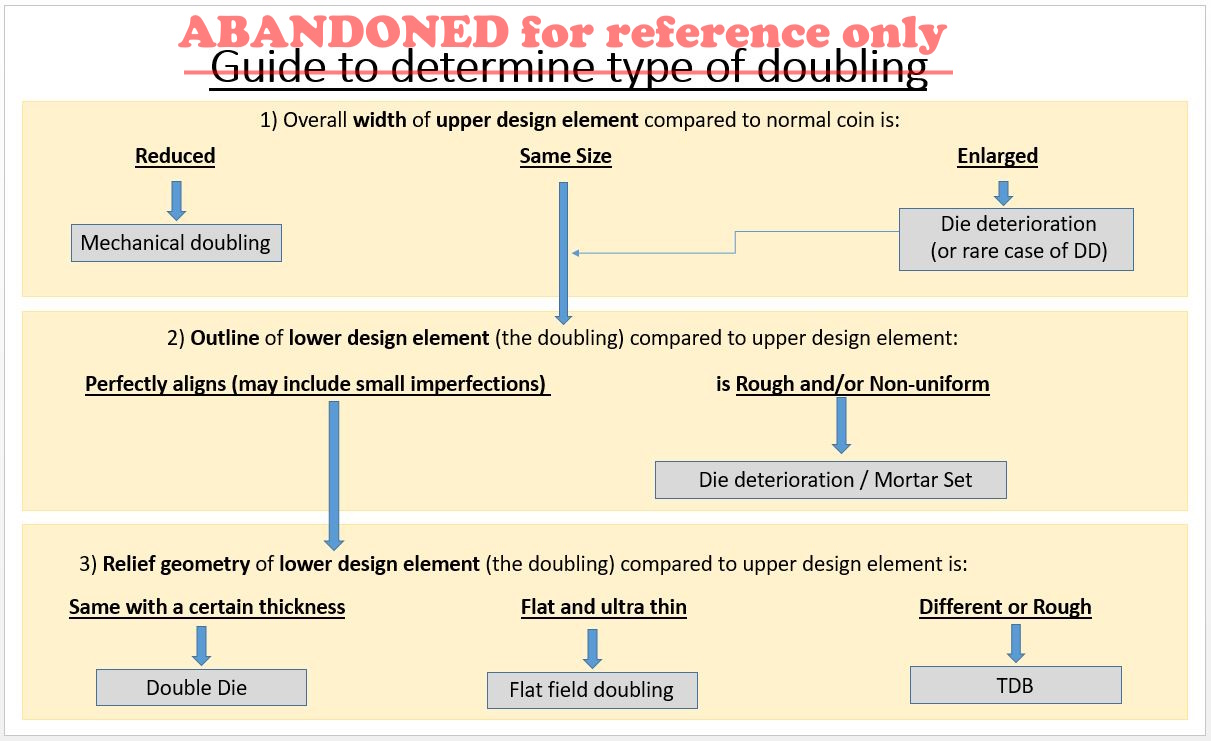 Edited by numidan
03/31/2023 10:04 am
|
|
Pillar of the Community
United States
5896 Posts |
Quote:What characteristic(s) did you use that makes you think it is Mechanical Doubling? The area under the yellow lines appears to be flat or even concave (with striations through the area) and that looks MD to me. It certainly isn't raised like we see on true doubling. What are your thoughts on the other part of my reply concerning the erratic edges of the secondary lines not showing separation from hub doubling? EDIT- The areas I call "erratic edges" above, you refer to as "weirdly shaped". Words of encouragement are one of the major food groups.
We need to consume them regularly to thrive and grow.
Edited by Petespockets55
03/31/2023 11:22 am
|
|
Valued Member
Canada
219 Posts |
Quote:
The area under the yellow lines appears to be flat or even concave (with striations through the area) and that looks MD to me. Thank you for confirming what I was suspecting. Hope you did not see a this doubling as being concave (going into the field of the coin) because it is definitely above the field as shown in image below. Quote:
It certainly isn't raised like we see on true doubling. I did not know there was a standard on how high the doubling must be. On the image below, the thickness of the doubling is about half of the upper design elements thickness! Sorry for the blurry parts, it is due to the limited depth of field of my microscope. 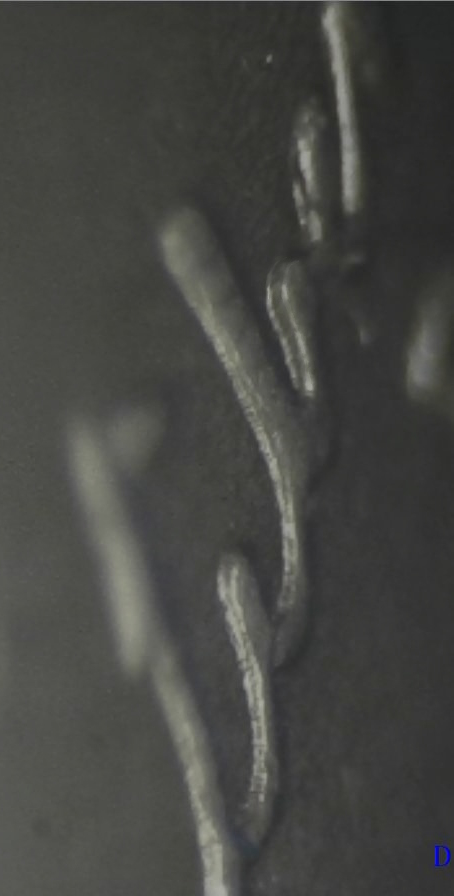 Quote:
erratic edges of the secondary lines It is normal for Mechanical Doubling. As the working die shifts, the sharp edges pushes and slides the metal causing it to look erratic. What is nice with graphics editing programs, when you multiple a red layer with a green layer, it becomes black. So, if you do the exercise as shown below, you can demonstrate (predict) how the edges of Mechanical Doubling will look like. 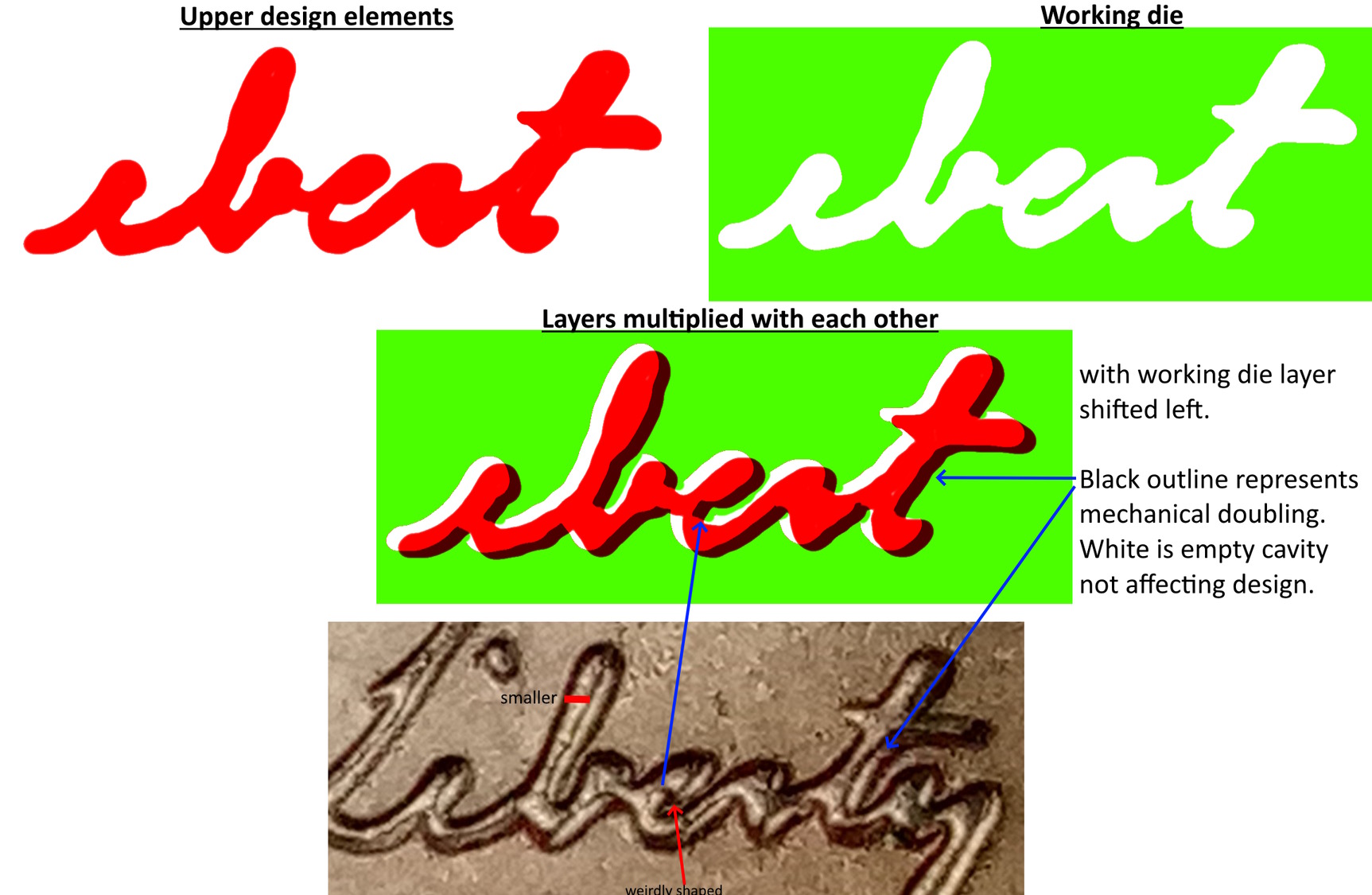 Edited by numidan
03/31/2023 12:57 pm
|
|
Valued Member
Canada
219 Posts |
Quick search for other dates having similar doubling characteristics as my 2005 nickel led me to this post. http://goccf.com/t/428760&SearchTer...bling,nickelMy verification process: -> Upper design elements same as a normal coin -> reference not available but does look the same as reference present in this post. -> checking outline -> exact alignment with small imperfections 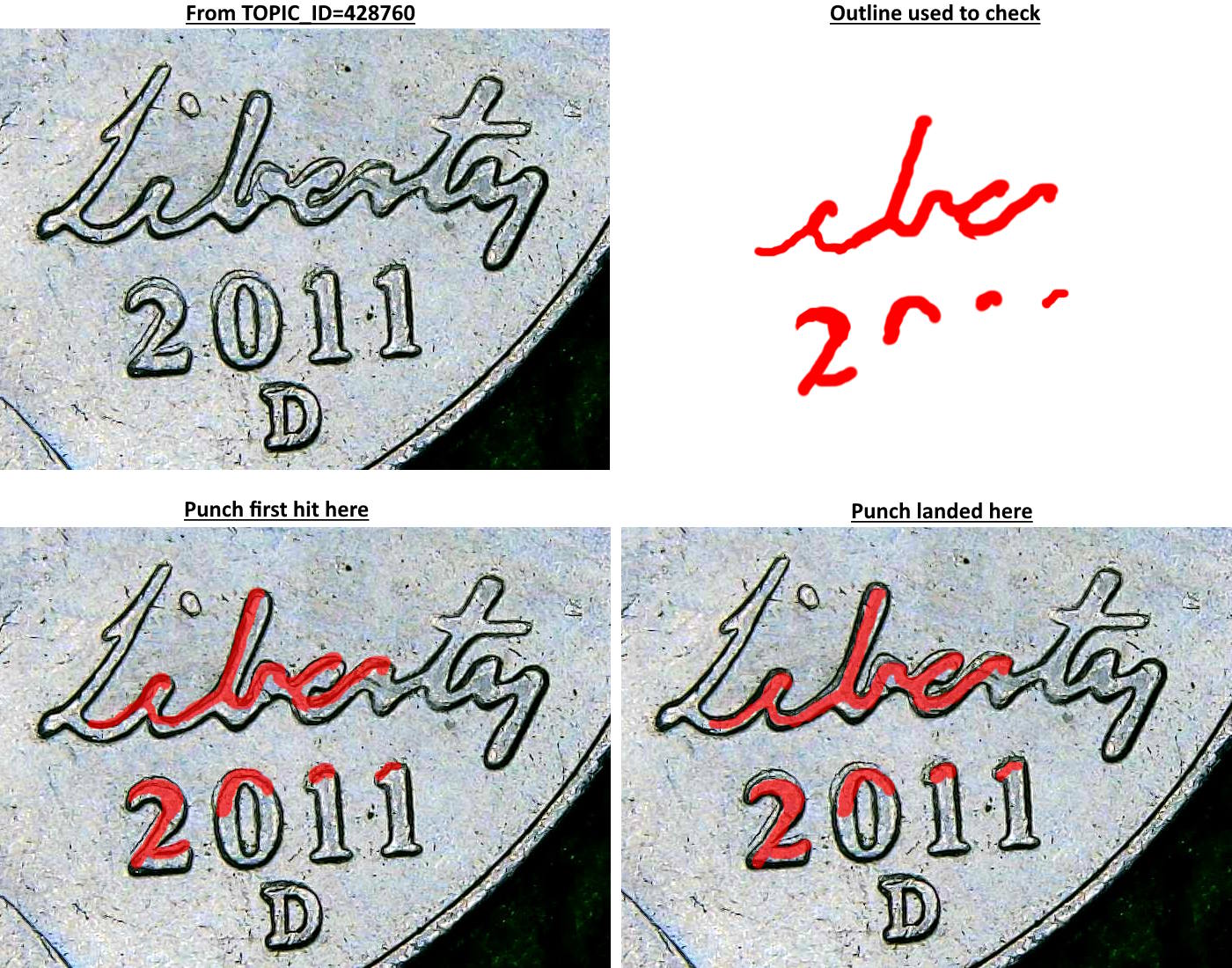 IMHO, this is not due to MD. Edited by numidan
04/01/2023 10:14 am
|
|
Pillar of the Community
United States
5896 Posts |
Quote:
...Hope you did not see a this doubling as being concave (going into the field of the coin) because it is definitely above the field as shown in image below.... No, it is raised from the field and then has a "concave curve" ending at the higher part of the device. The area under the yellow lines is not raised like the image you provided with the opaque "ribbon" on the "O" that demonstrated a "Doubled die". The yellow hash area looks more like the preceding image of the Mechanical Doubling. The image of the edge looks to confirm to me. Quote:Quote: "erratic edges of the secondary lines" It is normal for Mechanical Doubling. I don't agree "erratic edges" or "weirdly shaped" devices are normal for MD, unless you and I are talking about different things. You seem to be trying to get people to agree that this isn't MD but it looks like so many examples I have seen, especially at the yellow diagonal lines. Quote:
...
-> checking outline -> exact alignment with small imperfections... I'm not sure what you were trying to show with the four comparison images of the same coin. MD can be present on a coin from any year, even similar looking MD. "... >exact alignment with small imperfections" would tend to make me lean towards MD unless there was clear doubling. I guess I've lost sight of your reason for this thread. Is it to convince us that the doubling your 2005 is hub doubling and not MD? Or are you asking about the "weirdly shaped " edges to some of the devices? Or both? ps. I've only been back into collecting for 10 years now but I'm enjoying learning new things all the time. (Some of which I actually remember on occasion. LOL) Words of encouragement are one of the major food groups.
We need to consume them regularly to thrive and grow.
|
|
Valued Member
Canada
219 Posts |
At first I was asking if this was a genuine DDO and if someone else had found one. The post has evolve toward proving that the doubling on my 2005 coin is not due to mechanical doubling. As I can see, I was not successful at that. Bear with me as I will attempt a different way. Let's make sure we are at least all on the same page by taking the US penny. Mechanical Doubling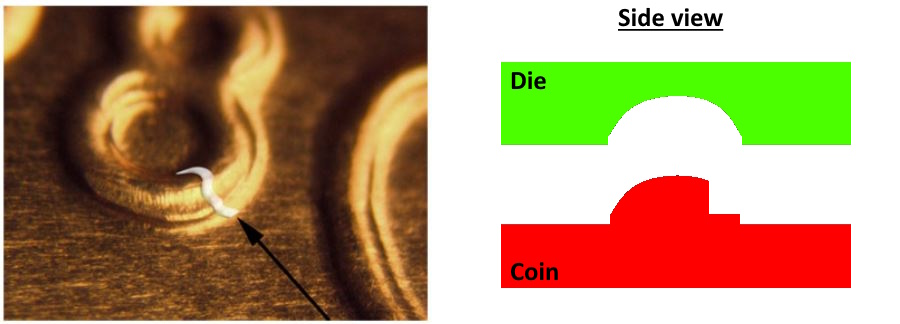 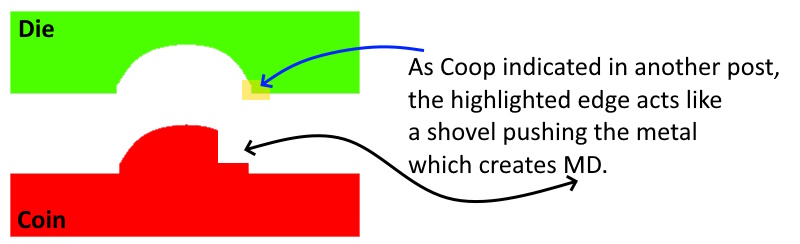 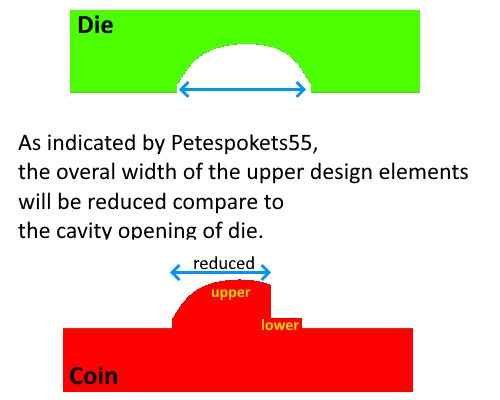 Double Die Double Die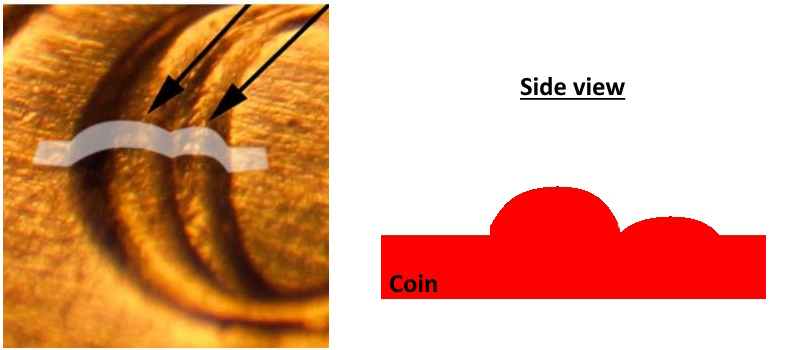 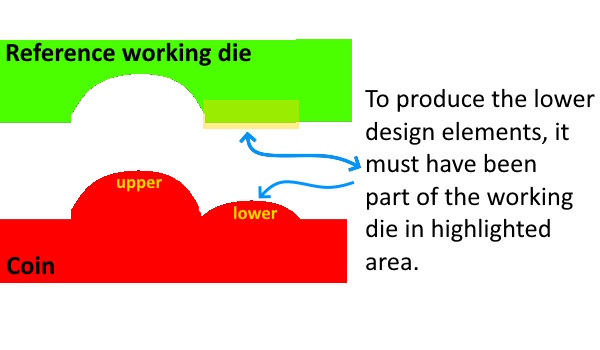 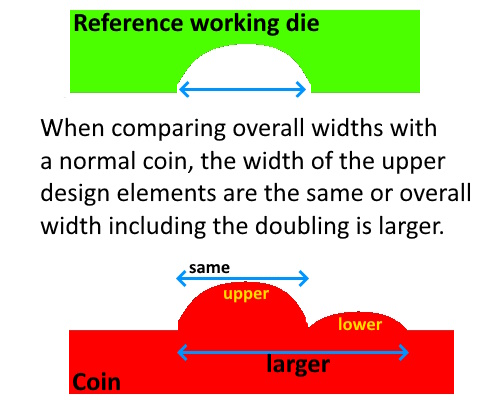 So, on US pennies, was I successful in demonstrating that all coins with MD will have the upper design elements reduced and if it is the same it is another type of doubling (in this case DD). So, on US pennies, was I successful in demonstrating that all coins with MD will have the upper design elements reduced and if it is the same it is another type of doubling (in this case DD).P.S. If you are reading this reply, please participate. Agree / Disagree and even a popcorn emoji will do. |
| |
Replies: 40 / Views: 5,182 |








 First Page


 Posted 03/25/2023 12:19 pm


