| Author |
 Replies: 10 / Views: 1,712 Replies: 10 / Views: 1,712 |
|
|
Rest in Peace
United States
632 Posts |
Hello Everyone! Here is a neat 1819 Large Cent, graded VG-8 details with lamination & corrosion. On the obverse, you can see a red streak from the top of the lamination to where the bun is. Barring someone highlighted the area with a magic marker, and ideas what it could be? 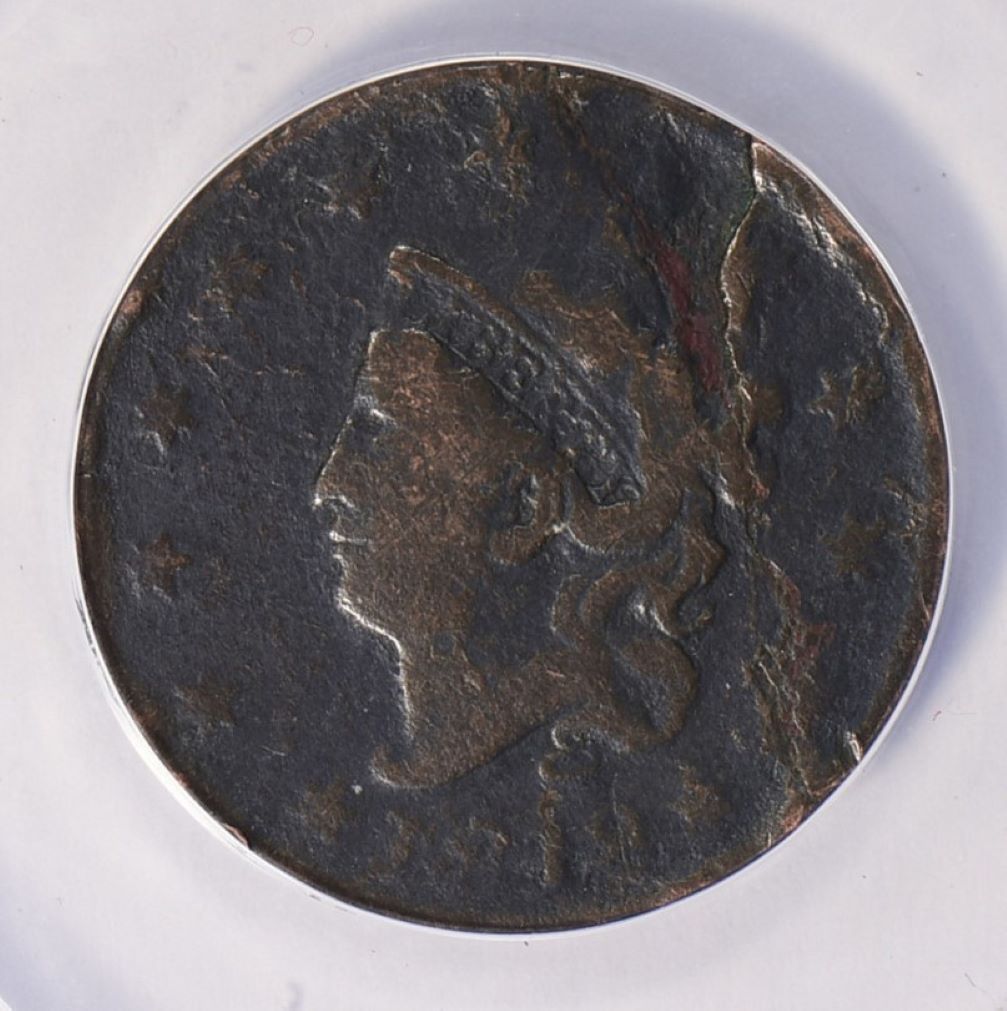 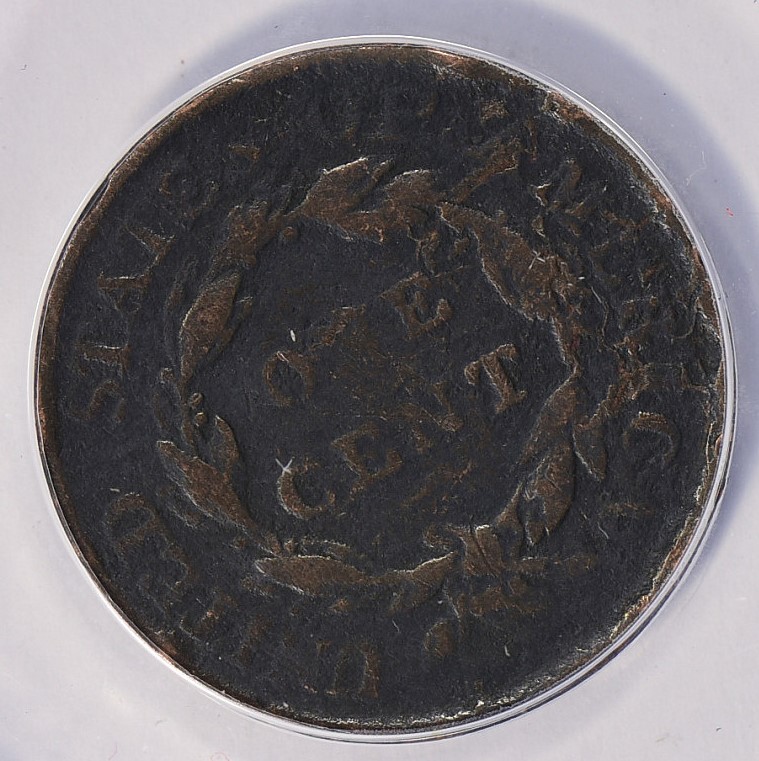 Edited by Oldgrouchyguy
04/03/2023 10:10 pm
|
|
|
|
Pillar of the Community
United States
4233 Posts |
I guess the easy answer is that it's some kind of impurity in the planchet. What kind, I haven't a clue. What coin was it where the planchets were shipped and used as ballast, and were damaged by saltwater?
|
|
Rest in Peace
 United States
632 Posts |
In 1819 US Large Cent planchets were supplied by Mathew Boulton, and they were pretty good, if a little bit heavy. This was something inside of the coin, which would have been unaffected by salt water. I'm trying to come-up with any mineral or metal mined with Copper that would produce a reddish coloration when oxidated. The only thing that I can think of is that a small iron nail or piece of wire was introduced into the copper mix before, or just after, pouring it into ingots? It didn't anneal properly, and >boom< Edited by Oldgrouchyguy
04/03/2023 10:26 pm
|
|
Bedrock of the Community
United States
94367 Posts |
Pics are so dark - can you throw more light on them?
|
|
Pillar of the Community
United States
4233 Posts |
Well, cuprite is red, and is a copper ore. Cornwall England has deposits. That's all I got.
|
|
Rest in Peace
United States
632 Posts |
Coinfrog: I bought it last night; it's on its way... it was bookmarked to look at later; I thought it had a very outside chance of being cast. I didn't notice the reddish stain until checkout. Kbbpll: That's a lot more than I found out, trying to find the source for Boulton's Copper... https://www.greatcollections.com/Co...VG-8-DetailsEdited by Oldgrouchyguy
04/03/2023 10:52 pm
|
|
Pillar of the Community
United States
4707 Posts |
My first impression is that the die is worn out and cracked.
|
|
Rest in Peace
United States
632 Posts |
jimbucks: I wish!! There was something foreign in the planchet, which was a Soho Boulton product. That is very strange. One of the reasons I suspected that it's a fake is that... nose. It just doesn't exist on any Middle Date Large Cent like that.
Edited by Oldgrouchyguy
04/04/2023 5:11 pm
|
|
Moderator
 United States
110516 Posts |
When you have the coin in hand, I hope you will come back to this topic for a follow up and maybe better images.
But is does look like a big lamination - a poor alloy mix.
|
|
Rest in Peace
United States
632 Posts |
Dearborn: willdo, just waiting... these planchets weren't alloyed-they were supposed to be of Pure Copper. I am wondering if the whole coin was "infected", or just some random thing that laminated through the surface...
|
|
Rest in Peace
United States
632 Posts |
First of all, it's an 1818 N-3: Middle Date nerds will recognize it as the obverse die for 1818 N-3 & 4, as the closest 1-Star-Tip of Bust combo, with the peak of the 1 heading over the right arm of Star 1, of the entire Matron Head series. This one had a violent lamination reaction to the strike-you can see a little piece at the edge of the lamination curled-over and struck into the bottom of Star 9. The reddish line is a stain: it has no dimension as is seen with some hard reddish corrosion on ancient bronze coins. It runs as a line from the top, pools at the lower hair bun, then continues as a line to the bottom of the fault. I'm guessing that the 'explosion' ended at the bun, as it is the lowest point of the die in that area. I'm still thinking a length of fine steel wire was in the mix, and didn't totally become alloyed, and it curves away from the 'exploded' area. You could stick a fingernail into the underside of Star 9, and lift-off a chunk of metal... 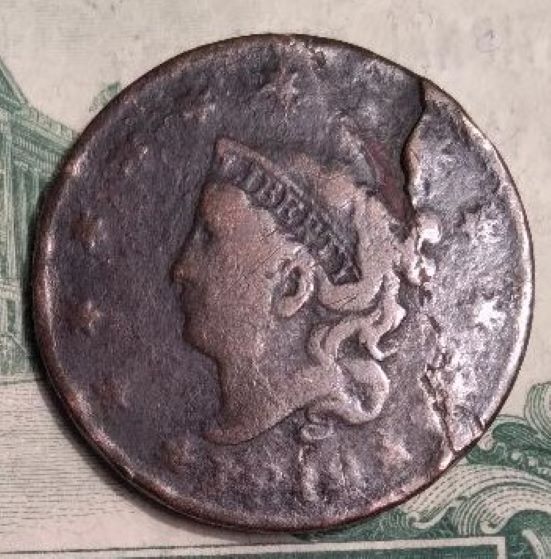 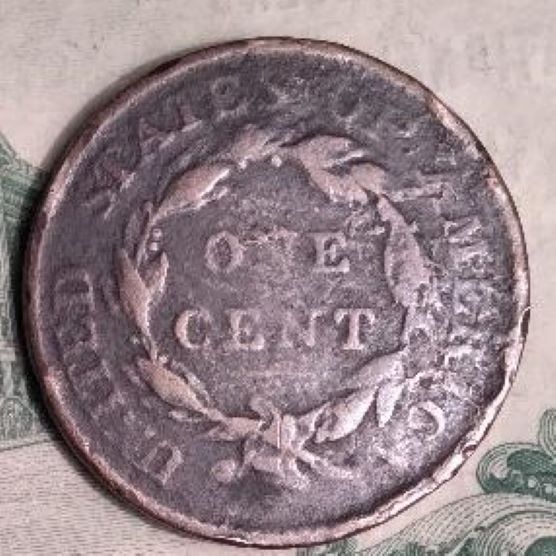 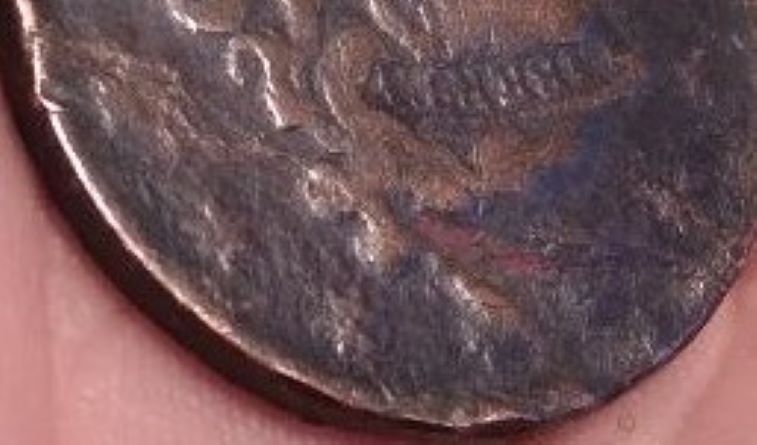 Edited by Oldgrouchyguy
04/15/2023 5:49 pm
|
| |
Replies: 10 / Views: 1,712 |
|







 Posted 04/03/2023 10:21 pm


