| Author |
 Replies: 12 / Views: 10,455 Replies: 12 / Views: 10,455 |
|
|
New Member
Russian Federation
5 Posts |
I came across two Lincoln cents 1984 D with different locations of mintmark D. Does anyone know, if they are described anywhere, or I found something new? Are they considered varieties? 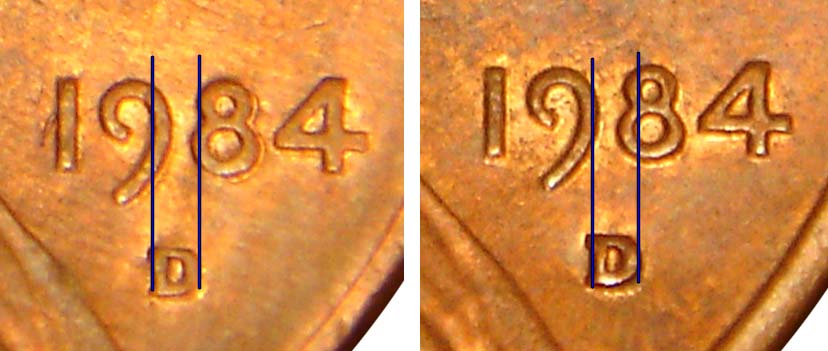 |
|
|
|
Pillar of the Community
United States
1807 Posts |
I believe up until 1990 the mint mark was applied to the die by hand, so they wander around a little.
Edited by rockdude
03/14/2009 1:42 pm
|
|
Valued Member
United States
499 Posts |
prior to 1990 if the mintmark is somewhere in the area below the date without touching any other details it is considered normal
|
|
New Member
 Russian Federation
5 Posts |
You mean, that mintmark was applied to every working die by hand? That means, every die would bear its own unique position of mintmark. The mintages in 1980s were over 4 billion every year. Therefore, thousands of dies were produced every year. And they all were marked by hand? If so, there would exist thousands of mintmark locations on the coins of each year, and it would be hard to find two simmilar coins. Is it really so? I don't have too much US coins, but easily found some similar pairs of coins before 1990. And only these Two Cents 1984 D were different. The Red Book shows some varieties like "large date" and "small date", "double mintmark", "D over S", and so on, but does not mention mintmark position at all. Why? It is clearly seen that these my Two Cents are really different. I'm interested, because such varieties are very popular in Russia on modern coins - coins of some certain years have one common variant of mintmark M (Moscow) location, easy to find, and several rare variants. And three types of coins were found without mintmark. Some variants are very hard to find, they are priced very high. |
|
Bedrock of the Community
United States
62064 Posts |
They can be close or far away from the date.  This one is a RPM as you can see S/S East. But a regular mint mark can be located this close. The next one is far away from date. Value for the close to date or far away is mainly just a conversation piece. The dies mint mark were punched this way, so all coins made from this die looks that way. Several coins look this way and other dies may look similar as well. On ebay they want more for them, but they are common. 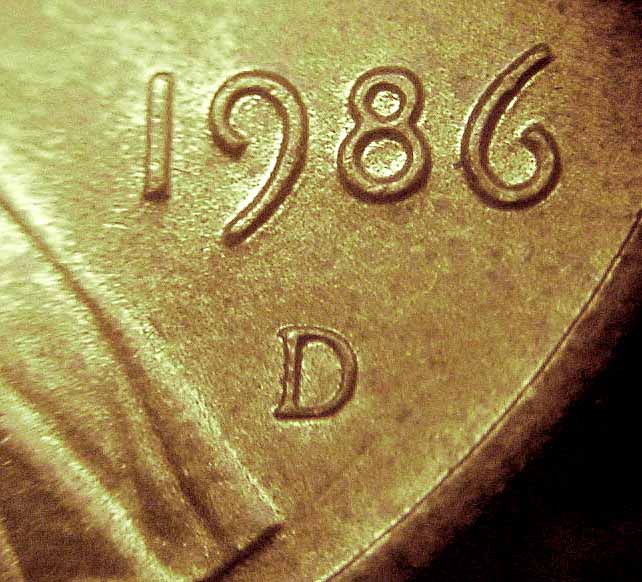 |
|
Pillar of the Community
United States
7629 Posts |
coins2001 - Your understanding is correct that every mintmark was placed into each individual working die by hand until 1990. The reason these don't have particular value is because there has never been an interest in them among the general collecting community unless the mintmark is place outside the normal area for a mintmark - which on a Lincoln Cent is under the date, in front of the vest, and within the rim. Beyond that anything goes. Your mention of mintmark omissiom is important here. In 1990 some of our San Francisco (S) mint cents were minted without mintmarks. Those are extremely valuable and rare. In 1922 all cents were minted in Denver (D) and should have had D mintmarks. Some, however, for one reason or another did not have mintmarks, and the value of such coins are currently through the roof. The exact position, however, of a mintmark has never been an issue here. |
|
New Member
Russian Federation
5 Posts |
Thanks, coop. Close or far from date is very clear. My are moved left or right. Does anyone collect such variants? Maybe they are described in catalogs or on the internet? They may be common, but they are different. I'm not going to make money on my Two Cents, just want to know. Does anyone know, if it is really hard to find in circulation two coins of the same date with same mintmark location? I doubt, if the mintmark was punched on each WORKING die. |
|
New Member
Russian Federation
5 Posts |
coppercoins, I posted my reply before reading yours. Thanks, I learned something new.
I'd like to ask the last question - what had happened in 1990?
|
|
Valued Member
United States
499 Posts |
In 1990 the mint mark was added to the master hub and therefor would be the same on every working die.
|
|
Moderator
 United States
16694 Posts |
If the mm is not touching a design element, it is considered a normal placement. As stated, prior to 1990, they were applied by a hand.
swcoin.ecrater.com
|
|
New Member
Russian Federation
5 Posts |
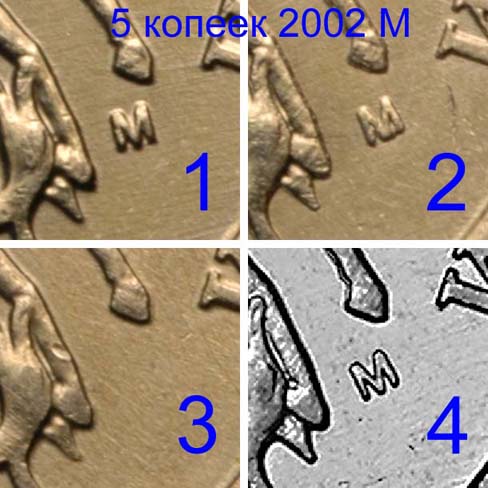
Thanks to all answered. It is amazing, how different is approach to varieties in Russia and USA. As an example, Russian 5 copecks 2002 M has four varieties, shown on the attached picture. 1 - is common variant. 2 is rather rare and valued about $30 in XF. 3 - without mintmark is also rare and cost $120-150. These are real prices, used for buy or sale right now. 4 - is extremely rare and priced over $500-800. I don't have it in my collection still and wouldn't hesitate to pay $500 if I'll been offered it to buy. Image:  5k02m.jpg 5k02m.jpg86.62 KB |
|
Valued Member
United States
145 Posts |
Quote:
Does anyone know, if it is really hard to find in circulation two coins of the same date with same mintmark location? Since each die would stamp on average many tens of thousands to hundreds of thousands of coins, and a lot of those coins would end up in the same geographical areas,it is pretty common to find coins of the same date with the mintmark placement the same. Also as for different placement on same date they are all over the place before 1990. These two are both 1960d and you can see that the one on the left has the MM much closer to the 9 then the right one.  |
|
Bedrock of the Community
United States
62064 Posts |
The one of the Left is an east RPM. The one on the right is a rotated RPM. In a OBW roll you will find several examples of coins from the same dies. But also you can find them in circulation as well. The location is usually an overlay point to identify certain dies that are the same variety.
|
| |
Replies: 12 / Views: 10,455 |
|







 Posted 03/14/2009 2:51 pm





 5k02m.jpg


