| Author |
 Replies: 11 / Views: 1,302 Replies: 11 / Views: 1,302 |
|
|
New Member
United Kingdom
5 Posts |
Hello, I've inherited a bunch of coins and am working my way through them. Does anyone have a clue what the attached is. I'm not sure if it is a token of some sort or an actual coin? Many Thanks Steve 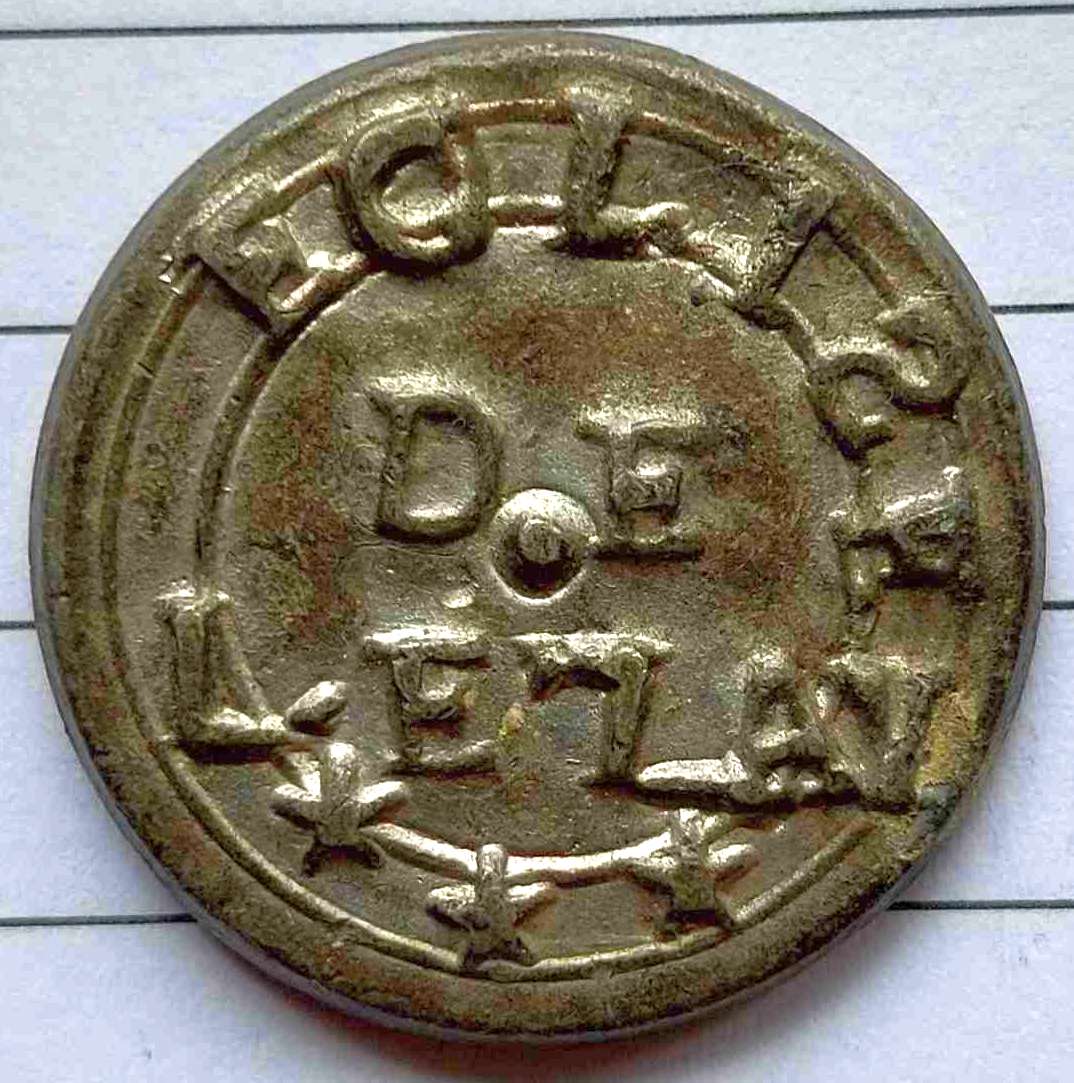 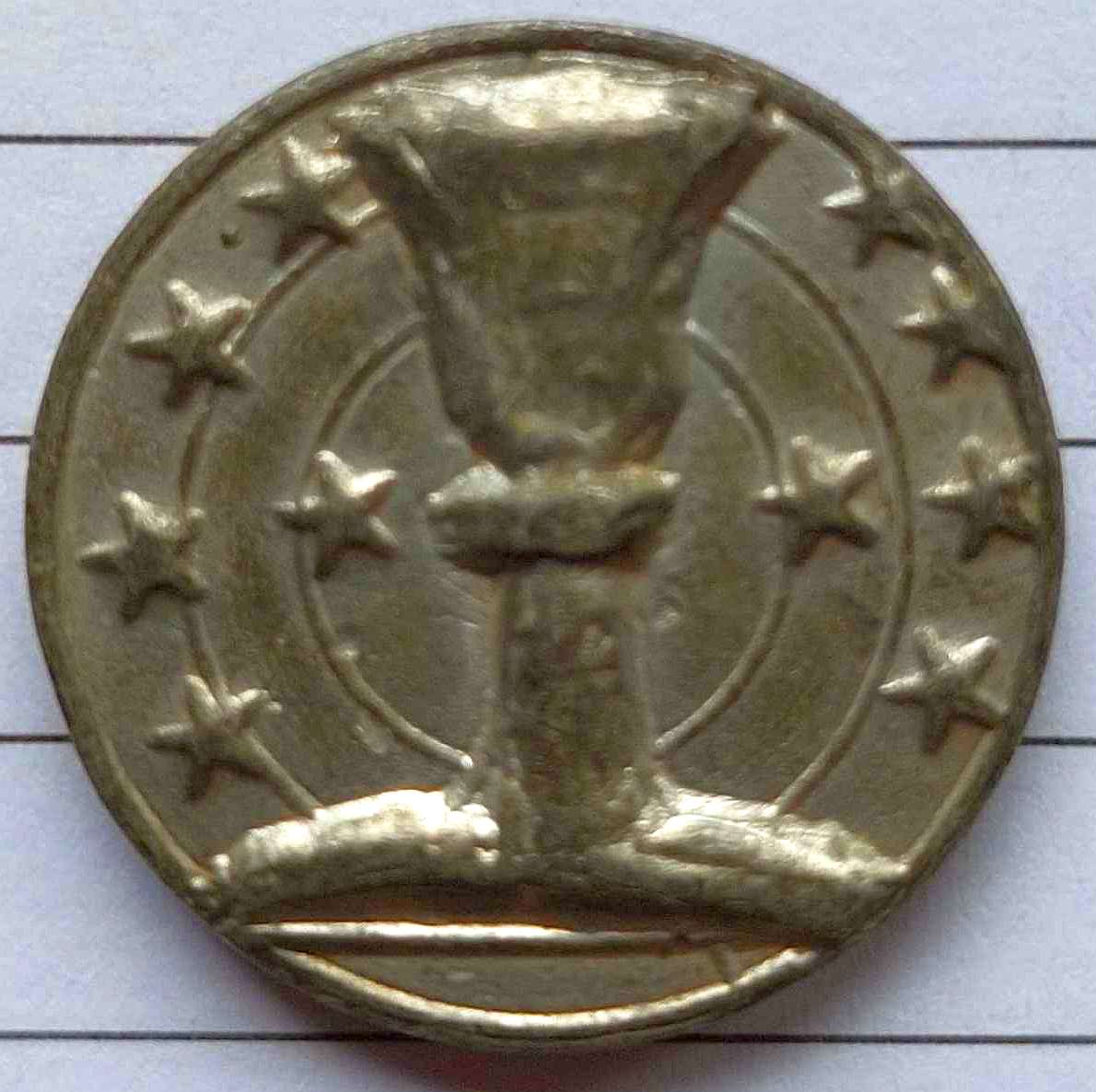 *** Edited by Staff to crop and/or rotate images. Please crop and correctly orient images before uploading. ****** Edited by Staff to clarify topic title. Please put as much info in the title as you can, they are very important. *** *** Edited by Staff to crop and/or rotate images. Please crop and correctly orient images before uploading. ****** Edited by Staff to clarify topic title. Please put as much info in the title as you can, they are very important. *** |
|
|
|
Moderator
 United States
194256 Posts |
 to the Community! |
|
Moderator
Australia
16956 Posts |
It isn't an actual coin, though it does appear to be attempting to imitate a mediaeval coin in general style. If I had to guess, my guess would be a "rennie coin" - a coin struck by historical re-enactors (like the Society for Creative Anachronism) as a demonstration of how folks in mediaeval times made coins.
Don't say "infinitely" when you mean "very"; otherwise, you'll have no word left when you want to talk about something really infinite. - C. S. Lewis
|
|
New Member
 United Kingdom
5 Posts |
Hi thanks for the messages. It comes from a big collection of coins from around the world, it sticks out amongst the rest of the collection which are very old and worn.
It has no obvious denomination so you could well be right.
Cheers
|
|
Pillar of the Community
Russian Federation
5186 Posts |
Quote:
It isn't an actual coin, though it does appear to be attempting to imitate a mediaeval coin in general style. If I had to guess, my guess would be a "rennie coin" - a coin struck by historical re-enactors (like the Society for Creative Anachronism) as a demonstration of how folks in mediaeval times made coins.  I would read the legend as "Folise de Lelay", but I'm not very confident of the "Lelay" part. Google isn't helpful [EDIT: on further look, "Folise" could actually be "Eglise", which is apparently French for "church". I'm still not sure about the "Lelay" bit.] |
|
Pillar of the Community
 Sweden
2124 Posts |
It is a communion token from the protestant church in Lezay, France. The text reads EGLISE DE LEZAY. Here is a piece of text from an article about protestant communion tokens in a French journal about history and literature: 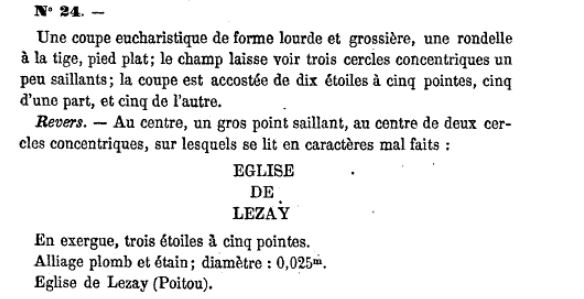 The text describes the token's obverse and reverse, to the point - it even mentions that the characters are malformed. The article is from 1872, so that sets a latest date for the token. @january1may, you were on the right track.  |
|
New Member
United Kingdom
5 Posts |
That is amazing thank you. My family were originally Huguenot French before Emigrating around Europe. This is such an interesting bit of research. Thank you!!
|
|
Pillar of the Community
Russian Federation
5186 Posts |
Wow, what an ID!
I was on the right track yeah... was wondering what the weird letter was but somehow hadn't realized it could be a Z. Still unexpected to see such a precise description for such an unusual item.
|
|
Moderator
United States
54295 Posts |
kudos to erafjel
I'm moving this to a more appropriate category (from ancient)
Show your financial support of the Coin Community Family (click here)See my topic on Mexican Numismatic Medals (click here) |
|
New Member
United Kingdom
5 Posts |
Hi, after Erafjel's great ID I did some basic research and have discovered a family member recorded at the Church in Lezan in 1612.
A great result from an anonymous token, thanks again!
|
|
Pillar of the Community
Sweden
2124 Posts |
|
|
New Member
United Kingdom
5 Posts |
Thanks again for the research. I have a lot of other coins- roman, Islamic, Chinese, European and American still to ID.. I'll take some photo's and see if anyone can knows what they are. Cheers
|
| |
Replies: 11 / Views: 1,302 |
|










 Posted 04/19/2023 12:02 pm


