| Author |
 Replies: 13 / Views: 1,543 Replies: 13 / Views: 1,543 |
|
|
New Member
United States
13 Posts |
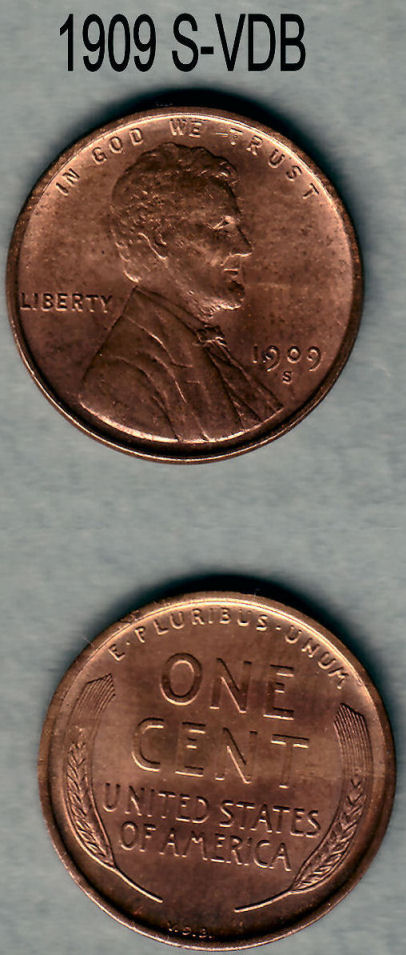
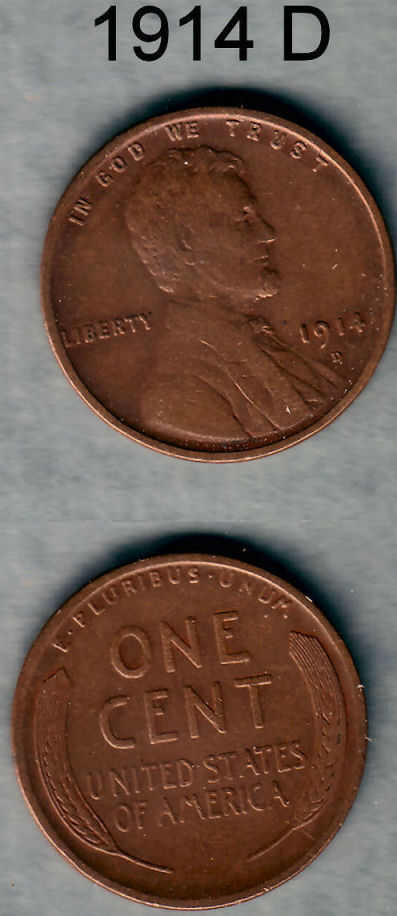
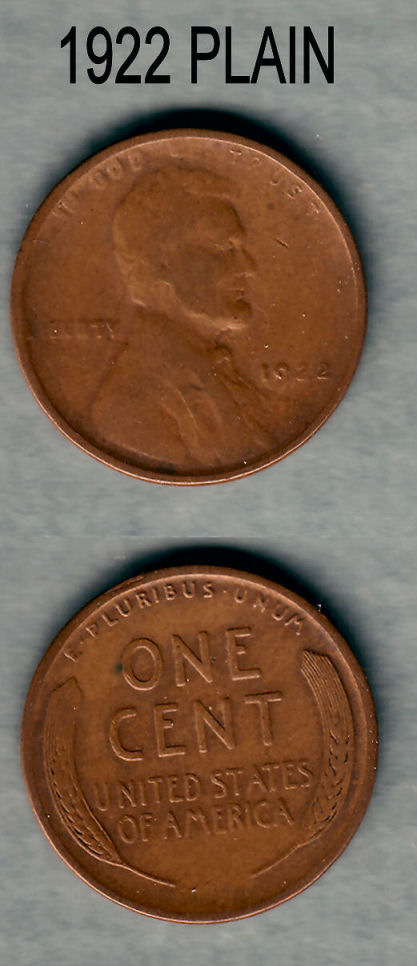
I have a complete set of Lincoln Wheat Pennies (up to mid 1960's). Can anyone give me an idea of the grade of these three? And what other dates may have value? Thanks, Greg Hays p.s. I also have a complete set of Washington quarters. Image:  1909.jpg 1909.jpg84.75 KB Image: 1914.jpg65.42 KB Image: 1922.jpg66.07 KB |
|
|
|
Moderator
 United States
16694 Posts |
The pictures are too small to make an accurate grading observation. Nice coins! 22 Pl. looks to be the strong reverse. Quote:
And what other dates may have value?
You have these 3 and you don't know that  swcoin.ecrater.com
Edited by vermontensium
03/16/2009 10:33 pm
|
|
Moderator
United States
23731 Posts |
 , From the pictures I'm going to say that the 09S-vdb is AU-58. The 1914 looks VF-30, and the 1922 weak strike looks VF-25. |
|
Bedrock of the Community
United States
10982 Posts |
 with echizento's grades but I'd flip flop the 30 & 25. All the early ('09-'15) S mint Lincoln's along with the '24-D and '31-S have significant value. Any early Lincoln (pre-'34) in EF and above is a real keeper in my book if it's well struck.
|
|
New Member
 United States
13 Posts |
I wasnt sure about the 1911-D MS65RD or the 1923 SMS64RB. Looking on ebay. There are a few that are priced pretty high. |
|
Bedrock of the Community
Canada
10743 Posts |
WOW! You have some very nice and expensive coins there Greg19670,and also welcome to the Forum. I would agree with echizento's grades.  |
|
Valued Member
United States
188 Posts |
I agree with Bherring, the 22's are all weakly struck and they tend to grade by the reverse details. It's hard to tell from the pictures but the S-VDB could go MS but it could just as easily come back body bagged for being dipped.
|
|
New Member
United States
13 Posts |
Being dipped? What does that mean?
Thanks,
Greg
|
|
Pillar of the Community
Spain
1361 Posts |
nice coins |
|
Bedrock of the Community
United States
12437 Posts |
Quote:
Being dipped? What does that mean?
Dipping is a chemical cleaning method that removes the original patina of a coin. Brown coppers are usually dipped to try and make them red, red= more valuable. The problem is that this process actually damages the surface of the coin and in reality reduces the value of the coin. Unfortunately, not everyone can detect when a coin has been dipped and some get suckered and pay way too much. Dipping silver coins is not as harmful but it is still quite a controversial thing with collectors. If done properly, it is almost impossible to detect. It should only be done to uncirculated or high AU coins because any silver coin that has spent significant time in circulation should not be blast white and should have some degree of patination However, most do not do it correctly and that leaves spots on the coin and reduces luster. Some will also dip obviously circulated coins giving them a very unnatural look and reducing their value. If I may ask, how did you acquire these coins- inheritance? Usually, someone who has several thousand dollars tied up in 3 cents is pretty knowledgeable in numismatics |
|
New Member
United States
13 Posts |
Yes. Inheritance. My forte is postage stamps. And it's been years since I've devoted any time in that.
I have been learning as I go thanks to sites like this.
|
|
Pillar of the Community
United States
588 Posts |
Other valuable dates are 1931 S, Semi Keys: 1910 S, 1911 S, 1912 S, 1913 S, 1914 S, 1915 S, 1924 D, 1926 S
|
|
New Member
United States
13 Posts |
Thanks for the information.
I'm hoping to pass these on to my son. I purchased a 2003 proof set for him (year of his birth).
I guess I really need to determine which, if any, I should have graded by a professional. This process looks to be expensive.
|
|
Moderator
United States
23522 Posts |
Quote:
I guess I really need to determine which, if any, I should have graded by a professional. This process looks to be expensive. It is expensive, which is why every grading decision should include a cost-benefit analysis. The only really good reason for professional grading is future resale value; if the coins aren't going to be resold, there's no need to have them graded. In your case, I would recommend having all 3 coins graded. Your intent is to pass them on; having done that, their fate will rest upon your son and you should offer him the best options. All 3 coins have a resale value which justifies the cost. As a rule of thumb for myself, I start making slabbing decisions at about the $150 level for a given coin. |
| |
Replies: 13 / Views: 1,543 |
|







 1909.jpg
 1914.jpg
 1922.jpg


 Posted 03/16/2009 10:32 pm





