| Author |
 Replies: 10 / Views: 1,582 Replies: 10 / Views: 1,582 |
|
|
Pillar of the Community
United States
1758 Posts |
Edited by colonialjohn
05/22/2023 10:21 pm
|
|
|
|
Valued Member
United States
133 Posts |
Hi John - interesting topic. Had a question for you - what is the relationship between Chilpancingo and Chihuahua? Are you saying since the Chihuahua mint has plain edge and colonial edge as well as debased pieces known, Chilpancingo pieces could have these features as well because both are cast? Not sure I follow.
|
|
Pillar of the Community
 United States
1758 Posts |
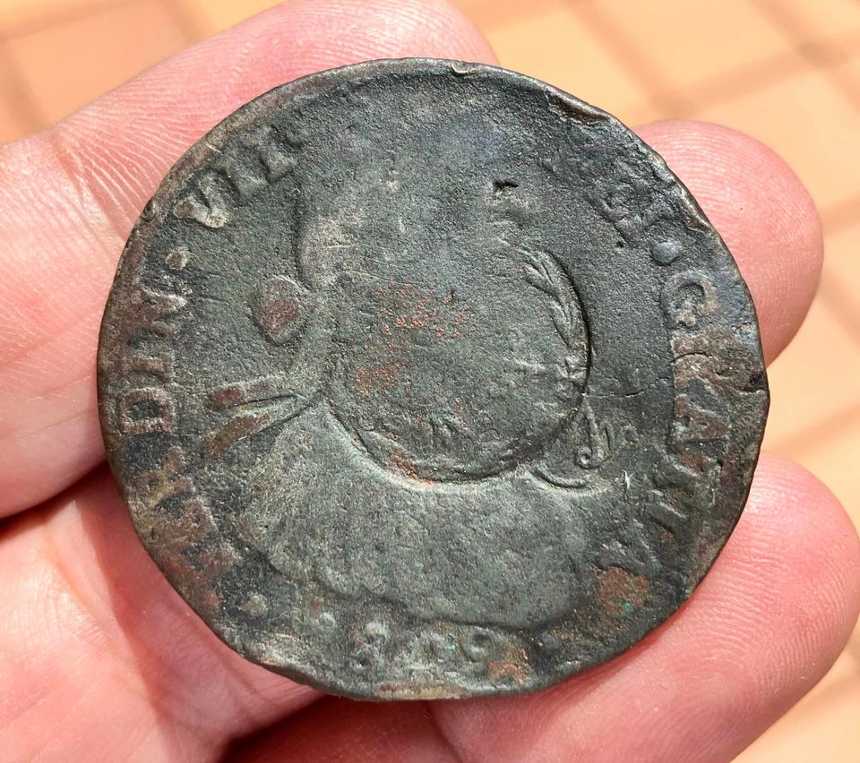
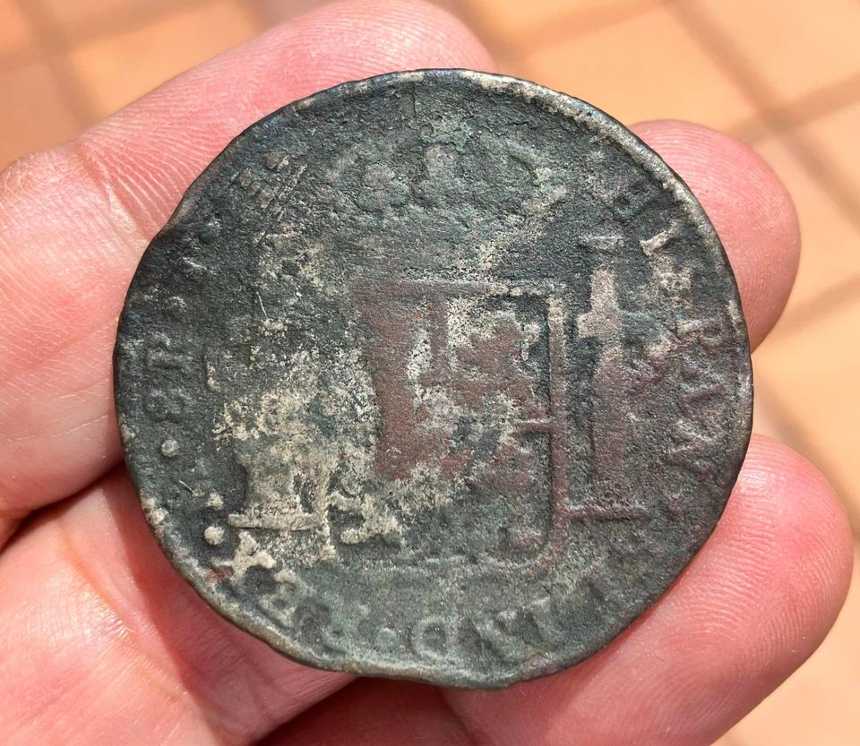
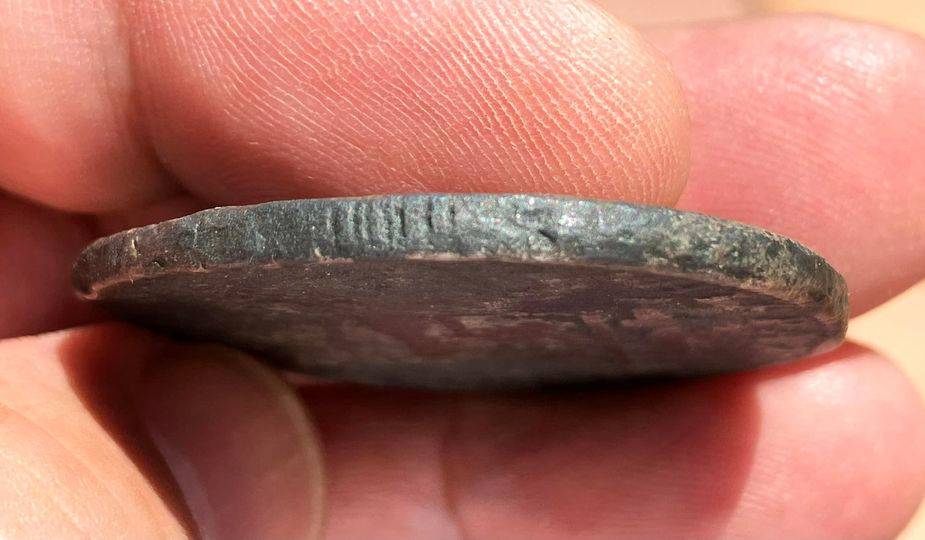
As shown in the Cast Silver 1811-1813 Chihuahua XRF study some pieces were plain edged and some were debased with all having the appropriate T (Treasury) and Pillar of Hercules validation stamps and all purchased from reputable sources. With this type the Chilpanzingo mint stamp should not be OVER this current classified LVA? script stamp whose current purpose is still unknown. Consider this example: https://auctions.stacksbowers.com/l...ental-damageHere is another good example. How do you account a Morelos stamp underneath a Chilpanzingo Royalist Mint Stamp? Did Morelos steal this piece before it had a chance to become validated by the Royalist? Was it never applied a Chilpanzingo mint stamp initially? Then it was reacquired by the Royalists and validated properly with the Congress of Chilpanzingo mint stamp after its possession by the Insurgents (i.e., hence the Morelos stamp). If such odd things happened could not this LVA? script be some form of a Royalist validation stamp and possibly as with the Chihuahua pieces they validated debased silver, off-metal alloys or underweight issues ... as emergency money was constantly needed? Some specialists believe if something is not at or very near the regal silver level it must be a modern fake and/or not a contemporary period piece. A black/white outlook mentality. Why create this counterfeit in a debased silver alloy? See this previous discussion back in the dark ages of counterfeits in Mexico <BG>: http://goccf.com/t/114462&whichpage=4 Most experts agree if a Royalist found a debased issue such as this piece it would never be validated but simply remelted or we are discussing this as a possible CCC of the period. An enigma of a piece to consider for some collectors? Edited by colonialjohn
05/23/2023 4:15 pm
|
|
Pillar of the Community
United States
1758 Posts |
LVA (top picture) & ZMY (bottom picture) Stamps: 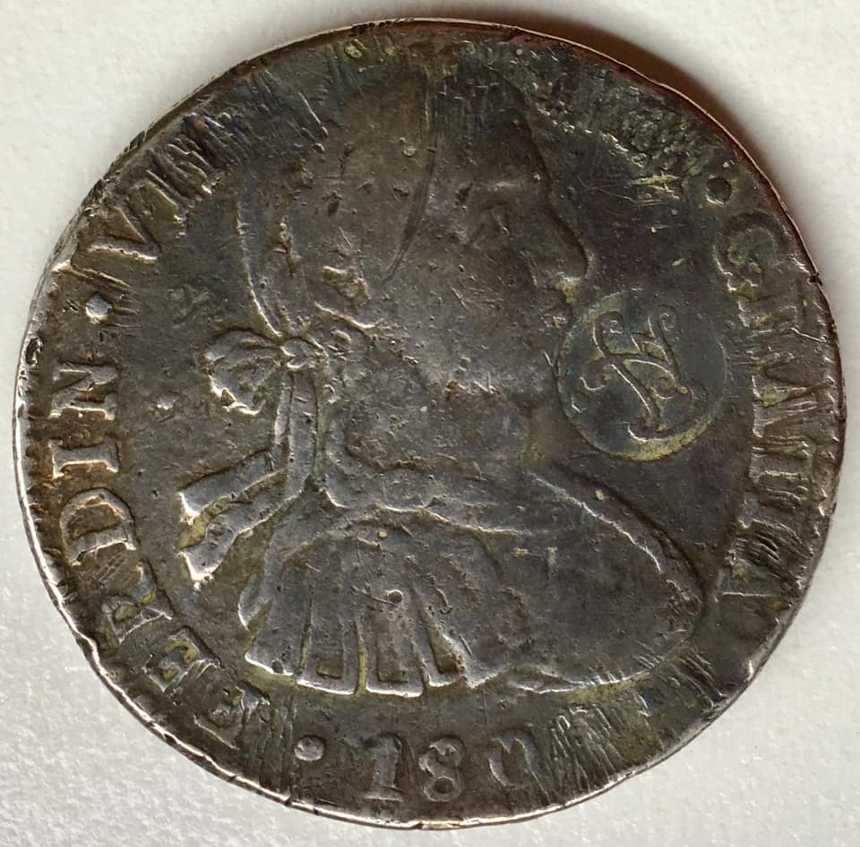 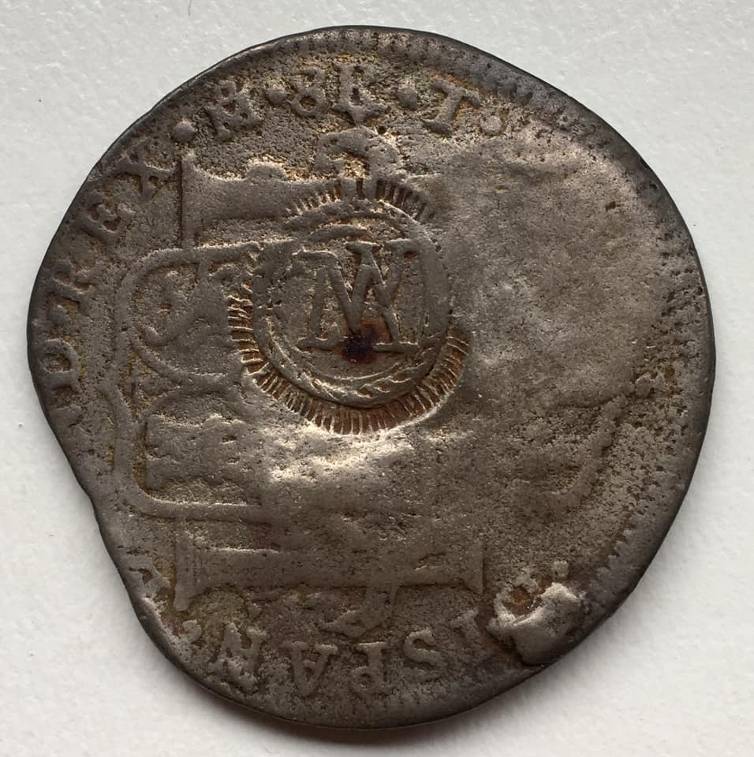 Consider this stamp similar to LVA stamp and ignore references to the ZMY stamp which it totally different. Currently most specialist consider the letters to be LVA and not LVS. Edited by colonialjohn
05/23/2023 4:16 pm
|
|
Pillar of the Community
United States
1962 Posts |
John, as I've mentioned before, these WOI stamped pieces are not my forte... I've looked at enough to get a decent grip (in case I find any in the wild) on the fabric of what genuine hosts and stamps should like as compared to fakes, including the obvious ones that started coming out of Spain around 2010 or so. As such, I've only casually glanced at the research and debate about which stamps should appear with/over/under other stamps and when. So, I cant offer any specific insight. That said, a few observations: I think this stamp you showed is fake. Just did a run through acsearch for any examples of that stamp (searching LVA, LVS, ZMY, even Allende... am I missing any terms?): https://www.acsearch.info/search.ht...%22+Allende)EVERY EXAMPLE, from the most honest looking to perhaps iffy, has at least one other stamp along with it. Aside from that, I don't like how evenly impressed the stamp on the piece you showed is (perfect circle border)... yet with rather low relief. I also don't like the host. It's cast, but just doesn't present like typical hosts these stamps appear on. ------------------ One more stupid comment: wouldn't the most obvious way to view/see the stamp be with the dot to the right... as a period after initials/an abbreviation? It doesn't look to be the dot of an I or a J, so I don't see how it could sensibly be in any other position except as a period, to the right. Like so: 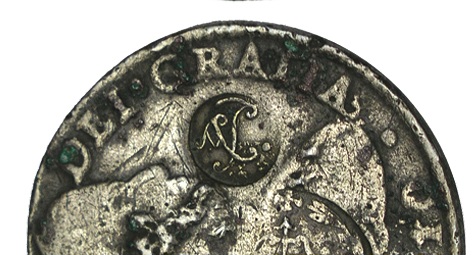 Now, what exactly that would make the symbol be read as is debatable... but "LVA" could be plausible. PS - That 2nd stamp you showed in the previous post, the reverse side with the straight-lettered initials/monogram - I've never seen that before. So that is supposed to be a "ZMY"... and/or is it called/theorized to stand for something else? Do you have any auction appearance or other informational links for that type? Edited by realeswatcher
05/24/2023 5:15 pm
|
|
Valued Member
United States
133 Posts |
Hi John, after a couple more years of reading I think I finally caught up to you here, lol. I'm curious if you ever had any testing done on your original piece? I bought a Chilpancingo piece last year and it was low weight and debased at 30% silver/70% copper.
|
|
Pillar of the Community
United States
1758 Posts |
See my USMEX Journal - September 2013 "1811-1822 Chihuahua Eight Reales Metallurgical XRF Study" by John Lorenzo. Actually it was not deleted but reappeared in the MNA website under Journals. No real change in information since 2013 with 1811-1813 Chihuahua pieces and expect some rare debasement in some pieces. Expect a few with plain edges but also very rare. I am working on a new SEM/EDS study on Monclova pieces like the recent upside down Monclova in the Briggs & Bustos Counterfeit auction. A few surprises. Its an unusual piece. In terms of your question with Chilpancingo a lot has changed since Max Keech did his June 2022 MNA Journal. These Supreme Junta stamps were applied at times of striking. Post a picture of your debased silver issue and will continue this conversation. Moving forward with all the work Max Keech has done we can with great confidence determine what is a genuine mint stamp and what is a fake stamp. From this if the mint stamp is real we can expect some deviation of silver purity but this still has to be explored. We know what the mint stamp should look like, we know the proper year range, we know the proper host coins - we know now the proper allowable mint stamp combinations with Supreme Junta/Morelos/Lva combinations - so silver/copper ratios I would say still have to be explored and what is acceptable? We should expect some deviations say from ~90% Ag. Its mint stamp dependent / its host dependent. JPL
Edited by colonialjohn
03/25/2025 10:36 am
|
|
Valued Member
United States
133 Posts |
Thanks for the reply, John. I was curious about the composition of your original piece because it does look bronze. Seems like a bronze piece could be a CCC, but possibly genuine if it at least had some silver. My coin is below. Based on the composition it seems to me that the insurgents weren't too picky about the silver content of these pieces. 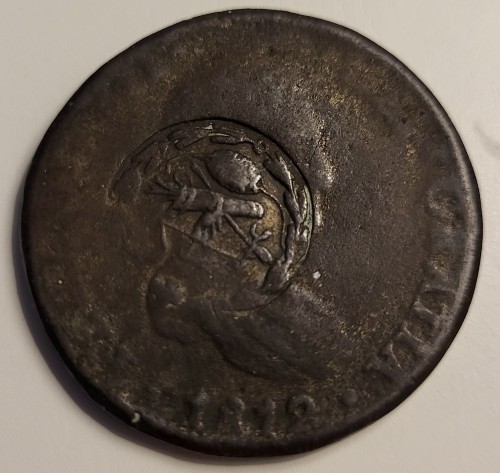 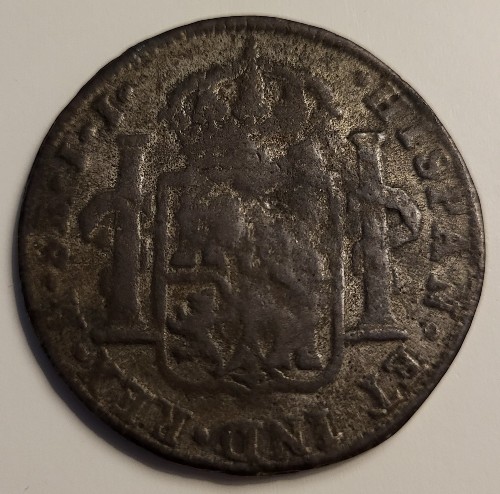 |
|
Pillar of the Community
United States
1758 Posts |
First I consider all these piece legitimate with the exception of the ZMY mint stamp on the Villa piece but the VIlla piece does not break any rules in terms of the proper Lva position (right central obverse), the Lva mint stamp in its design and being by itself is acceptable (i.e., occurs 2% of the time) according to Keech. Also Supreme Junta Arms over a Morelos stamp (Stacks piece) seems legal as Morelos did work with the Supreme Junta Insurgency group in 1811 before going out on his own in mid-1812.
What about the 1809 Supreme Junta Arms over Lva. This occurs 20% of the time where these mint stamps are found together. Whether the Supreme Junta Arms mint stamp is permissable over an LVA stamp is unknown to me at this time.. Keech speculates the Lva belongs to Osorno but there is no documented proof. A debased silver cast alloy.
3/50 Piece:Your piece is 1812 Mo JJ or KM#111 for the prototype. Host coin is acceptable. Its the second rarest host at a 5% occurrence. The most rare is Charles III (1772-1789) at a 3% occurrence. With a 5% occurrence and SO late as a mother coin (1812) could this explain its low silver appearance? Probably. BTW to me it looks cast then mercuric silvered based on the reverse. It appears also to have more reverse mercuric silvering than the obverse silvering which poses the question since the mint stamp is legitimate based on its design why is it on this degraded low Ag host coin? It was the end of the cast production period for the Supreme Junta Insurgent period. This seems the likely answer IMO. A XRF gun can't pick up mercury. Your coin would be better served in a vacuum type XRF analysis that can pick up Hg and show it was mercuric silvered BTW. In this case you would pick up probable higher Ag levels with reverse target points than obverse target points. Hg can not be detected using a cheap crude XRF gun analysis. I agree after this Monclova SEM/EDS project I am currently working on this would make an excellent MNA Journal study. Perhaps later this year like Winter 2025. What alloy Ag levels are acceptable in a casted coin from a Mother coin? Good question. TO BE DETERMINED/CONTINUED. IMO. JPL
Edited by colonialjohn
03/25/2025 8:13 pm
|
|
Pillar of the Community
United States
1962 Posts |
Cast hosts of the Proper Bust design are rather unusual, pushing the date boundary - but 1812 seems early enough and that stamp definitely looks good.
I think more silvering showing on the reverse here is simply a product of having more protected areas design-wise.
So many moving parts with these to get a grip on - proper combination of stamps, whether variant stamp "dies" are genuine/acceptable, in the proper sequence (which isn't always obvious as made if the stamps are sloppy), on proper host dates/types/metals/surfaces. Frankly a mess - really a project and for the truly astute specialist at that.
John, I mentioned this to threefifty recently relating to a different pice - have you browsed through the website for the Bank of Mexico ("Banxico") collection of these? The pedigree information is incomplete or missing on a lot of them, but many look kosher and among those are an incredibly large variance in weights and visibly apparent metallic composition. Many look nearly all "coppery" like threefifty's 1812. Pictures aren't the greatest but decent enough to review.
I would presume Max has looked through these all or even had the chance to see the cabinet in person.
|
|
Pillar of the Community
United States
1758 Posts |
Max even had people from his current company go into the archives and look at all the historical documents. I did go through the coin archives both for War of Independence mint stamps and Kleebergs. Some pictures are tough to view. But you make a good point. Briggs & Bustos recently had a Counterfeit Sale. Check out lot 24. We have this from the lot description: Countermark of "Chilpancingo" representing the insignia of the Supreme National Congress composed of a halberd on the left, a quiver on the right, a hand in the center holding a bow with an arrow and a sling underneath. As an unalterable rule of this issue, all the punches are characterized by the loop of the sling located on the same side of the quiver and most frequently they are presented with partial weakness, in contrast, the loop of the sling in the punch of the piece offered here is on the left and the Counterstamp was applied with too much pressure, in addition to the fact that all the elements present a cruder aspect, therefore modern FALSE, barely overlapping with the apocryphal Morelos counterstamp. Counterstamps applied on the bust of an authentic 8 Reales 1803 Mo FT coin, intentionally corroded after the application of the counterstamps, perhaps to make it appear to be melted, profuse dark patina. In paper envelope with annotations and supposed Iguala provenance, Ex. Clyde Hubbard. Note the bold highlight. Correct. Its important. 3/50 piece conforms to all the rules. Its a good mint stamp by the Supreme Junta. Its complex for sure. The learning curve is long and if not a MNA member - impossible.
|
| |
Replies: 10 / Views: 1,582 |
|









 Posted 05/22/2023 10:18 pm


