| Author |
 Replies: 10 / Views: 845 Replies: 10 / Views: 845 |
|
|
Pillar of the Community
Italy
1135 Posts |
I'm unable to find or authentic this one... I wasn't able to weigh it but it felt ok in hand... it is likely around 30 mm in diameter... I didn't see obvious fused planchettes; hard to tell if it is rim wear or fused. It is a bit bubbly and I have never handled a large roman silver to compare. Any thoughts? 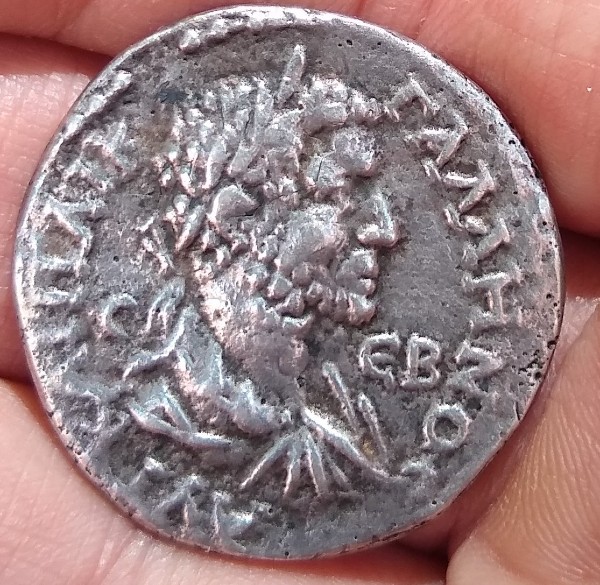 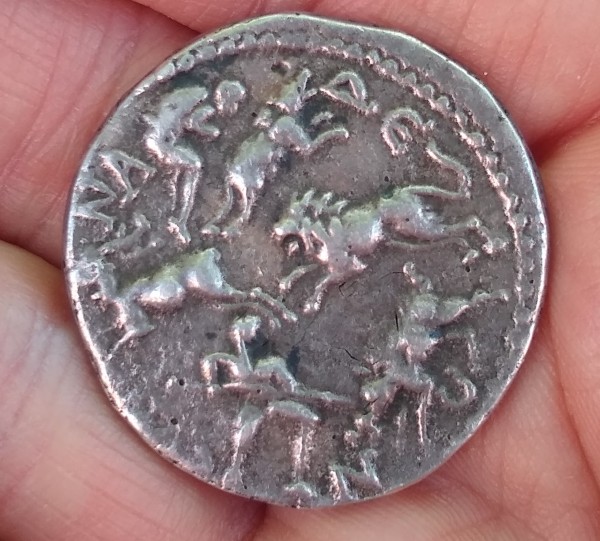 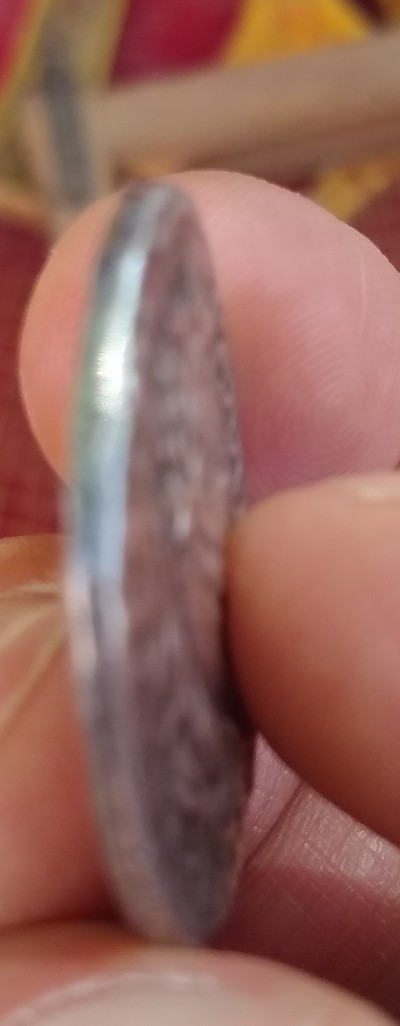 Edited by Roma2021
06/26/2023 07:48 am
|
|
|
|
Moderator
 United States
34538 Posts |
The bubbles and soft features are very concerning to me too.
"If you climb a good tree, you get a push."
-----Ghanaian proverb
"The danger we all now face is distinguishing between what is authentic and what is performed."
-----King Adz
|
|
Pillar of the Community
 Italy
1135 Posts |
@spence... I passed on the coin. Too much incentive to fake this one.
Any chance you saw the two unknown and possibly unknowable pieces I posted under other threads?
|
|
Moderator
United States
34538 Posts |
Yeah sorry but I'm definitely not an expert on buttons. You should check back now and again though as sometimes these things take some time.
I'm quite sure that this current piece is purporting to be Roma/Greek so will move this thread to the ancients subforum.
"If you climb a good tree, you get a push."
-----Ghanaian proverb
"The danger we all now face is distinguishing between what is authentic and what is performed."
-----King Adz
|
|
Pillar of the Community
Italy
1135 Posts |
Thanks @spence.
Sorry. I thought I put this in the right section.
|
|
Valued Member
United States
319 Posts |
I am in no way an expert, Roma2021. There is simply something off about the specimen. Especially crude in many ways. The gap in the dotted edge element is strange. Not only are the tiny voids troubling, but also the appearance of (what appear to be) stress fractures on the reverse. As if the coin had been stamped or pressed. A weight and clear edge pic would offer some beneficial information.
|
|
Pillar of the Community
United States
7066 Posts |
|
|
Pillar of the Community
United States
1046 Posts |
The edge picture is a bit blurry but it kind of looks like the remnants of a casting seem that's been filed.
|
|
Pillar of the Community
Italy
1135 Posts |
I couldn't get a good look at the coin. The seller sells at a market and has had good stuff before...
He described this as a roman colonial...I'll take a better look in two weeks but I'm pretty convinced it's a fantasy fake.
|
|
Moderator
Australia
16967 Posts |
Nobody in Roman territory in Gallienus' time was making large silver coins. For any reason. The silver denarius itself had disappeared, replaced with the "double denarius" which was in fact by this time made of essentially zero percent silver. Roman Provincial silver, as a whole, is largely unknown outside of a few select locations such as Egypt, Caesarea-in-Cappadocia, Ephesus and Antioch. Silver coinage issue was an Imperial prerogative, rather than under local council control as with bronze coins. You're very unlikely to find Roman Provincial coins in Italy, silver or bronze, in an archaeological context, as they would not have circulated there at all, so a random street vendor isn't likely to stumble upon one. Finally, here is the bronze coin this was copied from: a provincial of Gallienus from Synnada in what is now central Turkey. Don't say "infinitely" when you mean "very"; otherwise, you'll have no word left when you want to talk about something really infinite. - C. S. Lewis
|
|
Pillar of the Community
Italy
1135 Posts |
Thanks @sap. The fake coin I saw seems to be a direct copy of this coin. It fits the diameter and likely the weight.
The market where I buy a lot from is called "porta portese". I live about 100 meters from it. It is the largest non-food market in Europe and some absolutely crazy stuff appears at it. Nonetheless, you're right. This coin is a fake of that bronze.
Thanks for your help.
|
| |
Replies: 10 / Views: 845 |
|








 Posted 06/26/2023 11:48 am


