| Author |
 Replies: 7 / Views: 959 Replies: 7 / Views: 959 |
|
|
New Member
United Kingdom
20 Posts |
Hello there everyone, I have this coin (part of my late father-in-law's collection), and would really appreciate any help with ID, if anyone could please help? Not sure which is the obverse/reverse, apologies - I have only posted a picture of one side of this coin. Any sharing of wisdom greatly appreciated. Thanks in advance :) -Ockycoin 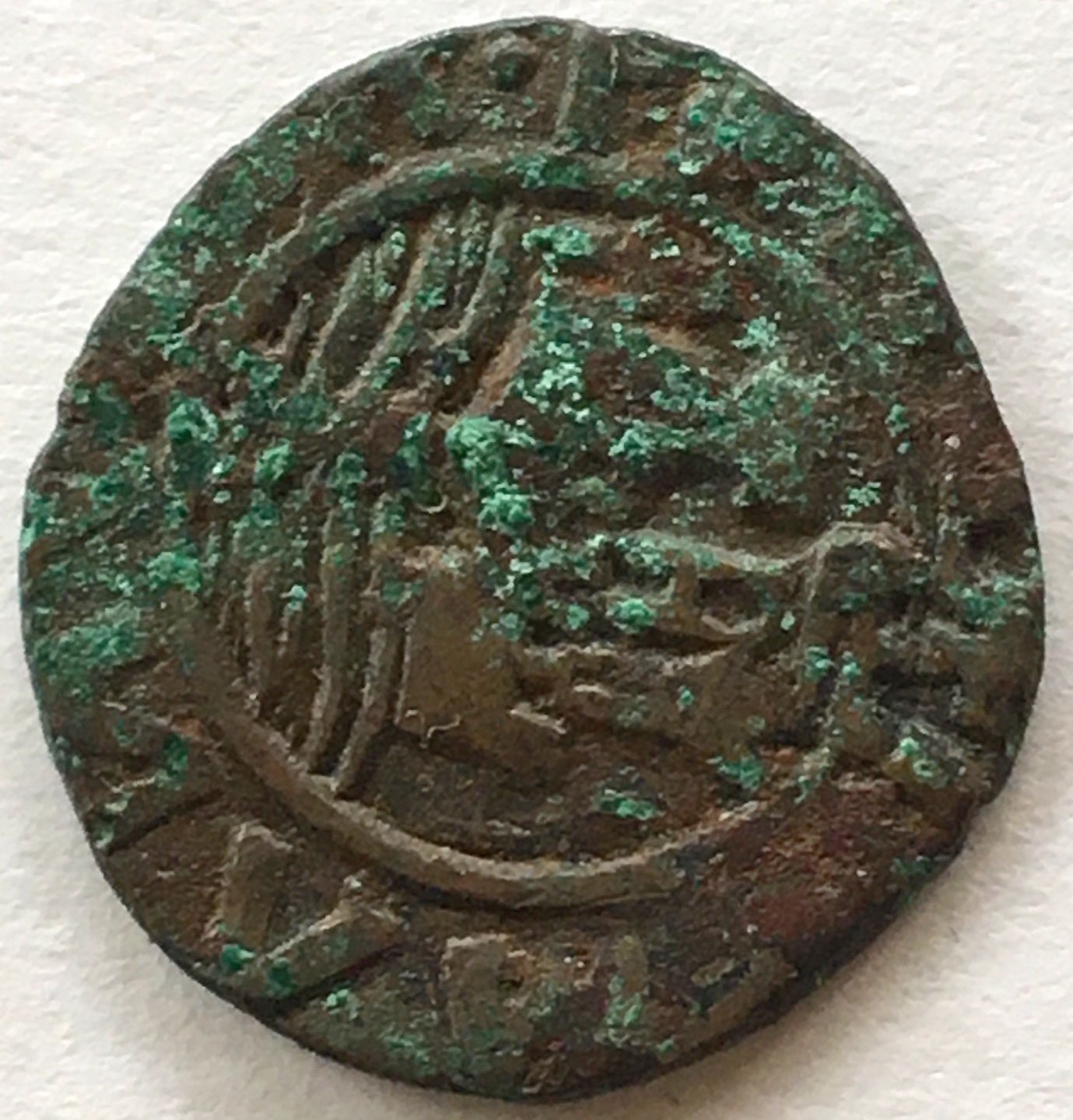 |
|
|
|
Moderator
 United States
34572 Posts |
Quote:
I have only posted a picture of one side of this coin. Please add a picture of the other side of the coin to this thread. Also, please include the weight and diameter as all of this information can be helpful with the identification process. Thx. With that said, my first impression is that this is a Portuguese copper, such as this one from the late 15th century: https://www.acsearch.info/search.html?id=8150206"If you climb a good tree, you get a push."
-----Ghanaian proverb
"The danger we all now face is distinguishing between what is authentic and what is performed."
-----King Adz
|
|
Pillar of the Community
 United States
8076 Posts |
Edited by tdziemia
06/27/2023 9:07 pm
|
|
New Member
 United Kingdom
20 Posts |
Hi again, Thank you both for your comments and shared wisdom :) The coin is approx. 18mm diameter, and weighs 2g. I've attached an image of the coin's other side to my reply. Thanks again and best wishes, hopefully this will give enough info for a definite ID :) 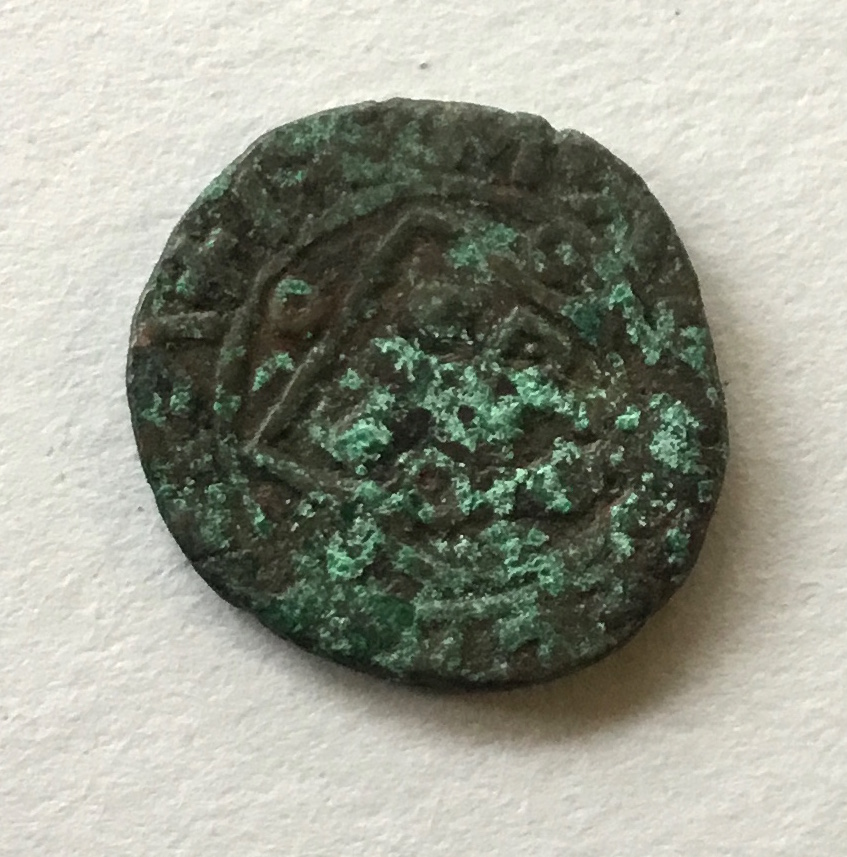 |
|
Moderator
Australia
17031 Posts |
That's definitely the Portuguese coat of arms.
Don't say "infinitely" when you mean "very"; otherwise, you'll have no word left when you want to talk about something really infinite. - C. S. Lewis
|
|
Pillar of the Community
Portugal
767 Posts |
@ tdziemia you are correct.
I am no expert in struck medieval coins, cannot help identify which type.
Coins like these were first struck in the late medieval era by Ferdinand the debaser of currency. Some of those are quite rare, they would be weak a silver alloy.
Yours is cooper, those start with Afonso V. The circle over the shield narrows it to John II to João III. The size means it is probably João III.
Edited by jecz79
06/28/2023 6:03 pm
|
|
New Member
United Kingdom
20 Posts |
Thanks everyone for being so helpful :)
|
|
Pillar of the Community
Portugal
767 Posts |
This led me to read the most up to date information about the ceitil. I should catalog mine some day.
I told of king Fernando because he had a coin of similar design in weak silver alloy. The design of a castle behind waves, and the arms in the back, appears in other coins. But the ceitil proper is only the copper coin.
It was the first portuguese pure copper coin. Some say the design is a castle behind a river meaning the city of Porto, and comes from the older similar coins. Some say it was meant to commemorate the taking of Ceuta, a castle by the sea, in north africa in 1415. It was worth 1/6 of a real.
Perhaps the use of the design in the ceitil and the gold escudo of the 1400s was a commemoration of that event but inspired by the older coins.
I see some more recent research that places the fist ceitis in the reign of Afonso V, in 1448. I believe it is correct.
Your ceitil is from the king Manuel I era. I see in the obverse the start of M A and a reverse N . In the reverse around the cross on top 'A + ? M A ..'. It is from EMANVEL or MANVEL.
Edited by jecz79
07/01/2023 7:08 pm
|
| |
Replies: 7 / Views: 959 |
|







 Posted 06/27/2023 9:06 pm


 )
)


