| Author |
 Replies: 13 / Views: 738 Replies: 13 / Views: 738 |
|
|
Valued Member
United States
117 Posts |
I purchased this 197X D 1c a few weeks ago since I've never really seen one minted between the 60-80's that have missing digits in the date. I'm familiar with with the common missing digits in the 1943 pennies and a few in the 40's and 50's. I have also seen some in the 80's & 90's. I Believe this is a 1971 D. From my experience most pennies struck in this era are well struck and any Die Deterioration still produces a readable date. Personally I would have to attribute this error to either a misaligned or worn die possibly with a planchette issue as well. That's my best guess anyway. Appreciate your thoughts. Thank you. 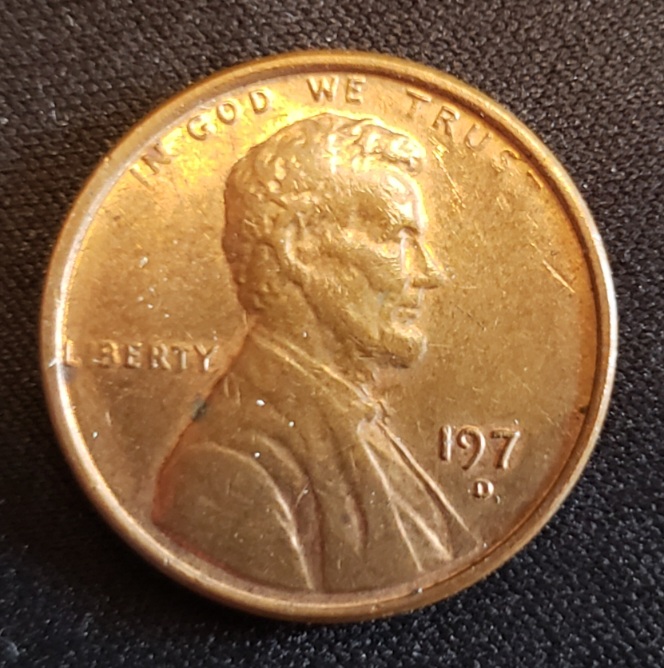 |
|
|
|
Pillar of the Community
 United States
8980 Posts |
-makecents-
Edited by -makecents-
07/04/2023 7:54 pm
|
|
Valued Member
United States
301 Posts |
|
|
Valued Member
 United States
117 Posts |
Thanks for your insight. Beyond simply using the term " Grease Filled Die" to describe a certain error I find it hard to believe that's the actual cause of any missing devices on any coin. A bit of logic and laws of thermodynamics eliminates the possibility of grease from obstructing any part of the coin when struck. Heat and pressure would cause the grease to burn away. My second and simpler argument would be, apply grease to a hammer, strike your finger, a nail, a board... whatever. It's still going to produce the same result. Broken finger, driven nail, indented wood. It simply doesn't make sense. Since I haven't taken the time to field test this theory I would assume the worst grease could do to a coin is cause discoloration from the heat and pressure. Anyway, I digress. I wish there was legitimate research into this specific error attribution. I agree, by the common term this coin would fall into the category of Grease Filled Die. However, I'm confident that coins similar to this penny aren't created in that manner. |
|
Valued Member
United States
117 Posts |
TO: Dutch-Tigger, thanks for the reference on the research. I've worked with large matel presses for years and still have a difficult time seeing how grease (on it's own) can eliminate any device from the the coin. The research looks sound and I do appreciate that link. Thank you again.
|
|
Pillar of the Community
United States
8980 Posts |
|
|
Moderator
 United States
34549 Posts |
Ozz, I respectfully think that you are making a false comparison here. A major difference between hitting a greasy finger with a hammer and a partially-filled die striking a coin is that in the case of the die, the grease has no where to go regardless of whether it is a solid or a liquid. Neither of these are particularly compressible, especially compared with the flesh of a finger.
"If you climb a good tree, you get a push."
-----Ghanaian proverb
"The danger we all now face is distinguishing between what is authentic and what is performed."
-----King Adz
|
|
Bedrock of the Community
United States
94367 Posts |
Have to agree.  |
|
Moderator
United States
106729 Posts |
same here, I'll have to agree with Spence. If grease gets into the recesses of the die (Incuse devices on the die) the grease would have no place to go during the strike - instead of fluid dynamics here it is more Hydraulic dynamics, if there is thick grease in the incuse device of the date in this case, when tie hammer die comes down the grease cannot vacate enough to allow the metal to take its place.
|
|
Valued Member
United States
301 Posts |
Quote:
TO: Dutch-Tigger, thanks for the reference on the research. I've worked with large matel presses for years and still have a difficult time seeing how grease (on it's own) can eliminate any device from the the coin. The research looks sound and I do appreciate that link. Thank you again. On the contrary, this is very dirty grease with metal fillings and other environmental debris mixed in and will become so hard that if and when released from its device tomb, can become a miniature Die embossing its shape into coins. 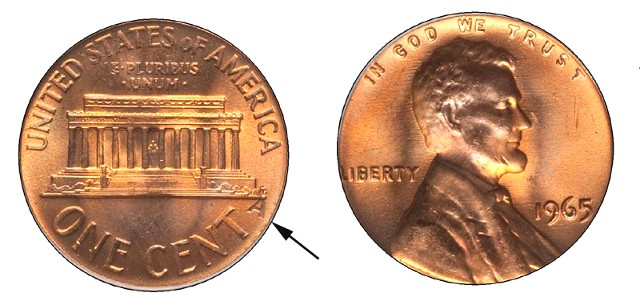 You need to read this complete section on Erro Ref  https://www.error-ref.com/?s=dropped https://www.error-ref.com/?s=droppedEdited by Dutch-Tigger
07/04/2023 9:39 pm
|
|
Bedrock of the Community
United States
79001 Posts |
|
|
Pillar of the Community
Canada
6244 Posts |
Quote:
@ Ozzy5150
I've worked with large metal presses for years and still have a difficult time seeing how grease (on it's own) can eliminate any device from the the coin. Those are four column presses with hot grease temperature control. Not same as the Gräbener coins presses in that time. Those presses Metal Presses four columns or theirs variety C Presses still be use today for the Hubs and Die. Edited by silviosi
07/05/2023 5:40 pm
|
|
Pillar of the Community
United States
7174 Posts |
When somebody say's Grease filled, it takes up a lot of things. Have you ever looked through bags or OBW rolls. You will see a clear to white wax stuck to the coin. I think that is what they used as lubricant in the 50s 60s and 70s. Whatever they use will get stuck onto the die. Every coin that is struck will have the same devices effected. There is no place for the contaminate to go until as stated above it falls out.
|
|
Pillar of the Community
Canada
6244 Posts |
@ Cujohn, will be interesting to find out what kind of grease they use in that time.
Me what I know it is the been only one shift of work, in 95% of the time the Dies rusty. I will like to know that grease.
|
| |
Replies: 13 / Views: 738 |
|





 Posted 07/04/2023 8:15 pm