Quote:
You can't say it's impossible. Right?
Very few things in this universe are genuinely impossible. It's not impossible that all of the oxygen molecules in the room you are sitting in spontaneously decide to migrate up into the top-northmost corner of the room you're sitting in, and remain there long enough for you to asphyxiate. That's "not impossible" either - just very, very, very improbable.
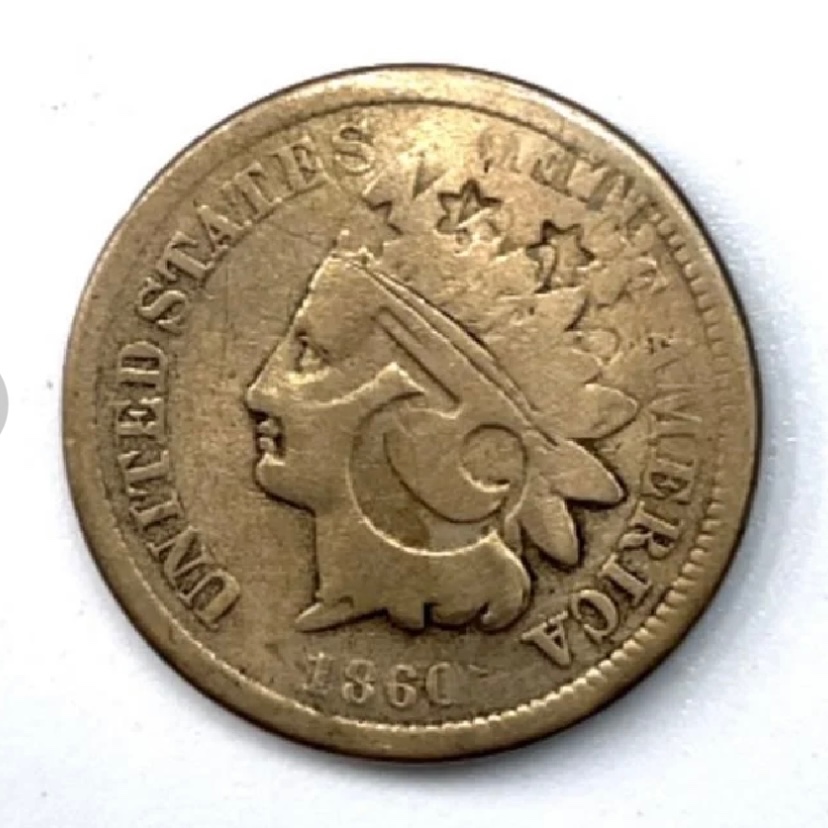
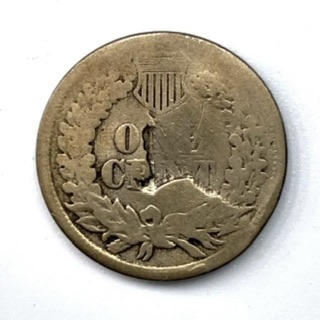
To make your coin like this in the mint, a number of extremely improbable events need to happen, sequentially:
- A normal 1860 penny gets struck, then "left behind" in the Mint. For six years.
- Some years later, while striking a batch of nickels, a nickel die cap occurs (where a normally struck nickel gets stuck inside the die, instead of being ejected, and the coin is used as the de-facto die for a subsequent striking).
- The lost penny magically reappears just at that moment, and mysteriously happens to land itself inside the coin press where the capped nickel is about to create a brockage.
- Instead of a regular brockage mint error, this "quasi-brockage error" occurs instead. It then doesn't get stuck or jam the die on its way out of the press.
- This coin then somehow escapes the eagle eyes of the quality control inspectors, and enters circulation (presumably as a penny, despite the fact they were striking nickels that day).
- The coin circulates for quite some time, given the amount of wear evident upon it, and nobody noticed that it was odd or unusual in any way, since they all seem to have just spent it as a penny.
Now, compare this sequence of consecutive highly improbable events, with the following:
- A perfectly normal 1860 penny is struck, and enters circulation for at least six years.
- A perfectly normal
Shield nickel is struck, some years later, and also enters circulation.
- At some future point (perhaps decades after both coins were struck), these two coins get squeezed together, either accidentally or deliberately, leaving the partial impression of the nickel upon the cent. How much damage the cent caused on the nickel is unknown, since we do not have the nickel to examine.
Science relies on the principle known as Occam's Razor. It basically states that, when you have to choose between two possible explanations, choose the one with the fewest number of improbable events, because that is the option that is most likely to be true.
Could your coin's current state have been created inside a Mint? Yes. But it does not need to have been made this way inside a Mint, since anyone with access to two coins and a relatively low pressure vise can recreate a similar-looking coin. So, the most probable explanation is that this occurred outside of the Mint, and is therefore not a mint error.
Don't say "infinitely" when you mean "very"; otherwise, you'll have no word left when you want to talk about something really infinite. - C. S. Lewis




 Posted 08/01/2023 6:30 pm