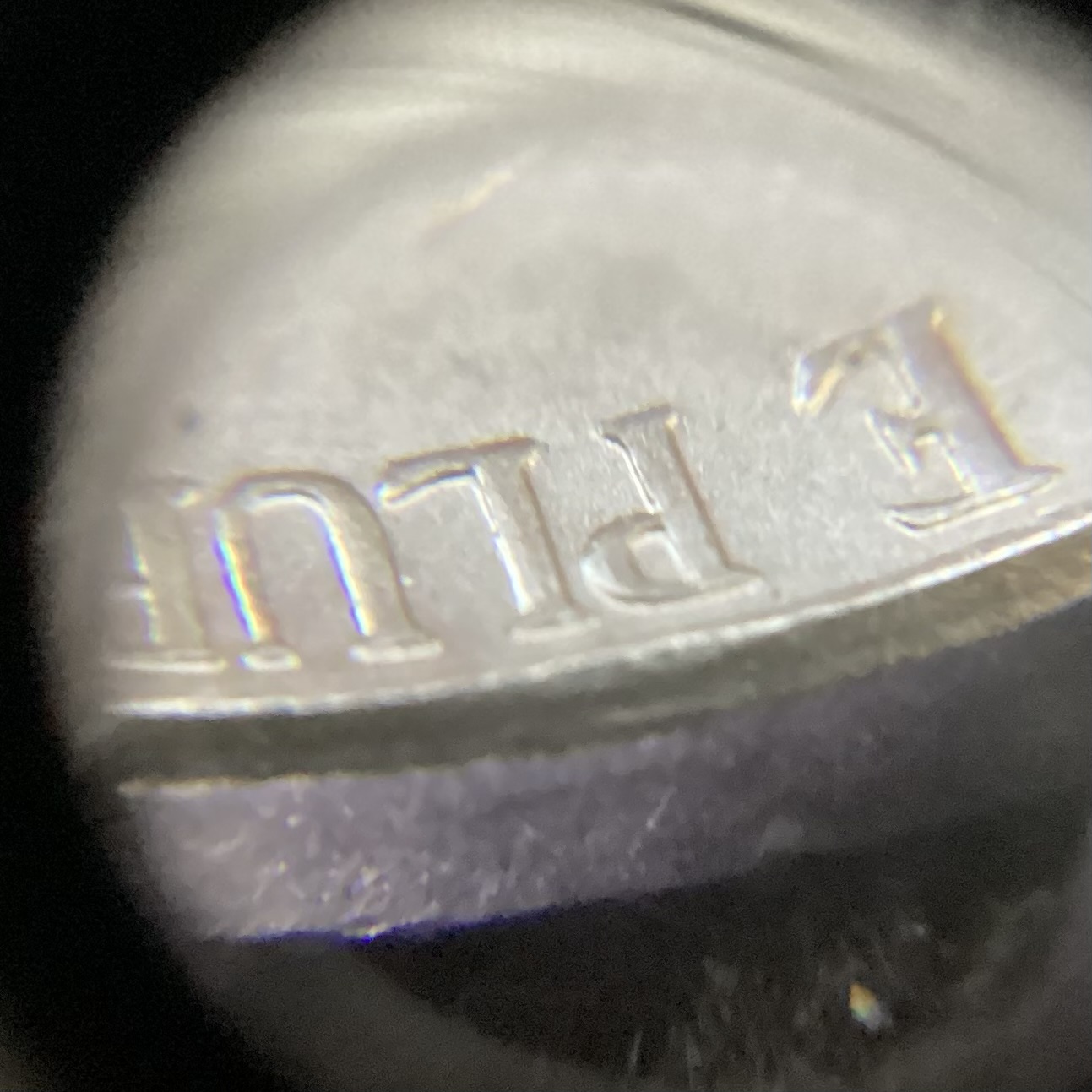
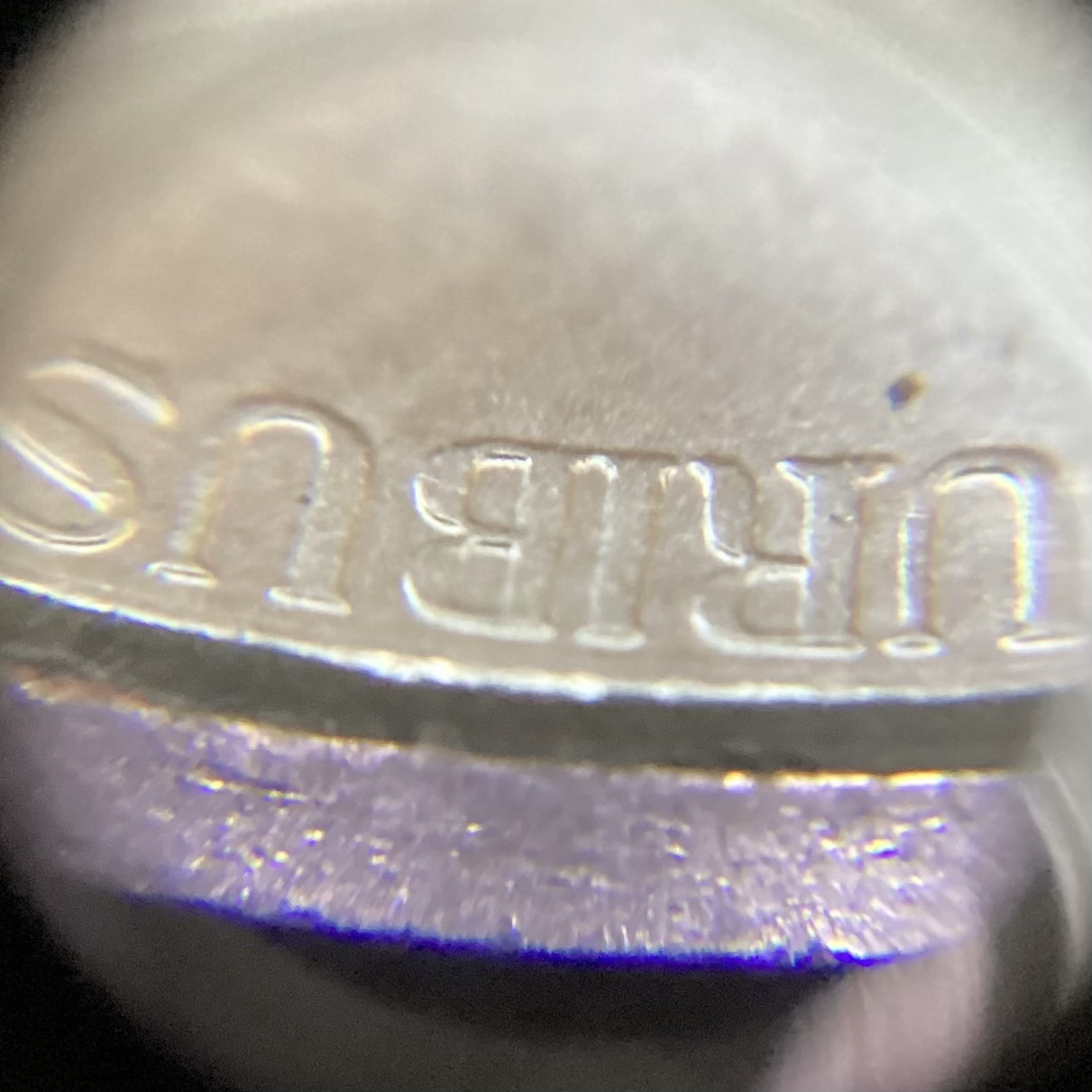
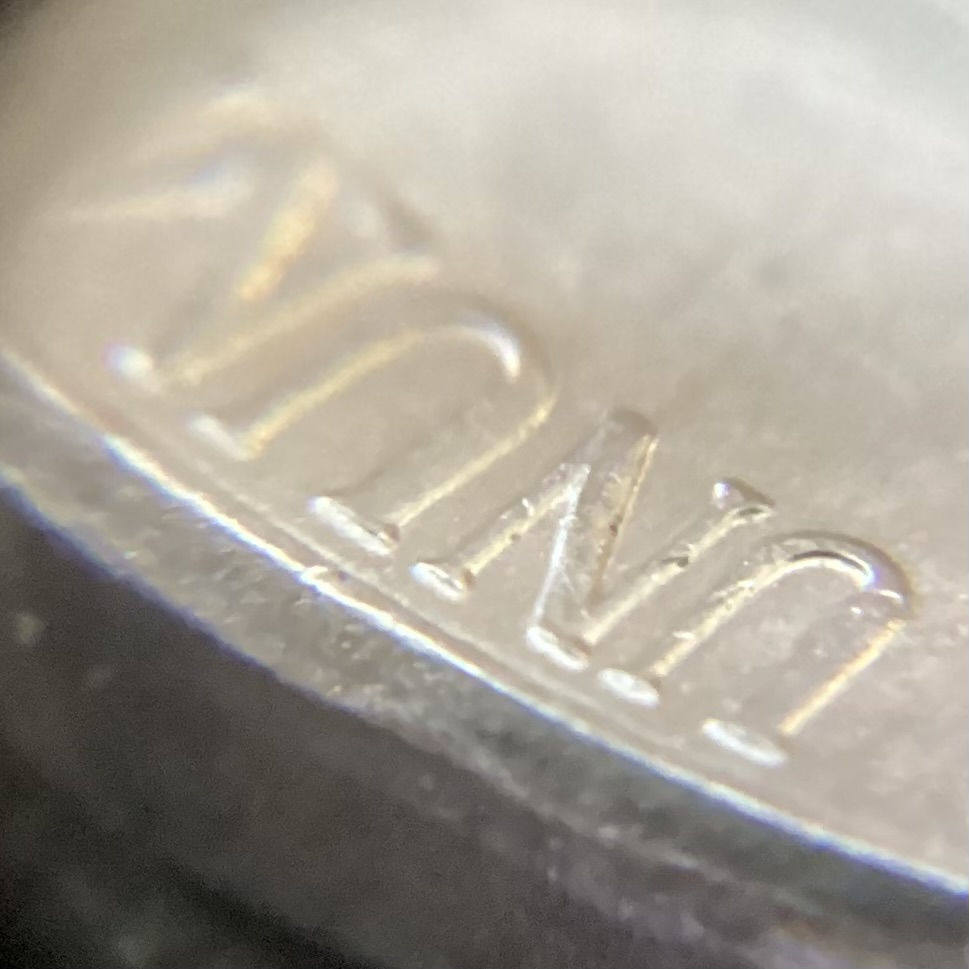
| Author |
 Replies: 15 / Views: 1,394 Replies: 15 / Views: 1,394 |
|
|
Pillar of the Community
United States
6909 Posts |
|
|
|
|
Bedrock of the Community
United States
79756 Posts |
Very interesting. I'll be standing by on this one.  Errers and Varietys.
|
|
Pillar of the Community
 United States
6909 Posts |
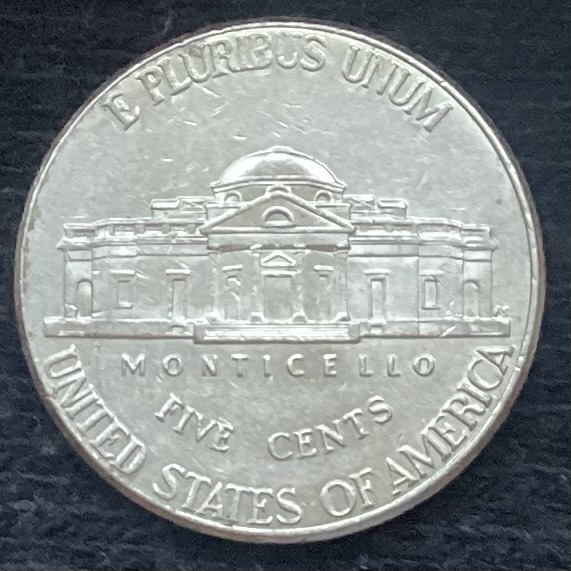
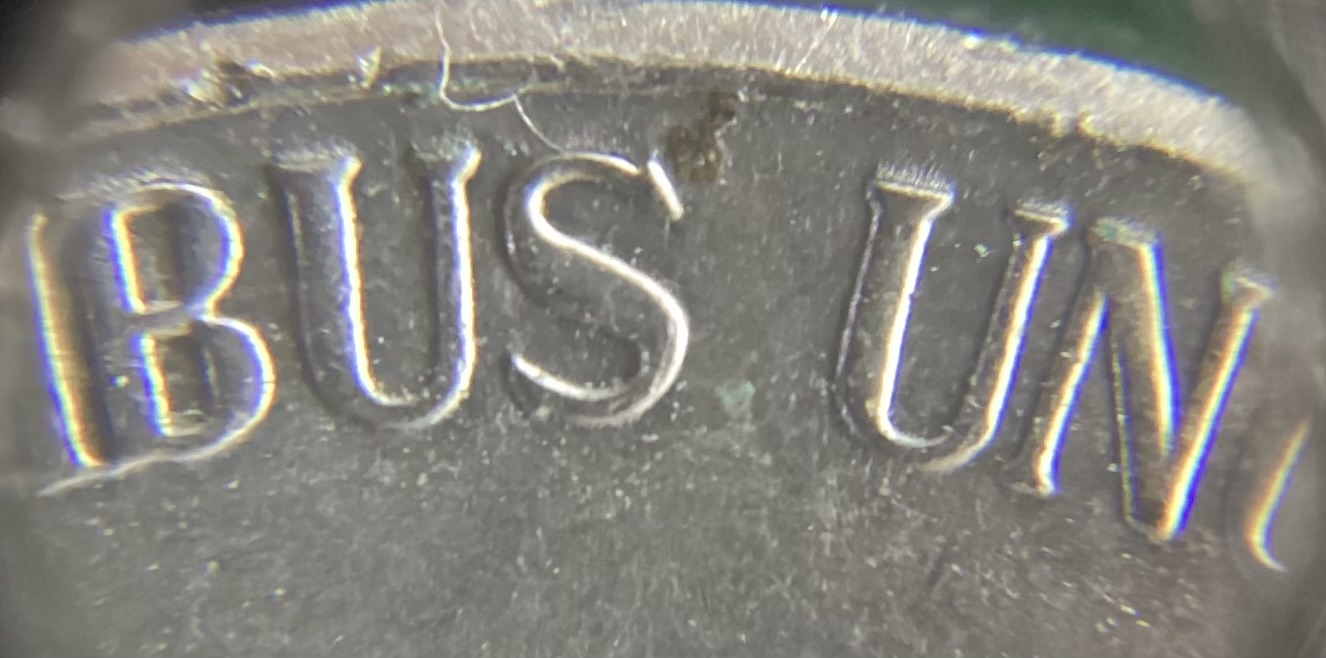
I think tomorrow I will do a rim-to-rim photo with the two nickels, and also a side-by-side. I've realized that just cropping freehand was a poor choice. With the image width normalization on the forum, the photos are all stretched by slightly different amounts. Having both coins in the same frame will help to establish the relative scale of the features.
|
|
Pillar of the Community
United States
6909 Posts |
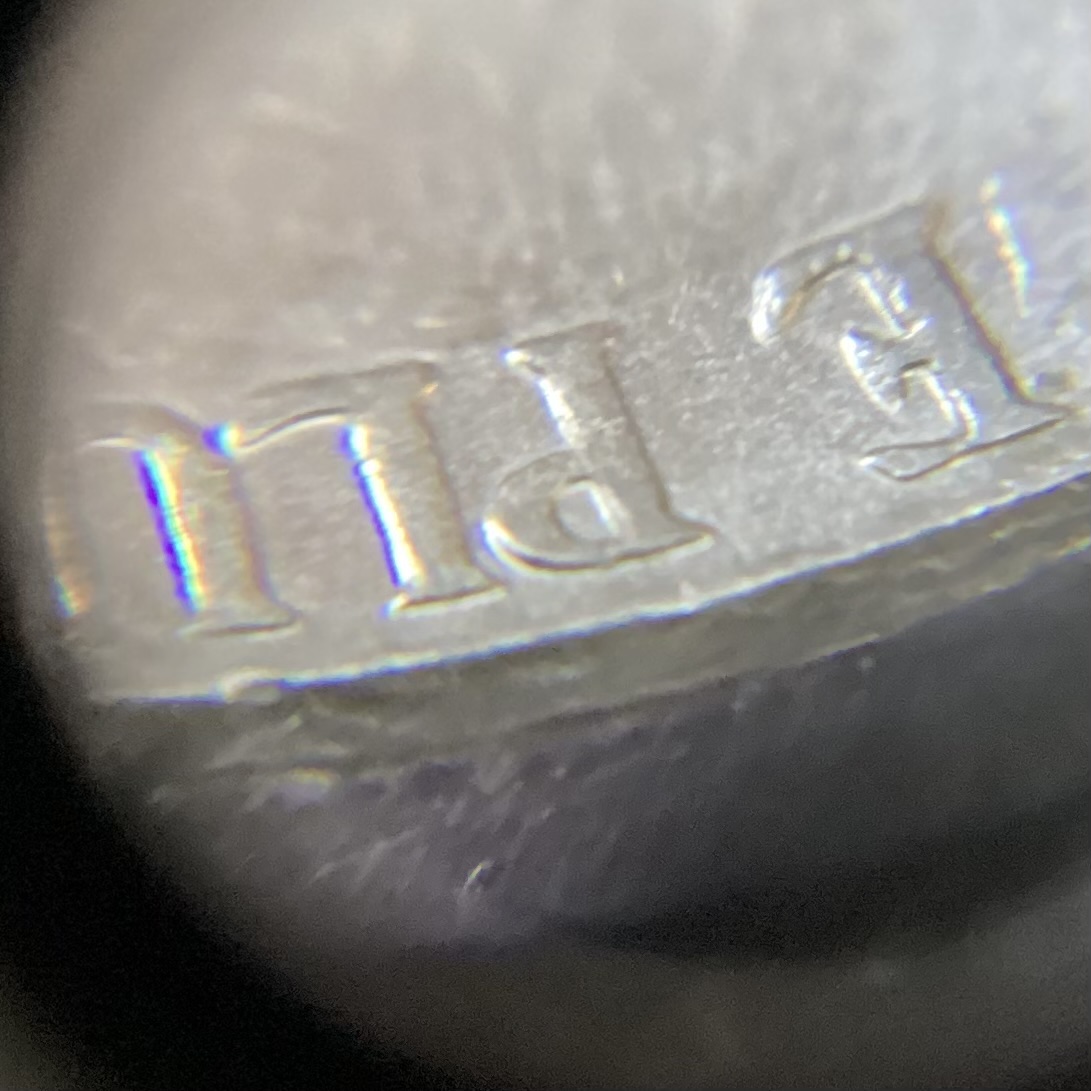
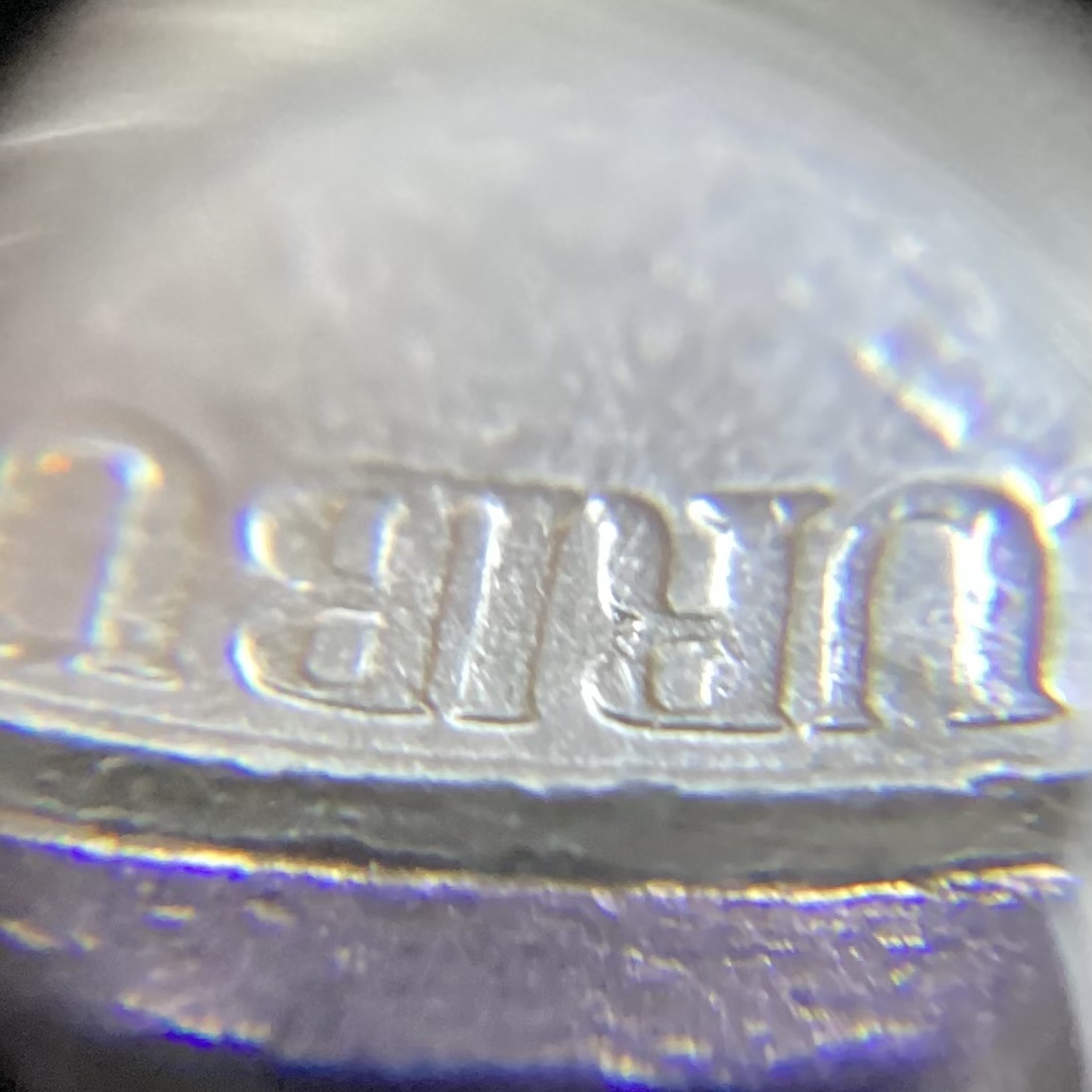
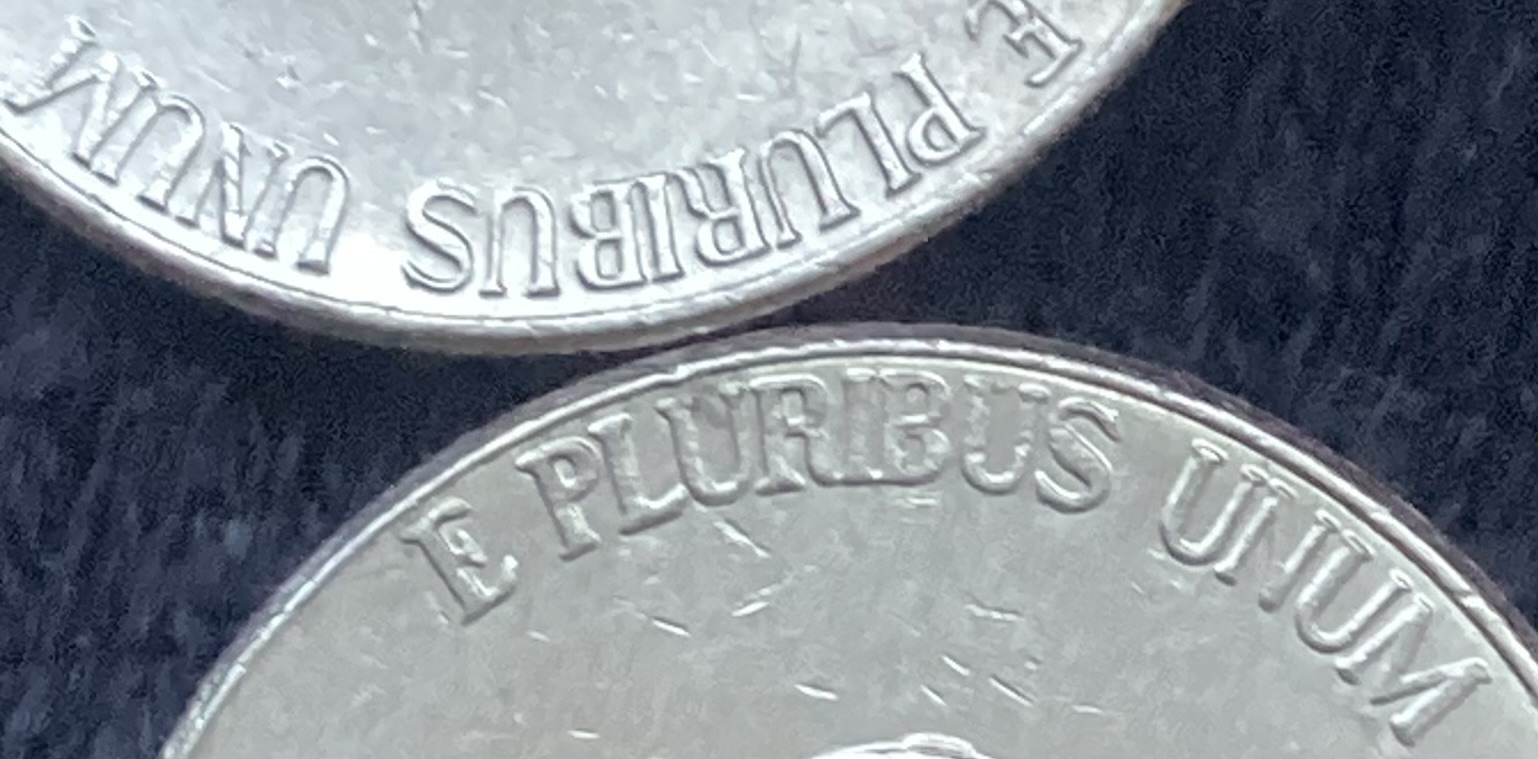 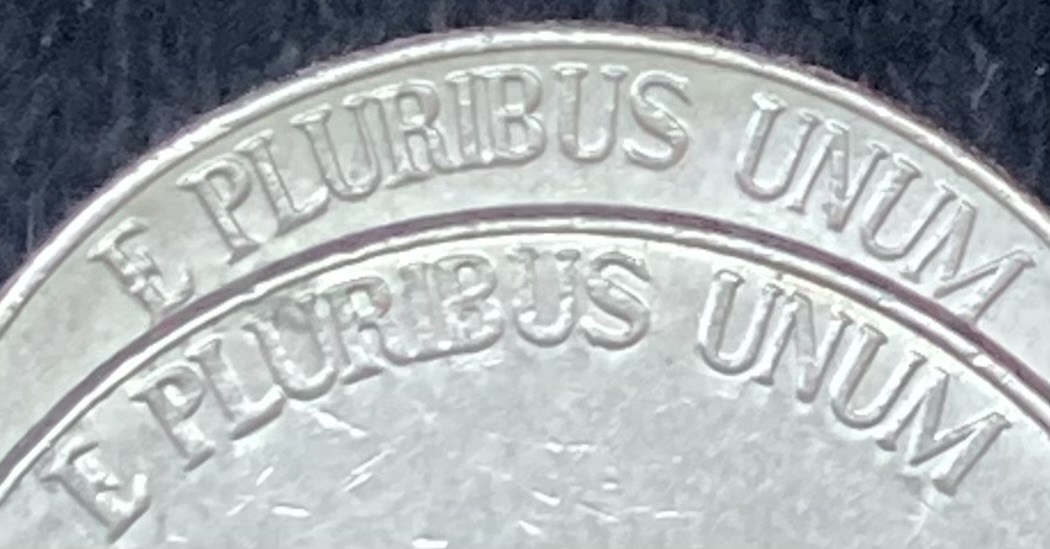 Ok, well that at least shows the thicker lettering by comparison, apples-to-apples. The posts and bottoms of PLURIBUS are so oddly thickened. |
|
Pillar of the Community
United States
3207 Posts |
when I've observed similar I've chalked it up to Die Deterioration because there were no other clear doubled die markers, nonetheless I can imagine it being a mild doubled die or hub |
|
Pillar of the Community
United States
6909 Posts |
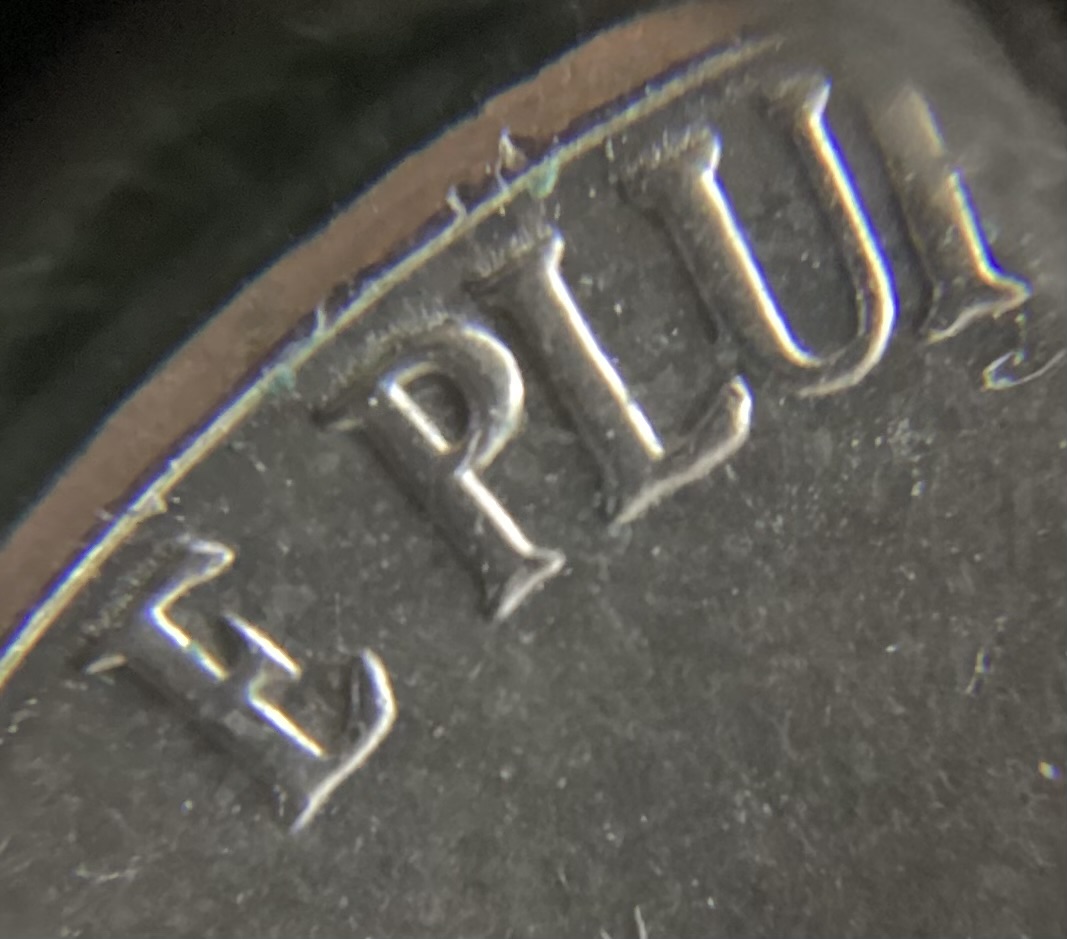
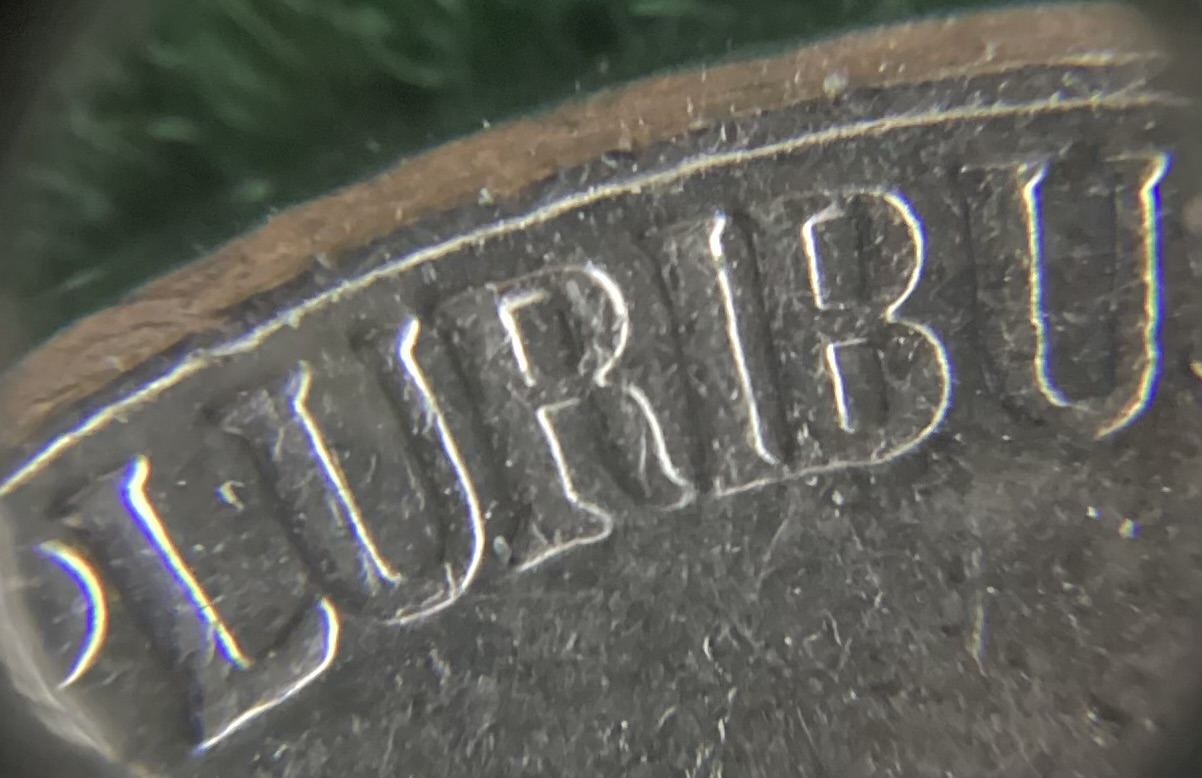
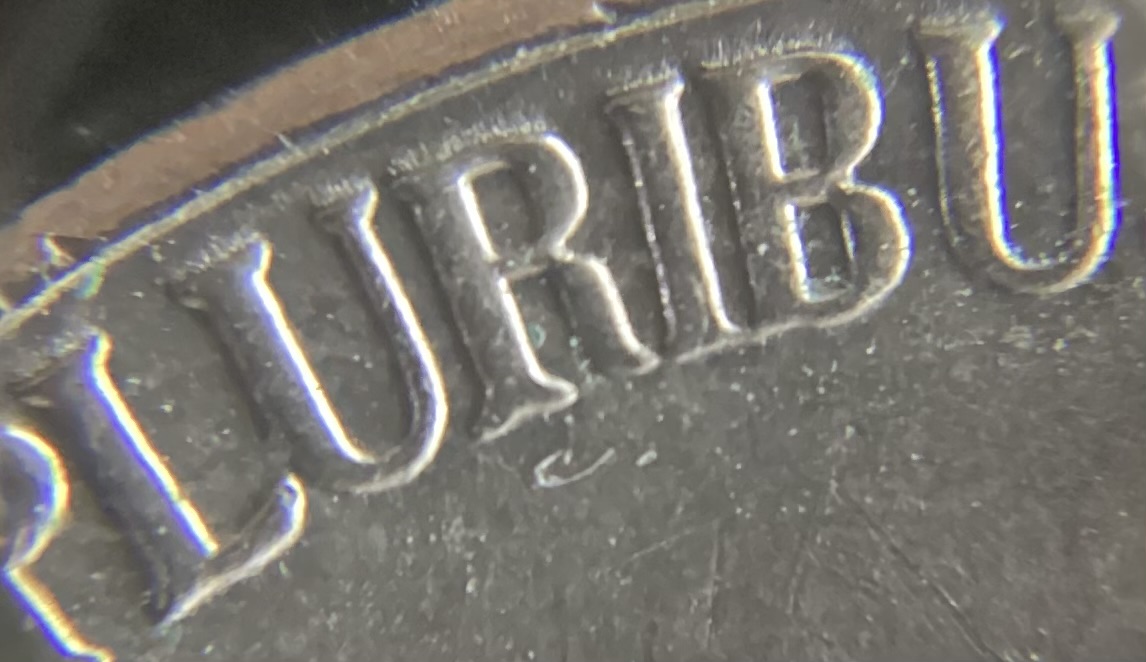
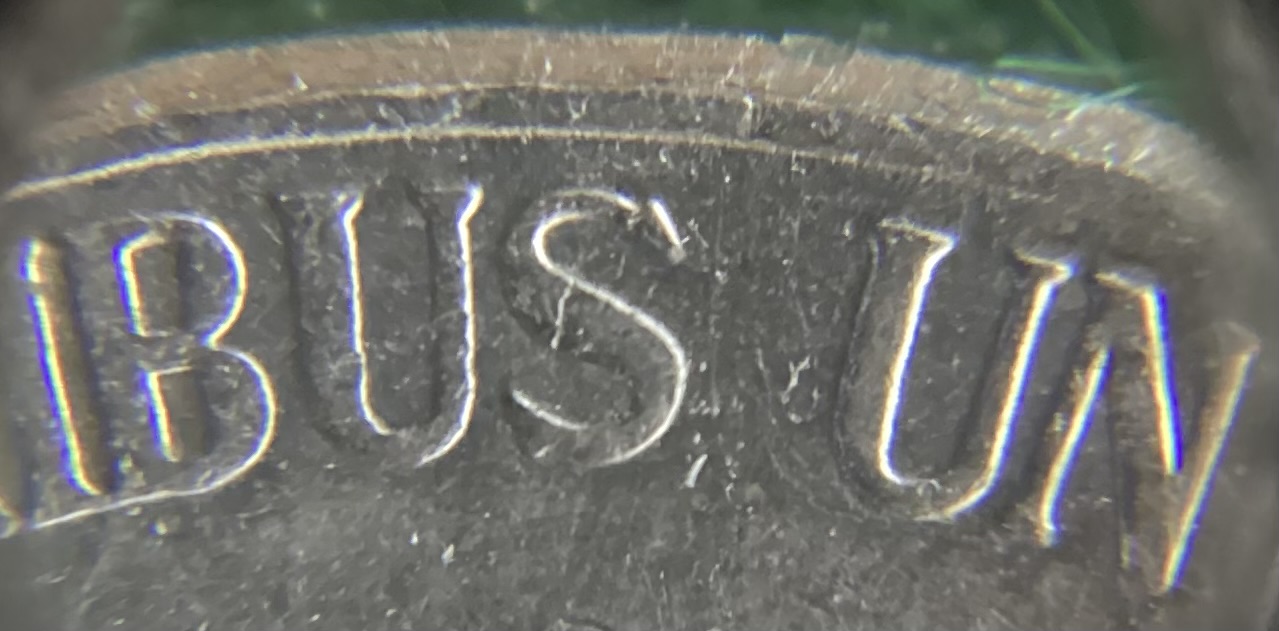
Nick, what are the other doubled die markers that you check? I assume we are looking for VIII/IX markers here, because it should have been a single contact hubbing. Although I guess it's possible that a distended or flattened hub happened. I agree that Die Deterioration is a possibility for making lettering thicker, but my gut feel is that this might not be DDD. All the DDD examples that I have seen on current nickels have affected all the lettering on the die face. Top, bottom, left, right. I will go over the reverse carefully this afternoon, using a magnifier, and look for evidence of radial flow, fuzziness, and ghosting. Just looking at the magnified pictures above, I don't see any obvious flow lines. When I put this nickel side-by-side with a PCGS reference image for a high MS coin, it looks to my eyes like EPU is different, but the other lettering is all proportioned correctly. 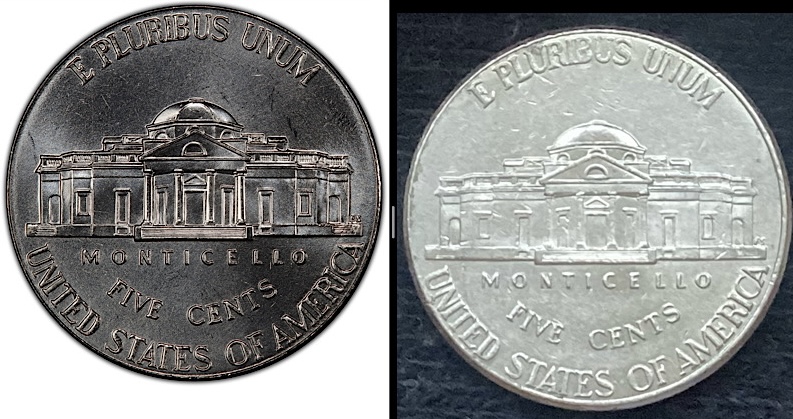 Edited by Brandmeister
09/04/2023 11:09 am
|
|
Pillar of the Community
United States
3207 Posts |
split serifs are the first doubled die indicator I seek, next that there is none of the shelf-like flatness common with Machine Doubling |
|
Moderator
 United States
108458 Posts |
Could also be a slight amount of grease in the tops (and narrowest part) of the devices too - this could result in fatter lettering,
Question, are the EPU letters not as high from the field as compared to a normal one?
|
|
Pillar of the Community
United States
6909 Posts |
The only split serif DDO or DDR that I know about on a 2006-2023 nickel is the 2022-P 5c VDDO-002. The 2004 LAP nickel has visible lines on the date. Everything else is pop-type doubles of door frames and OIV trees. I think split serifs are as rare as hen's teeth on single-squeeze dies for Jefferson nickels. |
|
Pillar of the Community
United States
6909 Posts |
Quote:
Question, are the EPU letters not as high from the field as compared to a normal one? I will put that on the list of things to check under magnification this afternoon. The nickel is definitely circulated and shows some wear. Circulation flattening is not out of the question, but it would seem unlikely that EPU would wear heavily and be flattened, but the lower lettering would be left untouched. It's possible that some kind of rolling machine or mechanical damage smooshed EPU without leaving giant scrape marks. |
|
Pillar of the Community
United States
3207 Posts |
modern center doubling, door frame and such, is to me so minor I don't even think about it, whereas your EPU outer edge anomaly is interesting
we know of rotated dies and horizontally misaligned dies, what about dies that are vertically misaligned? assuming that is possible, I can imagine the die wearing unevenly such that certain devices become distorted like that of your coin
|
|
Pillar of the Community
United States
6909 Posts |
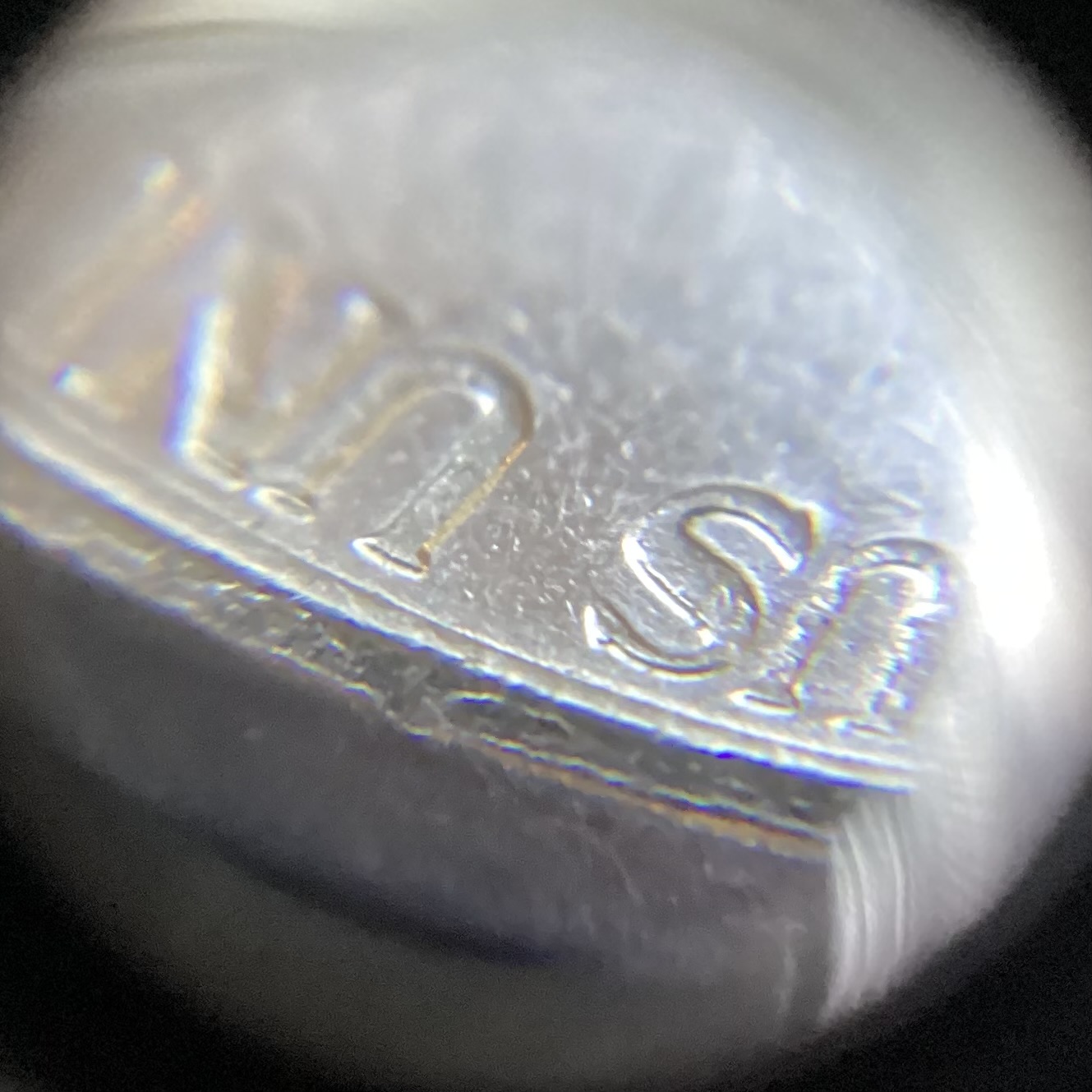
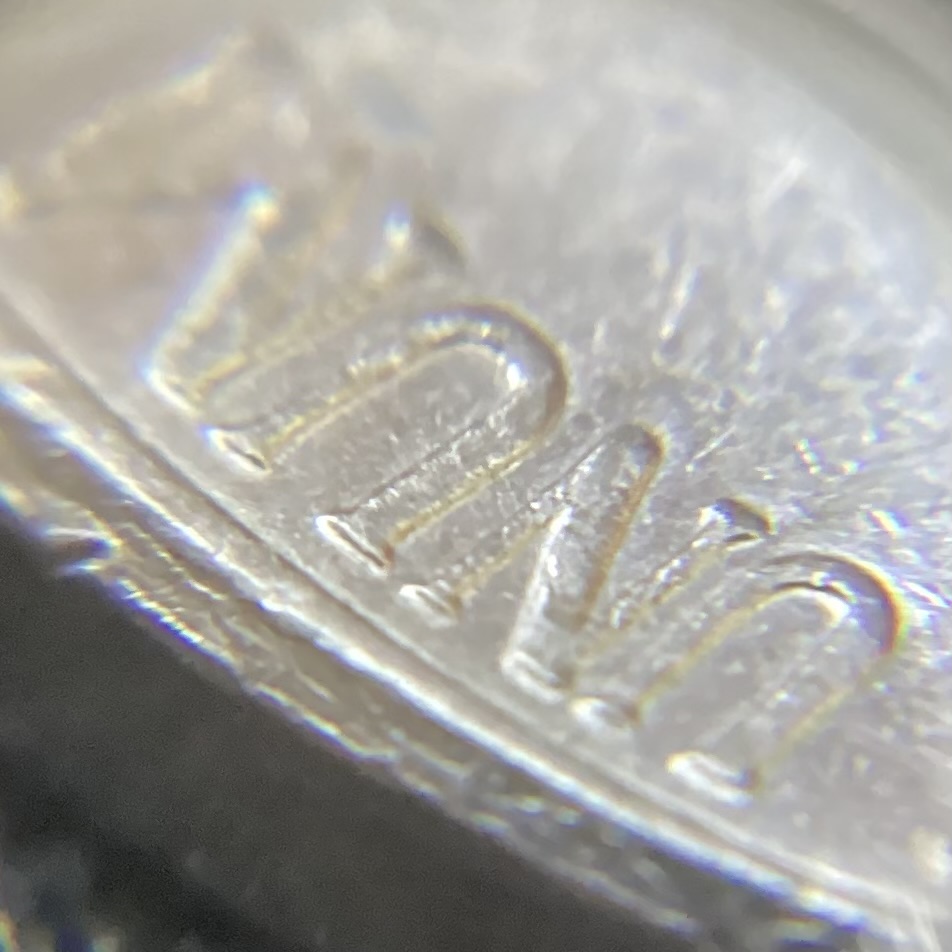
Vertical misalignment is a question of the minting machinery itself. I'm definitely not qualified to speak about that. It seems like a Coop, Silviosi, Mike D. kind of a question. Could I imagine situations where the die would wear that unevenly? Sure. Are they realistic? No idea. Here are the pictures I took with my little magnifier. I did not find evidence of die metal flow. Typically on a deteriorated die, the field under Monticello and above Five Cents will show radiating fine lines. That lettering also looks relatively sharp, so I think the die was in adequate condition. 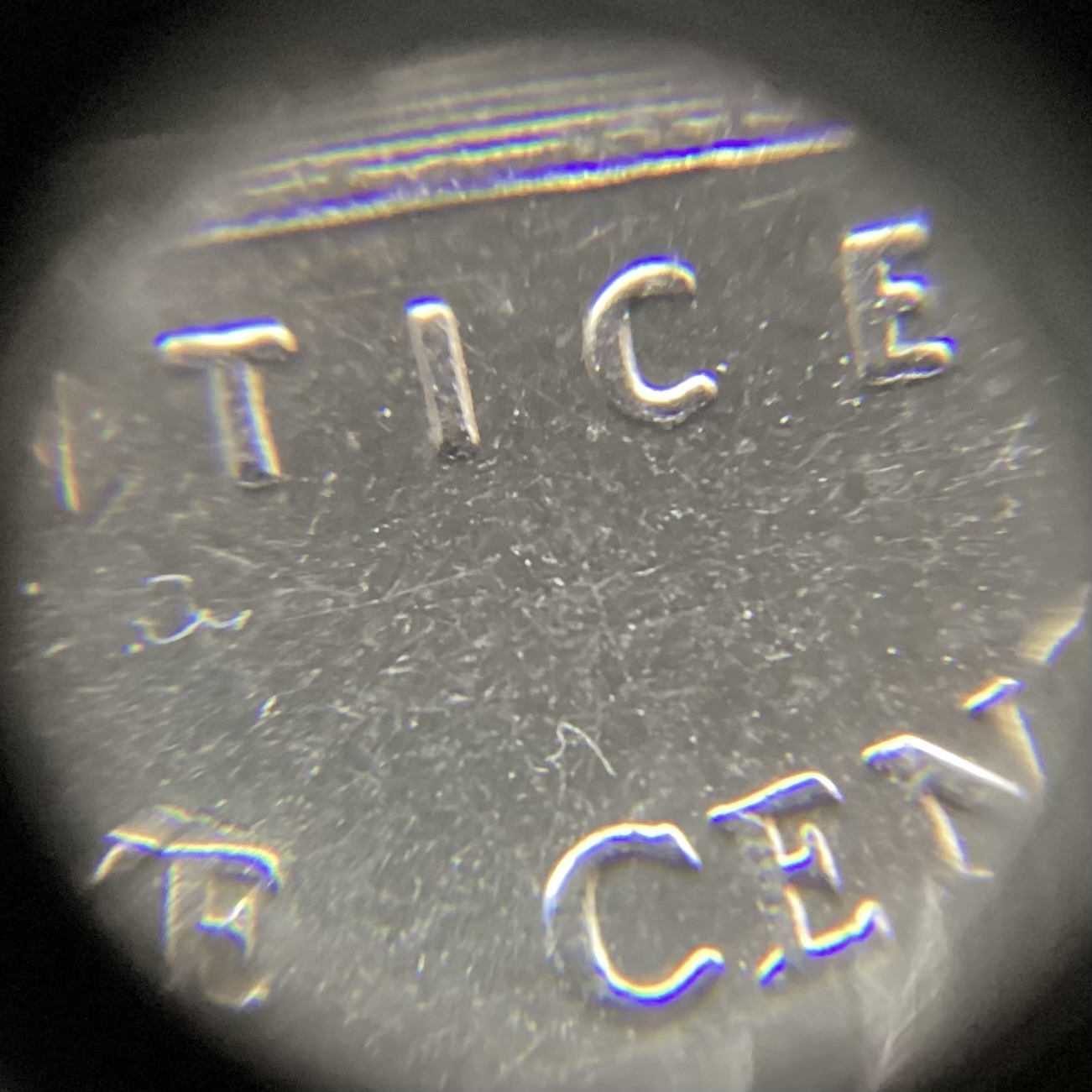 I did, however, note some contact or flattening on the extreme right and extreme left Monticello steps. Also there appears to be some activity on the word OF in USoA. So perhaps some kind of machine made light contact with the nickel's surface. Not enough to damage it or leave groove marks, but enough to distort things a little bit. 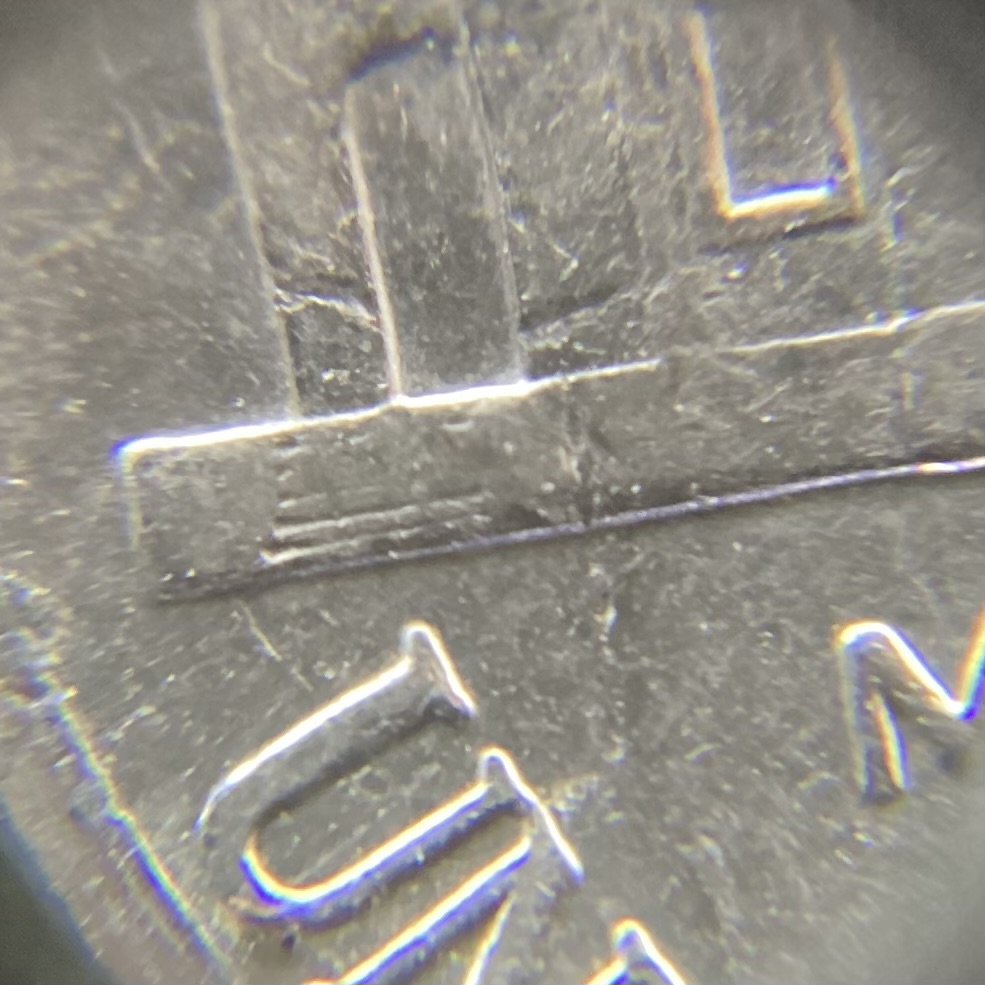 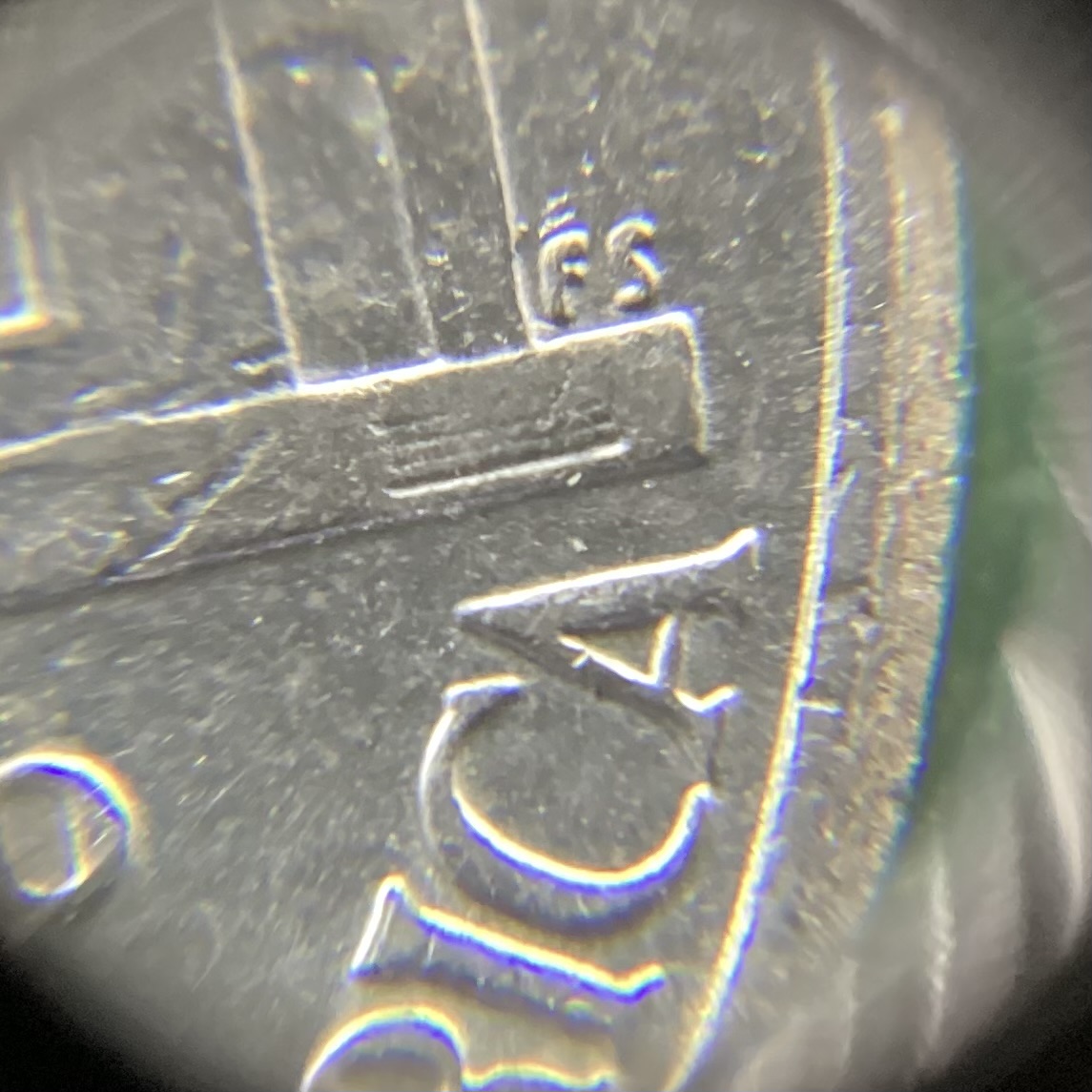 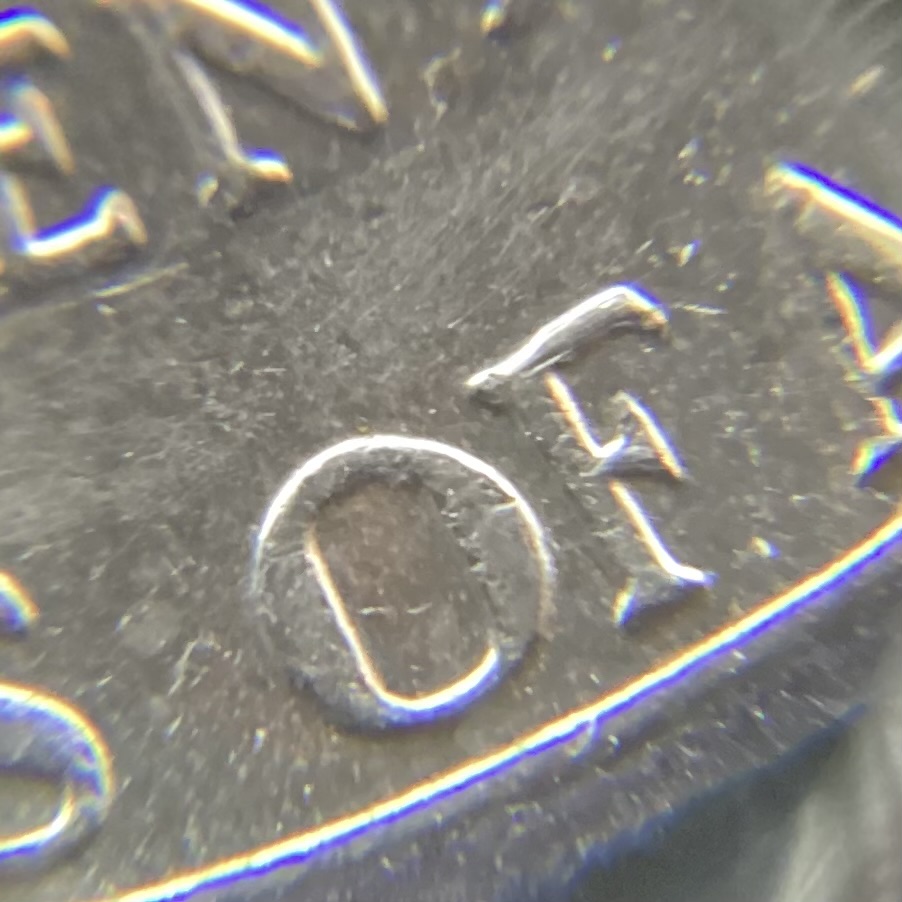 |
|
Pillar of the Community
United States
6909 Posts |
|
|
Pillar of the Community
United States
6909 Posts |
Well, in doing some further research last night, I discovered something interesting. I had checked Variety Vista for 2016-P 5¢ and found nothing but lines in doors DDR listings. I had also checked the Wexler/Ribar nickel listings on Brian's Variety Coins. The 2016-P 5c WDDR-002 listing shows puffy twisting on Monticello, Five Cents, and extreme extra thickness on all the building elements. It did have extra thickness on EPU and USoA as well, but I didn't make any connection to this coin. When I searched CONECA, I used 2016-P as my search term and got no results. I didn't realize that CONECA still lists Philadelphia coins as just the date, even though they have had a P mint mark for a long time. So yesterday I ran across the WDDR-002 listing again as CONECA 2016 5c DDR-001, with some different sets of pictures. The thickness on E PLURIBUS UNUM seems very similar. In particular, that heaviness on the bottoms of R, P, L and all the letter posts bears a resemblance. The official DDR-001 very strong doubled die is classified as a Class VI Distended Hub, which led me to do more reading about that type on Variety Vista ( VI Article). I then located another article on Class VI doubling on the Wexler site. In that article, Mr. Wexler states that Class VI Distended Hub doubling appears to still happen on single-squeeze hubbing coins, which is something that I hadn't really understood until now. I had assumed the VI still required two hubbings (one normal hub, one flattened hub) to produce any visible doubling. I also (incorrectly) understood that it would affect the whole coin face equally, like DDR-001 or the 1946 5c FS-801 in my own collection. For that reason, I had tossed that as a possibility on this nickel, even though it bore some visual similarities, including the lack of apparent separation lines even with the extra thickness. However, Mr. Wexler also discussed that he believes VI might actually be a flavor of VIII Tilted Hub for various reasons. He mentions that certain instances can strongly affect just one section of the die—definitely news to me—and that other sections might display weak doubling or even none at all. Since there is already a Class VI DDR for 2016-P 5c, it does not seem impossible that a much less dramatic version happened to another die. So that goes back on the list of possibilities. TL;DR: This thickened E PLURIBUS UNUM might actually be a minor Class VI Distended Hub double that affected only the top of the die, similar to WDDR-002 / CONECA DDR-001. Another remaining mystery is why Dr. Wiles submitted the DDR to CONECA, but it doesn't appear on Variety Vista. I would have assumed that if he imaged a coin thoroughly and confirmed a DDR, it would be posted on his own site first. Did he not post it, delist it for some reason, or something else? |
|
Pillar of the Community
United States
3207 Posts |
thanks for sharing your research, interesting stuff, I think you are on to something, it might be worth submitting your coin to CONECA
|
|
Pillar of the Community
United States
6909 Posts |
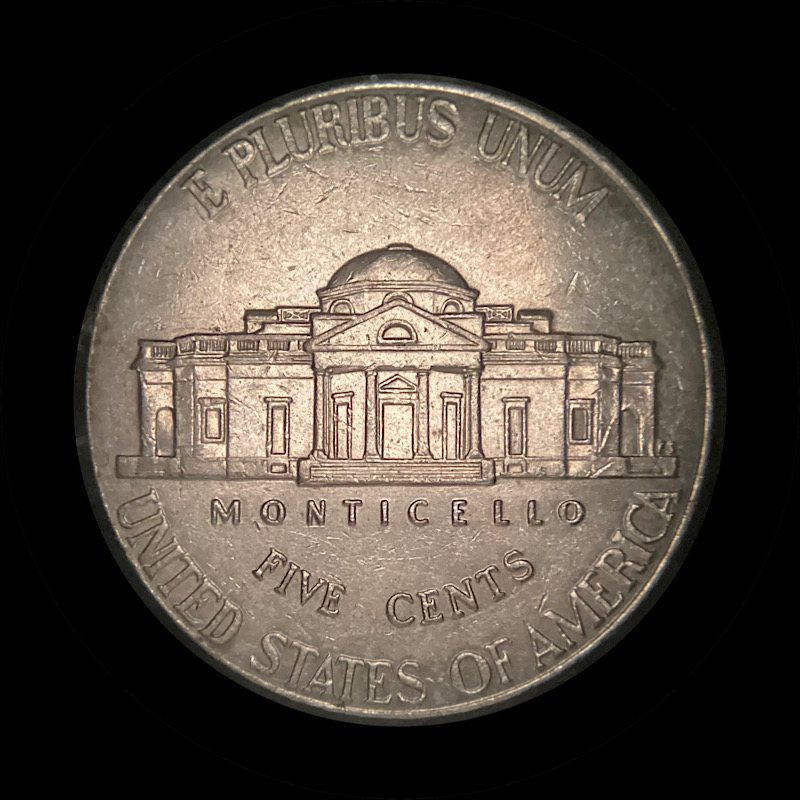 With the benefit of a lens that can capture the whole coin in one image, I now doubt my original thoughts about the extra thickness. It seems pretty obvious that this coin has suffered a tremendous number of little bangs that have slowly flattened out the letters of E Pluribus Unum. I think the original magnified pictures can exaggerate the size of the lettering, particularly because that setup captures glare on the Die Deterioration as part of the lettering. It also smooths many of the little metal strikes into a more uniform-looking surface. Light in the axial box has a lot less scatter, which offers a harder contrast. Those letters have simply endured considerable circulation punishment. Myth: BUSTED.  |
| |
Replies: 15 / Views: 1,394 |
|










 Posted 09/04/2023 12:26 am