| Author |
 Replies: 14 / Views: 1,499 Replies: 14 / Views: 1,499 |
|
|
Valued Member
United States
81 Posts |
Rather new at half penny. I found a description that said the reverse was NO STOP. I am not sure what that means. My guess is a . after Rex? Thank you.
|
|
|
|
Pillar of the Community
United Kingdom
945 Posts |
There are various forms of "No Stop" half pennies, depending on the date. What year are/were you looking at?
Some relate to various locations of potential stops in the legend, either on the obverse or reverse. Some refer to a stop before or after the date. Most are 18th or 17th century when there was much more variation in the production of dies. Some are scarce, some "no stop"s more common than those with a stop, so the date is all important.
|
|
Valued Member
 United States
81 Posts |
|
|
Valued Member
United States
81 Posts |
|
|
Pillar of the Community
United Kingdom
945 Posts |
No problem. In 1731 the usual and more common version has a stop after the NIA of Britannia on the reverse. The scarcer "no stop" version is missing this, about doubling the value in equivalent grades.
It is possible that an unscrupulous previous owner may have obliterated the stop to increase the value, so examine carefully.
Pictures would be nice!
|
|
Pillar of the Community
United Kingdom
945 Posts |
Here is a section of my 1731 halfpenny with stop to show you where it should be: 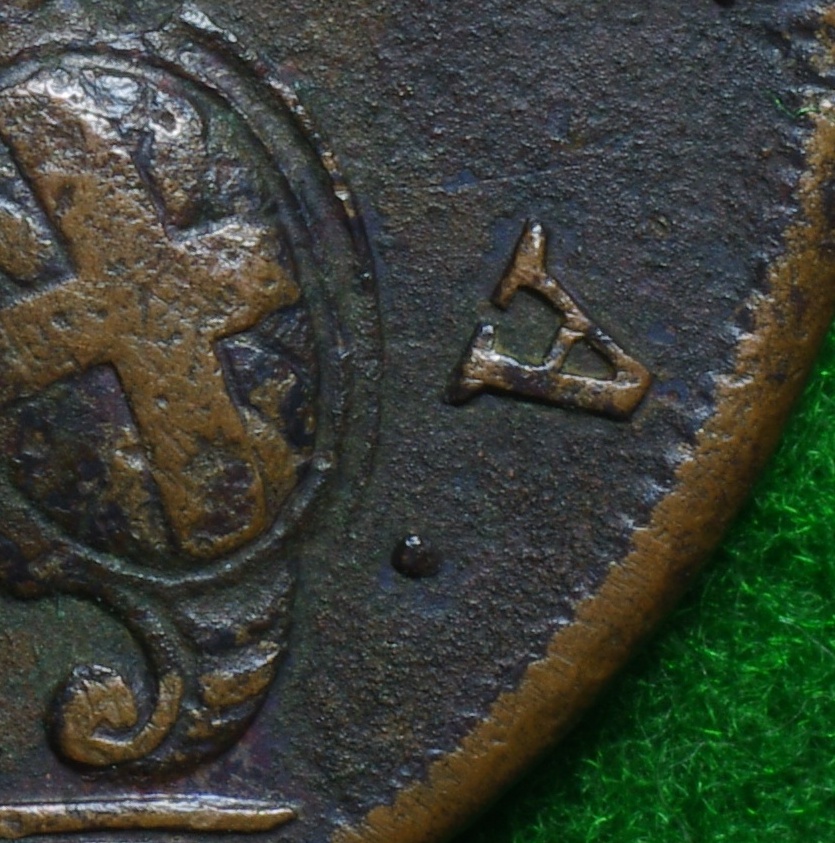 |
|
Valued Member
United States
81 Posts |
Thank you very much. I do not have one so I can't send a photo. I have the coin with the stop, I was just trying to figure out what to look for. Now I know!
|
|
Valued Member
United States
81 Posts |
By the way, how would one learn this from the literature? Where would this be written about? It is possible I missed it in my two books, but what books would explain this term to a newbie?
|
|
Pillar of the Community
United Kingdom
945 Posts |
I have to agree the common literature is not helpful. "Coins of England" just states: "rev. no stop" without indicating where it should be.
I referred to my copy of "English Copper, Tin and Bronze coins in the British Museum" by C Wilson Peck - usually just called "Peck". In my 1970 edition on page 209 it tells us that "with stop" is #840 and without is #841. Again it just states "rev., no stop" but fortunately there is a Plate referred to, which confirms it is the stop after Britannia that is missing. (There is no other stop possible.)
|
|
Valued Member
United States
81 Posts |
Oy! Thanks much I never would have figured it out. This forum is quite helpful!
|
|
Valued Member
United States
81 Posts |
Wow, I was wrong mine is no stop
Thanks again
I have trouble sending photos but it looks legit to me
|
|
Pillar of the Community
United Kingdom
945 Posts |
Good - well done! If you do get to send photos, that would be great.
|
|
Valued Member
United States
81 Posts |
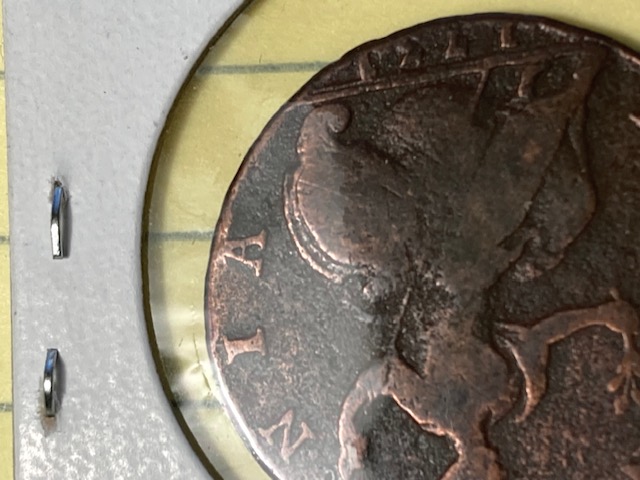 Here is the photo |
|
Pillar of the Community
United Kingdom
945 Posts |
Thanks for the picture.
I'm not sure some collectors would be happy with the "no stop" attribution. There is a significant circular mark exactly where the stop should be - possibly the result of it being worn away, although it could be some nefarious attempt to increase the rarity of the coin, or just a coincidence.
The books do not mention any other identifiers for the no stop variety, so in the end any collector has to make up their own mind.
|
|
Valued Member
United States
81 Posts |
Thanks. I will look at it under different lights and magnifications. Either way it will keep me occupied . Thanks again!
|
| |
Replies: 14 / Views: 1,499 |
|





 Posted 10/07/2023 1:59 pm





