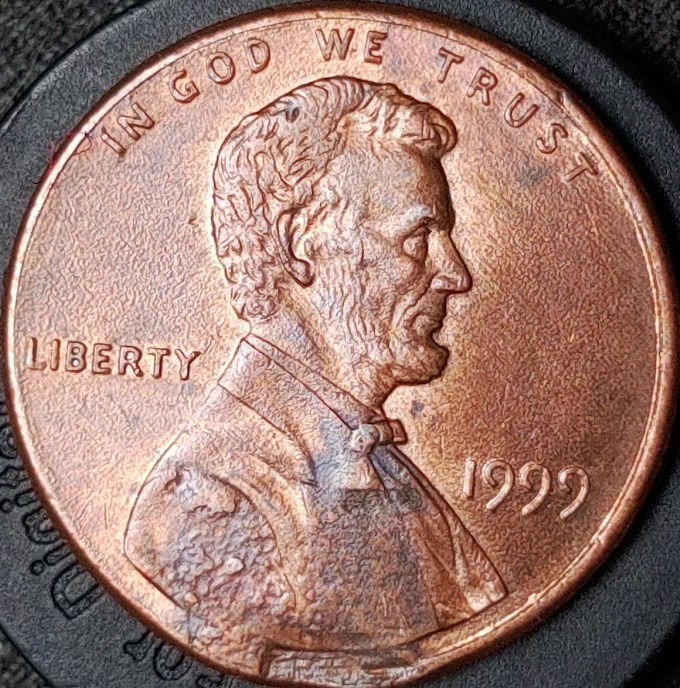
1999 P Lincoln Cent Struck through or PSD or some combination? (38 grains= 2.46 grams)
I found this one roll searching right after the 2020 struck through gritty grease that looked like a cigar. This one is a puzzler, to me anyways.
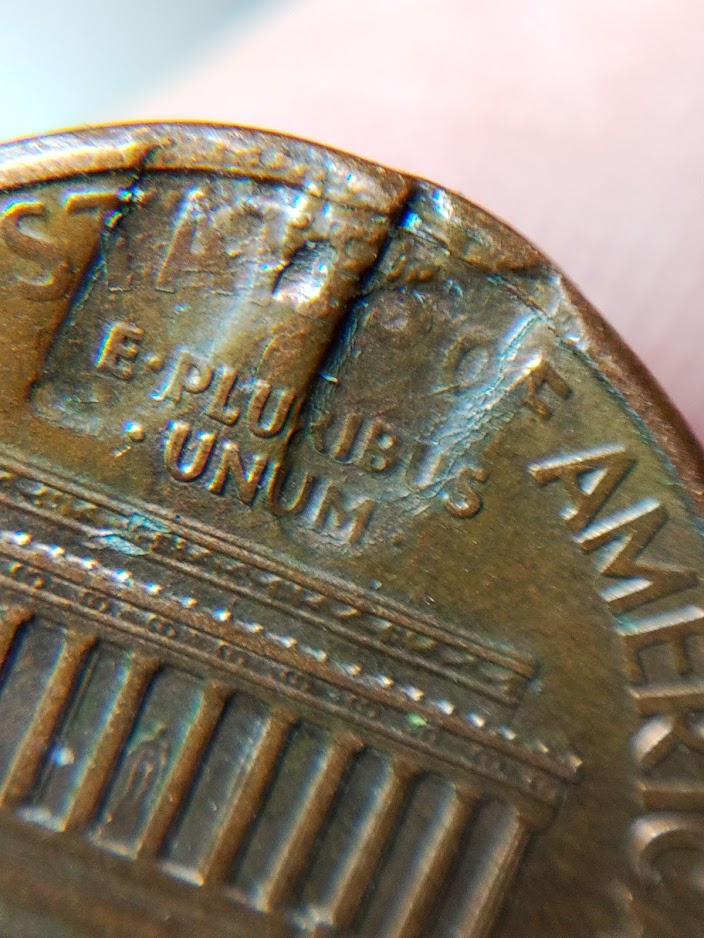
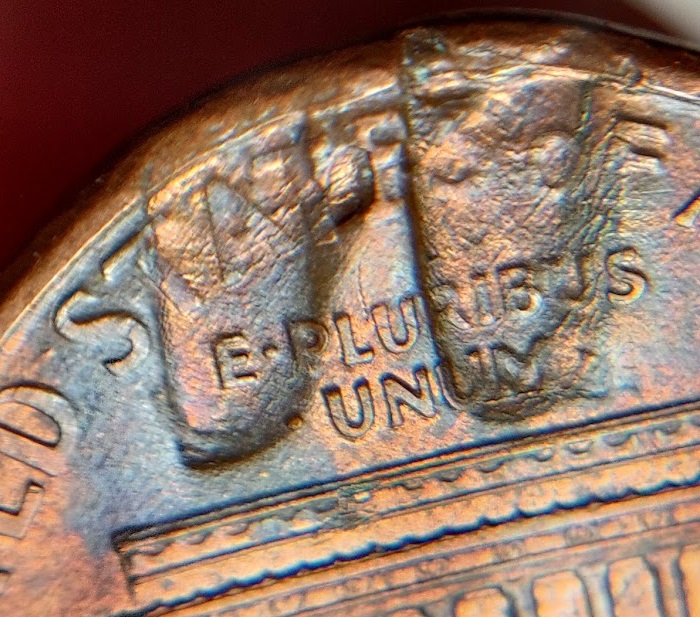
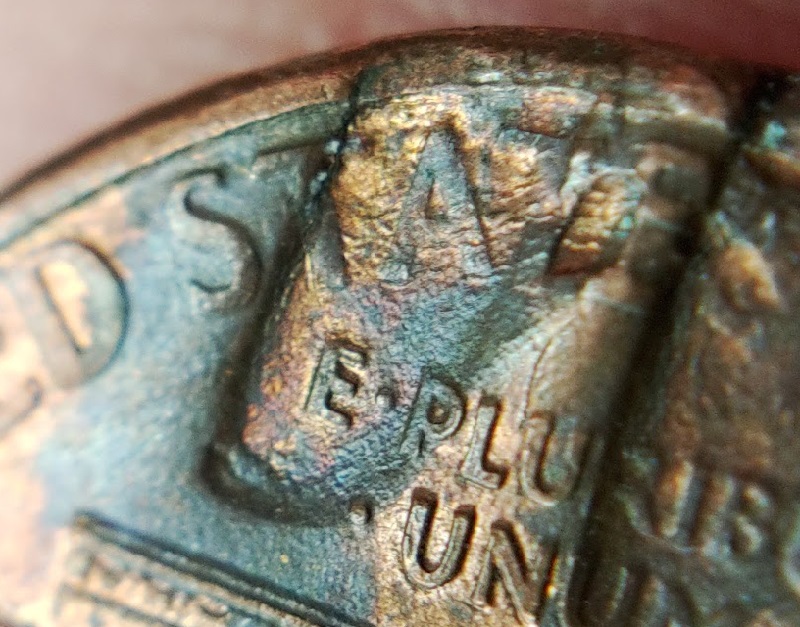
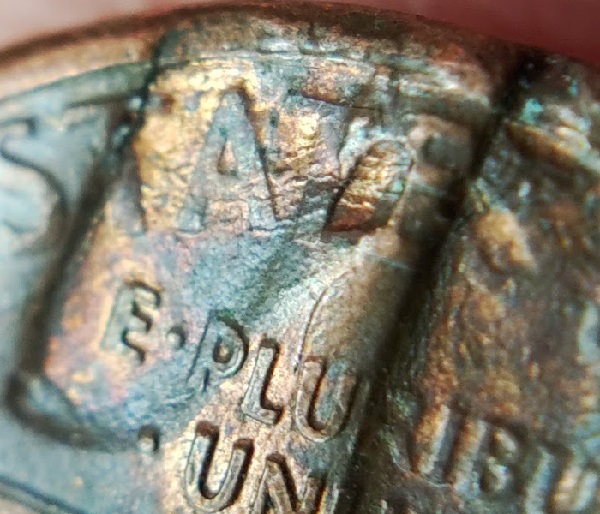
When I first saw the two incuse areas on the reverse, I immediately thought PSD (Post Strike Damage), but closer examination changed my mind.
The devices inside the incuse areas are still sharp and seem fully formed, like they were struck on a normal planchet and then collapsed into a possible void in a defective planchet. I don't know if internal voids in the zinc core are even possible.
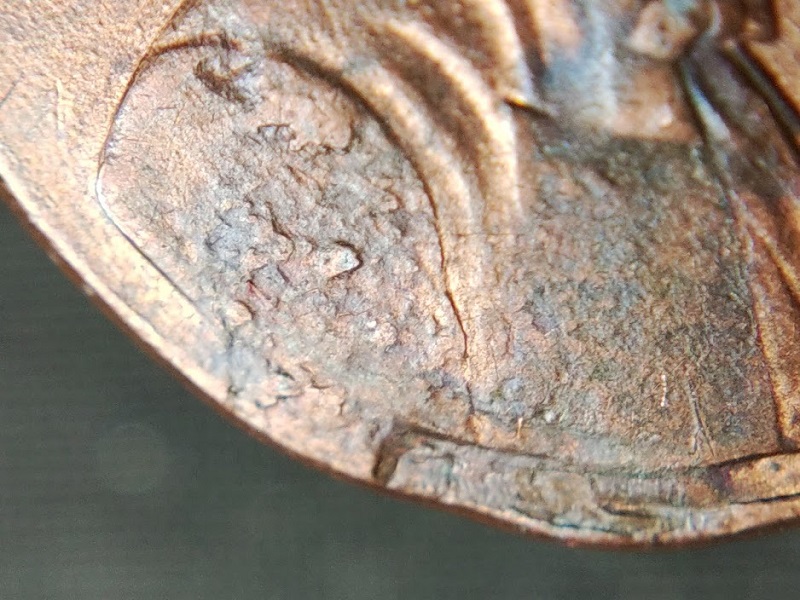
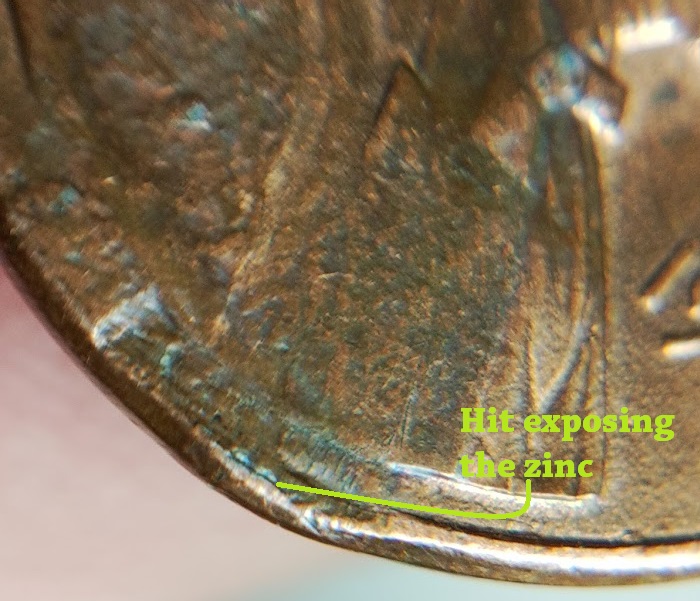
(There do appear to be areas that are definitely struck through and some zinc exposed under the bust along the rim from a hit that also pushed the rim out a little. This ding is visible on some of the obverse images.) The devices don't look like they have been crushed like we expect to see in a "vise job" coin.
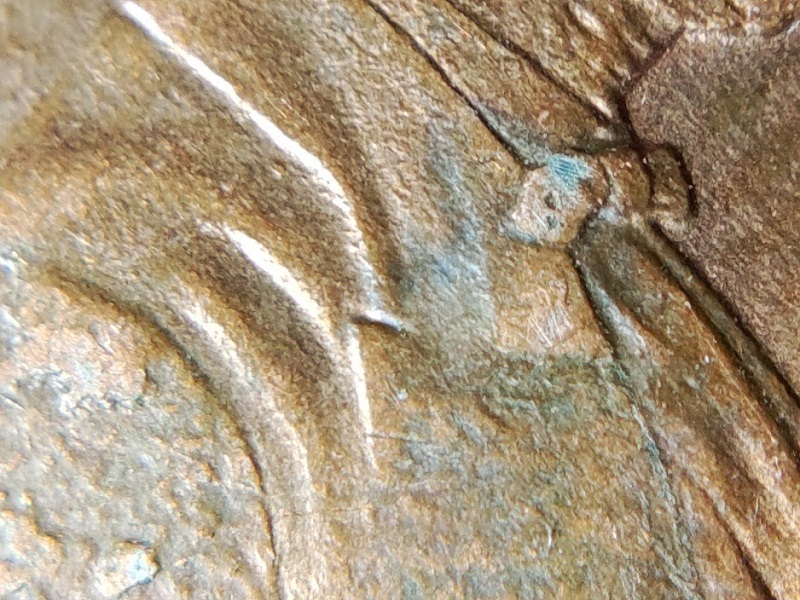
The obverse has some interesting texture to Lincoln's shoulder and even a slight depression around the tie that is slightly darker in color.
I'll post the images and look forward to comments and insight.
Words of encouragement are one of the major food groups. We need to consume them regularly to thrive and grow.
Hmm, I don't see how this could be anything but damage--the flattened and incuse areas are opposite to each other like this was clamped in jaws of some sort.
"If you climb a good tree, you get a push." -----Ghanaian proverb
"The danger we all now face is distinguishing between what is authentic and what is performed." -----King Adz
Thanks for the questions and comments. That's why I'm asking and trying to figure this one out.
PSD was my first thought as well but how do we explain the fact that the devices at the bottom of the recesses aren't damaged or completely obliterated?
Any kind of solid metal pliers/crimpers would have completely destroyed the devices and and displacement of metal would have caused the metal to push up or be deformed somewhere.
The texture on the shoulder reminds me of the course bumpy texture associated with improperly processed strips. I have seen this bumpy texture on the edge of ragged clips and fissures.
And look at the edge of the coin as it falls away to the rim. There is an uneven surface to the base of the depression that would not be there if this was from a mechanical device.
I did have a thought that this might be a tapered and defective planchet since there only seems to be a proto-rim on the obverse from K7-K9 below LIBERTY.
Words of encouragement are one of the major food groups. We need to consume them regularly to thrive and grow.
Quote: Definitely damage. PSD. There's a bulge on the obverse, where the damage is.
Yes, that "bulge" is what I pointed out in the 7th image, and that looks like a hit from what looks like the arced rim of another cent. It looks like the arc is going WNW-ESE in the image.
What are your thoughts on why the devices don't show signs of being crushed or deformed if it is all PSD?
Any thoughts about the irregular texture but still retaining luster on the shoulder?
Or the struck through area on the upper part of the "E" of STATES. The "E" is between the incuse areas , but the ragged oval is incuse.
Words of encouragement are one of the major food groups. We need to consume them regularly to thrive and grow.
I respect and like these thoughts and they are all the ones I've been through.
Quote: I'm trying to visualize a die striking through debris and wouldn't the letters in the recessed areas be not visible if a true strike through?
That's my point about being a struck through or PSD. The letters in the incuse areas seem too clear and sharp for either one being the sole cause of the two large incuse areas.
The edges of the incuse areas are rounded or tapered and don't project above the plane of the field. PSD of his magnitude should be causing pressure ridges somewhere along the edges. Displaced metal from PSD has to go somewhere. Even lite scratches cause pressure ridges like a plow going through a field.
FWIW- Zinc can be poured into ingots or molds and it can be rolled into strips. I don't know which is used by Artazn LLC (Jarden Zinc) that produce the US planchets.
It is very interesting, especially the part about " Blowholes" and "open holes": "Blowholes Blowholes are larger holes that can appear in the inside of a cast piece. Invisible to the naked eye, interior Blowholes are detectable by x-ray, harmonic, ultrasonic, or magnetic analysis. Blisters, a variant of Blowholes, are thinly covered shallow holes.
Open Holes A type of Blowhole, open holes appear at the piece's surface. These defects are caused by air getting trapped as metal is poured into the mold. There is also a shallow variant of open holes called a scar."
Words of encouragement are one of the major food groups. We need to consume them regularly to thrive and grow.
I would think that a strike through to this apparent depth would not transfer sush crisp letters as are seen in the bottom of the anomaly. I would imagine something softer than metal made these impressions in the reverse post strike. Think Texas Cent on a smaller scale
I believe that those marks was present on the blank before milling.The strike which it is at 54 T made the rim bulge.
For the sholder the explanation it is relative simple. After casting when the metal become cold and accidentally cold air flow arrive, the surface will has all crazy forms of ringcols. Or also some carbonic debris (previous Zinc oxide) from the liquid metal and then after the rolling those debris will fall making space to such surface design.
Disclaimer: While a tremendous amount of effort goes into ensuring the accuracy of the information contained in this site, Coin Community assumes no liability for errors. Copyright 2005 - 2026 Coin Community Family- all rights reserved worldwide. Use of any images or content on this website without prior written permission of Coin Community or the original lender is strictly prohibited. Contact Us | Advertise Here | Privacy Policy / Terms of Use








 Posted 11/23/2023 9:24 pm