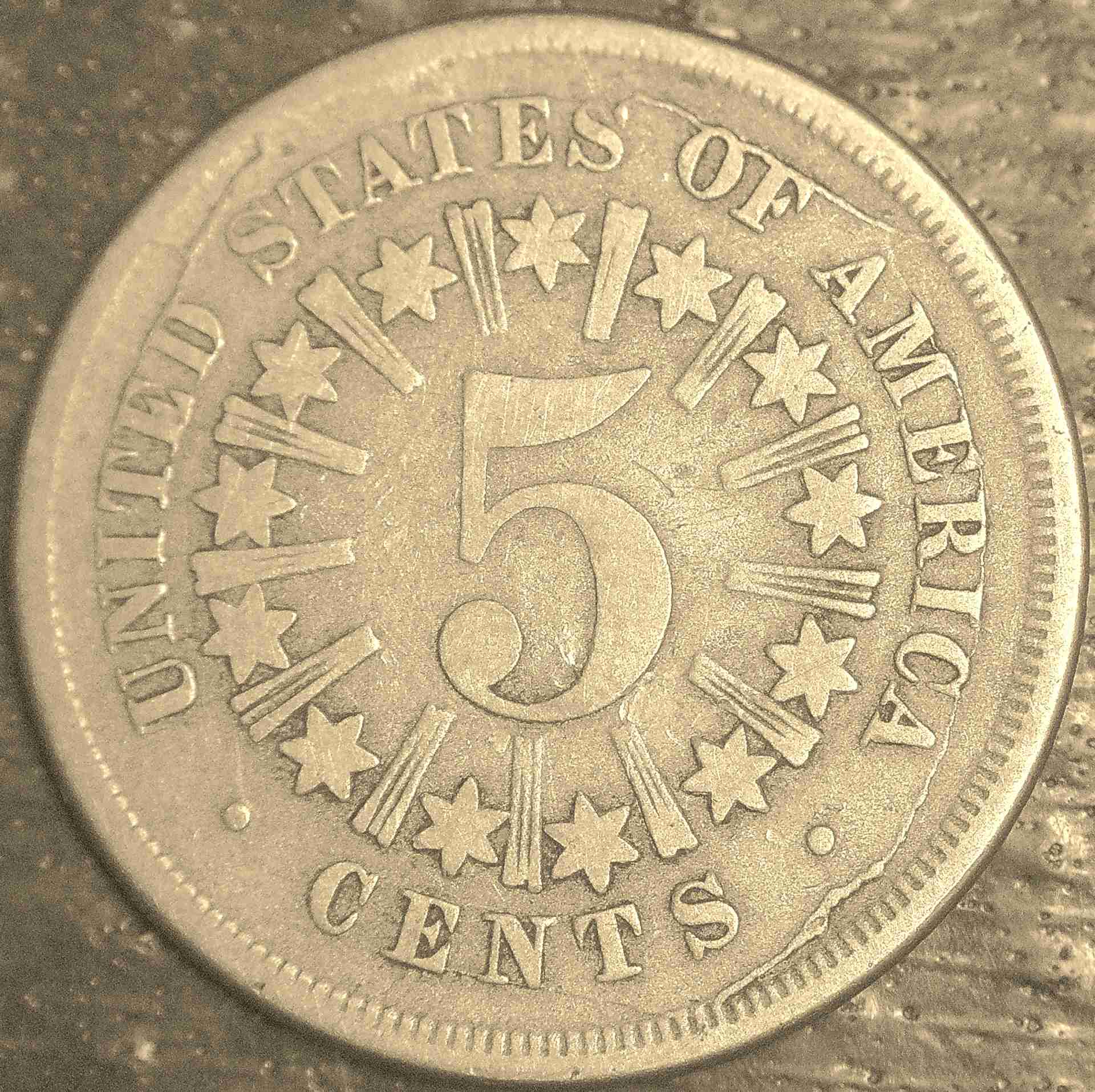
I would call that a
Retained Cud. The area is not yet filled in from the chunk completely out of the die at this stage. The weaker side I believe is due to the
Cud that is forming.
Here is a short excerpt from the book "The Complete Guide to Shield &
Liberty nickels" by Gloria Peters and Cynthia Mohan.
Quote:
Business strikes — The 1866 has the distinction of being the first five cent piece and the first cupro-nickel struck for regular and Proof U.S. coinage. Mushy, poor strikes are typical for this date. Finding a 'fully struck' piece cores a 10 in difficulty. A fully struck Gem is worth much more than the price guides estimate... perhaps double.
Luster is typically satiny and nickel (greyish-silver) or golden toning are the most predominant colorations. Certified MS-65 coins are judged by the 'well struck' factor and are not expected to be 'fully struck.' MS-65 examples, for instance, may have a few semi-flat stars if all other factors warrant the Gem grade. The strike must be better for MS66 & 67's. Check the veins in the leaves on the right side, the horizontal lines at the top and left side of the shield. On the reverse, the stars, rays and the 5 should be well defined for a top grade. Many have been improperly rinsed after dipping, resulting in dark unattractive streaking and/or dulled surfaces. Harshly cleaned pieces are not uncommon.
Die life is estimated to have been only 15,000 coins. Die cracks are very common for this date, as is carbon spotting. Pictured above is the business strike 1866. Die polishing is evident by the rough metal at the bottom of the white stripes; strike is good for the date and die cracks are minimal. The 1866 is a two-year type coin and popular as the less expensive issue for the 'RAYS' variety.
Note the parts about the cleaned (common) and die cracks (also common).
There is a free copy of this book on the NNP for download in PDF. Ed Fletcher also wrote a more involved book on various varieties, worth a look at, though getting harder to find these days as it is out of print. Lots and lots of varieties in the
Shield nickel series if that is something that piques your collecting interest, so many fascinating examples out there.
I like this coin regardless of the cleaning as the die cracks and
Retained Cud are interesting enough to over look any hairlines or cleaning.
"Buy the Book Before You Buy the Coin" - Aaron R. Feldman - "And read it" - Me 2013!
ANA Life Member #3288 in good standing since 1981, ANS, Early American Coppers Member (EAC), Colonial Coin Collectors Club member (C4), Conder Token Collector Club member (CTCC), Civil War Token Society (CWTS) member, Liberty Seated Collectors Club (LSCC) & Numismatic Bibliomania Society member (NBS), USMex, Member in good standing, 2¢ variety collector.
See my want page:
http://goccf.com/t/140440








 Posted 01/14/2024 2:40 pm





