Coin Community Family of Web Sites Join Thousands of Coin, Bullion, & Money Collectors
Royal Canadian Mint products, Canadian, Polish, American, and world coins and banknotes. Coin, Banknote and Medal Collectors's Online Mall Vancouvers #1 Coin and Paper Money Dealer Join Thousands of Coin, Bullion, & Money Collectors Specializing in Modern Numismatics Royal Estate Auctions - $1 Coin Auctions300,000 items to help build your collection!


Username:
Password:
Save Password
Forgot your Password?


This page may contain links that result in small commissions to keep this free site up and running.

Welcome Guest! Registering and/or logging in will remove the anchor (bottom) ads. It's Free!

The Lovely Lowly Liard

To participate in the forum you must log in or register.
Author Previous TopicReplies: 163 / Views: 7,126Next Topic
Page: of 11
Moderator
Learn More...
jbuck's Avatar
United States
189340 Posts
 Posted 05/14/2024  08:00 am  Show Profile   Bookmark this reply Add jbuck to your friends list Get a Link to this Reply
Nice example and as always an interesting background read!
Pillar of the Community
Learn More...
erafjel's Avatar
Sweden
2124 Posts
 Posted 05/14/2024  5:47 pm  Show Profile   Bookmark this reply Add erafjel to your friends list Get a Link to this Reply
CHAPTER 17: Liards and Oorden of The Spanish Netherlands

= Late 17th Century =


Fast forward almost a century, and back to Brabant, from where I showed a statenoord in Chapter 13. Brabant was, just like Guelders, split as a result of the revolt, with the northern part being occupied by the Dutch Republic (formally becoming part of it with the 1648 Peace of Westphalia) and the southern part remaining under Spanish control.

Brabant - Charles II

The-Lovely-Lowly-Liard
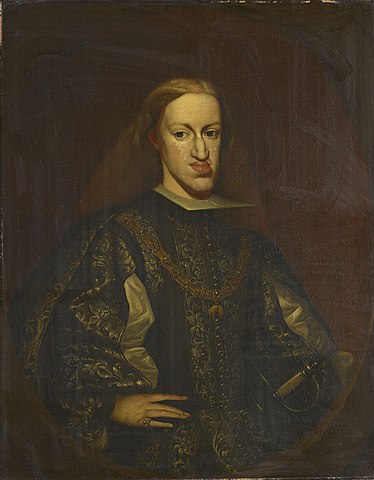
Charles II of Spain.
Source: Painting by unknown artist, ca 1680-1685. Wikimedia Commons. Public domain.


In 1665, at the age of three, Charles II of Spain took over the reins of the Spanish Netherlands. Being the result of the efforts of many generations of Habsburgs to keep the royal bloodline pure by marrying only close enough relatives, poor Charles was both mentally and physically disabled. But his coins looked fine.

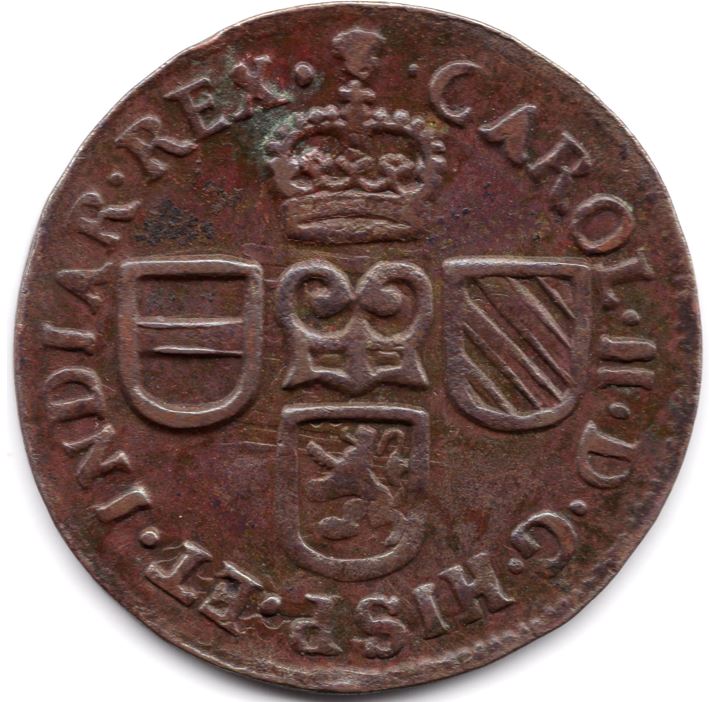
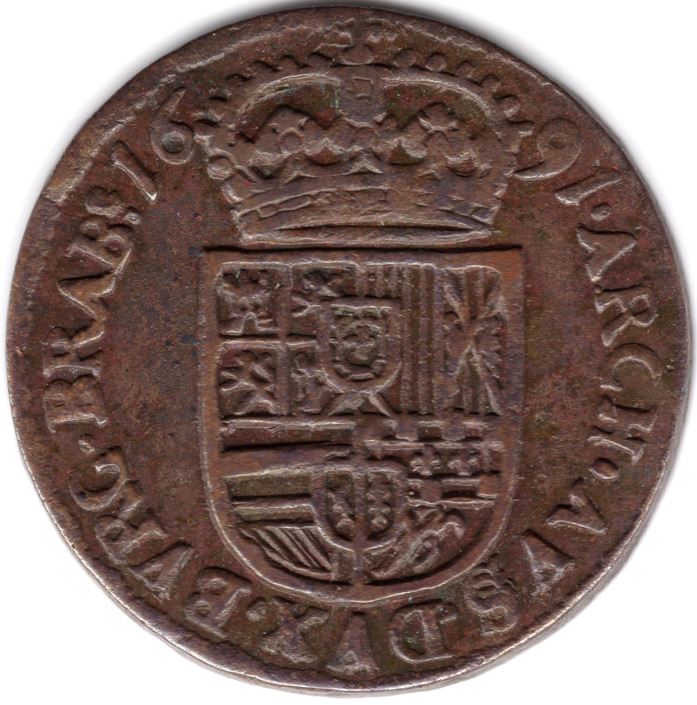
Oord, Brabant (Spanish Netherlands) 1691, Charles II of Spain, Brussels. Copper. 4.01 g, 24 mm. Vanhoudt 722.BS.

The-Lovely-Lowly-Liard The-Lovely-Lowly-Liard

Obverse: CAROL II D G HISP ET INDIAR REX (Carolus II Dei Gratia Hispaniarum et Indiarum Rex / Philip by Grace of God King of the Spains and Indies). Crowned firesteel, left-to-right shields of Austria, (ancient) Burgundy, Brabant. Angel head at top, mintmark for Brussels.
Reverse: ARCH AVS DVX BVRG BRAB (Archidux Austriae Dux Burgundiae [et] Brabantiae / Archduke of Austria, Duke of Burgundy and Brabant). Crowned coat of arms for Charles II.

(If you like challenges, have a close look at this one and try to find out what is "wrong", given the historic information in this thread so far . The answer is at the end of this Chapter.)

Charles has many titles, so both sides of the coin have to be used. All fields are filled up with heraldry, let's see what it all means.

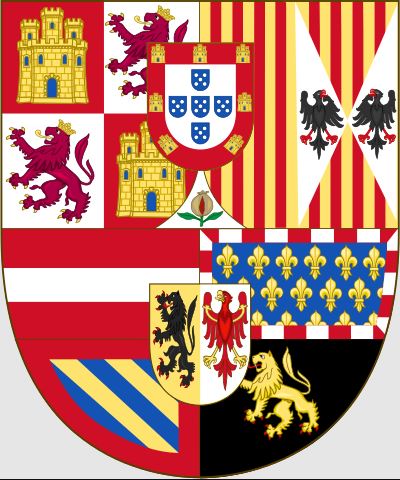
For the obverse, we have already listed that it shows shields for Austria, Burgundy, and Brabant. The fire steel in the center is another symbol for the Duke of Burgundy. The reverse is a bit overwhelming, and maybe overambitious for a low-end denomination like this, but all right, here goes . . . (look at the image of the arms below for comparison).
- Starting with the upper left quadrant, we have the quartered arms of Castile and León.
- Upper right quadrant is parted vertically with Crown of Aragon to the left; to the right quartered (in a saltire arrangement) Kingdom of Sicily (under the Crown of Aragon) - the elongated blobs in the left and right parts are supposed to be eagles - poor die cutter.
- Between the two upper quadrants, a shield with the arms of Portugal.
- Below that shield, squeezed in between the two upper quadrants, a triangle shape with the arms for Granada (you are excused if you have trouble making out the pomegranate fruit).
- The lower left quadrant is parted horizontally with Austria above ancient Burgundy.
- Lower right quadrant, also parted horizontally, has modern Burgundy above and Brabant below (with a bit of imagination one can see the lion; it should be rampant - like on the obverse - but here it has tumbled over and become an English lion ).
- The two lower quadrants also have a shield in between, parted with Flanders to the left and Tyrol to the right.

The-Lovely-Lowly-Liard
Charles II of Spain Coat of Arms.
Source: Wikimedia Commons. Creative Commons Attribution-Share Alike 3.0 Unported license.


Burgundy has five mentions in inscription and arms, Brabant has to settle for three. It might be worth a few words about why Burgundy, an area in Central Europe, keeps recurring on coins of the Low Countries, located by the North Sea. To Habsburg rulers, like Charles, the Low Countries were part of the Burgundian Circle, the administrative area in the Holy Roman Empire that also comprised, and had its name after, the County of Burgundy. I don't know what the people of Brabant thought of that, if they cared. But maybe they thought something of a ruler who is more keen to show his ancestry and possessions than a portrait of himself? (On second thought, considering what his portrait looks like . . .)

Also, I hope the Brussels die cutters were paid better than their French colleagues, who could just punch three fleurs-de-lis and then take the rest of the day off.

The challenge then? If you haven't figured out already, here is the answer to what is "wrong" with this coin. How come Charles styles himself as Duke of Burgundy, when it was the County of Burgundy that passed to the Habsburgs in 1493, as I described back in Chapter 12? Charles V correctly wrote Count of Burgundy on his 1555 Burgundy coins, if you remember, so what happened after that? Well, actually, things happened already back in 1526. French king Francis I had managed to get himself captured by the Spanish during one of the wars with Spain. Charles V, king of Spain (as well as Holy Roman Emperor) hadn't forgot about the once imperial possession of the Duchy of Burgundy, and to negotiate his release, Francis promised to give Charles back title and land for the duchy (plus send his two sons to replace him as hostage). It worked, Francis was released, and back home he immediately revoked his decision (and left his sons, aged 5 and 8, in Spanish captivity for three years - a tough upbringing!). The duchy remained under France, but Charles - not willing to wage another war for it - continued to claim the title at least. He and his descendants continued to style themselves not only as Counts, but also Dukes, of Burgundy. And although no war over the issue is imminent, the present Spanish king, Felipe (Philip if you like) VI, still carries the title of Duke of Burgundy.

Next Time: The 18th Century

For the first time, we take a step into the 18th century! We have not seen the last of the 17th, no there is plenty more and we will be back there soon, but first a brief taste of the Age of Enlightenment and Revolutions!
Pillar of the Community
Learn More...
tdziemia's Avatar
United States
7959 Posts
 Posted 05/15/2024  10:49 am  Show Profile   Bookmark this reply Add tdziemia to your friends list Get a Link to this Reply

Quote:
On second thought, considering what his portrait looks like . . .)


Yes, poor Charles, to be physically cursed like this by the practices of his ancestors.
Interestingly, it seems this deformation began manifesting well after childhood, as we can see in portraits on his coins. Charles began his reign two months before his 4th birthday, and coins with his image as a 4 year old were struck less than a year later: https://en.numista.com/catalogue/pieces24891.html

This next portrait, at age 20 still does not look like the face in the painting posted by erafjel (perhaps the engraver was being kind?): https://en.numista.com/catalogue/pieces337065.html

But by his mid-20s we see portraits looking very much like the painting: https://en.numista.com/catalogue/pieces337464.html

Worst of all for a Hapsburg royal, his physical disabilities (probably) prevented him from producing an heir... I am sure we will hear more on this in a later chapter.

Sadly, I failed the challenge question .

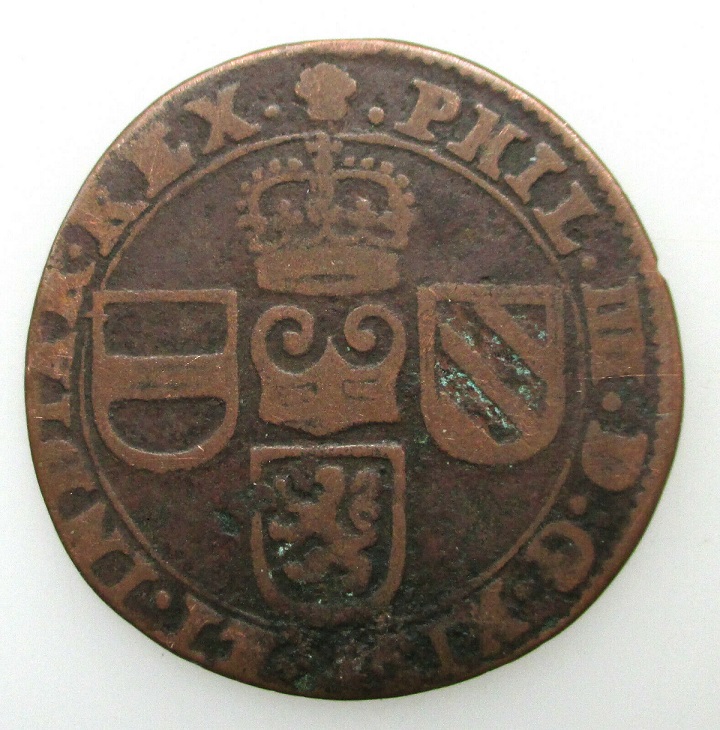
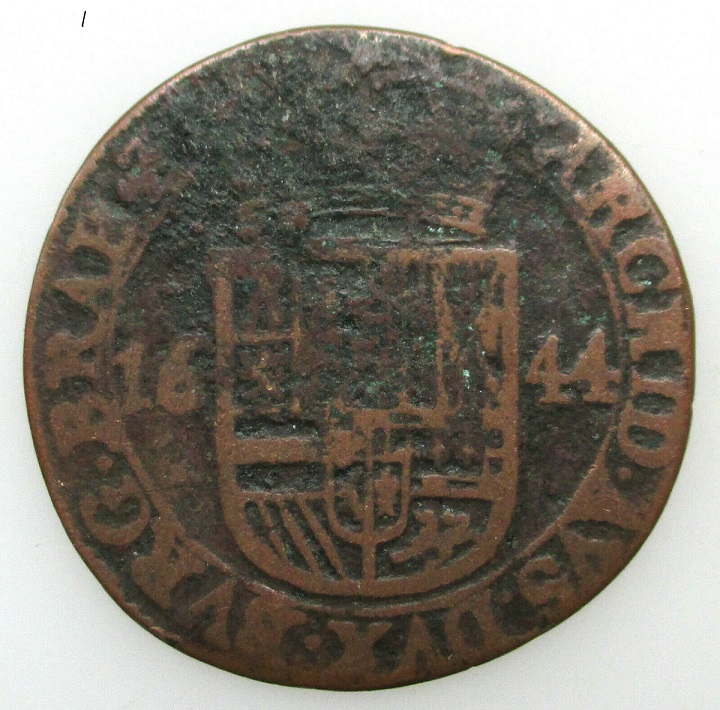
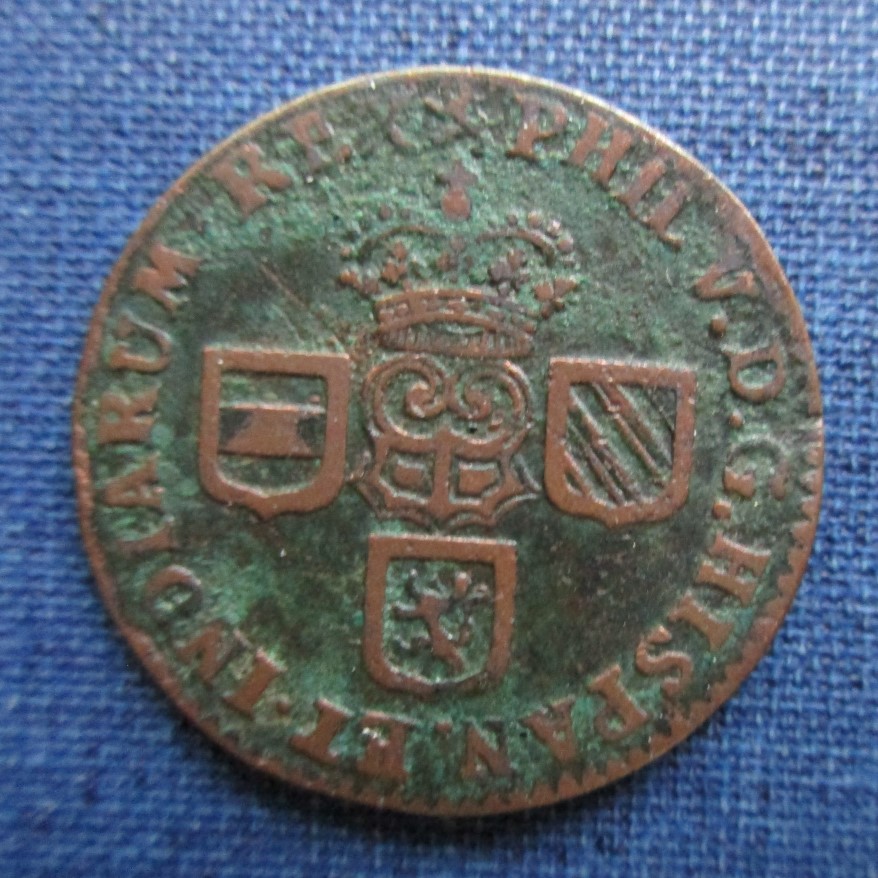
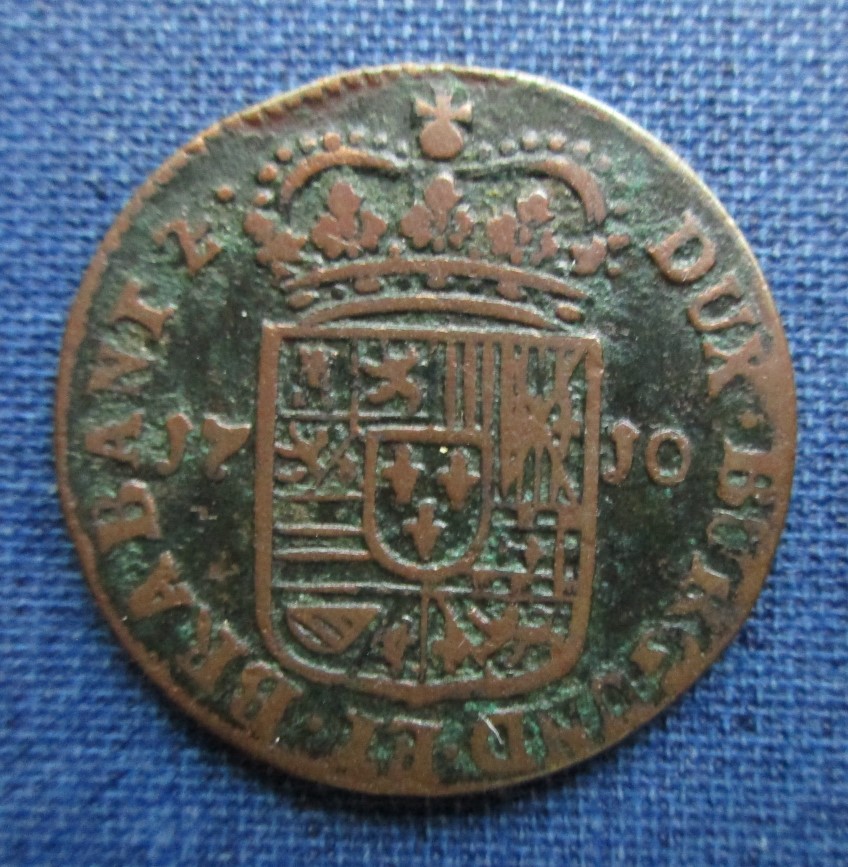
Meantime, I will fill in the gap between Albert & Isabella and Charles II with a 1644 liard of Phillip III, struck in Brussels:
The-Lovely-Lowly-Liard


Moderator
Learn More...
jbuck's Avatar
United States
189340 Posts
 Posted 05/15/2024  11:00 am  Show Profile   Bookmark this reply Add jbuck to your friends list Get a Link to this Reply
That coat of arms packs a lot in there!

Those die cutters earned every bit of their (hopefully significantly higher) pay.

Pillar of the Community
Learn More...
erafjel's Avatar
Sweden
2124 Posts
 Posted 05/15/2024  12:45 pm  Show Profile   Bookmark this reply Add erafjel to your friends list Get a Link to this Reply

Quote:
Yes, poor Charles

Interesting to see that sequence of portraits, tdziemia. And yes, you will soon - very soon - hear more about the lack of an heir, and what that led to (which I am sure you already know ).

Great to see a Philip IV (right?) liard too!


Quote:
That coat of arms packs a lot in there!

Yes, the die cutters surely had their hands full!

Pillar of the Community
Learn More...
erafjel's Avatar
Sweden
2124 Posts
 Posted 05/15/2024  1:06 pm  Show Profile   Bookmark this reply Add erafjel to your friends list Get a Link to this Reply
CHAPTER 18: Last Liards, Oorden and Days of The Spanish Netherlands

= 1712 =


Charles II did not produce any heirs (he is believed to have been sterile). After his death in November 1700, he was succeeded by his grand nephew, a grandson of French king Louis XIV, with the name Philip V. That was not seen kindly by the other powers in Europe and soon followed the outbreak of the War of the Spanish Succession, where France, Spain, the Holy Roman Empire, the Dutch Republic, England, and a couple of other states, put forward the (armed) arguments for their favorite candidates to the Spanish throne. Philip (of the house of Bourbon) was of course one of them, backed by France and Spanish Bourbon supporters. Charles of Austria (house of Habsburg), a more distant relative of Charles II also claimed the Spanish throne and got backed by Austria and other member states of the Holy Roman Empire, the Dutch Republic, Great Britain, and a couple of others. A third candidate was Maximilian Emanuel of Bavaria (house of Wittelsbach), who had an excellent CV but was backed mostly by himself.

All three, in their capacity (or assumed capacity) of Spanish monarch, issued coins for the Spanish Netherlands. I will show liards/oorden by Charles and Maximilian. I haven't got one by Philip - perhaps someone out there has one, then please show it!

Namur - Maximilian Emanuel

Maximilian Emanuel realized he needed more support than his own enthusiasm for the task, so he tried allying with France. That did not get him any closer to the Spanish throne - France had already placed their favorite there. But as a consolation price for Maximilian's military support against the Habsburgs, Louis XIV arranged for him to have the Lordship over the Spanish Netherlands in 1711. Since most of its provinces were under the military control of the Habsburg alliance, it was effectively only Namur and Luxembourg that Maximilian got - which is not bad by itself. Having been Governor of the Spanish Netherlands since 1691, and chased out of Bavaria by the Austrians after having allied with their enemy France, it was perhaps like finding a home at least.

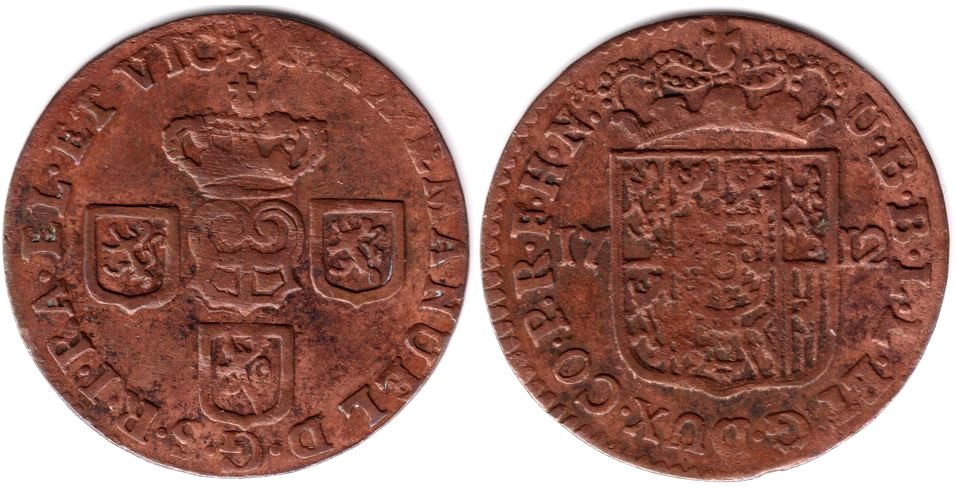
Liard, Namur (Spanish Netherlands) 1712, Maximilian II Emanuel of Bavaria, Namur. Copper. 2.77 g, 23 mm. Vanhoudt 787.
The-Lovely-Lowly-Liard

Obverse: MAX EMANUEL D G S R I RA EL ET VIC (Maximilianus Emanuel Dei Gratia Sacri Romani Imperii Archidapifer Elector et Vicarius [RA should be AR] / Maximilian Emanuel by Grace of God Arch-Steward, Elector and Vicar of the Holy Roman Empire). Crowned firesteel and three shields with lions. Standing lion at top, mintmark for town of Namur. (The misspelling RA for AR is not uncommon.)
Reverse: U B B L L ET G DUX CO P R F H N & (Utriusque Bavariae, Brabantiae, Limburgi, Luxemburgi et Geldriae Dux; Comes Palatinus Rheni, Flandriae, Hannoniae, Namurci et [cetera] / Duke of both Bavaria, Brabant, Limburg, Luxembourg and Guelders; Count Palatine of the Rhine, Flanders, Hainaut, Namur etc). Crowned coat of arms for Maximilian.

It looks pretty similar to the liard by Charles II shown in the previous Chapter, and we shall come back to that. But I think Max takes the prize for longest title squeezed into a liard. Let's look a little bit closer at what it says.

What is an "Archidapifer", you might wonder? The common translation is Arch-Steward, which might not be self-explanatory either. Traditionally, in the early days of the empire, it was apparently a court role that involved placing the first bowl on the imperial table. Later it evolved into a more ceremonial, but very high-ranking, office (which still seems to have included some involvement in court festivities, on occasion). I am not sure what it entailed in Maximilian's time, but I don't think he needed to serve at the emperor's dinner table . An Elector had the right to participate in the election of the emperor; only some of the rulers in the empire had that privilege. Being a Vicar was perhaps an even more high-ranking role, as there were only two in the whole empire. Their role was to administer the empire during an interregnum, the time between the death of an emperor and the election of his successor. In 1712, Maximilian was still in disfavor, and his imperial functions were taken over by his cousin Johann Wilhelm. Including them in his list of titles here was a bit obstinate and some distance away from the truth, but Maximilian probably considered the titles his by birthright.

The reverse is also a bit theoretical. Here Maximilan lists most of his titles, as duke and count of a long list of states and provinces. By birth he was Duke of Bavaria, even if that was for the moment occupied by Austria, and on paper he was duke or count of all the Spanish Netherlands provinces, but in reality it was the Duchy of Luxembourg and the County of Namur that he exercised any power over. Those were also the two provinces where he issued coins.

Done with the long list of titles, the arms shown aren't bad either. Those on the obverse are a bit confusing, though . . . The fire steel is a symbol for the Duke of Burgundy (which Maximilian did not claim to be). Probably it just tagged along from the previous and very similar Namur liards, issued for Charles II and Philip V of Spain (who weren't Dukes of Burgundy either, but as discussed above, they wanted to). Later liards do not have it (neither do any other of Maximilian's coins). And then there are three lion shields . . . the only description I have found says they are all three the Brabant lion. Not that there is a lack of heraldic lions to choose from, practically every Low Countries province has one in their arms. What the mint master had in mind, we might never find out.

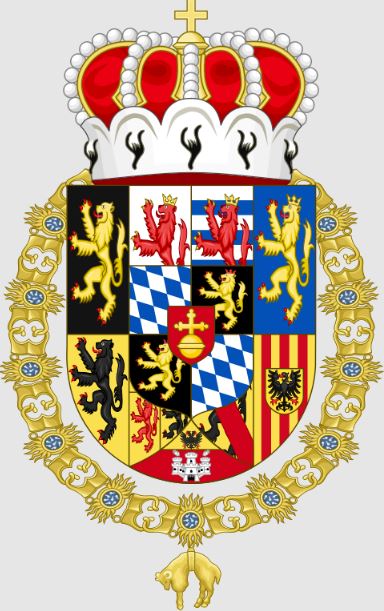
The reverse has a coat of arms that is fully on par with that of Charles II (see previous Chapter). It is Maximilian's coat of arms as Lord of the Spanish Netherlands. It represents most of the provinces and is, consequently, full to the brim with lions. If you feel you have had enough of heraldry in this series of posts, feel free to skip past the image of the coat of arms below . (The arms do not show too well on this example, so look at the picture below instead.)
- The four fields in the middle belong to the heart shield placed on top of, and obscuring, the main coat of arms. It is the arms for the House of Wittelsbach-Bavaria, which is quartered with the arms of Wittelsbach and the Palatine Lion (the only lion not roaming the Netherlands ). The globe with a cross (globus cruciger) is the symbol for the Arch-Steward. (The lozenges representing the House of Wittelsbach, which ruled Bavaria from 1180 to 1918, also became arms for Bavaria itself.)
- Moving to the main coat of arms, the upper left quadrant is Brabant and Limburg.
- Upper right quadrant is Luxembourg and Guelders.
- Lower left quadrant Flanders and Hainaut (which is quartered with - again - Flanders and Holland).
- Lower right quadrant Namur and Mechelen.
- Between the two lower quadrants, we have the Margraviate of Antwerp, with the imperial eagle and the city arms.

Like for Charles II, I can pity the die cutter who had to squeeze all of this in, on the very limited space provided by a liard. And to do it over and over again, as dies wore and broke . . .
The-Lovely-Lowly-Liard
Maximilian II Emanuel Coat of Arms.
Source: Wikimedia Commons. Creative Commons Attribution-Share Alike 4.0 International.


These liards were minted only during 1712 (but in large quantities, resulting in a number of varieties). They looked much like the liards of Charles II and Philip V of Spain, Max's predecessor and competitor. Neither Maximilian's nor Philip's liards were accepted in the provinces occupied by the Allies, since they referred to the "wrong" ruler. When the Namur moneyers began minting imitations of liards in the name of the deceased king Charles II to circumvent the ban, and that in large numbers, the Allied authorities had enough and demonetized all liards that looked like those under Charles II / Philip V / Maximilian. So Maximilian changed to another design, with a portrait and a monogram. A portrait and a monogram that looked exactly like the new liards minted by the Allies for their ruler, Charles VI of Austria . . . who, by the way, is our next contestant!

Flanders - Charles VI of Austria

Charles declared himself king Charles III of Spain in 1700, after the death of his Habsburg relative Charles II. In 1711 his elder brother Joseph, Holy Roman Emperor, died and Charles became Emperor and Archduke of Austria Charles VI.

As king Charles III of Spain, he had minted coins in the Spanish Netherlands provinces of Flanders and Brabant - no liards yet though. Liards (or oorden) were minted beginning in 1712. On those, Charles styles himself Charles VI of Austria, and they are often classified under the Austrian Netherlands, even though it wasn't until 1714 that the Peace of Utrecht gave the Spanish Netherlands to Austria. (Any confusion about whether these liards belong to the Spanish or the Austrian Netherlands is largely an effect of our modern notion of a one-to-one relation between coins and nation states. They were minted for Charles VI for use in his possessions in the Low Countries, whatever they were called at the time. The same liards were minted until 1719, so it is practical to group all of them together, from 1712 onwards.)

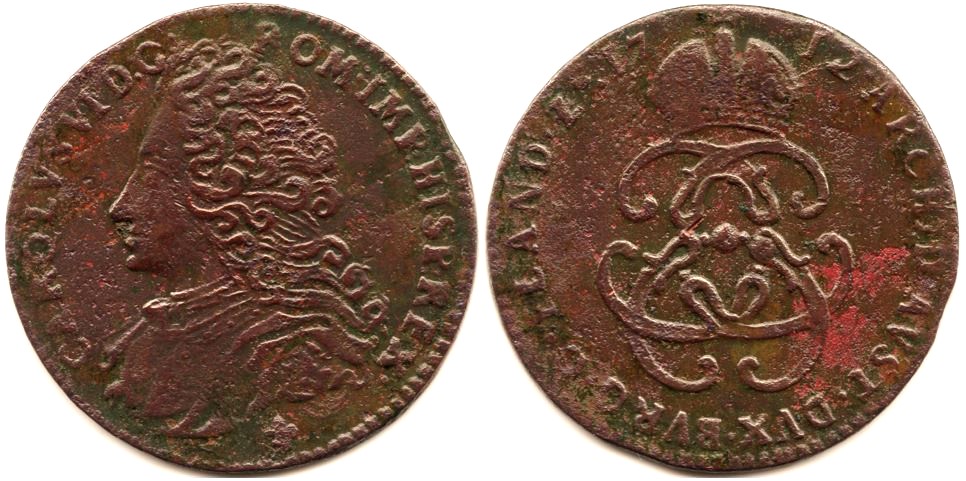
Liard/oord, Flanders (Spanish Netherlands) 1712, Charles VI of Austria, Bruges. Copper. 4.01 g, 24 mm. Vanhoudt 794.BG.
The-Lovely-Lowly-Liard

Obverse: CAROLVS VI D G ROM IMP HISP REX (Carolus VI Dei Gratia Romanorum Imperator Hispaniarum Rex / Charles VI by Grace of God Emperor of the Romans, King of the Spains). Bust of Charles VI. Fleur-de-lis below bust, mintmark for Bruges.
Reverse: ARCHID AVST DVX BVRG C FLAND Zc (Archidux Austriae Dux Burgundiae Comes Flandriae et cetera / Archduke of Austria, Duke of Burgundy, Count of Flanders etc). Crowned monogram for Charles (three Cs).

Minted before the Peace of Utrecht, Charles still claims the Spanish throne on this one (see Note 1). Duke of Burgundy was the by then traditional Habsburg claim (for the duchy that had been part of France for centuries). Count of Flanders was of course fitting to point out on a Flanders coin. (On the virtually identical coins minted in Brabant, he was Duke of Brabant.)

What Happened Then?

A messy drama, the Spanish Netherlands during the first decade and a half of the 1700s. How did it all end for our main characters?

The Spanish Netherlands turned into the Austrian Netherlands as a result of the haggling over distribution of power between all that wanted some, summed up in the 1714 Peace of Utrecht. They continued minting liards and in Chapter 29 we shall have a look at those.

Charles VI of Austria reluctantly gave up Spain at the Utrecht Peace (Great Britain and others thought he got a big enough bite of Europe when he became emperor). But he managed to pull the Spanish Netherlands into his holdings as part of the deal, in return for dropping his claim on the Spanish throne. He also became Emperor, Archduke, and King over a couple of lands. He really couldn't complain. He stayed emperor until his death in 1740. He was succeeded by his daughter Maria Theresa, who we will meet in Chapter 29.

Maximilian Emanuel had to give up his Lordship over the Spanish Netherlands as a result of the Utrecht Peace. When French king Louis XIV had a generous moment and gave them to Max to thank him for his services, they weren't really his to give. After all, they weren't called the French Netherlands . . . The peace treaty stipulated that Maximilian should be allowed to reclaim his possessions in Bavaria and the Palatinate, which he did. He continued to pursue various possibilities to climb to higher positions, including the imperial throne, but all in vain. He died of a stroke in 1726.

Philip V of Spain was the winner. He continued to sit on the Spanish throne until 1746, although haunted by mental problems. Because of those, he actually abdicated in 1724 in favor of his son Louis, but after he died only 7 months later, Philip took over the throne again. After a couple of sometimes agonizing decades, he died in 1746. His descendant Philip VI sits on the Spanish throne today.

Next: A Visit to the Dutch Republic

In the next Chapter, we are back in the 17th century. The Dutch Republic was born out of the rebellion against Spain. What did its oorden look like, is perhaps not the first question most people ask, but that is what we focus on next!

Notes

Note 1. In case the explanation in Chapter 13 of why the Spanish king was king of "the Spains" and not just "Spain" has fallen into oblivion, here it is again:
Historically, there was more than one Spain: Castile, León, Aragon, Granada, Navarre, and more - those were once independent kingdoms, later collected under one king, and there we have "the Spains". The term was used until the 19th century, but today the Spanish king calls himself "King of Spain".

Moderator
Learn More...
jbuck's Avatar
United States
189340 Posts
 Posted 05/15/2024  4:59 pm  Show Profile   Bookmark this reply Add jbuck to your friends list Get a Link to this Reply
Very interesting!

World history lessons from 40 years ago are starting to resurface.
Pillar of the Community
Learn More...
erafjel's Avatar
Sweden
2124 Posts
 Posted 05/16/2024  1:38 pm  Show Profile   Bookmark this reply Add erafjel to your friends list Get a Link to this Reply
CHAPTER 19: The Oorden of The Dutch Republic - Friesland

= Mid 17th Century =


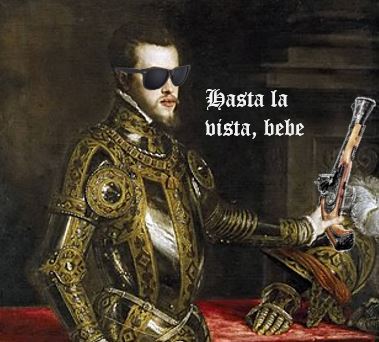
The Dutch Republic, aka the United Provinces (of the Netherlands), aka the Seven Provinces, officially the Republic of the Seven United Netherlands, was formed in 1579 (the Union of Utrecht), after years of fighting Philip II and his Spanish troops. The secession from the Spanish Netherlands was in no way accepted by Philip - it wasn't "Oh well, you win some, you lose some" from him, more "Hasta la vista, baby". In fact, war continued for a long time, with both sides as aggressors, and came to be known as the "Eighty Years' War", not ending until 1648.

The-Lovely-Lowly-Liard
Philip II, post-secession mode.
Source: Painting by Titian, grossly tampered with. Wikimedia Commons. Public domain. Modified by me.


As illustrated in Chapter 14, minting was already in full swing in Holland, one of the Seven Provinces, well before the formation of the Dutch Republic. The name "The Dutch Republic" gives a false impression of coordinated authority in all areas, it was really a confederation of Netherlands. Each "Netherland" had its own minting, for example, with the only commonality being a continuation of the gulden/florin system of the Spanish Netherlands. There was uniformity for the highest denominations, like for gold ducats that needed to have a common look to be accepted for international trade. For the small change, like the duiten and oorden, each province continued with its favorite theme.

While all seven provinces issued duiten (½ oorden), only Friesland and Zeeland issued oorden, from what I can see. Why that is so, I don't know. The step from stuiver down to duit (1/8 stuiver) seems large enough to motivate intermediate values. Anyway, it kind of makes my work with this part easier.

Friesland

In Friesland, small series of billon and copper duiten and (very rare) billon oorden were minted in the 1590s. More regular emissions of oorden, in copper, appeared in 1607. A number of series were issued until the middle of the century, all virtually looking the same. Here is one from the last series:

Oord, Friesland (Dutch Republic) 1646, Leeuwarden. Copper. 2.71 g, 24 mm.

The-Lovely-Lowly-Liard

Obverse: MO NOVA ARG O[RDI]N FR (Moneta nova argentea ordinum Frisiae / New silver coin of the States of Friesland). Crowned arms of Friesland on top of ornamental cross.
Reverse: NISI [DOMINVS] NOBISCVM (Nisi Dominus Nobiscum / Unless the Lord is with us). F O in field, probably standing for Friese Oord. Generic Frisian nobleman with sword. Standing lion on top, mintmark for Leeuwarden.

These seem difficult to find in anything but rather worn condition. We can in any event make out the seven bars on the arms with the two lions; they represent not the seven provinces of the Netherlands, but the seven districts of Friesland.

The reverse is slightly enigmatic. The motto of Friesland, "Unless the Lord is with us" seems cut off. A couple of web sites say that the full motto is "Nisi Dominus Nobiscum Frustra" / "Unless the Lord is with us, all is in vain". But it is literally only a couple, so some reservation about that information. Otherwise "Nisi Dominus Frustra", without the "Nobiscum" so we have just "Without the Lord, all is in vain", is a popular motto. It is derived from Psalm 127 (see Note 1) and was used by other Dutch provinces, as well as many modern institutions (for instance, the City of Edinburgh Council).

The "F O" beside the swordsman is probably the denomination, "Friese Oord" in Dutch ("Frysk Oartsen" in the local Frisian language also works; see further Note 2).

The swordsman (in some descriptions called a nobleman, in others a farmer, but I don't think the farmers carried swords) appears on Frisian coins of several denominations. Other Dutch provinces used similar designs, and it is possibly copied from 16th century Saxony thalers, which had a quite similar swordsman (who is definitely more noble than agricultural).

I find it strange that this issue is called "new silver coin", when earlier, very similar looking, issues of these oorden were called just "new coin". I do not think this issue has any more silver in it than the 0 % previous issues had. Perhaps someone more versed in the intricacies of Dutch coinage has an idea?

Finally, the lion mintmark is a pun on the town name, Leeuwarden. Leeuw in Dutch means lion (but the town's name is a corruption of an older name with another not fully clarified, but definitely non-feline, meaning).

Next Chapter: Zeeland

Continuing with the other province that minted oorden . . .

Notes

Note 1. Psalm 127, 1st verse (in the Latin Vulgate version it is psalm 126): Nisi Dominus ĉdificaverit domum, in vanum laboraverunt qui ĉdificant eam. Nisi Dominus custodierit civitatem, frustra vigilat qui custodit eam.
In translation (King James version): Except the Lord build the house, they labour in vain that build it: except the Lord keep the city, the watchman waketh but in vain.

Note 2. An alternative interpretation is Frisia Ordines - States of Friesland - but we already have that on the obverse. In addition, the rare billon oorden of the 1590s had the text "F.ORT", the ½ stuiver named "butken" had "F B", and many other denominations had the corresponding text arrangement, like "1 S" for 1 stuiver.
Moderator
Learn More...
jbuck's Avatar
United States
189340 Posts
 Posted 05/16/2024  2:19 pm  Show Profile   Bookmark this reply Add jbuck to your friends list Get a Link to this Reply
An interesting read with a nice example coin to accompany it!
Pillar of the Community
Learn More...
erafjel's Avatar
Sweden
2124 Posts
 Posted 05/17/2024  4:20 pm  Show Profile   Bookmark this reply Add erafjel to your friends list Get a Link to this Reply
CHAPTER 20: The Oorden of The Dutch Republic - Zeeland

= Mid 17th Century =


Zeeland

Zeeland minted statenoorden immediately after the formation of the Dutch Republic (this had somehow to do with its dependency on the province of Holland, which at first did not approve of its "subordinate" province minting its own coins). After some years of minting oorden with the effigy of the deposed king Philip II of Spain, they came to their senses and stopped. Larger denominations (without Philip) continued to be minted, and the small change oorden and duiten began to be minted anew in 1601, then with the effigy of (probably) Maurice of Nassau. Like for Friesland, oorden with the same design were minted in periods into the late 1600s.

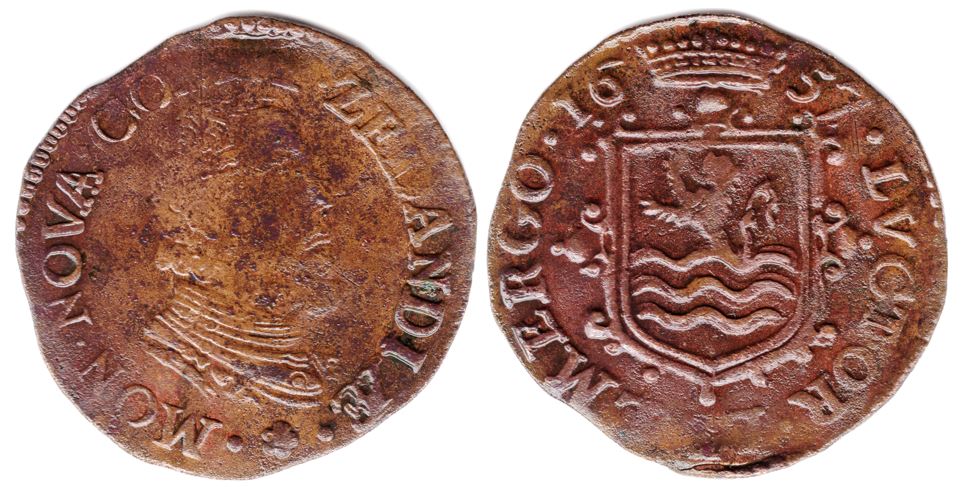
Oord, Zeeland (Dutch Republic) 1657, Middelburg. Copper. 3.21 g, 26 mm.

The-Lovely-Lowly-Liard

Obverse: MON NOVA COMIT ZELANDIĈ (Moneta nova Comitatus Zelandiĉ / New coin of the County of Zeeland). Bust of Maurice of Orange/Nassau (?). Rose at bottom, mintmark for Middelburg.
Reverse: LVCTOR ET EMERGO (I struggle and emerge). Crowned coat of arms for Zeeland.

Whether the portrait is of Maurice of Orange/Nassau, stadtholder for Zeeland and other provinces in the new republic (see Note 1), is uncertain, but there is no other obvious candidate. By 1657 he had been dead for more than 30 years, so that his portrait is rather faded is perhaps understandable . I picked this coin not for the portrait, but for the clearly visible coat of arms.

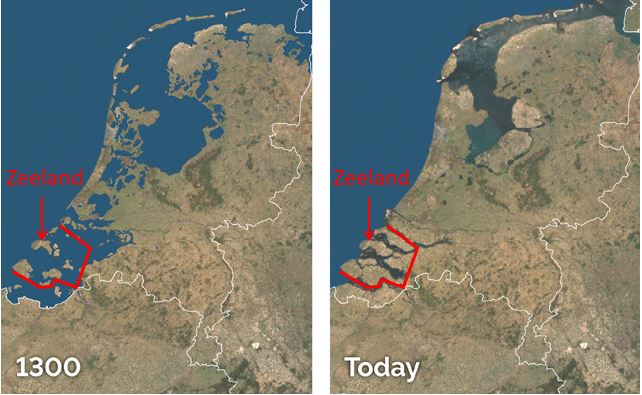
The coat of arms and the motto are commonly interpreted as representing Zeeland's struggle against the sea and the centuries long reclamation of land that literally made the province come out of the sea. It is indeed a rather fascinating process, illustrated by the two maps below, showing how Zeeland (and other parts of the Netherlands) has turned from mostly sea to mostly land in 700 years!

The-Lovely-Lowly-Liard

Land reclamation in the Netherlands. Ancient County of Zeeland in red borders (not exact and not identical to modern Netherlands province of Zeeland).
Source: Kit Cantner via vividmaps.com (modified).


The Dutch lion climbing out of the sea is a good metaphor for land reclamation. It is, however, possible that the original meaning was another one, namely the struggle against and victory over the Spaniards. The wavy lines which look like water were originally (until around 1500) straight lines, possibly with a Medieval origin not necessarily representing water. Also, the motto was added after the Dutch Revolt.

Next time: Back to the Holy Roman Empire

Next Chapter will stay in the 17th century and not go far from the Dutch Republic. We shall look at the coinage in those Low Countries that were directly under the Holy Roman Empire.

Notes

Note 1. The stadtholder was an official who acted as replacement for the count or duke who led the province before the republic (that is, Philip II in the case of the Dutch provinces). Although not formally head of state, his role developed into something similar.
Pillar of the Community
Learn More...
erafjel's Avatar
Sweden
2124 Posts
 Posted 05/17/2024  4:27 pm  Show Profile   Bookmark this reply Add erafjel to your friends list Get a Link to this Reply
2/3 of the journey done! If you have been with me this far, it is now time for a well-deserved pause. Next Chapter will come after the weekend, on Monday, and is about Liège and Stavelot-Malmedy.

Until then, you are so welcome to show us your liards and oorden, be they coppers or billons, French or Low Countries!
Moderator
Learn More...
jbuck's Avatar
United States
189340 Posts
 Posted 05/17/2024  4:47 pm  Show Profile   Bookmark this reply Add jbuck to your friends list Get a Link to this Reply
Thank you for sharing.

I have always been fascinated the history of land reclamation in the Netherlands.

Enjoy the weekend!
Pillar of the Community
Learn More...
erafjel's Avatar
Sweden
2124 Posts
 Posted 05/17/2024  5:50 pm  Show Profile   Bookmark this reply Add erafjel to your friends list Get a Link to this Reply
It has fascinated me too, ever since I visited the country as a kid and learnt that much of it was below sea level.

Quote:
Enjoy the weekend!

Thank you, I will! I am going to "time travel" 45 years back in time and meet with my fellow high school graduates.

Have a nice weekend you too!
Pillar of the Community
Learn More...
tdziemia's Avatar
United States
7959 Posts
 Posted 05/18/2024  11:41 pm  Show Profile   Bookmark this reply Add tdziemia to your friends list Get a Link to this Reply
Catching up again ...

Quote:
Great to see a Philip IV (right?) liard too!

Yes, thanks for catching my mistake!

In response to your exhortation in Chapter 18 on coins struck by Philip V...

Quote:
I haven't got one by Philip - perhaps someone out there has one, then please show it!
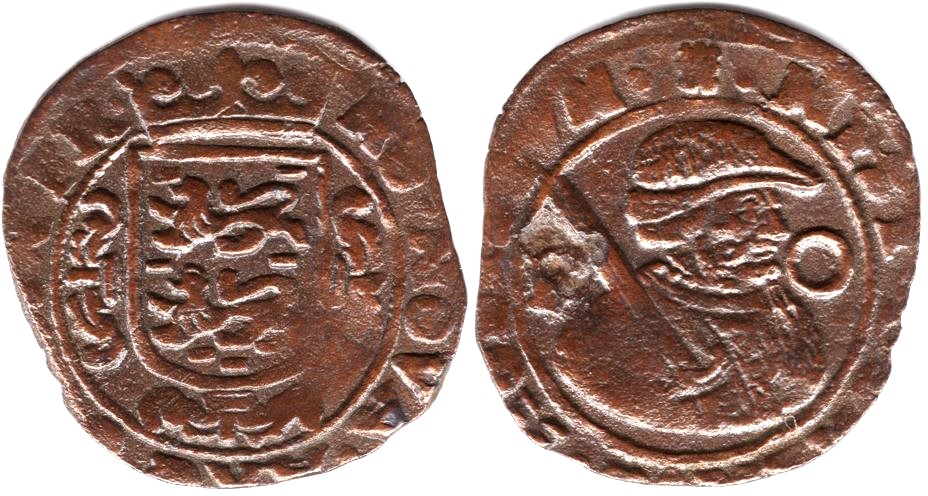
:
The-Lovely-Lowly-Liard
I have a much nicer 2 liard with a portrait, but would be off topic.

As for land reclamation in the Netherlands, I was there about a month ago at the end of a trip to places slightly farther south. As the plane was taxiing at Schipol, and I was looking at the flight data projected at the screen, I grinned at the "altitude" on the screen: - 6 feet.

Edited by tdziemia
05/18/2024 11:42 pm
Pillar of the Community
Learn More...
erafjel's Avatar
Sweden
2124 Posts
 Posted 05/19/2024  12:08 pm  Show Profile   Bookmark this reply Add erafjel to your friends list Get a Link to this Reply

Quote:
In response to your exhortation in Chapter 18 on coins struck by Philip V...

Thank you tdziemia, greatly appreciated! We are filling up with Phils, only #3 missing now!

Quote:
I have a much nicer 2 liard with a portrait, but would be off topic.

You know, I think we can stretch the scope to include liard multiples, without risking overloading the thread with posts . I have noticed that they are often nicer looking than the single liards. So please do show us what Philip V looked like!
  Previous TopicReplies: 163 / Views: 7,126Next Topic
Page: of 11

To participate in the forum you must log in or register.


Disclaimer: While a tremendous amount of effort goes into ensuring the accuracy of the information contained in this site, Coin Community assumes no liability for errors. Copyright 2005 - 2026 Coin Community Family- all rights reserved worldwide. Use of any images or content on this website without prior written permission of Coin Community or the original lender is strictly prohibited.
Contact Us  |  Advertise Here  |  Privacy Policy / Terms of Use

Coin Community Forum © 2005 - 2026 Coin Community Forums
It took 0.59 seconds to rattle this change. Forums