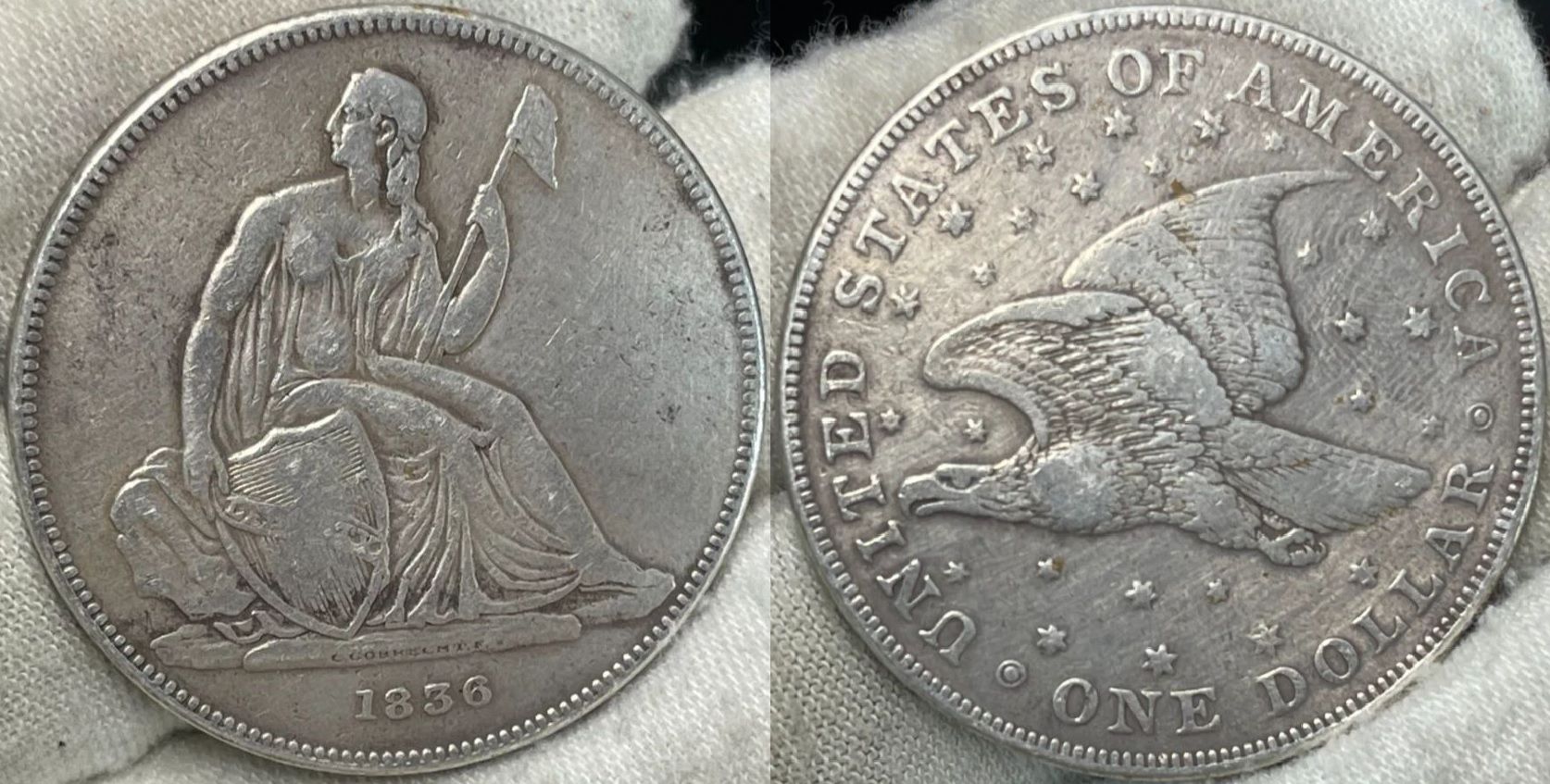
NGC -
The weight and design flaws reveal this coin to be a counterfeit.It may seem strange that the minting of silver dollars came to a halt for more than 30 years in the early days of the US Mint. But the denomination came roaring back to life with the 1836
Gobrecht dollar, a masterful design that set the stage for a new era of excellence in
US coinage. Examples of
Gobrecht dollars invariably sell for thousands of dollars due to their extremely limited mintage and strong collector interest.
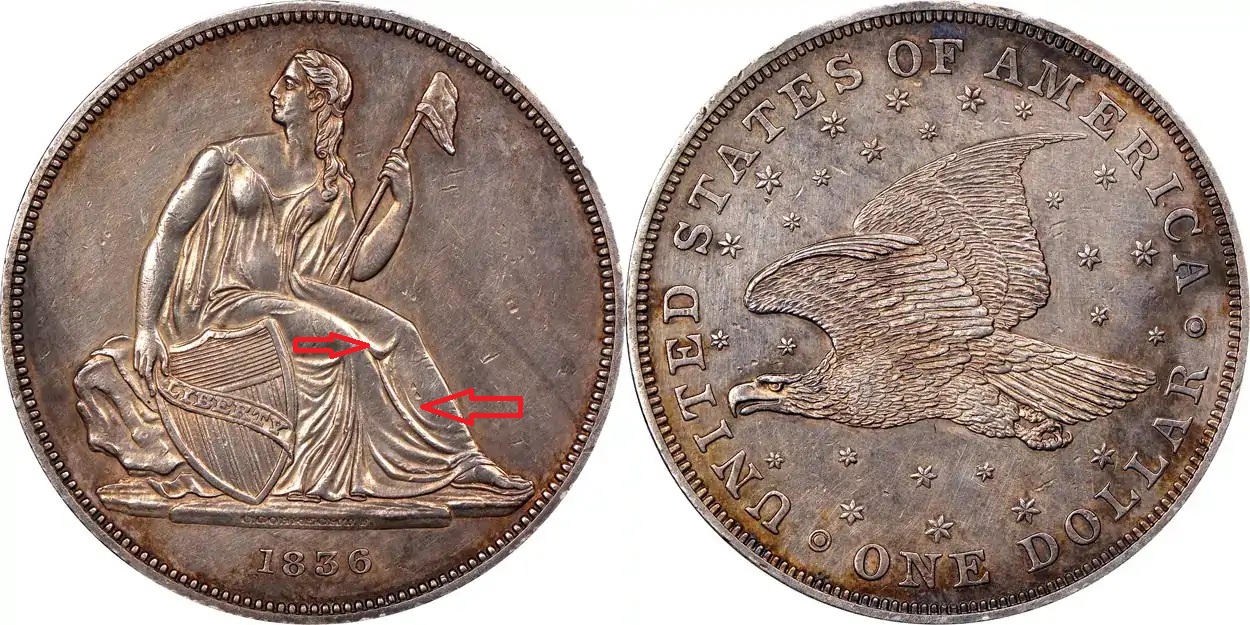
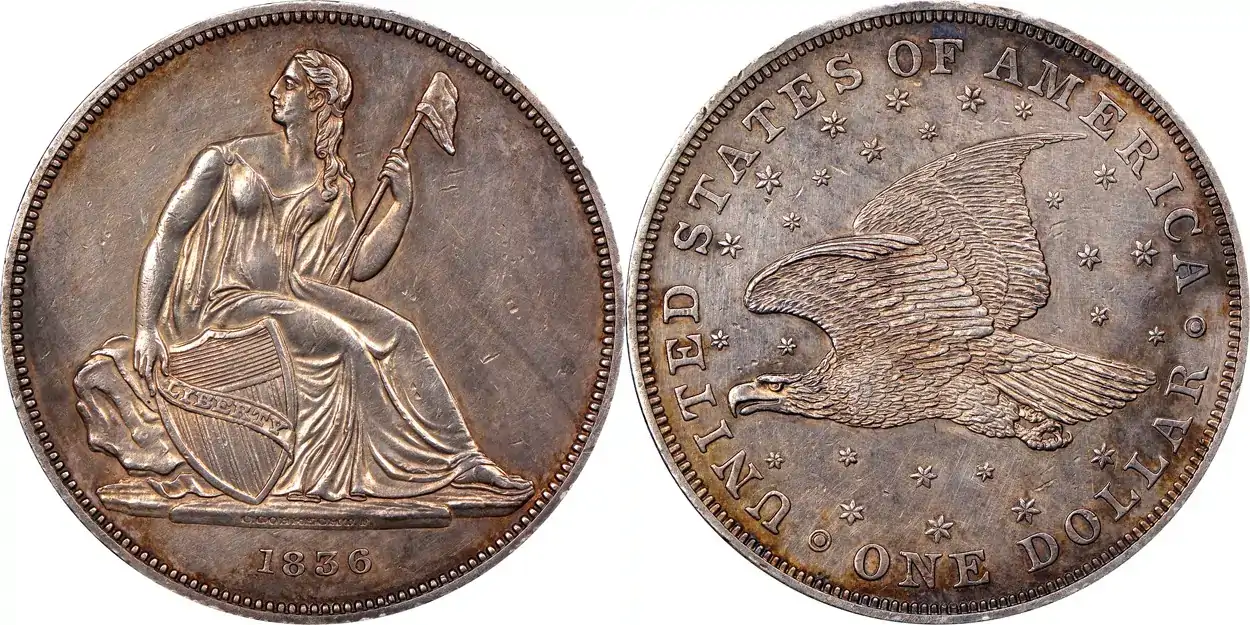 Genuine 1836 Gobrecht silver dollar (Judd-60)
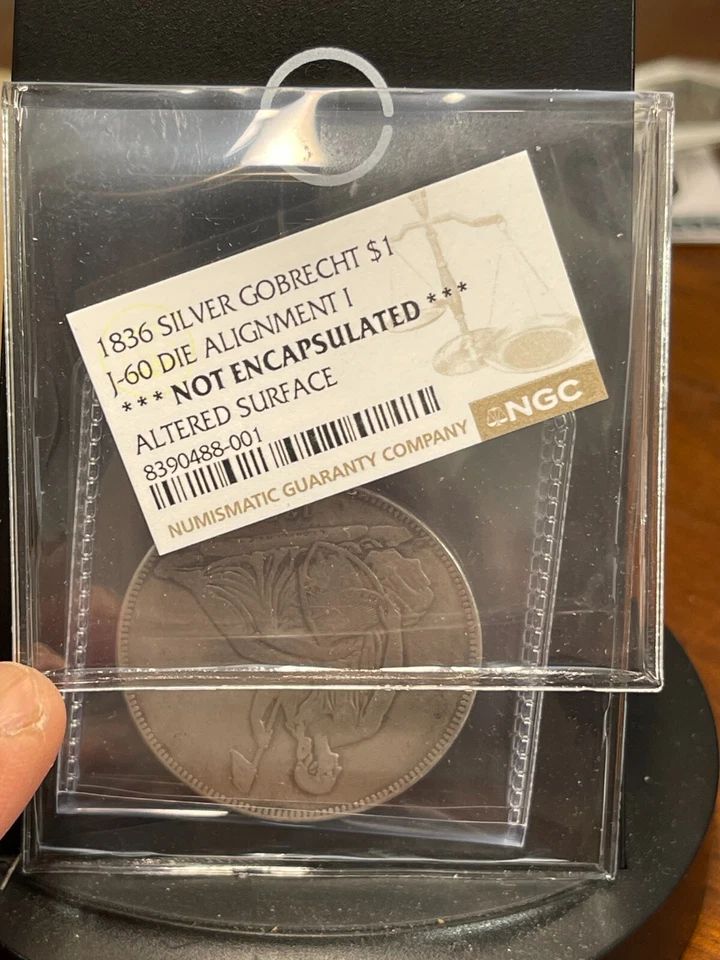
NGC recently received a purported example of a
Gobrecht dollar, which is found in several varieties. A crucial step in coin authentication is to determine which variety you have. For instance, certain varieties (Judd-58, 59, 63, and 64) have C. GOBREHCT F. between the year and Liberty's base on the obverse, while the rest (including Judd-60, which is the most popular) have it discreetly placed within Liberty's base. The coin submitted to NGC is missing the C. GOBREHCT F. entirely, so it's already off to a questionable start (though there are 1838 and 1839 varieties that do omit the name).
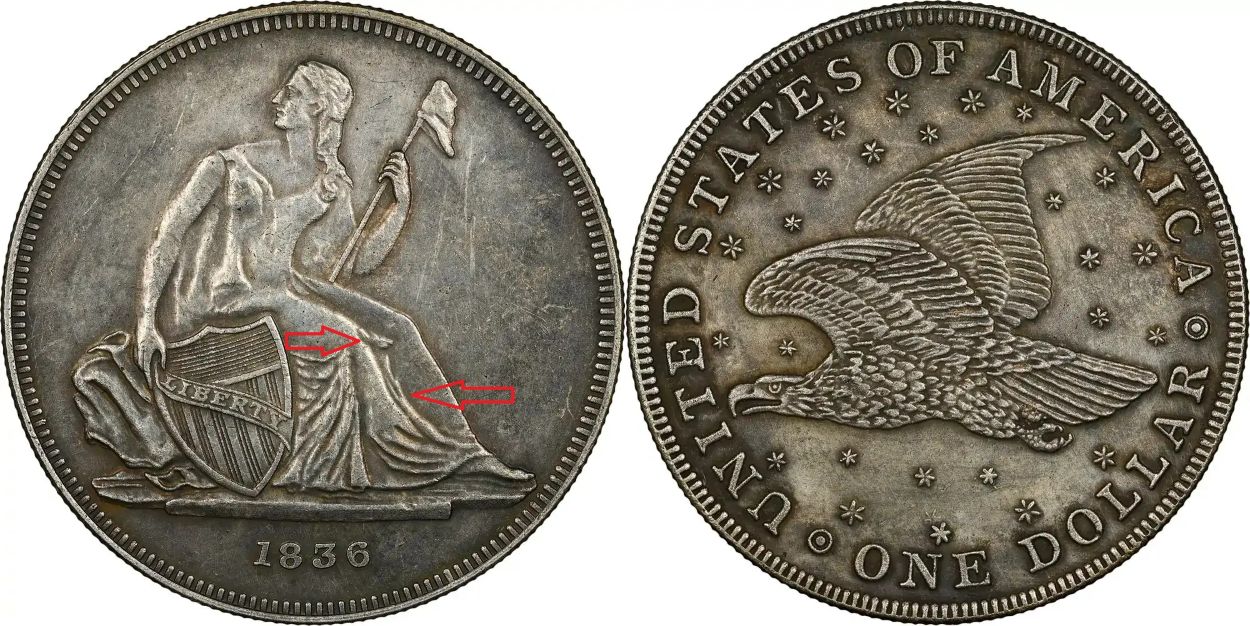
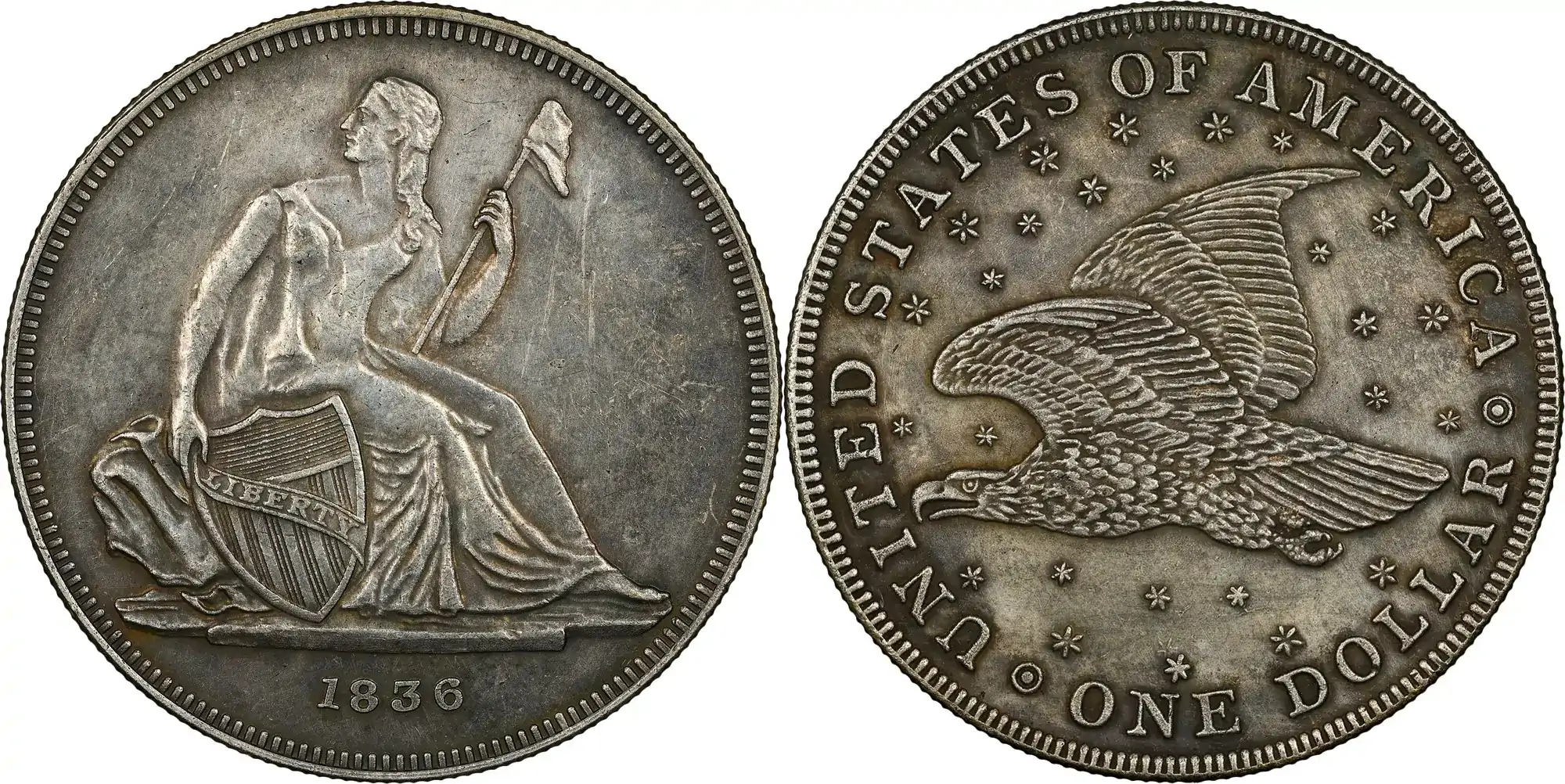 Counterfeit 1836 Gobrecht Silver Dollar Gobrecht dollars
 were struck in the 1830s and then again years later for sale to provide collectors something of numismatic value as the US Mint sought to obtain other rarities for its coin cabinet. Examples of the J-60 variety can be found in .8924 fine silver at 26.96 grams (the pre-1837 standard) or .900 fine silver weighing 26.73 grams for the Restrikes.
A metallurgical analysis of the coin submitted to NGC shows that it is 64% copper, 24% zinc, 11% nickel, and 1% silver. While copper varieties do exist, they are not struck with anything remotely close to this particular alloy. In addition, this counterfeit was artificially worn and colored in an attempt to mimic a coin struck primarily in silver.
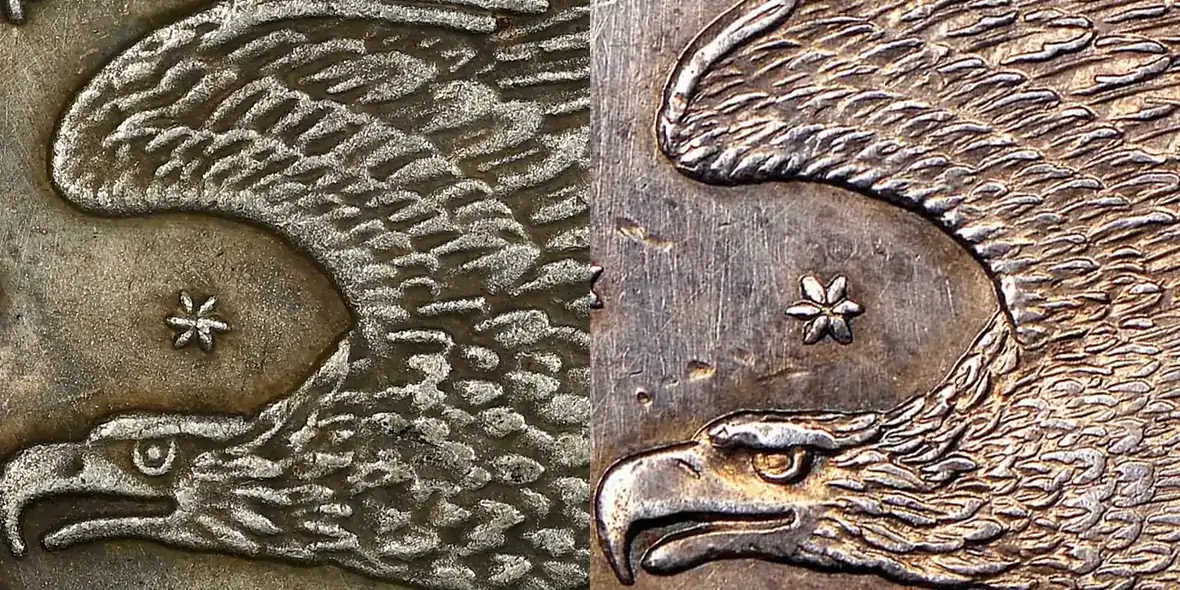 Close-ups of the counterfeit (left) and genuine coin
At 23.5 grams, the coin is significantly underweight for what is presumed to be one attempting to pass for a silver version. The lower-than-expected weight is a result of using metals that are less dense than silver while simultaneously trying to maintain a normal thickness for the coin.
Other red flags include rough surfaces and porosity above the eagle's head. Also note the shortcomings in the design, including denticles that are far too big and a lack of details in the eagle.
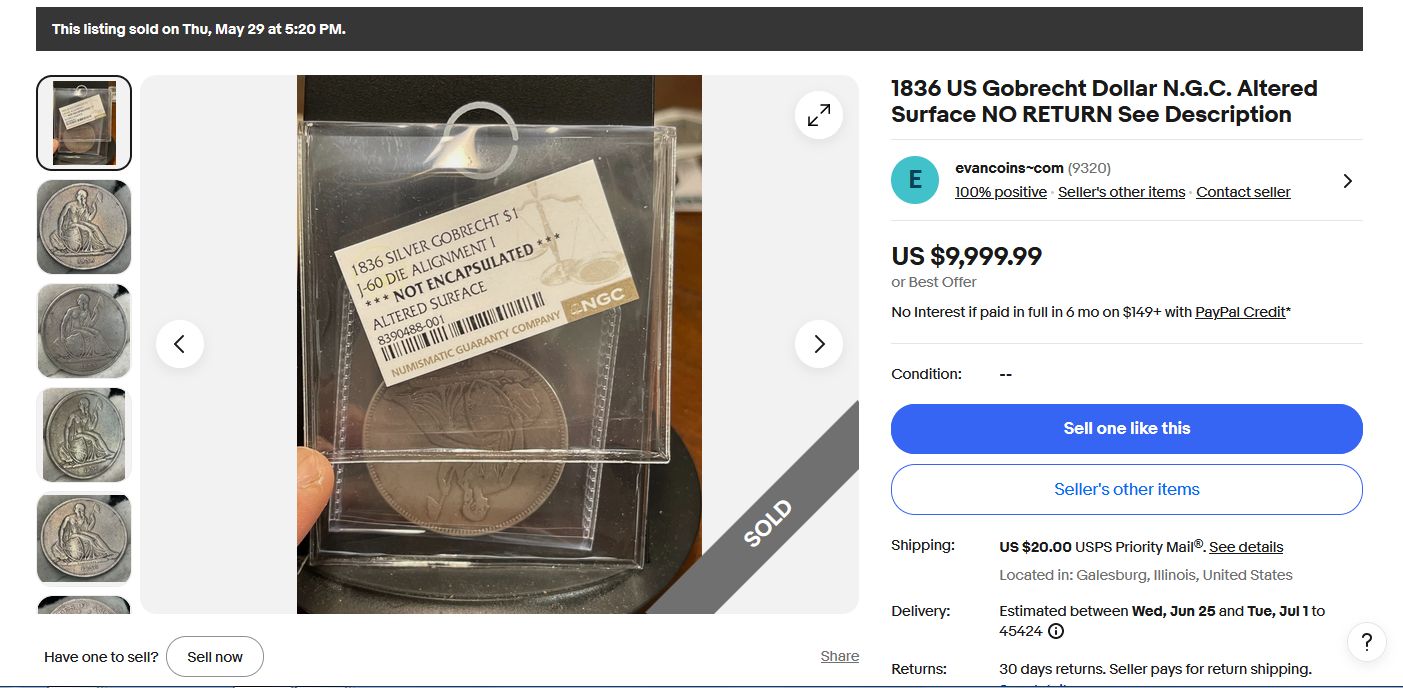
Read More: Counterfeit Detection Series Check out Gobrecht Dollars on ebay
.




 Posted 07/06/2025 2:47 pm