| Author |
 Replies: 12 / Views: 1,374 Replies: 12 / Views: 1,374 |
|
|
Valued Member
United States
91 Posts |
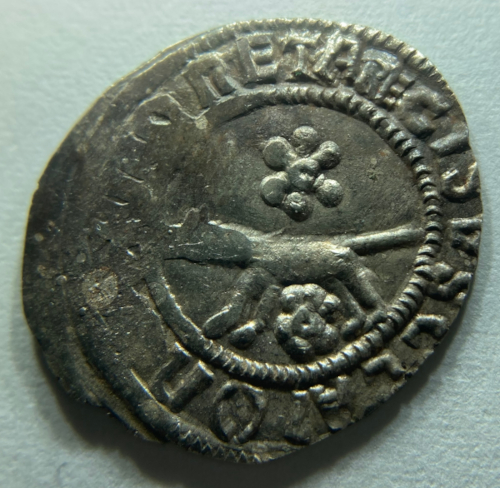
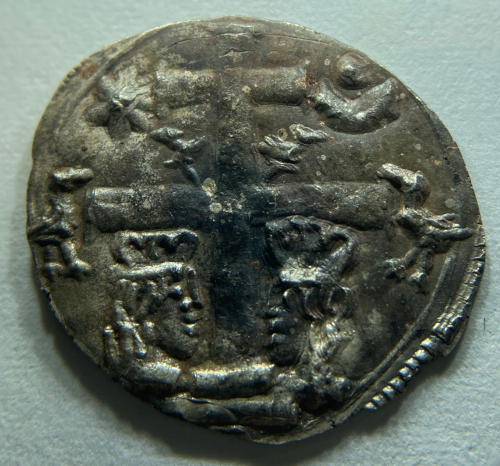
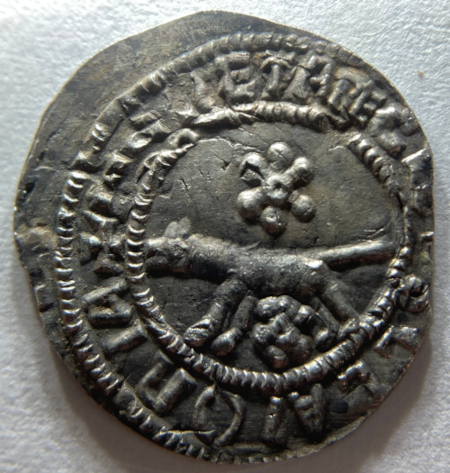
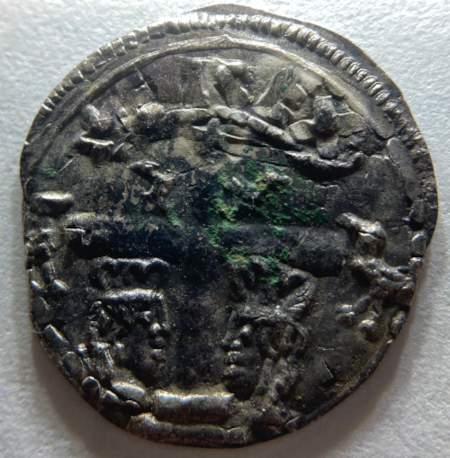
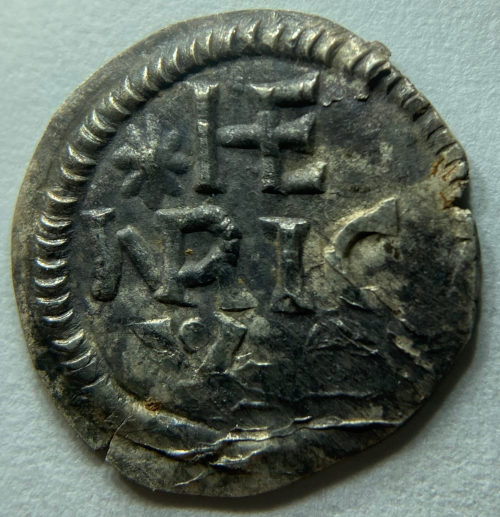
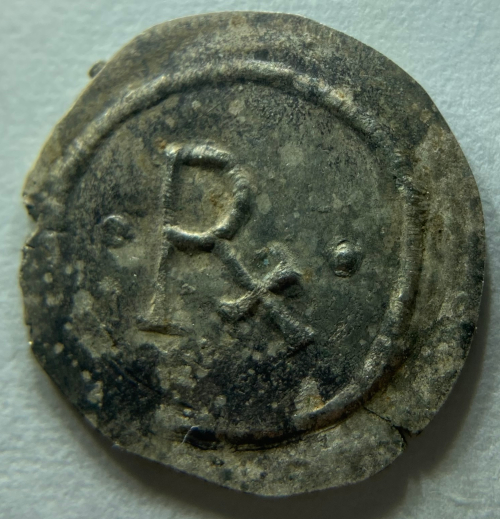
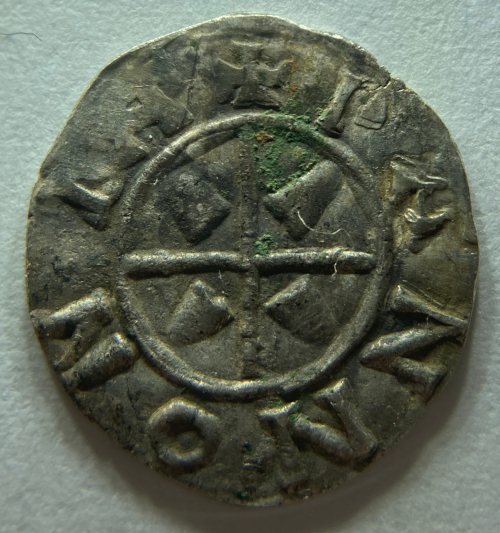
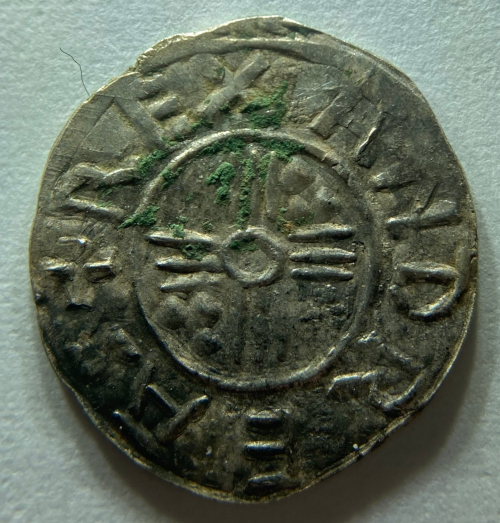
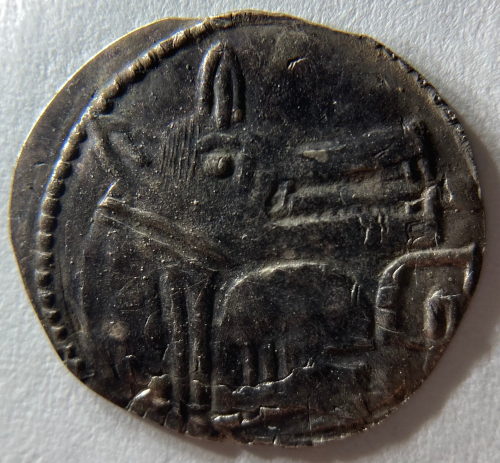
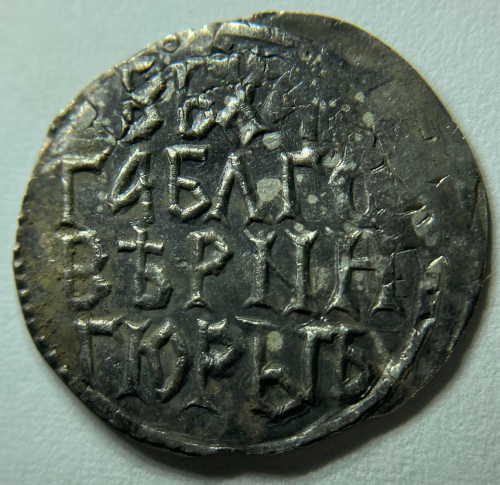
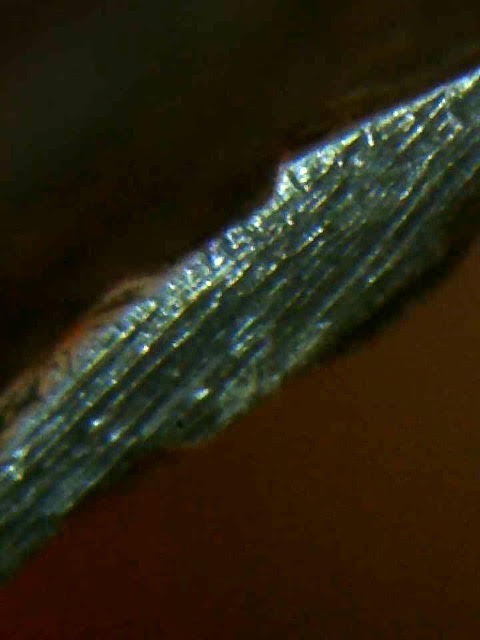
I ordered a batch of medieval Hungarian and Serbian coins from a dealer in Serbia via ebay. I think it's a mix of genuine and fakes (copies and fantasies). I would like to discuss this with the community so we can all help to educate each other about the fakes that are on the market. I'm including pictures of the whole lot here. The seller, "greatwarriorachilles", is currently selling a few similar lots. Here's my assessment: #1 - #7: I think these are genuine, low-grade Hungarian denars, 14c-15c, though some may be contemporary counterfeits. #8 and #9: Genuine Banovac denars? One has traces of file marks on the edge. #10: Hungary, Emeric, N#50647 var. I would expect a fake to look more perfect, but whoever is making these is using some convincing medieval techniques. Slight split at the edge. File marks on edge. #11: Hungary, Andreas, N#33130 var. This one had some patina on it that scraped off easily. Suspicious. There is some slight doubling of the strike. File marks on edge. #12: Zeta, I posted about this earlier. No clue if it's genuine. Traces of file marks on the edge. #13 - #14: Uncertain. #15 - #20: Fakes/fantasies. (1) They all have identical green patina, which is not soluble in weak acid (it's not copper oxide / copper chloride / verdigris) and scrapes off easily with no pitting or corrosion beneath. (2) They appear to be undocumented types, I can't find any of them online. (3) The designs look like they're inspired by earlier Anglo-Saxon coins (and I've read there are Anglo-Saxon fakes coming out of Serbia). For #16 ("Stefand") I found a die match, and a die variation, in another of this seller's lots. Someone worked pretty hard creating these considering they cost less than $5 each. I have higher resolution images, but how can I share them here? They're around 4MB each. 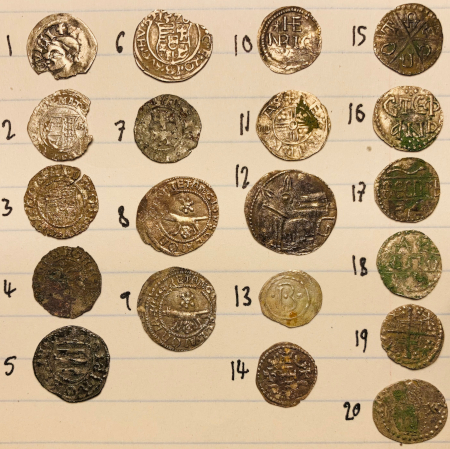 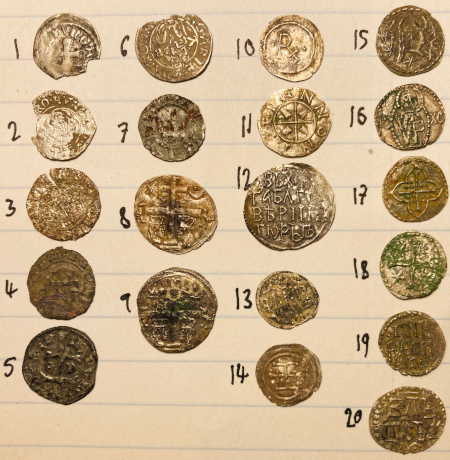 |
|
|
|
Valued Member
United States
223 Posts |
Have you tried ring testing any you feel are suspicious?
The first six look okay from what I can see -- they're common and likely not worth counterfeiting. (Although you never know nowadays...)
I actively seek out fakes/counterfeits/replicas of medievals in my area of interest just to have a "black cabinet" for research purposes. It's a great learning tool.
Someone more experienced will answer your high res image question shortly :)
|
|
Valued Member
 United States
91 Posts |
@samoth: Thanks for your insight! I'm glad to know there are some others who share my fascination with fake medievals.
I'm not an expert at ring testing, but #8 and #9 in this group (the banovac denars) definitely have the brightest, sharpest sound. #15 through #20 (the fantasies) have an identical dull tone.
Here are the weights, by the way:
#1: 0.38g #2: 0.42g #3: 0.36g #4: 0.44g #5: 0.59g
#6: 0.37g #7: 0.30g #8: 1.12g #9: 1.12g #10: 0.54g
#11: 0.82g #12: 1.20g #13: 0.38g #14: 0.50g #15: 0.77g
#16: 0.76g #17: 0.68g #18: 0.62g #19: 0.60g #20: 0.85g
|
|
Pillar of the Community
 Australia
2577 Posts |
@aquilacavallo Welcome first  Regarding posting the higher resolution images, I use a free pc program you can download called "Paint.net". Open the hi res image with it and choose File - Save (or Save As and rename it). Click Ok. A smaller window titled Save Configuration will pop up with your image in it. Use the Quality slider to reduce the file size (shown). Keep the file size under 300kb. There should be no noticeable quality change to the saved image. The other thing you can do (among lots) is resize the image first. The image here is resized to 1200 pixels wide. Experiment....what could go wrong?  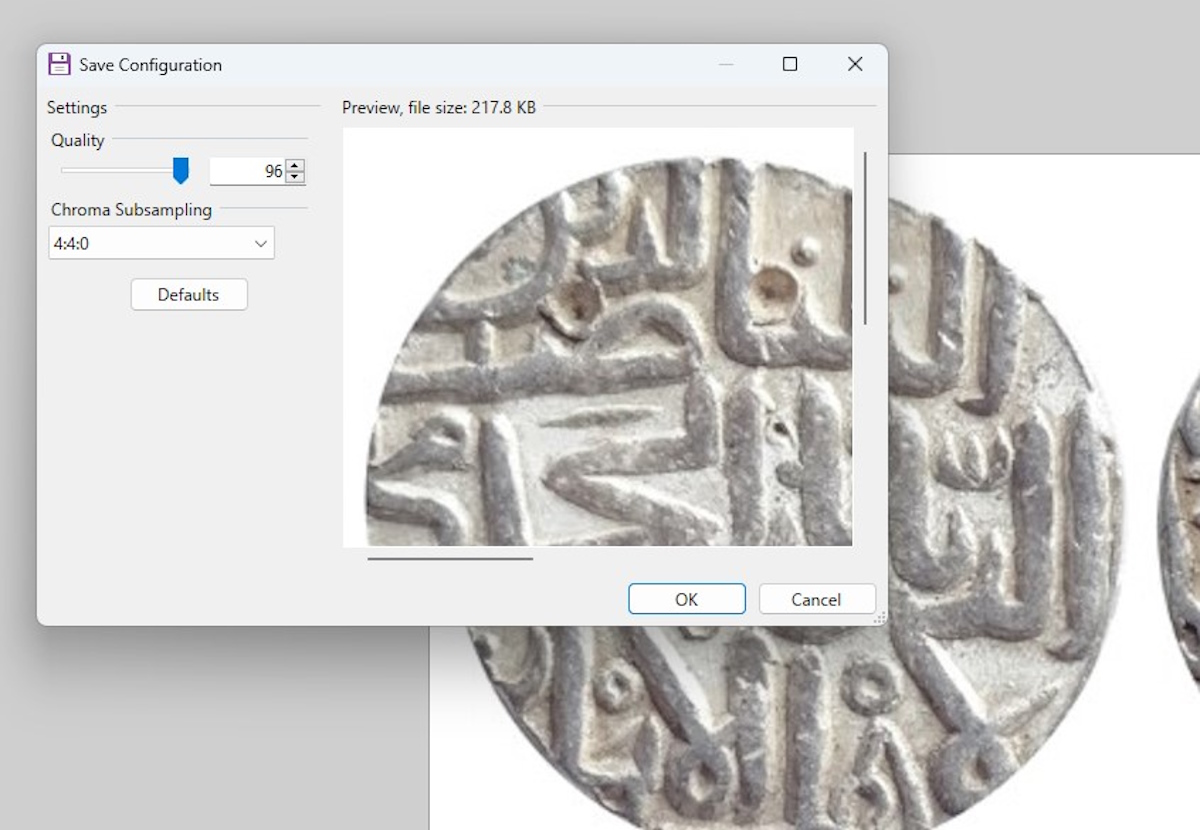 The Ox moves slowly, but the Earth is patient.
|
|
Pillar of the Community
 United States
8038 Posts |
Hungarian denars were definitely counterfeited.
Tells are things like mistakes in the coat of arms and legends (not legend variants, but misplaced letters).
Likewise color that is really off (darker) compared to other posted examples of same date.
And of course weight, though for some of yours that are missing chunks, that won;t help.
Better photos please, maybe one or two at a time.
|
|
Valued Member
United States
91 Posts |
|
|
Pillar of the Community
United States
8038 Posts |
Quote:
I'll start with images of the Banovac denars (#8 and #9) Fake. Nothing like the workmanship on the real ones. |
|
Pillar of the Community
United States
8038 Posts |
Quote:
early Hungarian denars (#10 and #11) Gets a bit tougher since the originals are a bit cruder, but I will still go with fake on #11. I am taking this example auctioned by H.D. Rauch as authentic: 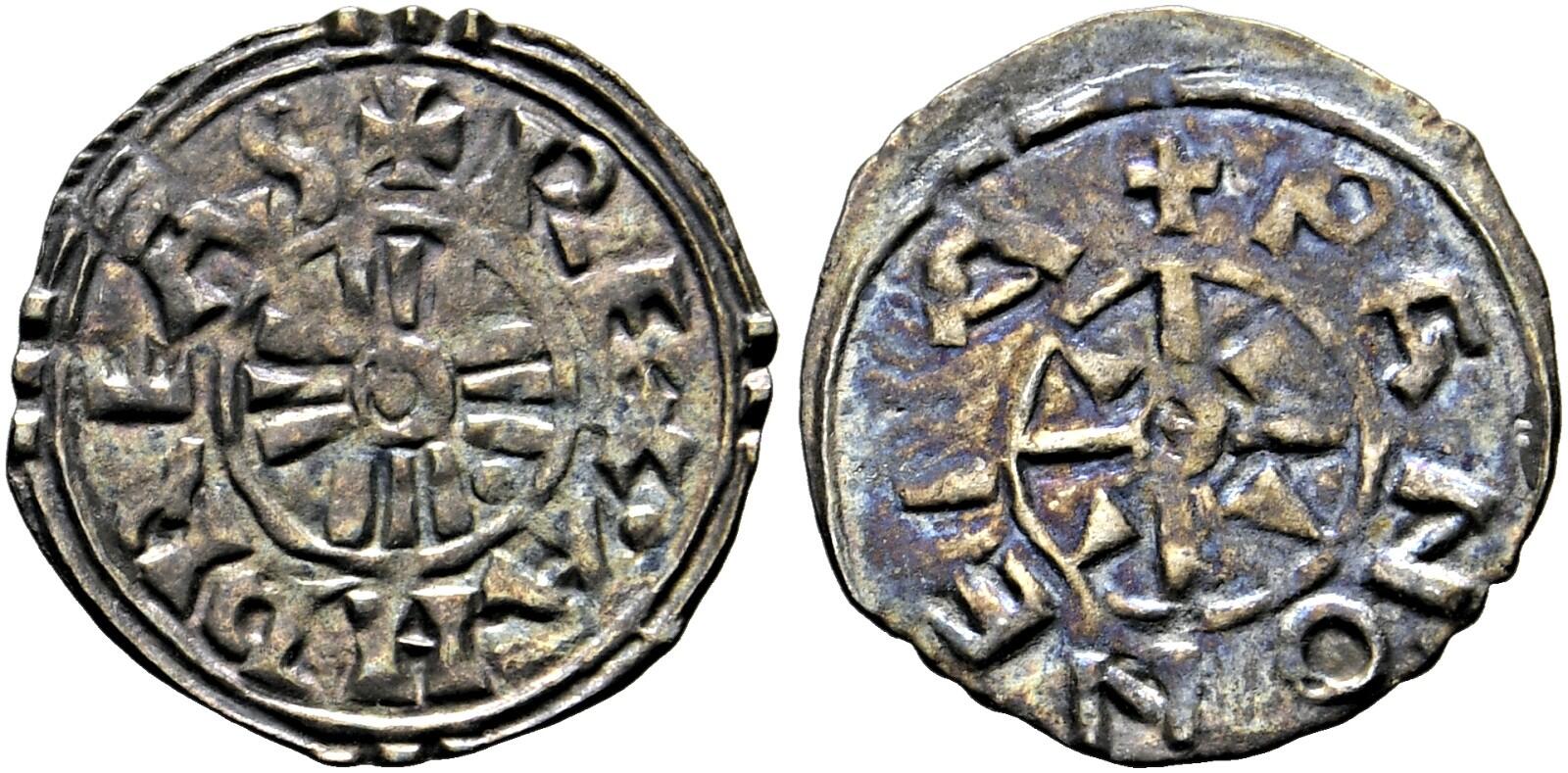 ...and this one that was offered at auction then withdrawn, as maybe a counterfeit very similar to yours (typical reason for withdrawing a coin): 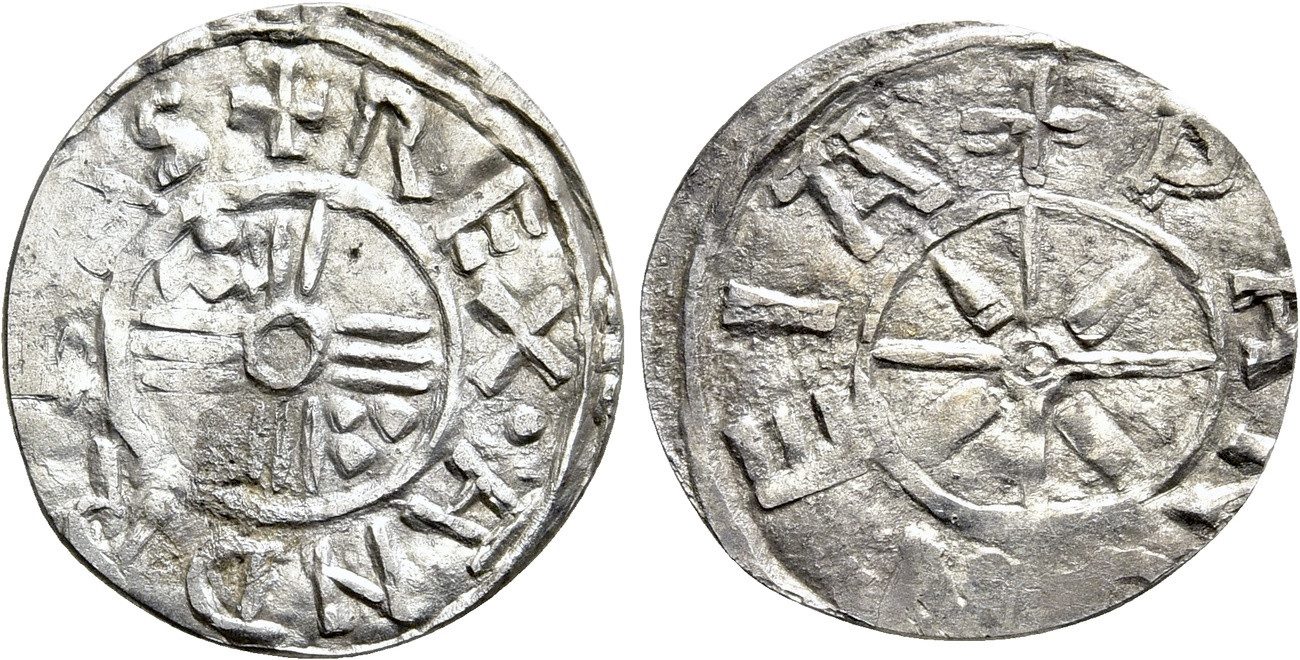 As you said at the beginning, possibly a handful of damaged real denars worth a few dollars each (though some of those could also be fake, too), and a bunch of fakes of more valuable types. I recently looked at some of the Zeta issues for another reason, so I would be curious to see an enlargement of that one (I had never heard of these until a few weeks ago). Edited by tdziemia
05/03/2024 4:48 pm
|
|
Valued Member
United States
91 Posts |
|
|
Valued Member
United States
91 Posts |
|
|
Pillar of the Community
Russian Federation
5186 Posts |
Dunno about the authenticity, but sure looks like an overstrike in here! If it's a fake, perhaps it's struck over a cheap denar type to get an authentic composition of medieval silver.
I wonder if the undertype could be identified - if it's a later type than the Zeta issue then it has to be fake, but I'm not sure if there's enough details to tell. I'm seeing a cross and maybe some lettering?
FWIW I don't like how the solid border turns into a dotted border between 7h and 8h on the legend side; AFAIK it's not a thing that normally happens on actual medieval coins - either the border is solid all around or dotted all around.
|
|
Pillar of the Community
Portugal
717 Posts |
Quote:
...and this one that was offered at auction then withdrawn, as maybe a counterfeit very similar to yours (typical reason for withdrawing a coin): It was a bad fake. The letters were not medieval style. Early second millenium medieval had a more stylized look. In any place that had been influenced by Charlemagne and successors. Perhaps the forgers were more used to do roman and byzantine coins? Thinner and better traced letters. |
|
Valued Member
United States
91 Posts |
@january1may: Great observation, now I see that it's an overstrike. I can't pick out enough details to identify the undertype, but I'll keep trying. Maybe others here will have some ideas. At 19mm it's a bit larger than a lot of the common denars (the later Hungarian ones, at least). Good point about the rim.
@jecz79: Good point as well. Incidentally, when I did an image search for #15-#20 of this batch -- which appear to be pure fantasies -- what came up was invariably Carolingian and Anglo-Saxon coins. Whoever made these was drawing inspiration from those, but the maybe the die-cutting technique (as far as the lettering goes) is closer to Roman and Byzantine?
|
| |
Replies: 12 / Views: 1,374 |
|










 Posted 05/02/2024 9:30 pm