| Author |
 Replies: 12 / Views: 1,792 Replies: 12 / Views: 1,792 |
|
|
Pillar of the Community
United States
6440 Posts |
One of our coin club members has been trimming his world coin collection and has put some interesting items on our auction board. He offered this Bolivia 8 reales at the last meeting and it caught my eye. For $30 plus sales tax I thought it offered a lot of eye appeal and history for the money. The surfaces look original to me. The defects include several small rim digs on the reverse plus a tiny cluster of scratches below D of DEI. What do you all think? 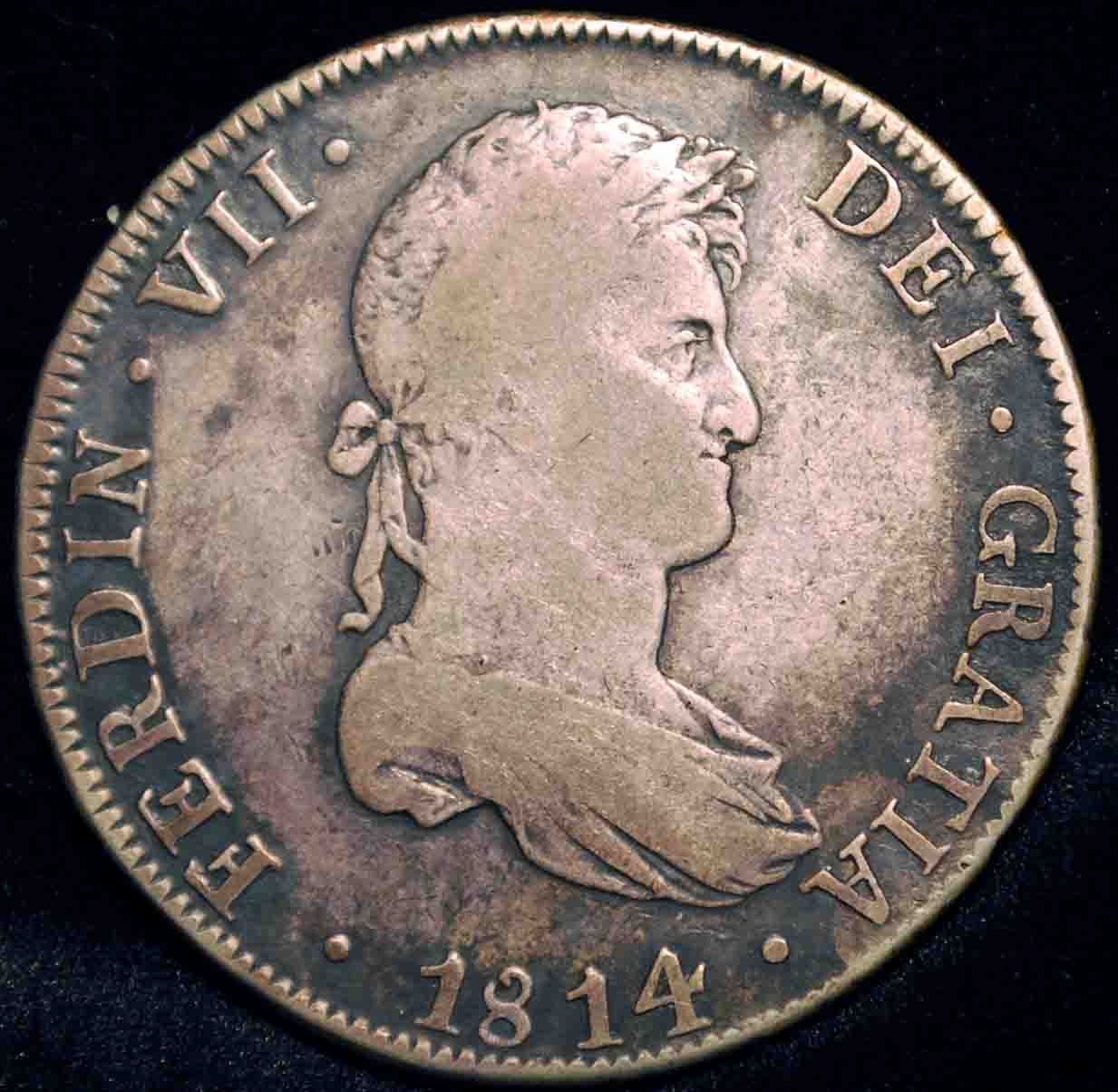 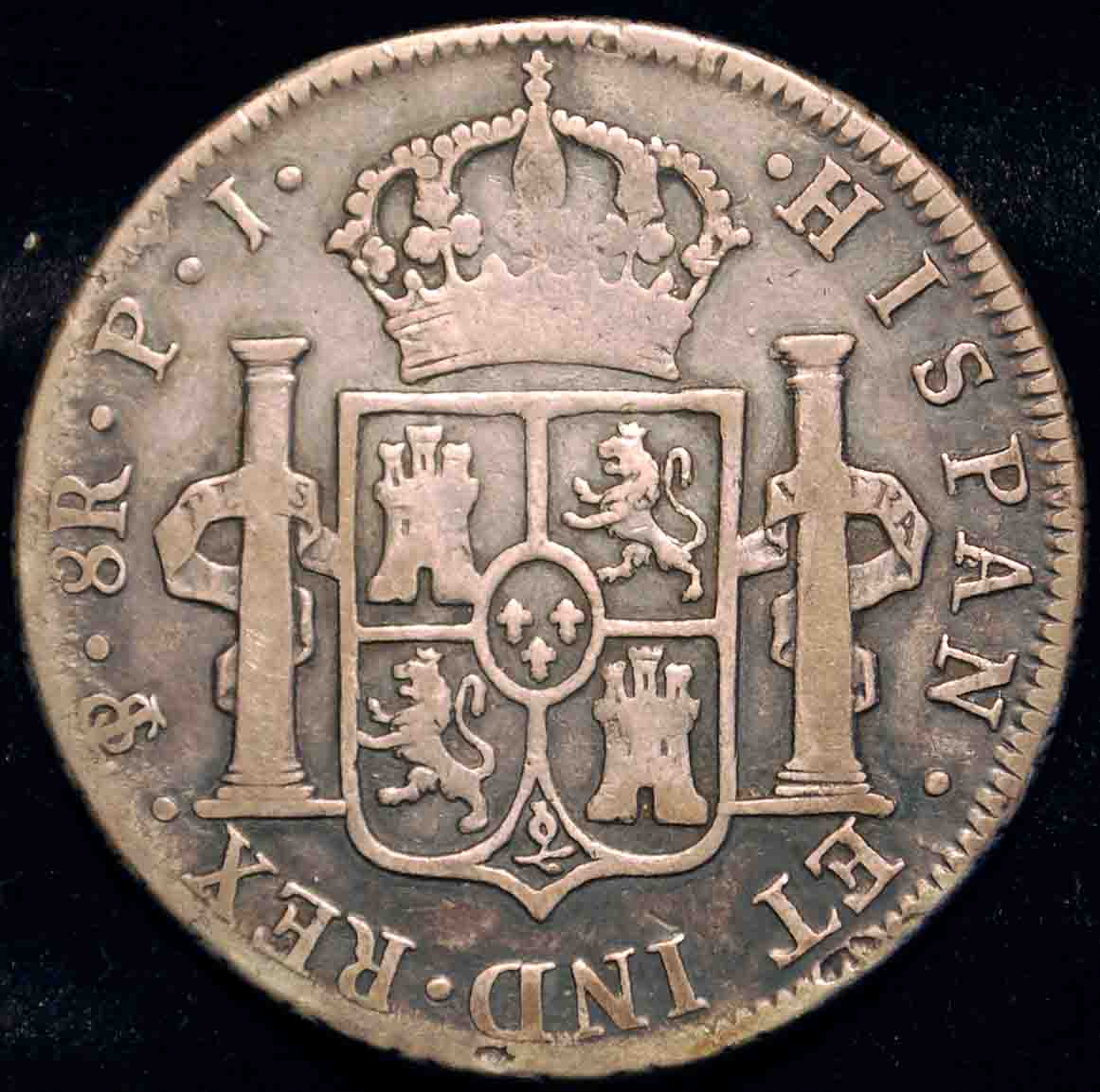 |
|
|
|
Moderator
 United States
23731 Posts |
Not bad for 30 bucks, though I think this is an early cast copy. Those pot holes on the reverse look to me to be bubbles caused in the casting process. The dentals also look odd. Swamperbob will know for sure if it's a copy or not.
|
|
Pillar of the Community
 United States
6440 Posts |
Boy, I hope it's real! The seller is a former dealer who has been collecting world coins for probably 50 years and he was 100% positive this is a genuine coin. I didn't photograph the edge, but the edge design consists of a blurry pattern of alternating circles and rectanges which I think is normal for these "bustman" dollars. There is no sign of a casting seam anywhere on the edge. Hopefully Swamperbob can weigh in on this one.  |
|
Pillar of the Community
United States
3499 Posts |
There did tone to all sorts of odd colors at time, but this one does look especially brown. The details of the coin look pretty good, but I'm not quite sure what to make of the dings/ bubbles on the reverse. I think that we'll need both pics of the edge and some input from Swamperbob.
|
|
Pillar of the Community
United States
1801 Posts |
Coin looks OK to me, thought hard to tell in a computer picture. Just weigh the coin, is it close to 28 grm? If it is a cast copy it will be lighter (and still worth $30 as a contemporary counterfeit). Check with a high power glass and see if the surface looks "struck" or cast? Cast surface is always grainy looking usually with microscopic pitting that can be seen with a magnifying glass. Great cin and a good buy! Well done Jaobler!
|
|
Pillar of the Community
United States
5362 Posts |
For what it's worth - I believe it is real. At $30 I would be hoping for a contemporary copy, but I think everything I see can be attributed to planchet issues or post strike damage. The price is good for an original with incomplete rims.
Look very closely at the Rim Digs and make sure they are not small planchet chips. I have seen planchets cut on worn cutters that exhibit breaks (tears) near the edge which get isolated by the edging process (which raises the edge curling metal inward and upward leaving a recess in the dentils that resembles a hit) They end up looking like this. Personally I put those in a totally different class than post strike damage and I do not downgrade for planchet issues.
It is of course possible that a bubble from casting ended up at the perimeter but these just do not looks like the results of casting to me.
If the coin was ever cleaned it would be long ago. In addition when you get lower than Fine there is no such thing as an intact surface left anyway. Pocket wear at Fine looks like cleaning and vice versa. So unless there is very clear indication of cleaning don't believe it.
Overall - nice coin good price
|
|
Pillar of the Community
Spain
1361 Posts |
nice deal  |
|
Pillar of the Community
United States
6440 Posts |
Here's a shot of the largest reverse digs (I'm not sure these give any more detail than in the original photo), plus an image of the edge. Again, I don't see any sign of a casting seam. Except for the obvious marks, the surfaces seem smooth and free of porosity. Any other opinions about authenticity? 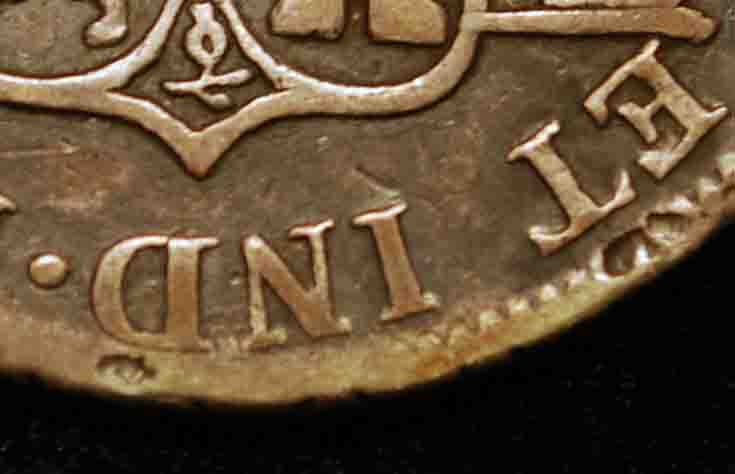 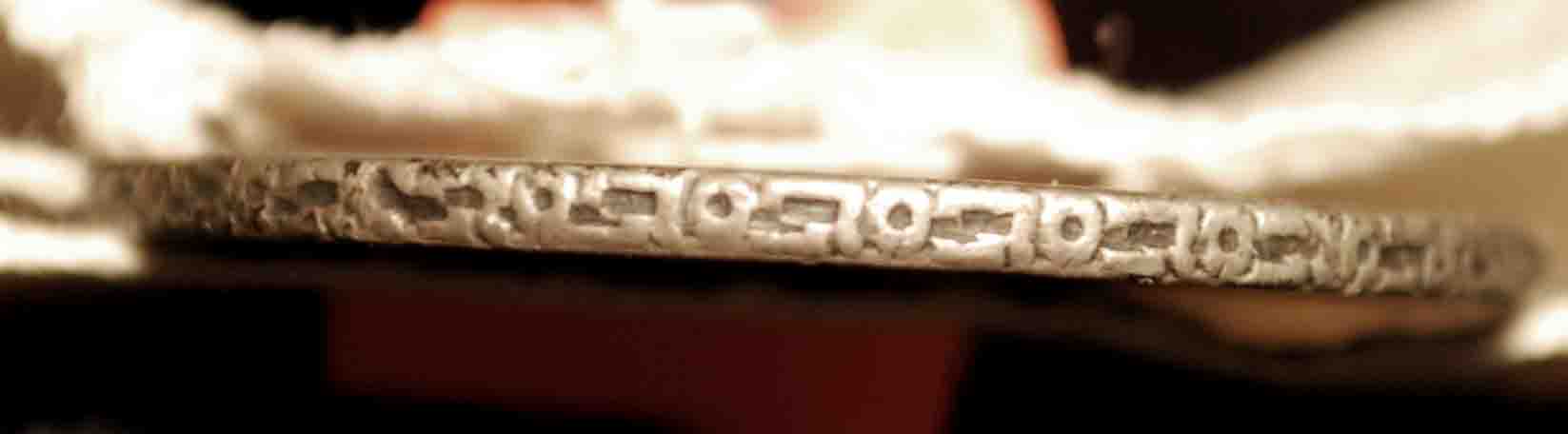 |
|
Pillar of the Community
United States
5362 Posts |
Jaobler - Nice pictures - the depressions in the rim are in my opinion post strike damage. There is a pice of displaced dentil next to the rectangular impression between the ET which shows displacement of the raised dentils into the field. A planchet defect would not have a displacement - the dentil would simply be weak or missing. The fact that there are corners on some of the holes removes casting as a possibility because bubbles do not have angular corners. The edge photo shows very clearly one of the edge overlaps I discuss all the time. This one is rather long! I see overlap across the entire picture at least 10 segments in length. That does present a problem unless the entire edge is doubled or there is evidence oon the edge of a second edging. The possibility of a mint error is indicated. The blank may have beeb edged two times accidentally. This did happen but not often. There are also instances of a blank jamming so that a restart had to be done. Those are usually seen when there are large retained spurs on the blank (due to poor blank punching). There are normally two overlaps from 1 to 5 segments in length with a single impression of the edge in between. In the case of a doubled edged planchet it has 4 overlaps but they are usually very difficult to spot after any wear occurs. Does any of this point to a forgery? - only minimally. There were silver counterfeits struck in the late 1890s and early 1900s when silver bullion prices fell and these coins were still trading at a high face value. It was similar to making a Morgan dollar in the same period when it contained only 35 cents worth of silver. If you could pass it in the US you made a profit. The same thing happened in China when the merchants were accepting Bustman dollars at the old face value but the silver value had dropped. Enterprising forgers made full weight silver copies for less than 50 cents each and got $1.00 value in China. That said - this edge does NOT look like a typical edge from that period. If it was a silver counterfeit - you wouldn't have lost anything anyway. Fewer than 1 in 10 dealers even recognize them so they trade as originals anyway. I STILL THINK IT IS REAL. |
|
Pillar of the Community
United States
3499 Posts |
Very nice! I think that it is real as well. Congrads!
|
|
Pillar of the Community
United States
1415 Posts |
Congrats on the pick up. And SwamperBob excellent description. Quite informative.  |
|
New Member
United States
29 Posts |
I was under the impression the the edge of these coins was imparted using some kind of rolling method prior the the coin being struck. I have some Central American Coins with the same overlap effect on the circles and squares edge that I know are genuine as they were struck from the same dies as other originals. I will have to try and find where I originally heard about the edge treatment on these old coins.
|
|
Pillar of the Community
United States
5362 Posts |
Kris - Your impression is correct. There is a link to extended discussions on this forum. The blanks after being adjusted for weight were edged in a Two die milling machine. This not only added the edge device it also upset the rim for a better strike. The mill consisted of two flat bar dies mounted on a flat table like surface. One die was fixed to the table and the other movable. Screw devices controlled movement toward the fixed die and a second screw moved it parallel to the fixed die. A blank was inserted - the movable die was pressed into the edge of the blank at 90 degrees squeezing it and reducing the diameter of the blank to the size of a planchet(in the process it made impressions on both sides simultaneously). The movable die was then cranked along parallel to the fixed die causing the impression to be cut into the edge as the coin blank rolled along between the two dies. The blank was held tightly by the pressure until just a bit over one half revolution was complete. At that point the entire blank was edged and it was just a bit SMALLER than it started out - that reduction in size released the pressure and allowed the blank - now a planchet to fall out the bottom of the apparatus into a basket. On many single coin edgers the cutting teeth of the die were ground off at this point to allow a free drop which PREVENTED double edging.
This was a production effort and no time was wasted. If each planchet took an extra second or two production rates fell. The workers were paid by the number of planchets produced. They needed to completely edge the planchet but did not spend extra time normally adding too many extra segments. It could happen - say a novice operator - but I can not now recall ever seeing one.
Later edging mills (1880's say) were multiple blank edgers and were more sophisticated (mechanized) but in the later dates multiple edging 2 or 3 turns are very common.
The specific problem I saw was the length of the overlap. Too long an overlap can indicate a forger attempting to duplicate the effect of the edging mill. Ten segments is a long overlap for most Portrait coins. Edging a planchet a second time makes far more sense than an extended overlap. That is why I wonder if the entire edge was doubled. The initial set of pressure was done manually so it was possible to do an edge twice (but that is a scarce error in my experience).
|
| |
Replies: 12 / Views: 1,792 |
|










 Posted 04/28/2009 11:33 pm


