Quote:
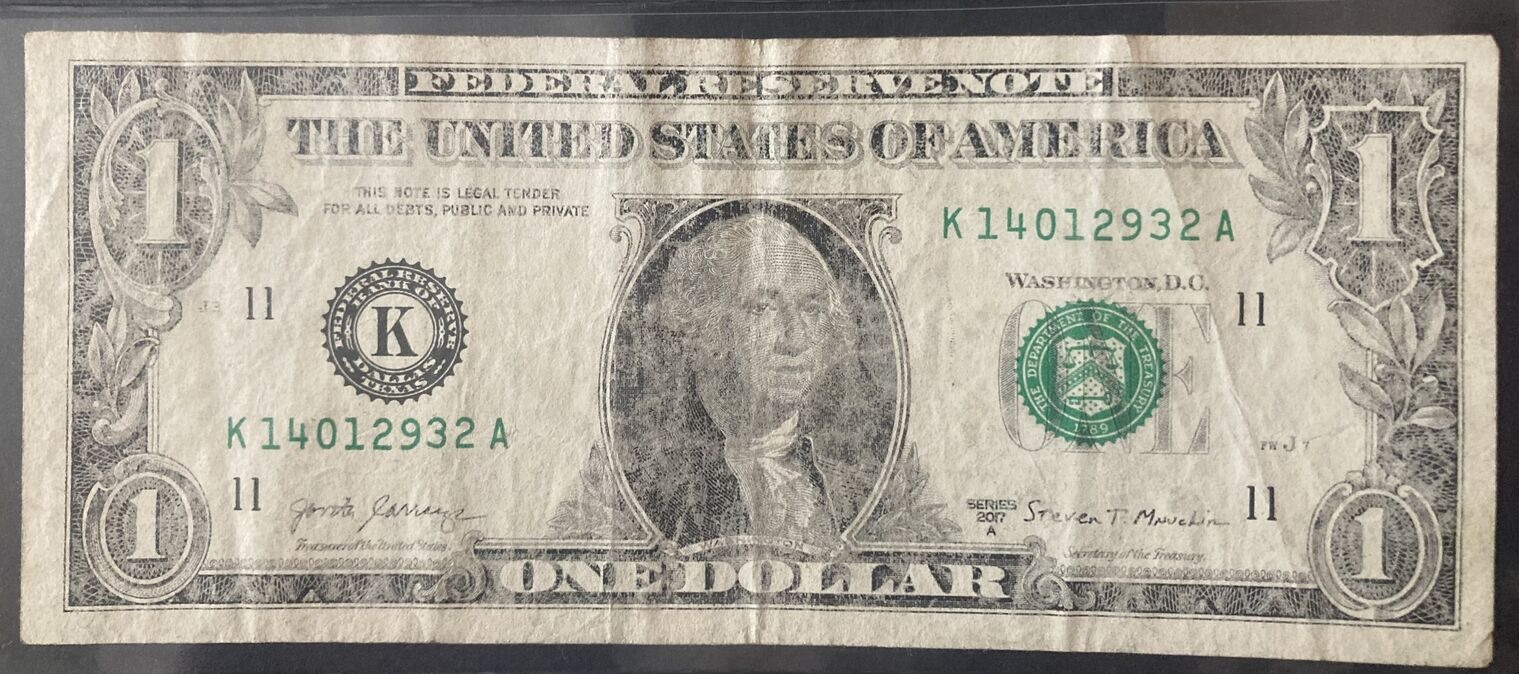
I'm just not sure if this is an error due to the bill being circulated.
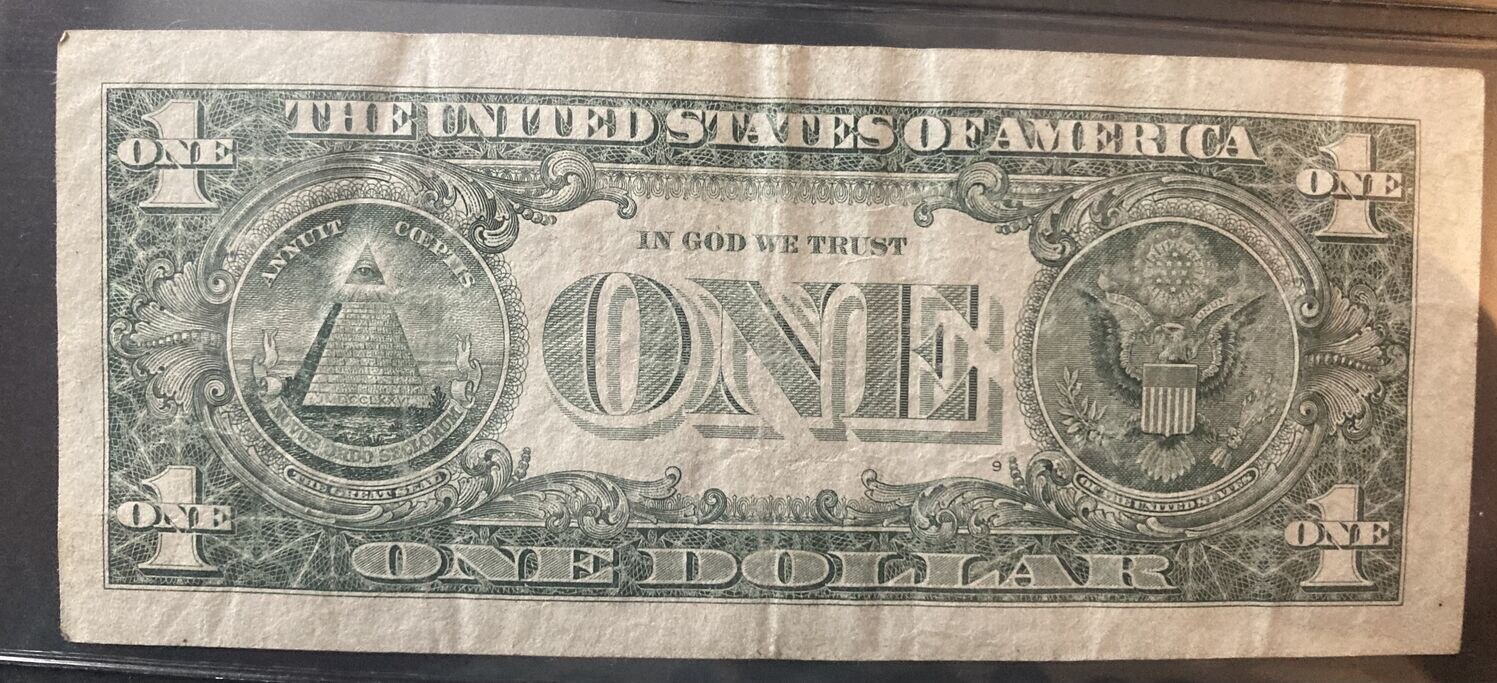
In this instance, your gut reaction is correct, here. This is an extremely heavily worn note. Once again, Occam's Razor applies: if it were some kind of "missing ink error" note, wouldn't somebody have noticed such an oddity, back when the note was still fresh and clean, and put it aside way back in 2019 when the note was printed? The most probable explanation for this note receiving this degree of wear and tear is that it looked like a perfectly normal one dollar note for most of its existence.
The blank printing on US banknotes is printed intaglio - using thick, heavy, metallic ink, giving the surface a three-dimensional feel. One corollary to this process is that, just like the 3-D surface of a coin, the 3-D surface of a banknote can be worn down after heavy circulation.
The only "error" here is that it was still in circulation when you found it. Any bank receiving this note for deposit would be obligated to withdraw it from circulation and send it for destruction, due to the heavy wear. So I assume it's been out there circulating for a couple of years now without having seen the inside of a bank building.
All that being said, the 2017A series of banknotes were produced using experimental inks. You can read
this old thread about it. It is possible that these notes "wear differently" to previous and subsequent banknote series.
Don't say "infinitely" when you mean "very"; otherwise, you'll have no word left when you want to talk about something really infinite. - C. S. Lewis












 Posted 02/15/2025 12:26 pm


