Sorry to take so long to respond but had a few chores to do.

To start, I will admit that I can be a "fly in the ointment" and don't necessarily mean to, but it has come to be, as I learn and cannot help but question certain things, as I think we all should, occasionally. We should not just always take things at face value and what we are told, use the thing between your ears every now and then.

Quote:
To keep it simple and not go into too much detail.
So, to not keep it simple. I noticed you said nothing about my statement on "transitional varieties", which are CLEARLY human "error", there's that error word again.
A human put the wrong die in place at the time of making a coin, which turned out to be MULTIPLE coins, (that made no noise), but we'll get back to the noise thing later.
Quote:
An error is usually one of a kind that is caused by a malfunction during the striking of the coin such as
a broadstrike, misaligned die, brockage etc.
These are not one of a kind but definitely less in numbers, typically. A misaligned die definitely does not fall in the less numbers group though, as there are doubled dies that have a misaligned die tied to them, therefore having the same number of coins being made. I did not take time to find one but know this is the case and will if you would like.
So, back to the "noise" thing. Many of the so called "errors", tend to make noise when they happen, noise will alert the mint workers that something is wrong, and they will stop the press because of this. I'm sure that a long-time mint worker, with some experience, can even tell what type of "error" has occurred before they even get to the press to stop it. Because of this, there are lower numbers of coins made, such as clashes,
Cuds and shattered dies. "Varieties" do not make a noise and thus the higher number of coins produced.
Quote:
A variety is a change in the coins design from the original die so that every coin struck from this die is the same
so there can be hundreds of thousands of a variety.
This I can go along with for the most part, but what happens to an "error" coin is also a change in the design, quite drastically in some cases.
Quote:
A DD is a variety due to a double strike on the die that will produce all coins struck from that die to be the same.
This is not a good statement in my opinion. "Double Strike" is a term which is misused on a regular basis and definitely has absolutely nothing to do with a "Doubled Die". This is a double strike and is what you would call an "error". LINK
https://www.pcgs.com/news/doublestruck-mint-errors That being said, here was my statement, that should have gave you pause and thought about why I said it the way I did. My statement about doubled dies.
Quote:
So, a doubled die, I kind of understand, to an extent, there are mechanics involve that you could kind of blame that on but still, it had to do with "error" in how the die was put back in
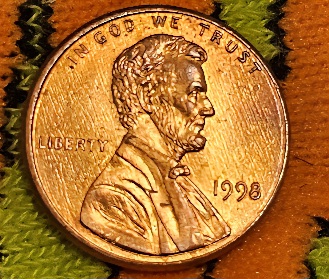
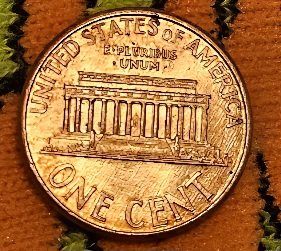
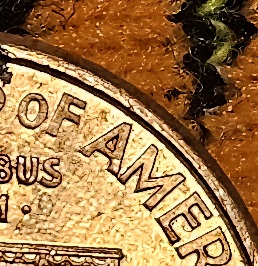
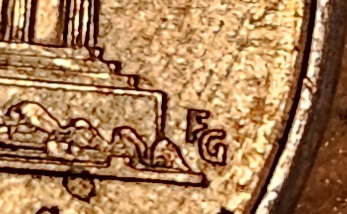
A doubled die is created because the working die was removed from the press after the initial hubbing was not deep enough, and the working die was annealed again to soften the die more, which could occur more than once and then when the working die was replaced, it was not in the correct position and a doubled die is born. Once again, like the transitional variety, human "error". Lastly and very shortly, RPM's, I should not have to explain this as nothing more than human "error", if I need to, let me know. Do you kind of get me now, JimmyD, if not, I do not think I can explain it any better. Here is a link to Wexler's explanation of doubled dies if you would like to read it.
https://doubleddie.com/58222.html








 Posted 05/22/2025 8:19 pm


 with above statements here.


