| Author |
 Replies: 9 / Views: 1,775 Replies: 9 / Views: 1,775 |
|
|
Valued Member
United States
150 Posts |
Edited by Sap
05/30/2009 12:31 am
|
|
|
|
Pillar of the Community
United States
3098 Posts |
Look under republic of China for the fat mans and Imperial China for the other one. They look.... real!  |
|
Valued Member
 United States
150 Posts |
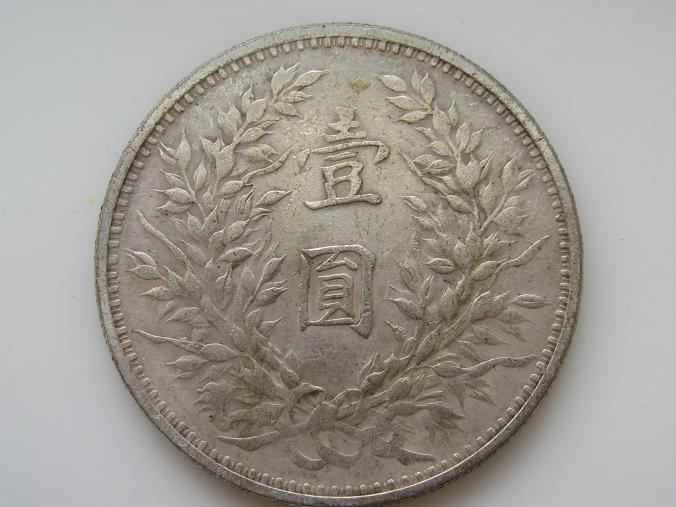
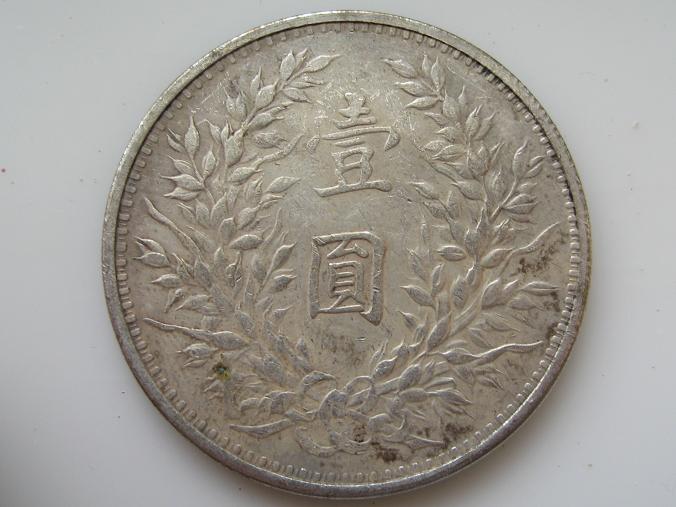
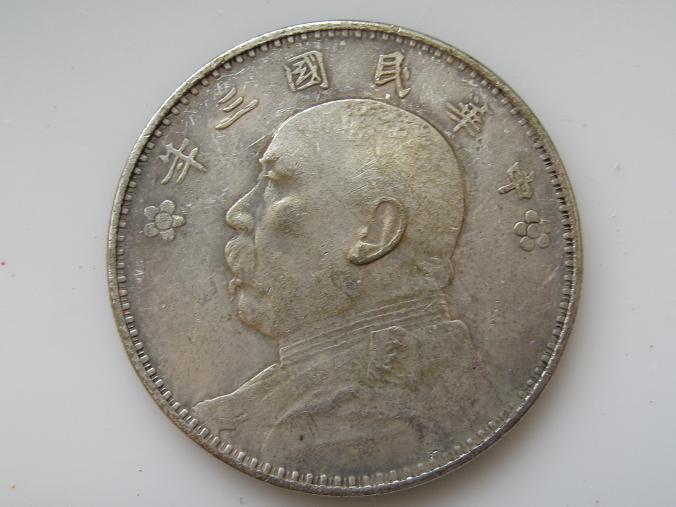
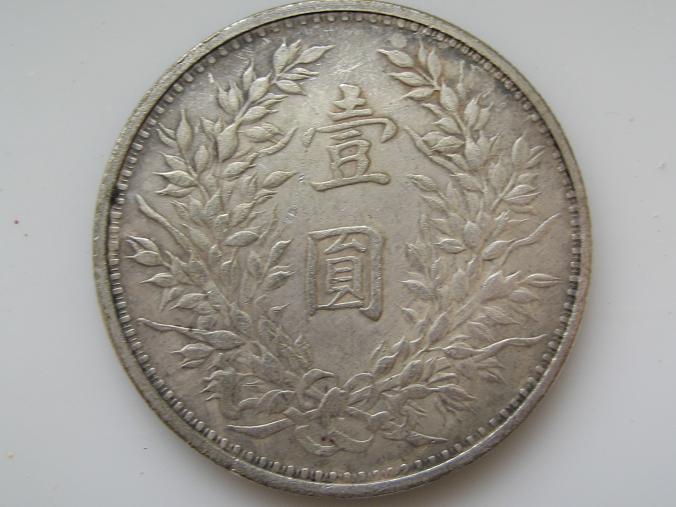
Yesterday my friend gave them to me, he say this coins has many varieties and some of them should be expensive pieces. I found this coin in Krause, but with some ornaments on the edge. All this coins have reeded edge, 2 of them has some kind of flowers on obverse, and I don't have any idea how to read the years  |
|
Pillar of the Community
United States
3098 Posts |
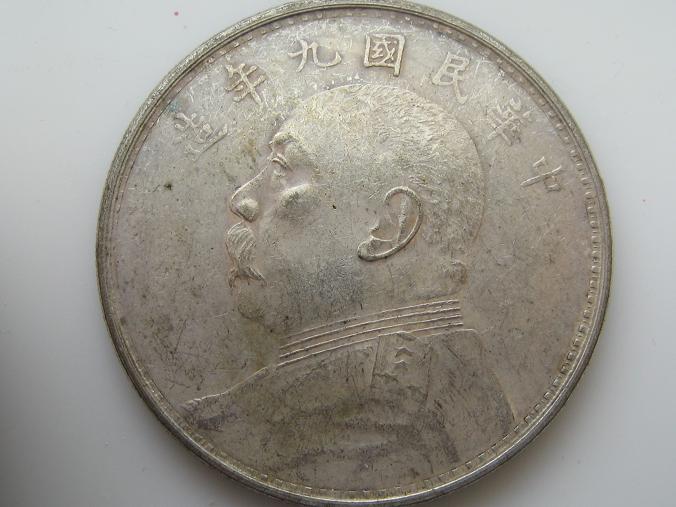
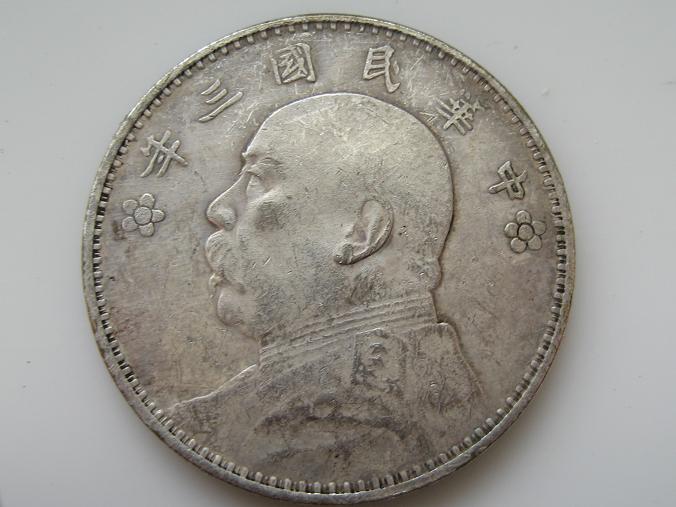
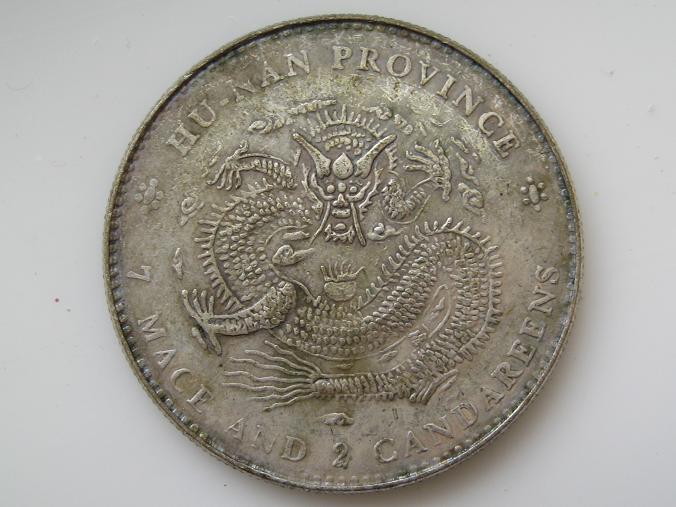
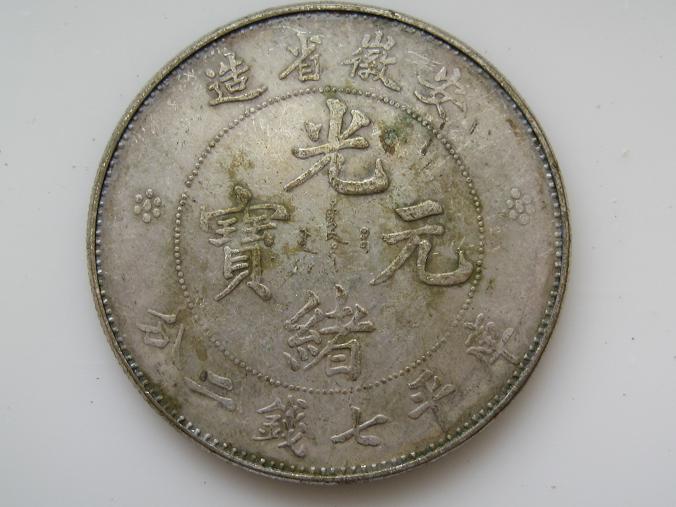
What a nice friend! I can help with the years! The first one is 1920, 9th yr of the republic. Second is 1914, 3rd year. I've never seen the one with a flower ornament... is it rare? And the last one is from the reign of this guy http://en.wikipedia.org/wiki/Guangxu_Emperor... why does it say Hunan province on the side with the dragons and An Hui province on the reverse? |
|
Pillar of the Community
Thailand
1509 Posts |
The Chinese numeral (7) on the first coin is the third character from the left on the obverse. The character (3) on the second and third coins are the second from the left after the flower. I can't see a date on the fourth one but on the reverse there are the Chinese characters for 7 (third from right at the bottom) and 2 (second from left). I would assume they refer to 7 Mace and 2 Candareens on the obverse. You'll find a page on Standard International Numeral Systems in K&M. I've found it useful to learn the characters as an aid to identifying coins (but not every time) and don't forget that some countries use the regnal year of the ruler at the time to date coins. I suppose the lesson is to try what you can yourself it's a great way to learn. Anyway that's my tuppenyworth.
Vic
|
|
Moderator
 Australia
17002 Posts |
Sadly, I believe all these pieces are quite likely to be fakes, of the kind typically being churned out by the truckload in China these days. The obverse detail on number 1 is very faint, and the "flowers" on #2 and #3 are an unknown variety to me. As for #4, the Anhwei obverse is moderately rare (KM/Y# 45) but the Hunan reverse is an extremely rare type (KM# Pn3); only 6 pattern coins with this design were made in Birmingham to test dies that were never sent to China, and none of the coins ever made it to China. It is impossible for this coin to be genuine. Quote:
why does it say Hunan province on the side with the dragons and An Hui province on the reverse? Because the people these coins are sold to aren't likely to notice such things until it's way too late. Typically, the fakemasters in China don't pay too much attention to getting the die pairings always correct. They might start out the day's run with matching dies, but if one die fails, they'll swap the broken die for the first die they grab off the shelves. Of course, if you do happen to notice and point out such an "error" to one of the street vendors selling these coins in China, they will act surprised, immediately try to tell you how rare and valuable such a "mint error" must be... and multiply their asking price tenfold! If you're still hopeful that they're genuine (the most likely to be so is number 1), a quick test for fakeness is to weigh it. A genuine silver dollar should weigh 26 to 27 grams. Your typical fake will often weigh much less (around 21 grams), a few carelessly made fakes even weigh much more. A correct weight is not proof of authenticity, but a wrong weight is definite proof of fakeness. Don't say "infinitely" when you mean "very"; otherwise, you'll have no word left when you want to talk about something really infinite. - C. S. Lewis
|
|
Valued Member
United States
150 Posts |
Yes, it's sad than I see some nice Russian Imperial silver coins (which I will love to collect) in some auctions, and came out than item located in China I think that I didn't see enough real coins in my hands to determine fake and have to skip this lot.. I'm happy, that I got this coins for free ,and thanks to this I found lots of new for me,thank you,everybody for help! Too bad I have nothing to weight on this fantasy, but as soon I'll do it will post results. At least it's silver |
|
Valued Member
United States
303 Posts |
The first coin is from the year 9, or 1920, but many of these Yuan Shi-kai coins were produced many years beyond that. I am not sure of the double rim on this coin.. so maybe it isn't real? But like others said, the mass of the coin is the best test you can do for determining if the coin is genuine or not.
|
|
Pillar of the Community
United States
3098 Posts |
Quote:
Of course, if you do happen to notice and point out such an "error" to one of the street vendors selling these coins in China, they will act surprised, immediately try to tell you how rare and valuable such a "mint error" must be... and multiply their asking price tenfold! Haha! Just a question sap, has that actually happened to you? I know Chinese dealers will give you an outrageous price first that you can talk down, but straight up lie to you? That's why I don't buy coins in China. |
|
Moderator
Australia
17002 Posts |
Nope. Never been to China myself, but I've seen stories along this line posted here on the forums. There's also a few very well travelled gents in the coin club who have come home with similar stories.
Don't say "infinitely" when you mean "very"; otherwise, you'll have no word left when you want to talk about something really infinite. - C. S. Lewis
|
| |
Replies: 9 / Views: 1,775 |
|












 Posted 05/28/2009 5:43 pm


