











 Posted 07/31/2025 03:53 am


Hi Roma2021!
I have some Celtic coins from Gaul, no staters though. A couple of bronzes attributed to the Aulerci Eburovices or the neighboring Carnutes tribe are in my collection. They are later and quite different from your half stater.
Celtics are a fascinating area of collection, with their wide variety of motives and in all metals - gold, silver, bronze, tin - and hammered or cast. Lots of influences from early Greek coinage, later from Roman coinage, as well as lots of Celtic symbolism. The symbols and their meaning are to a large part mysterious to us, since the Celts had no written tradition and so there is little documentation of their cults and traditions (by external observers - Julius Ceasar was one of them, writing down what he learned about the various Gallic tribes while he subjugated them during his conquest).
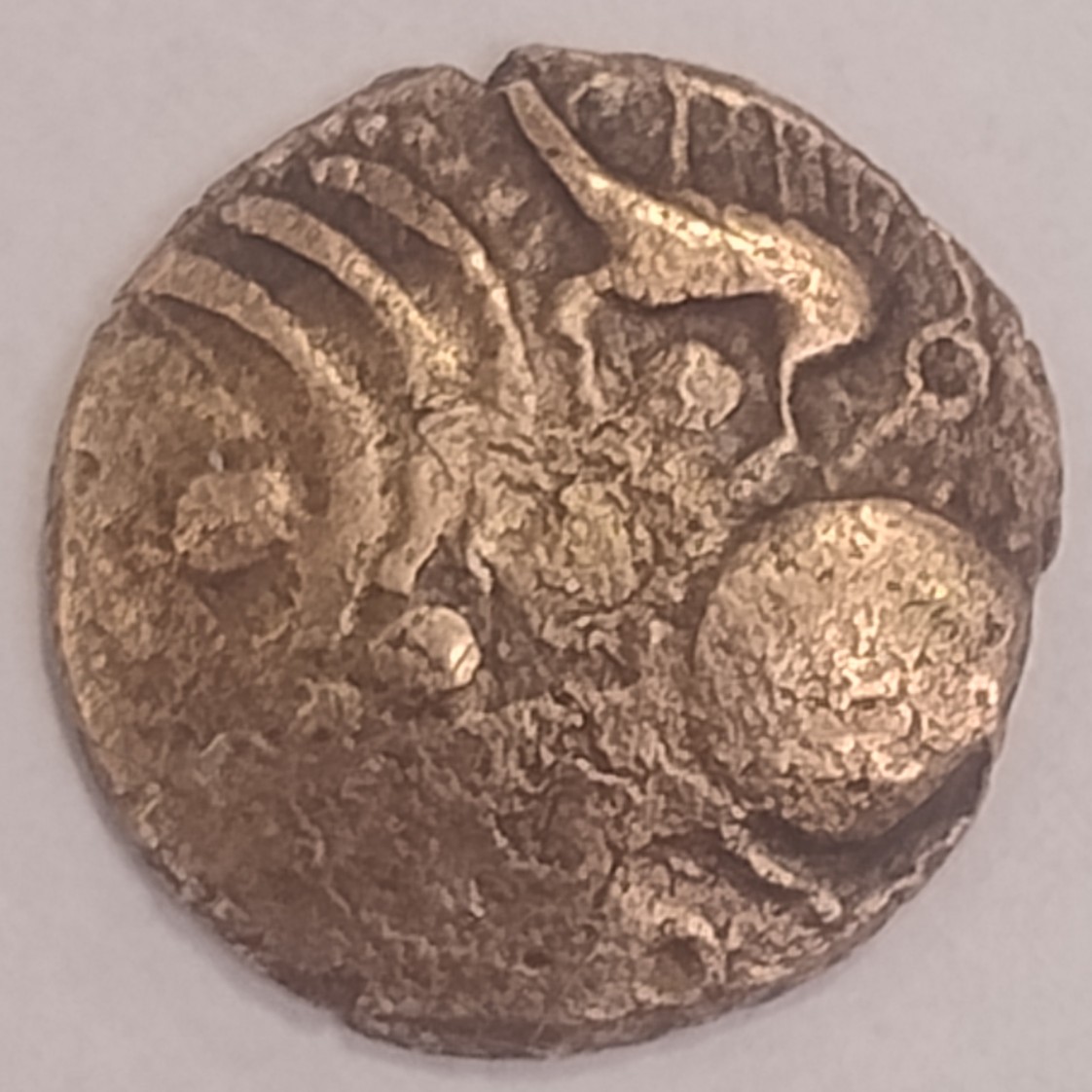
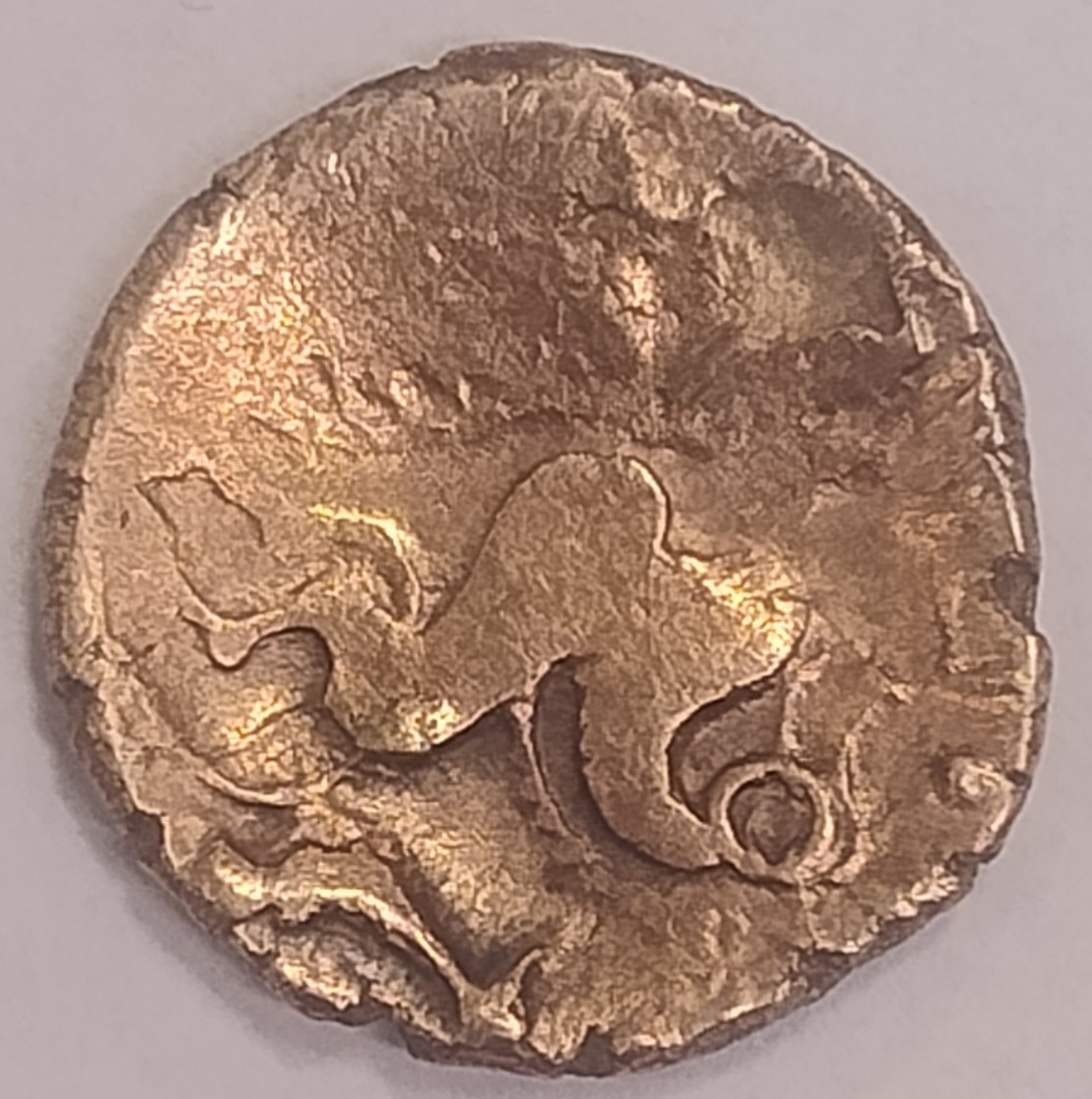
I think I have identified your coin, at least (you need to rotate the images a bit to match):
https://www.poinsignon-numismatique...e_77483.html
If correct, it is a half stater "with boar" from the 2nd - early 1st century BC, issued by the Aulerci Eburovices tribe. The obverse shows a stylized face, with a boar behind the ear (the bristles on its back showing clearly at the edge of the coin). The reverse has a likewise stylized horse, with a wild boar below it (not really visible on your example). While the coin in the link weighs only 2.34 g and yours is 3.3 g, that is not an issue, weight can vary a lot for these coins.
There are many books and reference works for Gallic/Celtic coins. Delestree and Tache Nouvel Atlas de Monnaies Gauloises is a modern standard work in four volumes (with your coin being DT 2407).
I have some Celtic coins from Gaul, no staters though. A couple of bronzes attributed to the Aulerci Eburovices or the neighboring Carnutes tribe are in my collection. They are later and quite different from your half stater.
Celtics are a fascinating area of collection, with their wide variety of motives and in all metals - gold, silver, bronze, tin - and hammered or cast. Lots of influences from early Greek coinage, later from Roman coinage, as well as lots of Celtic symbolism. The symbols and their meaning are to a large part mysterious to us, since the Celts had no written tradition and so there is little documentation of their cults and traditions (by external observers - Julius Ceasar was one of them, writing down what he learned about the various Gallic tribes while he subjugated them during his conquest).
I think I have identified your coin, at least (you need to rotate the images a bit to match):
https://www.poinsignon-numismatique...e_77483.html
If correct, it is a half stater "with boar" from the 2nd - early 1st century BC, issued by the Aulerci Eburovices tribe. The obverse shows a stylized face, with a boar behind the ear (the bristles on its back showing clearly at the edge of the coin). The reverse has a likewise stylized horse, with a wild boar below it (not really visible on your example). While the coin in the link weighs only 2.34 g and yours is 3.3 g, that is not an issue, weight can vary a lot for these coins.
There are many books and reference works for Gallic/Celtic coins. Delestree and Tache Nouvel Atlas de Monnaies Gauloises is a modern standard work in four volumes (with your coin being DT 2407).


