| Author |
 Replies: 62 / Views: 4,409 Replies: 62 / Views: 4,409 |
|
Rest in Peace
United States
632 Posts |
Edited by Oldgrouchyguy
08/27/2025 5:38 pm
|
|
|
|
Bedrock of the Community
 United States
10601 Posts |
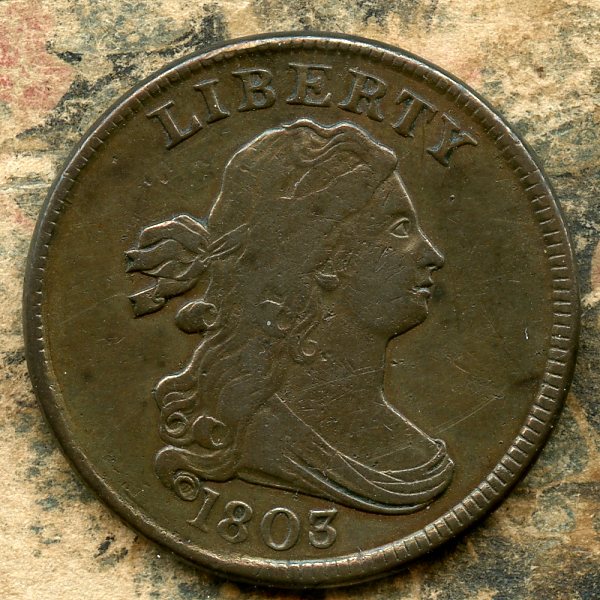
Well it's a nice Cud and die crack. Quote:
I'll just add that the coin passed through the Upsetting Mill after striking with no problem How exactly would this happen? Coins don't go thru the upsetting mill - blanks do. |
|
Rest in Peace
 United States
632 Posts |
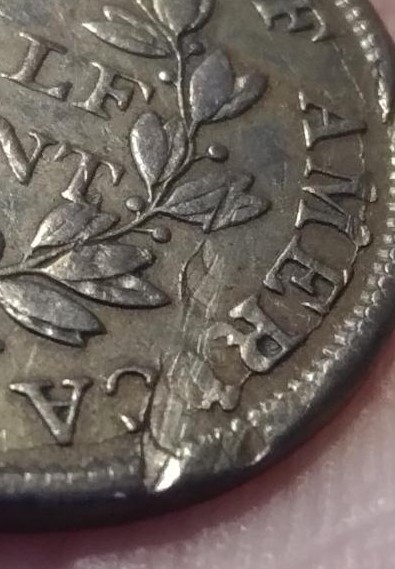
Marve65: I wrote an article for Penny Wise about just that, having found an 1807 1/2C that passed only half-way through the mill. Nope, they passed after striking; otherwise the rims would be flat as pancakes. For the record, you can see how this coin passed, as the damages to the edge at the beginning and end of AMERICA was stretched and smoothed over in the direction of the passing. Think about this: how would you have a rounded and high rim over the denticles, which extend to the edge of the die, if it didn't pass through after striking?
Edited by Oldgrouchyguy
08/27/2025 6:23 pm
|
|
Bedrock of the Community
United States
10601 Posts |
So you're saying the dies did not form the rims on Half Cents? |
|
Rest in Peace
United States
632 Posts |
That is correct. Since there is no such thing as a "Broadstruck" Draped Bust Half Cent (no collar, for one); those are thought to be, for lack of a better reason, coins stuck in the basket that were on their way to being upset. If you ever have the opportunity to handle one, you'll see that the edge is flat (just the way it was punched from the strip) and squares to the rim. I've cherried p-l-e-n-t-y of them Edited by Oldgrouchyguy
08/27/2025 6:32 pm
|
|
Pillar of the Community
United States
2019 Posts |
I too was under the impression that blanks went through the upsetting mill before striking. Guess I need to educate myself some more on the early production methods and screw presses too. Nice Half Cent by the way! |
|
Rest in Peace
United States
632 Posts |
MisterT: Thanks, it's pretty and right out of the woodwork. It's been cleaned in the same way and has the same toning in the manner of the PCGS AU55, first sold in auction by Haseltine in 1929 I think these were owned by the same person, and Haseltine passed on it. It's the sharpest Late State known, and proves that the large Cud always was retained, and not full.
|
|
Bedrock of the Community
United States
10601 Posts |
This is a Half Cent I have - why no denticles? And how do you explain the inside rim? An upset mill only forms the outside proto rim, right? 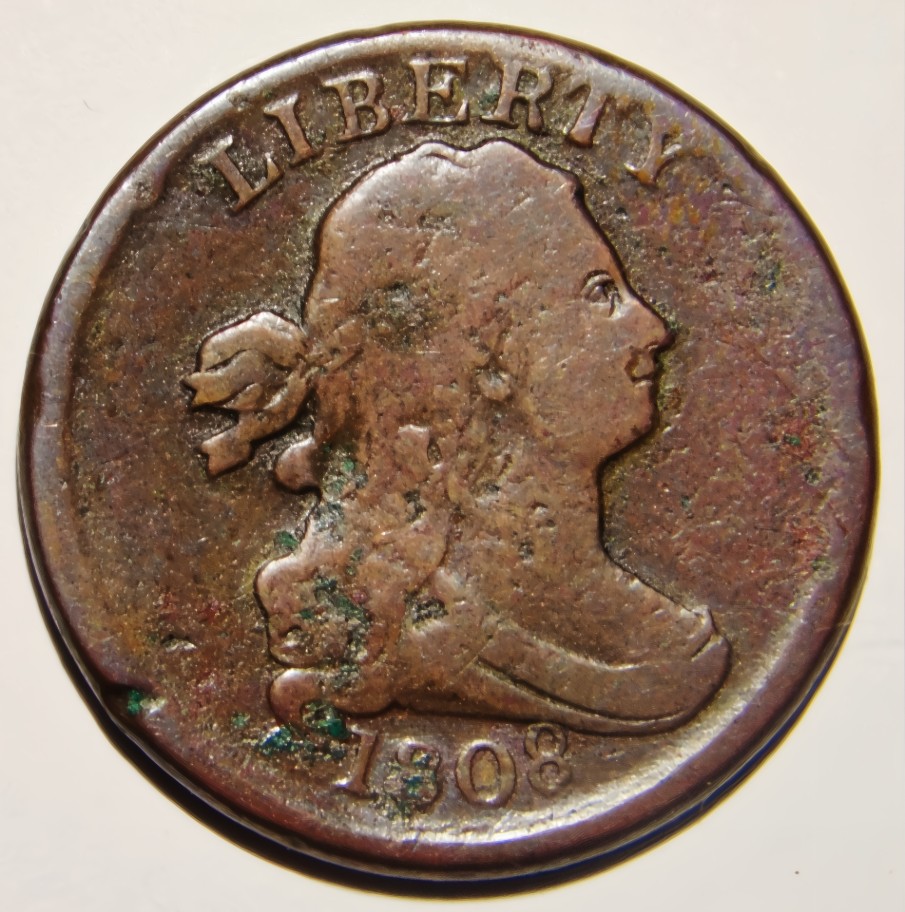 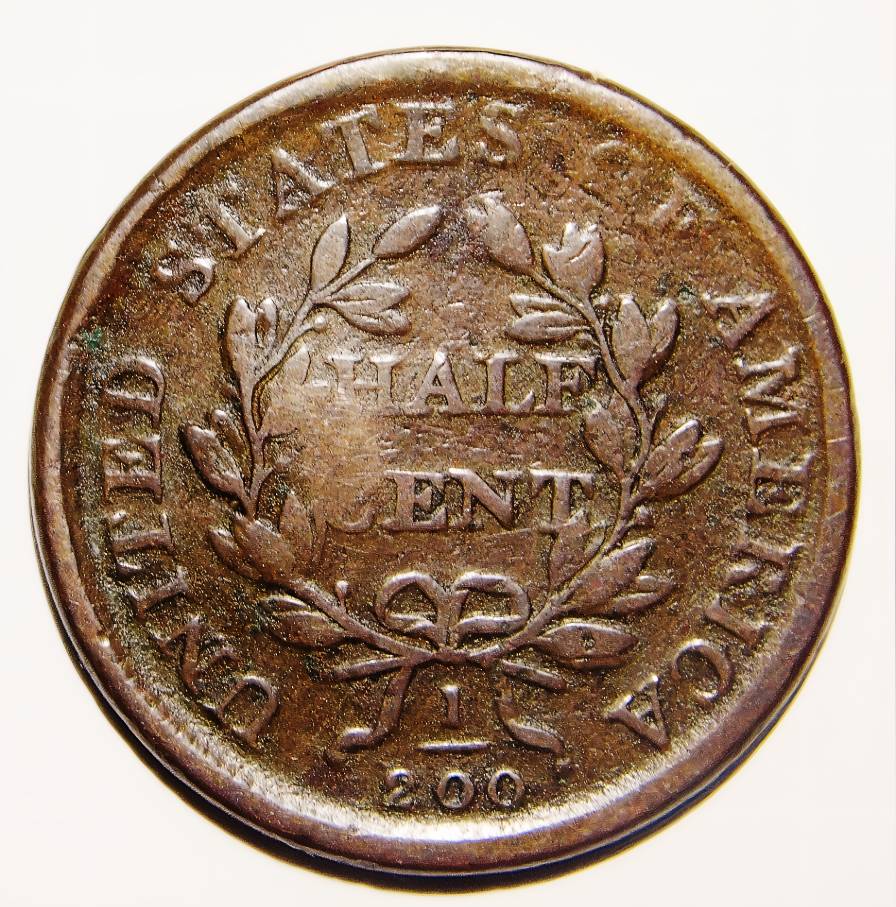 |
|
Rest in Peace
United States
632 Posts |
Marve66: your coin is bent, but we will let that go for now... The 1808 C-3 1/2C dies were pounded together until they totally wore out, which produced what you see. The denticles on yours are still visible in areas front and back; it's a Late State but not the latest. Fun Fact: the 2nd 8 was made from the denominator 0, punched one atop the other
Edited by Oldgrouchyguy
08/27/2025 8:22 pm
|
|
Bedrock of the Community
United States
10601 Posts |
Quote:
Fun Fact: the 2nd 8 was made from the denominator 0, punched one atop the other Thanks for the info! |
|
Moderator
United States
198004 Posts |
Quote: Since there is no such thing as a "Broadstruck" Draped Bust Half Cent (no collar, for one) No collar was used before the 1830s, so I suppose it makes sense they would have ran coins through the upsetting mill after striking to help round the coin.  |
|
Bedrock of the Community
United States
27514 Posts |
It's an amazing coin, but I'm not buying the "strike through" claim. It looks more like a scrape or some other type of PMD to me. Inordinately fascinated by bits of metal with strange markings and figures
|
|
Pillar of the Community
United States
3848 Posts |
Blanks do not go through the upsetting mill after striking. Oldgrouchyguy is wrong with this information. The copper is stretched on long thin sheets, blanks are cut out with a round blade (planchet cutter), the blanks then travel to the upsetting mill and are turned into planchets, and the coins are struck after. Having the rims upset after striking is a ridiculous and misleading statement. Rims on a coin were meant to assist detail to be fully struck along the edge of the coin. Without an upsetting mill pre-strike, the dentils would hardly be seen on any coin. To prove this without a doubt, here is a Half Cent blank planchet sold at Stack's Bowers in 2020: 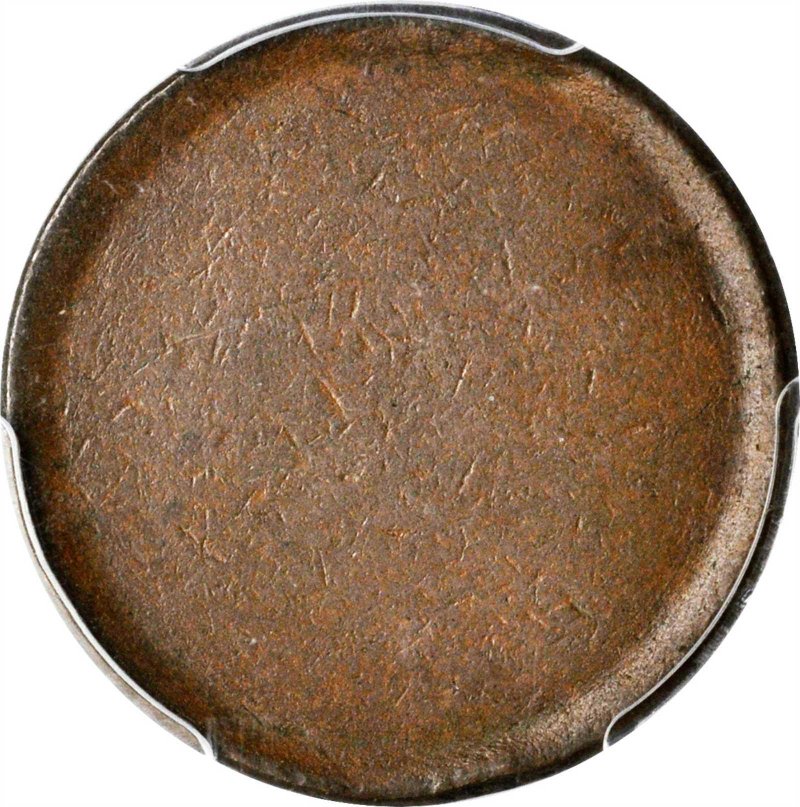 Quote:
No collar was used before the 1830s, so I suppose it makes sense they would have ran coins through the upsetting mill after striking to help round the coin. Collars were used before the 1836. Half Dimes, dimes, gold coins, etc had what is called "close open collars." The coins could expand in the striking chamber, while the reeded edges were impressed on the single-piece collar dies. All reeded edge US coins pre-1836 had a collar. All lettered edge and plain edge coins were struck without a collar (open collar). All coins pre-1836 are slightly out of round. This also proves the upsetting mill was pre strike. Oldgrouchyguy makes up theories, and I will no longer involve myself in his aimless and misleading discussions.
Suffering from bust half fever. Want to learn how to attribute early half dollars by die variety? Click Here: http://goccf.com/t/434955Shoot me a PM if you are looking to sell bust halves. |
|
Rest in Peace
United States
632 Posts |
jacrispies: you are at odds with several EACers of note; I'd suggest that you find and read my article in Penny Wise. Please do some homework before you post
Edited by Oldgrouchyguy
08/28/2025 8:50 pm
|
|
Rest in Peace
United States
632 Posts |
Ummmm, that's not a planchet for pre-steam coinage; and while you're at it, take a stroll through the Davey Collection. Plus, I have an 1806 Half Cent, with two in sequence off-center strikes, which passed through the upsetting mill; however, there is a small divot on the edge where the rails didn't meet, which is exactly the same length in difference as the second off-center strike is, measured from the edges of it of a normal edge. How does one explain that? And, as I stated, this coin passed through the Upsetting Mill, smoothing and stretching the edge damage from the strike throughs. What does one not understand about that? Edited by Oldgrouchyguy
08/28/2025 10:28 pm
|
|
Pillar of the Community
United States
1028 Posts |
I don't know anything about the process of how these are made, but the coin appears to have PMD to me. It has a heck of a Cud though! |
| |
Replies: 62 / Views: 4,409 |










 Posted 08/27/2025 6:05 pm


