Quote:
I wonder why A wouldn't be up when the obverse is up, and B be down.
As I haven't yet seen a definitive reply yet, I'll jump in with a bit of plausible/logicial conjecture...
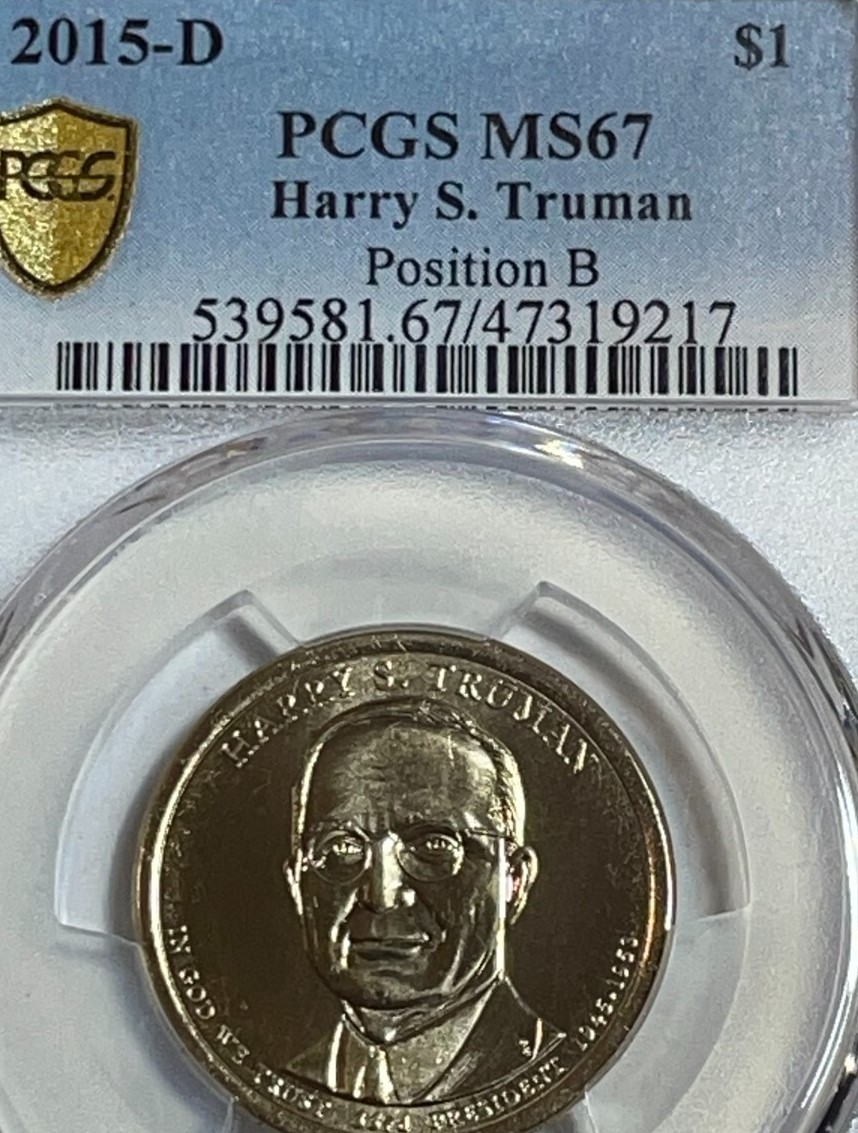
As noted above, Position A refers to a coin whose edge lettering appears to be upside-down when viewing the obverse - the upside-down orientation is true only if the coin is viewed horizontally from the edge. If you are looking at the coin's obverse from "above," and peer over the rim from such a vertical (perpendicular) orientation, the edge lettering is oriented such that it is readable via the US standard left-to-right method. As such, it is easy to see how this would be considered the preferred or "A" position.
The opposite is the case for Position B. When looking at the obverse and peering over the rim, the edge lettering appears upside-down (difficult to read without additional pre-processing by the brain) but rightside-up when looking at the edge from the horizontal. Such orientation wouldn't be "preferred" (i.e., can't be read from above) and thus easy to see how it would be considered the secondary or "B" position.
(This explanation is easiest to understand if you have a raw Presidential $1 coin in hand with which to follow along.)
As to the question of "Who?"
I believe it was the grading services who came up with the "Position A" and "Position B" designations to place on holder labels so that the edge lettering orientation could still be correctly/easily identified on encapsulated coins.
Collecting history one coin or medal at a time! (c) commems. All rights reserved.












 Posted 09/04/2025 12:16 pm


 .
. 



 You look up at the hammer die, the orientation is correct.


