| Author |
 Replies: 17 / Views: 1,270 Replies: 17 / Views: 1,270 |
|
Pillar of the Community
United States
6880 Posts |
Picked this up for $7.73 on ebay, 100% for restoration and learning. When I saw it, I immediately said to myself, "That's a DOCC coin right there." I can't tell if the silver stuff is plating or paint. The coin is currently soaking in acetone, although I have no idea how long it might take to dissolve metallic paint, if acetone can even dissolve it at all. I do find it interesting that the substance seems to have worn off the high points, making me wonder how long it has been on the coin, and why it was applied in the first place. Maybe it was a pocket piece? Unfortunately, someone scratched at the date, so all I can say right now is that it's 18xx. It's also possible that somebody else tried to clean off the silver stuff, and rubbed it vigorously on a carpet or something. 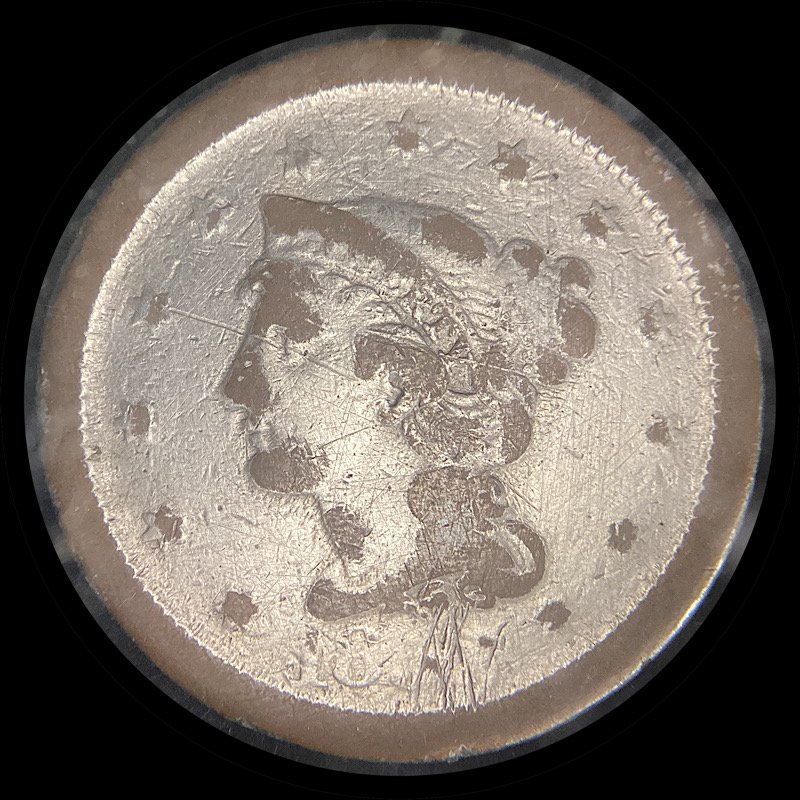 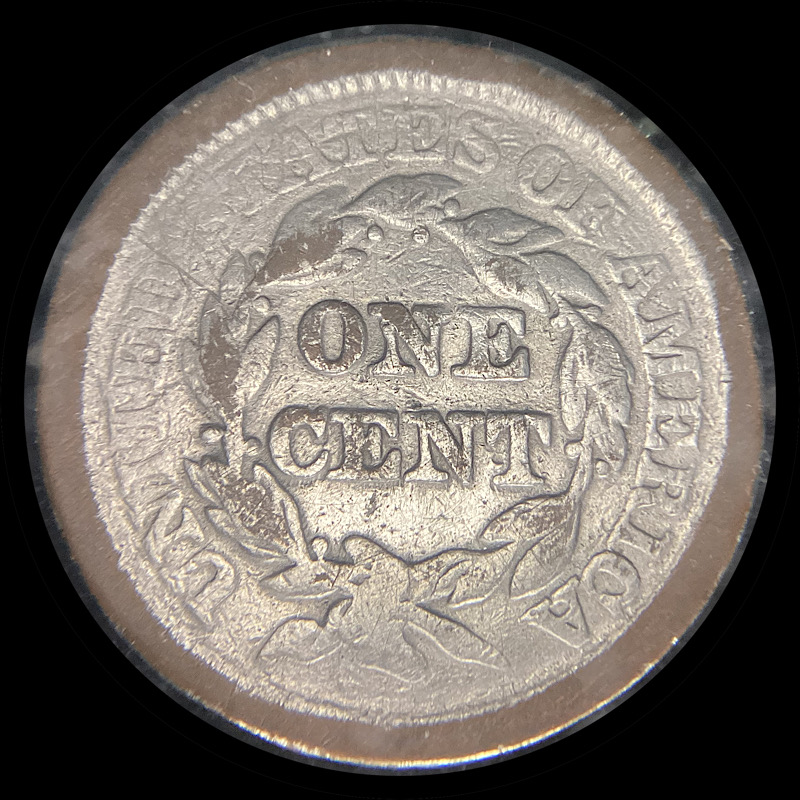  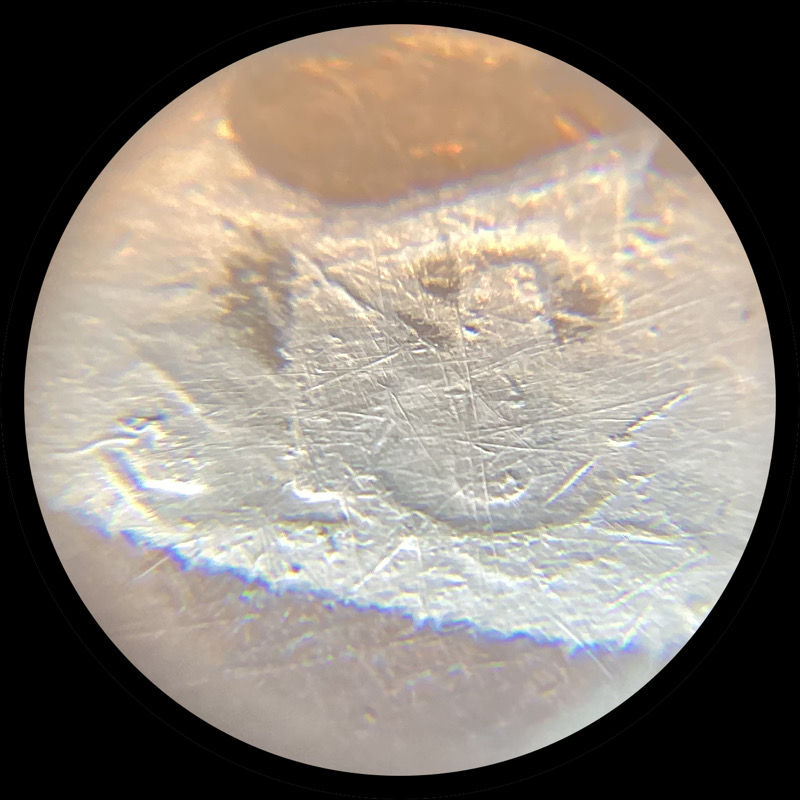 |
|
|
|
Bedrock of the Community
 United States
27348 Posts |
Interesting project, Brand! That coin definitely has stories to tell.
Give acetone a shot, although from my past experience I don't think that it will do much. You'll need to use some sort of paint stripper.
Inordinately fascinated by bits of metal with strange markings and figures
|
|
Pillar of the Community
 United States
6880 Posts |
I think you're right, Hondo. The cent been soaking in pure acetone for 30 minutes, and that silver stuff hasn't blinked. If anything, it has gotten shinier and more reflective.
|
|
Moderator
United States
195142 Posts |
Good luck!   |
|
Pillar of the Community
United States
6880 Posts |
Zero change after 2:15 in the acetone. Safe to say that acetone is not going to help here.
This is a braided hair cent, right?
|
|
Bedrock of the Community
United States
27348 Posts |
Quote:
This is a braided hair cent, right? Yes, it seems to be 183X. Inordinately fascinated by bits of metal with strange markings and figures
|
|
Pillar of the Community
United States
6880 Posts |
I had guessed 185x. To my understanding (which could very well be wrong), the braided hair cent started in 1839. But the 1839 coins had much smaller lettering on the reverse. The chunky letters seem more like 1850s decade letters.
|
|
Pillar of the Community
United States
3727 Posts |
Be very careful. This could be a copper-mercury amalgam layer. If so, it is toxic. That was done to form cheap jewelry that looked like imitation silver at one time.
|
|
Pillar of the Community
United States
6880 Posts |
Yikes. Thanks for the warning!
Edit: yep, I'm watching some videos and reading some articles now. I think that's exactly what this is. Glad I didn't try to rub that shine off with my fingers! I am going to take the coin out of the isopropyl alcohol it is soaking in. Then evaporate the liquid outside and seal the coin in a flip. Probably both will need to be disposed of correctly.
Edited by Brandmeister
09/15/2025 6:06 pm
|
|
Bedrock of the Community
United States
27348 Posts |
Quote:
Probably both will need to be disposed of correctly. Give paint stripper a shot first. And I don't think that you need to worry about the mercury volatizing from the coin. Just seal it in an air-tite. Inordinately fascinated by bits of metal with strange markings and figures
|
|
Bedrock of the Community
United States
78607 Posts |
Interesting purchase, Brandmeister. Hopefully you can somehow manage to get the stuff off of it. I love Braided Hair Cents. Errers and Varietys.
|
|
Pillar of the Community
United States
6880 Posts |
Hondo, I was more concerned about forming some kind of film on the surface that might be touched to skin.
After working in the semiconductor industry, I have developed a great caution around all hazardous materials (congratulations, mandatory annual MSDS and Hazmat training!). Many dangerous elements and chemicals are relatively inert unless you pair them with a delivery mechanism. Lacking any experience with mercury, I didn't really know what soaking a possible copper-mercury amalgam in alcohol might produce.
Maybe I will let the coin sit for a while, and figure out if there is some safe way to test the surface for mercury.
|
|
Pillar of the Community
United States
6880 Posts |
After some more research, it appears that a handheld XRF machine can detect mercury. So maybe a coin shop or precious metals dealer in this area can help me to determine what is on the coin.
|
|
Bedrock of the Community
United States
10601 Posts |
If it was plated with mercury amalgams there is no need to worry.
Amalgamation involves binding the metal to another metal. It's not floating around there to get into your system.
Edited by Marv65
09/15/2025 8:42 pm
|
|
Moderator
United States
34539 Posts |
Quote:
This could be a copper-mercury amalgam layer. If so, it is toxic. That was done to form cheap jewelry that looked like imitation silver at one time. That was my first thought too, although with the cause being dipping a copper coin in liquid mercury as a high school science experiment. It's interesting that the coin has seen some wear since this surface change was made, but after someone was angry with the date. "If you climb a good tree, you get a push."
-----Ghanaian proverb
"The danger we all now face is distinguishing between what is authentic and what is performed."
-----King Adz
|
|
Pillar of the Community
United States
6880 Posts |
Quote:
If it was plated with mercury amalgams there is no need to worry. Amalgamation involves binding the metal to another metal. It's not floating around there to get into your system. That's a fair point, although I am currently in the process of attacking this alterered surface with chemicals in the hopes of revealing the copper underneath. |
| |
Replies: 17 / Views: 1,270 |





 Posted 09/15/2025 12:32 pm





