

 Posted 09/18/2025 4:55 pm


First, it is nice to see another obscure (at least to me) medieval.
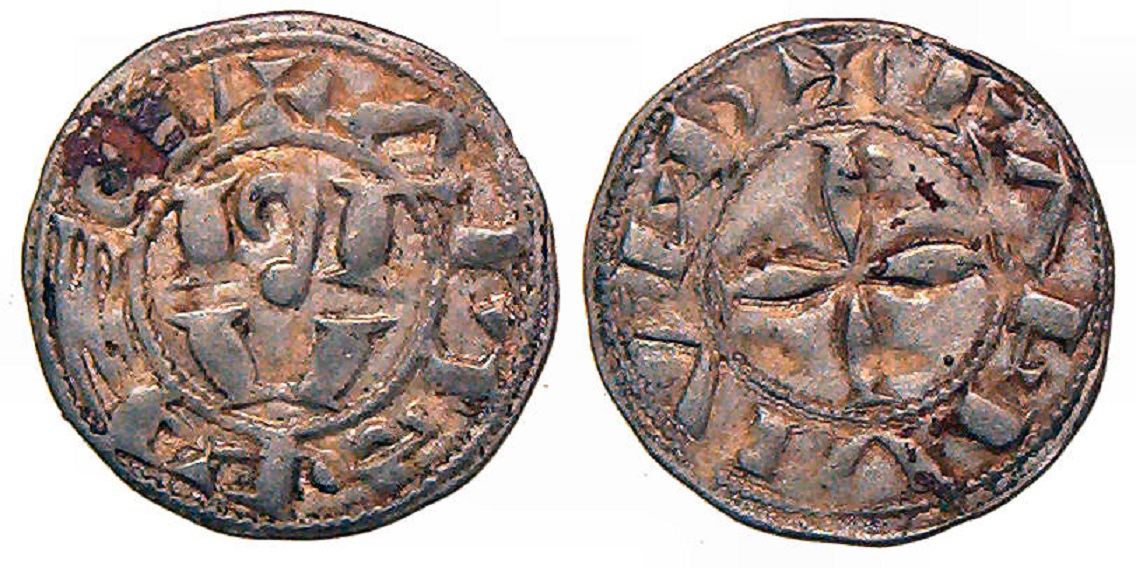
I've seen those capped cylindrical objects (both sides as they also form the arms of the cross) also called spindles. Apparently there was a rapidly growing textile industry in southern France from the mid-13th century. A slightly off-the-wall hypothesis is that the curved object is NOT a bishop's crozier, but is some other hook-shaped tool used in textile manufacture. Catalogs tend to copy one another on such things. If the first one calls it a crozier (probably Poey d'Avant in this case?) most later ones just follow, without questioning.
Of course, your speculation on both a bishop and a noble (who issued a coin) being in positions of authority also makes sense. I don't know much about the history of the south of France, but I understand that in Italy the bishops ruled the towns in the early medieval period, followed by "communes" or republics in some places (Florence being the most obvious example), and then those famous local noble families starting from the 13th-14th century (Visconti/Sforza, Este, Scaliger, Malatesta, Gonzaga, Medici etc.). So I suppose there could have been a period when there was a sort of shared authority.
I've seen those capped cylindrical objects (both sides as they also form the arms of the cross) also called spindles. Apparently there was a rapidly growing textile industry in southern France from the mid-13th century. A slightly off-the-wall hypothesis is that the curved object is NOT a bishop's crozier, but is some other hook-shaped tool used in textile manufacture.
Catalogs tend to copy one another on such things. If the first one calls it a crozier (probably Poey d'Avant in this case?) most later ones just follow, without questioning. Of course, your speculation on both a bishop and a noble (who issued a coin) being in positions of authority also makes sense. I don't know much about the history of the south of France, but I understand that in Italy the bishops ruled the towns in the early medieval period, followed by "communes" or republics in some places (Florence being the most obvious example), and then those famous local noble families starting from the 13th-14th century (Visconti/Sforza, Este, Scaliger, Malatesta, Gonzaga, Medici etc.). So I suppose there could have been a period when there was a sort of shared authority.
Edited by tdziemia
09/18/2025 5:02 pm
09/18/2025 5:02 pm