








 Posted 12/07/2025 07:53 am


There are far fewer "Colonial North American" coins, in terms of legal tender or government-authorized coinage, compared to Spanish-colonial issues. Don't forget: pre-1776 non-Latin America had virtually no freshly mined gold and silver to make coins from; the colonists made do with whatever Spanish-colonial or European coinage came their way.
I think a "full list" of North American colonial coins, issued by government or under government patent, would be:
- New England coinage
- Massachusetts oak tree and pine tree coinages
- Maryland Lord Baltimore coins
- 1688 Plantation coins
- Rosa Americana coinage
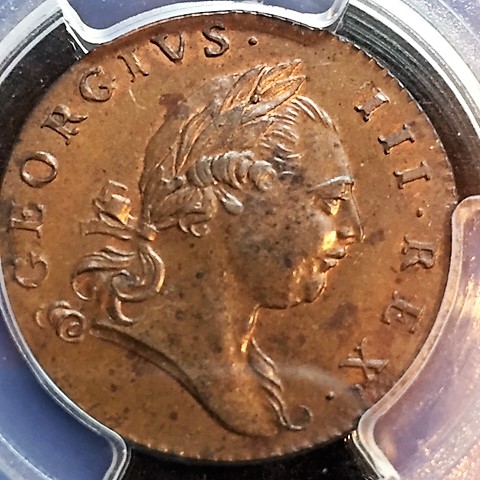
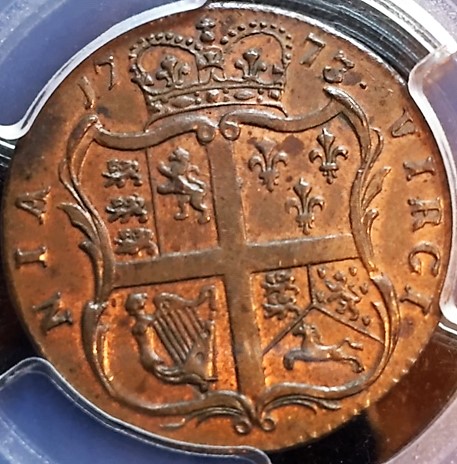
- Virginia halfpennies
- the various Canadian provincial coinages
- French Colonies coinages, which would have seen circulation in Quebec and Louisiana.
The Dutch and Swedish governments issued no coinage specifically for use in their North American colonies.
The first six categories are of course very highly sought after in the United States, being considered "pre-independence colonial coinages" of what would become the United States. The French Colonial coinages are generally considered to be intended for Quebec, rather than Louisiana, though of course would have circulated in Louisiana as well. And of course Canadian colonial coins "don't count" for American collectors, since they mostly date from after the American revolution.
The only other colonial coin series popular in the United States is the Sommer Islands coins, issued for what we now call "Bermuda". These are popular on account of being "the first British Colonial coins struck for use in the North American region", and are the only coins listed in the Red Book that were struck for a location that is not currently, and never has been, part of United States territory.
I think a "full list" of North American colonial coins, issued by government or under government patent, would be:
- New England coinage
- Massachusetts oak tree and pine tree coinages
- Maryland Lord Baltimore coins
- 1688 Plantation coins
- Rosa Americana coinage
- Virginia halfpennies
- the various Canadian provincial coinages
- French Colonies coinages, which would have seen circulation in Quebec and Louisiana.
The Dutch and Swedish governments issued no coinage specifically for use in their North American colonies.
The first six categories are of course very highly sought after in the United States, being considered "pre-independence colonial coinages" of what would become the United States. The French Colonial coinages are generally considered to be intended for Quebec, rather than Louisiana, though of course would have circulated in Louisiana as well. And of course Canadian colonial coins "don't count" for American collectors, since they mostly date from after the American revolution.
The only other colonial coin series popular in the United States is the Sommer Islands coins, issued for what we now call "Bermuda". These are popular on account of being "the first British Colonial coins struck for use in the North American region", and are the only coins listed in the Red Book that were struck for a location that is not currently, and never has been, part of United States territory.
Don't say "infinitely" when you mean "very"; otherwise, you'll have no word left when you want to talk about something really infinite. - C. S. Lewis


