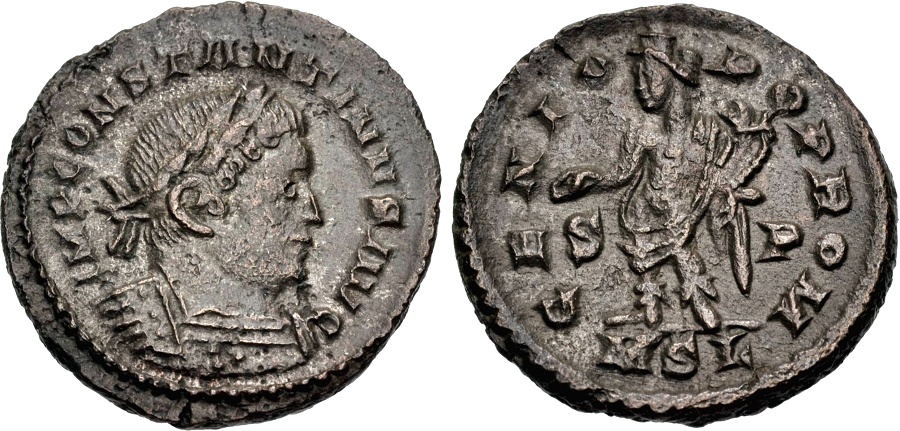
The Roman mint in London was started by a pirate. The Emperor Diocletian put Carausius in charge of clearing out the Frank and Saxon pirates pillaging the English Channel. Carausius (reigned 286- 293) defeated the pirates, but then declared himself ruler of Britain, in effect, becoming a pirate himself. Carausius struck coins in his name along with Diocletian and Maximianus in hopes that he would be formally named as a co-ruler; which did not happen. This presumptuous and ill-fated desire to be recognized is why the reverse legend ends with AVGGG- - one G for each Augustus. The Diocletian and Maximianus coins also have ML as part of the mintmark; which translates as "money from London" and XXI, which is likely a mark of value, meaning 20 parts alloy to 1 part silver. Until A.D. 294, the standard denomination in the Roman Empire was the antoninianus which, during the Tetrarchy, was circa 24mm and 4.0 grams. The coin, which featured a radiate crown on the ruler, was first introduced by Caracalla in A.D. 215. In the late 3rd century, it was issued for all the rulers of the 1st Tetrarchy --Diocletian, Maximianus, Constantius I and Galerius.
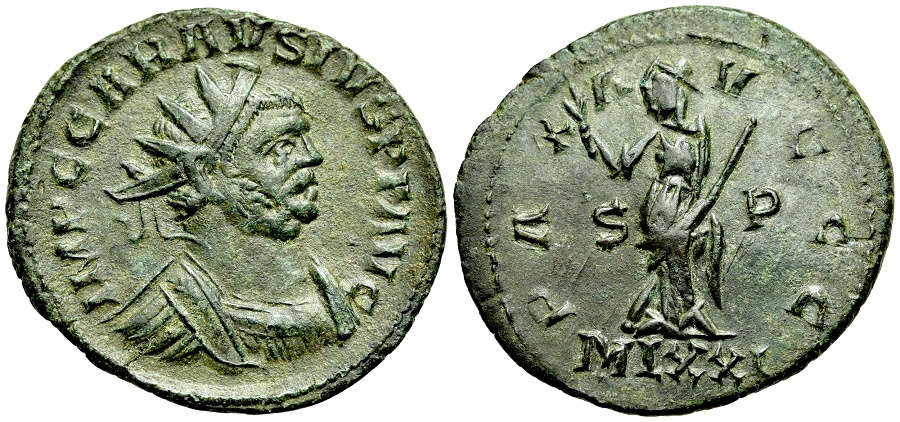
Carausius
A.D. 291
24mm 4.3g
IMP C CARAVSIVS P F AVG; radiate and cuirassed bust right
PAX AVGGG; Pax stg. l., holding olive branch and transverse sceptre; S-P across fields.
In ex. MLXXI
RIC V London 143; RIC V.5 London 2197
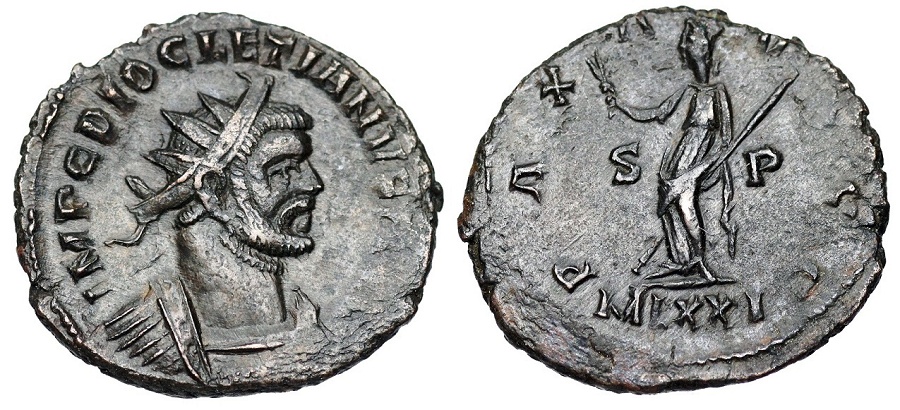
Diocletian
A.D. 291
21x24mm 4.4gm
IMP C DIOCLETIANVS P F AVG; radiate and cuirassed bust right
PAX AVGGG; Pax stg. l., holding olive branch and transverse sceptre; S-P across fields.
In ex. MLXXI
RIC V London 9; RIC V.5 London 3546
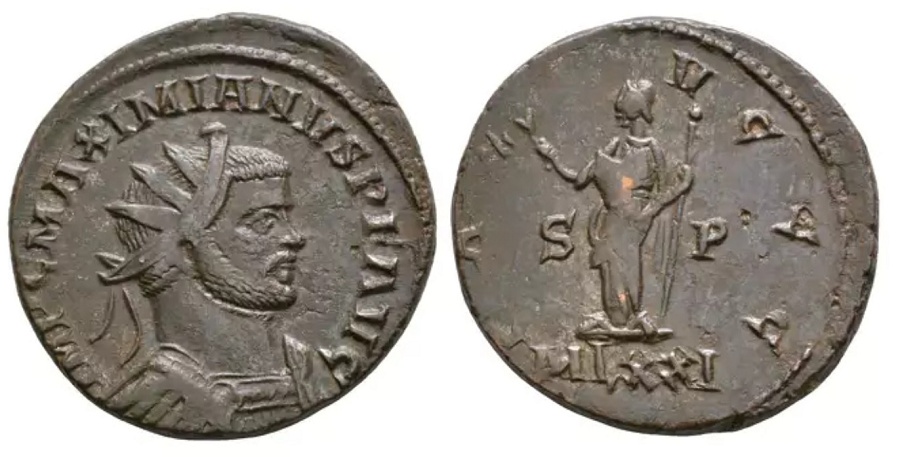
Maximianus
A.D. 291
24mm 3.8g
IMP C MAXIMIANVS P F AVG; radiate and cuirassed bust right
PAX AVGGG; Pax stg. l., holding olive branch and sceptre; S-P across fields.
In ex. MLXXI
RIC V London 34; RIC V.5 London 3607
The treasurer for Carausius was a man called Allectus (reign A.D. 293- 296). He assasinated Carausius and took over and his reign ended after he died in battle against the forces of Constantius I.
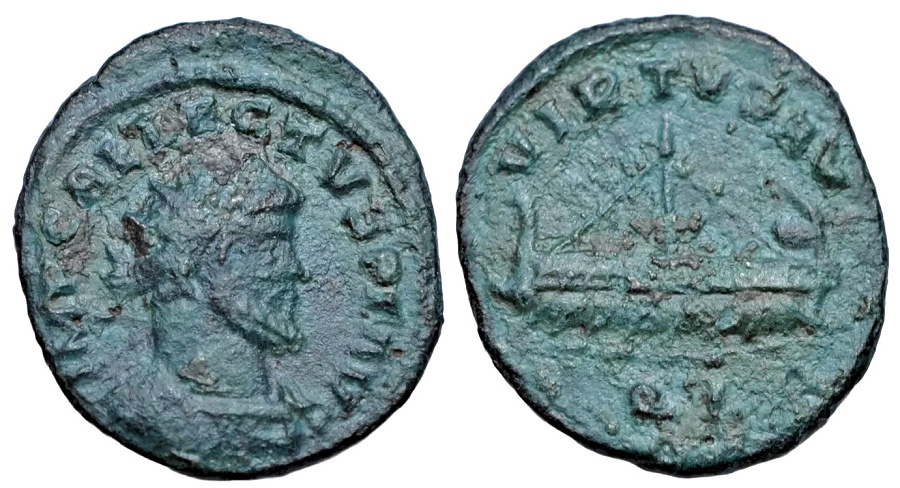
Allectus
A.D. 293-296
AE Quinarius 19mm 1.9g
IMP C ALLECTVS P F AVG; radiate and cuirassed bust right.
VIRTVS AVG; galley with five oars.
In ex. QL
RIC V London 55; RIC V.5 London 276
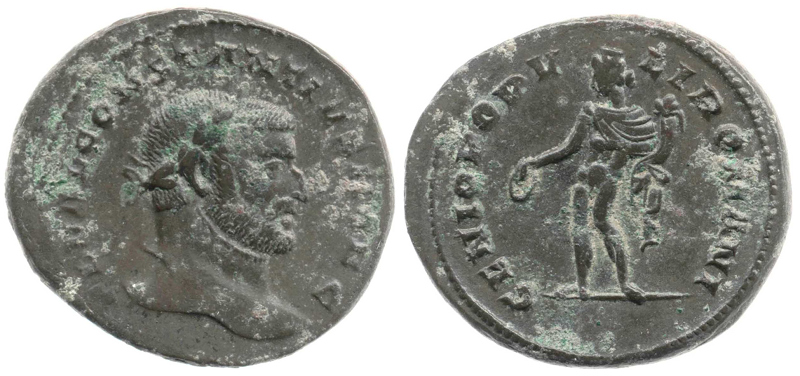
After the defeat of Allectus, the London mint was firmly in the hands of the Roman rulers. Below are coins of the tetrarchy from the Rauceby Hoard. This hoard was discovered in the UK in 2017 and totaled 3,099 coins. Two coins were radiates (before A.D. 282) and the rest were struck from A.D. 294- 307. The majority are from western mints.London (875) Trier (1459) and Lyon (468). These coins are all called folles. The radiate bust of the antoninianus has changed to a laureate bust. The follis is also much larger, with some as large as 30mm and 10 grams.
The tetrarchy was the rule of four with a senior Augustus and his Caesar in the Eastern half of the Roman Empire and an Augustus and Caesar in the Western Empire. The rulers changed often, but below are the years from A.D. 296- 306
The first Tetrarchy
A.D. 296- 305
Augustii-- Diocletian, Maximianus
Caesars-- Constantius I, Galerius
A.D. May 305- July 306
Augusti-- Constantius I, Galerius
Caesars-- Severus, Maximinus II
Seniors-- Diocletian, Maximianus
A.D. July 306- Nov 306
Augusti-- Galerius, Severus
Caesars-- Maximinus II, Constantine I
Seniors-- Diocletian, Maximianus
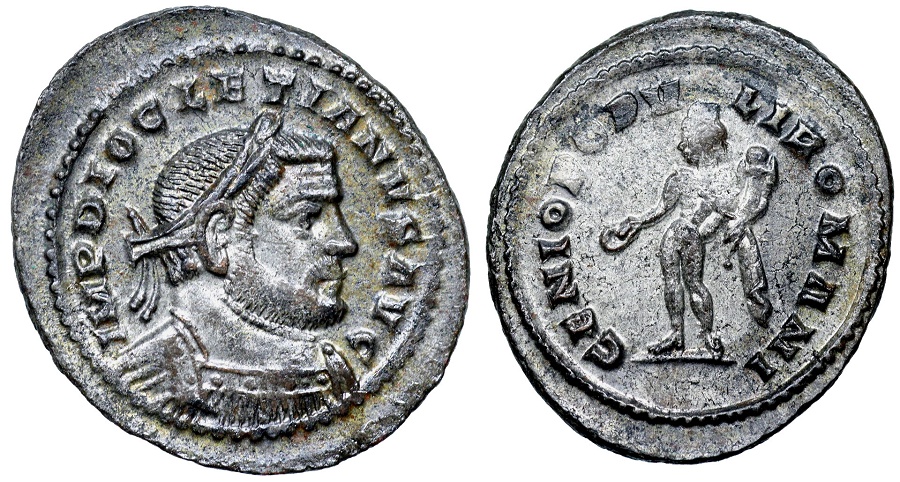
Diocletian
A.D. 303
32x28mm 9.1g
IMP DIOCLETIANVS AVG; laureate and cuirassed bust right.
GENIO POPVLI ROMANI; Genius standing left, naked except for chlamys over left shoulder, holding patera and cornucopiae.
No mintmark
RIC VI London 28a; LMCC 3.01.005
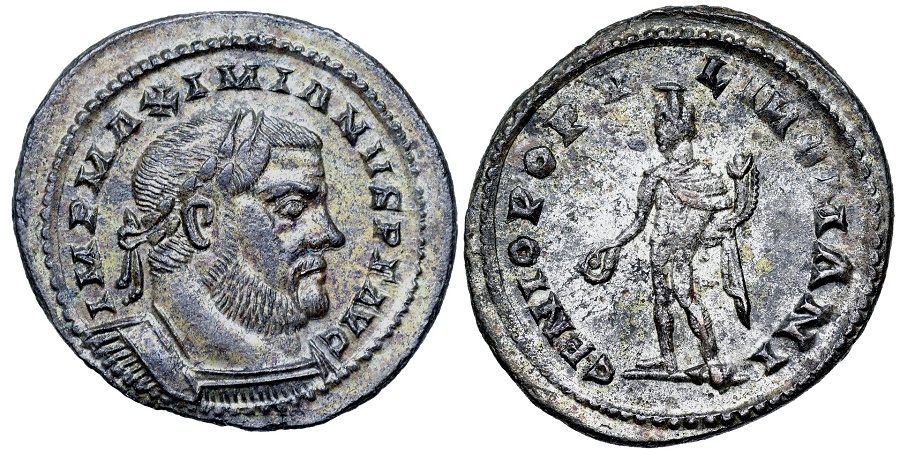
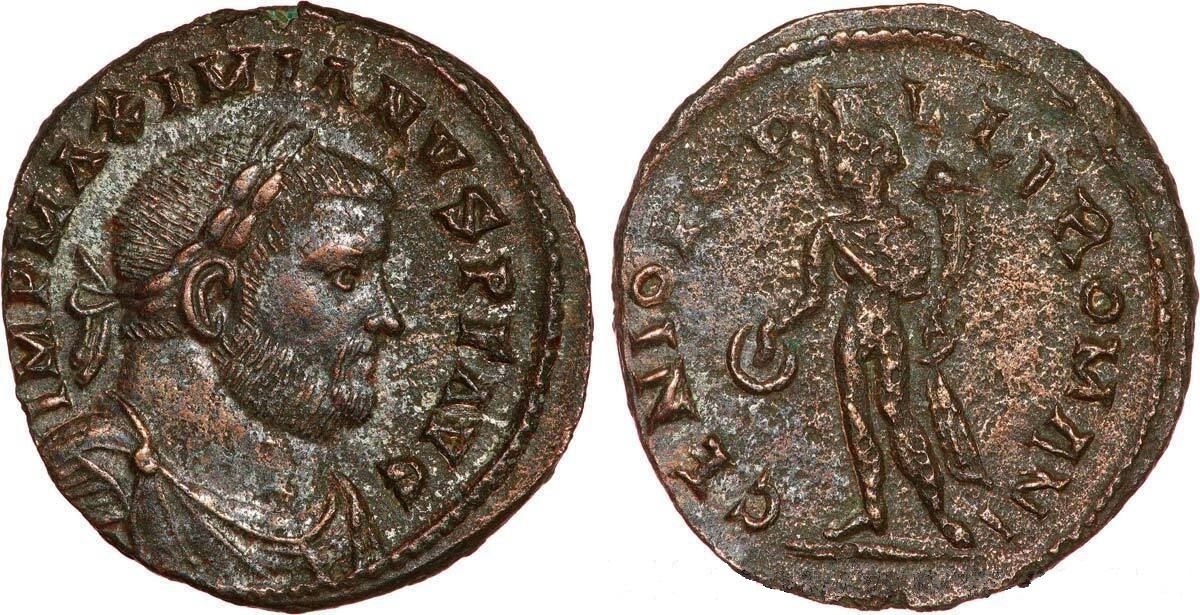
Maximianus
A.D. 303
30x28mm 9.0g
IMP MAXIMIANVS P F AVG; laureate and cuirassed bust right.
GENIO POPVLI ROMANI; Genius standing left, modius on head, naked but for chlamys over left shoulder, right holding patera, left cornucopiae.
No mintmark
RIC VI London 23b; LMCC 3.01.012
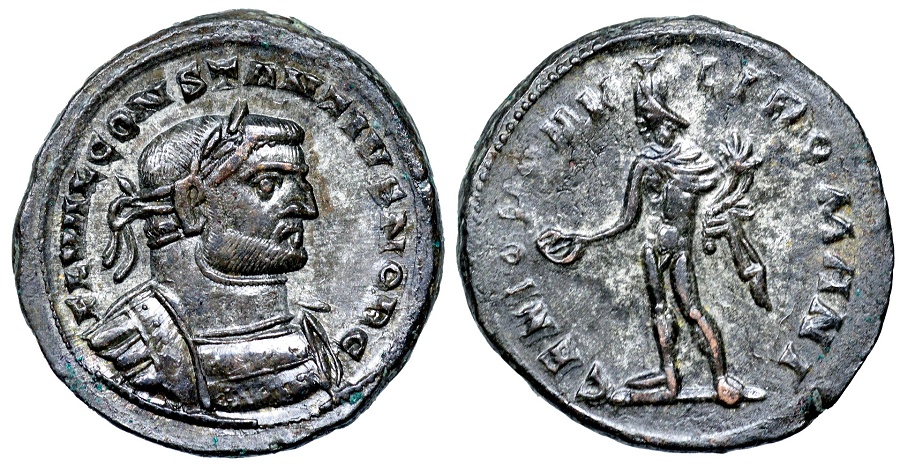
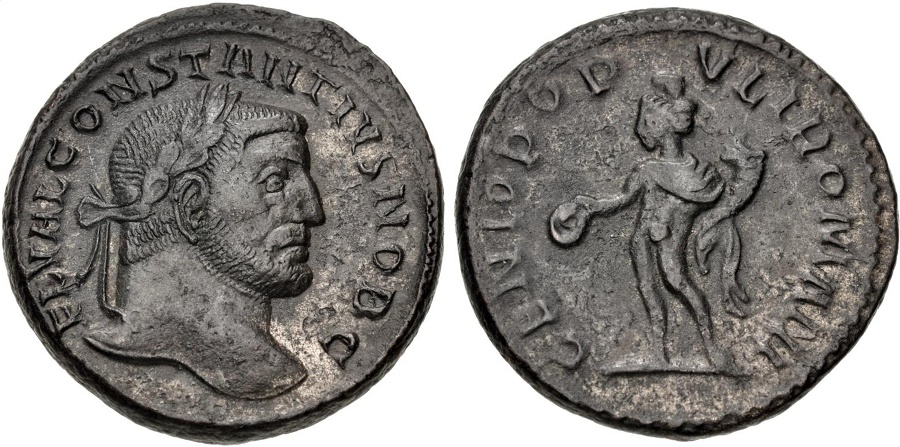
Constantius I
A.D. 296-303
26x27mm 9.8g
FL VAL CONSTANTIVS NOB C; laureate and cuirassed bust right.
GENIO POPVLI ROMANI; Genius standing left, modius on head, naked but for chlamys over left shoulder, right holding patera, left cornucopiae.
No mintmark
RIC VI London 14a/20; LMCC 2.01.010
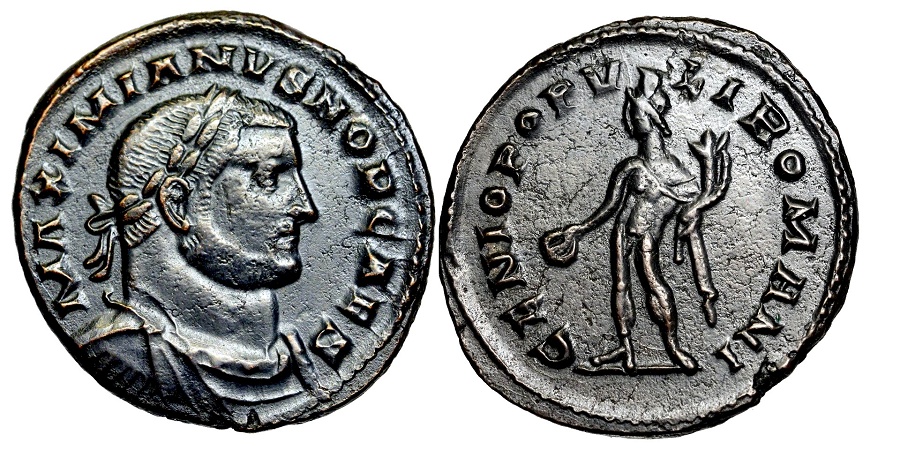
Galerius
A.D. 303- 305
AE follis 28mm 10.2g
MAXIMIANVS NOB CAES; laureate, draped and cuirassed bust right.
GENIO POPVLI ROMANI; Genius standing left, modius on head, naked but for chlamys over left shoulder, right holding patera, left cornucopiae.
No mintmark
RIC VI London 36; LMCC 3.01.034
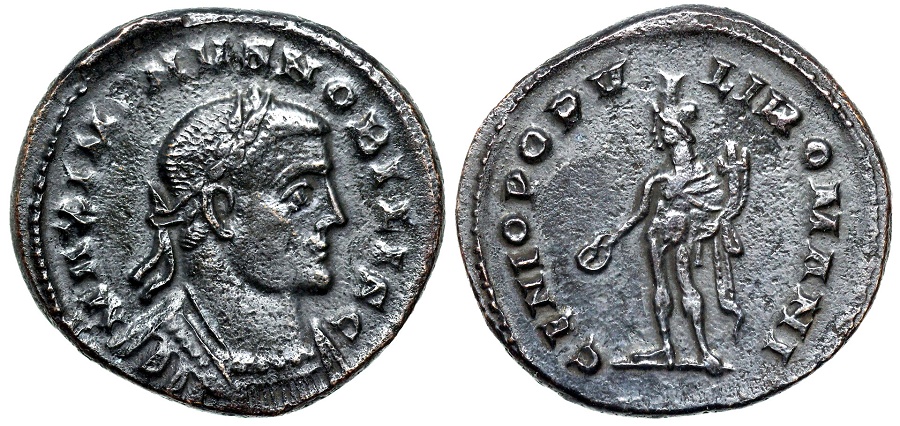
Maximinus II
A.D. 305- 307
AE follis 28mm 10.6g
MAXIMINVS NOBILIS C; laureate and cuirassed bust right.
GENIO POPVLI ROMANI; Genius standing left, modius on head, naked but for chlamys over left shoulder, right holding patera, left cornucopiae.
No mintmark
RIC VI London --; LMCC 4.03.027
Not in RIC
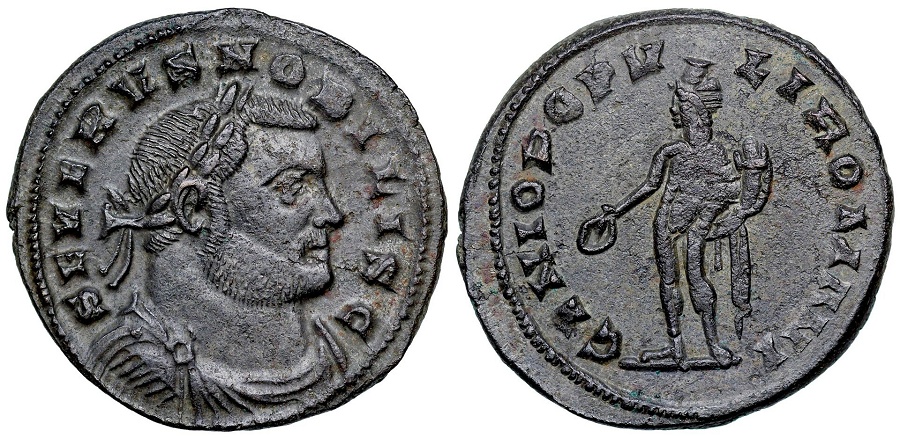
Severus II
A.D. 305- 306
AE follis 28mm 8.6g
SEVERVS NOBILIS C; laureate, draped and cuirassed bust right.
GENIO POPVLI ROMANI; Genius standing left, modius on head, naked but for chlamys over left shoulder, right holding patera, left cornucopiae.
No mintmark
RIC VI London 63a; LMCC 4.02.019
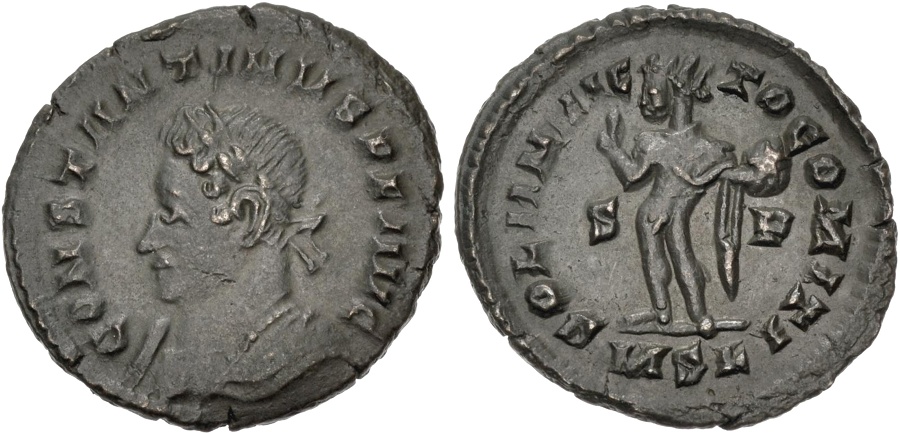
and the first coin issued for Constantine I (also from Rauceby)
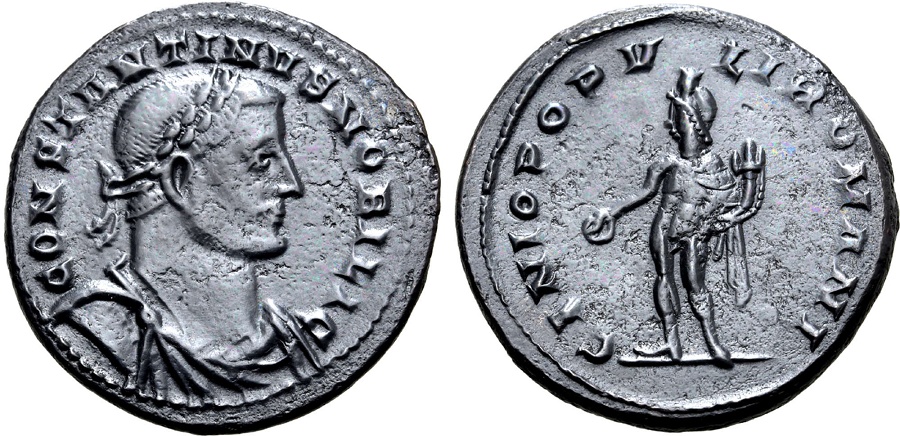
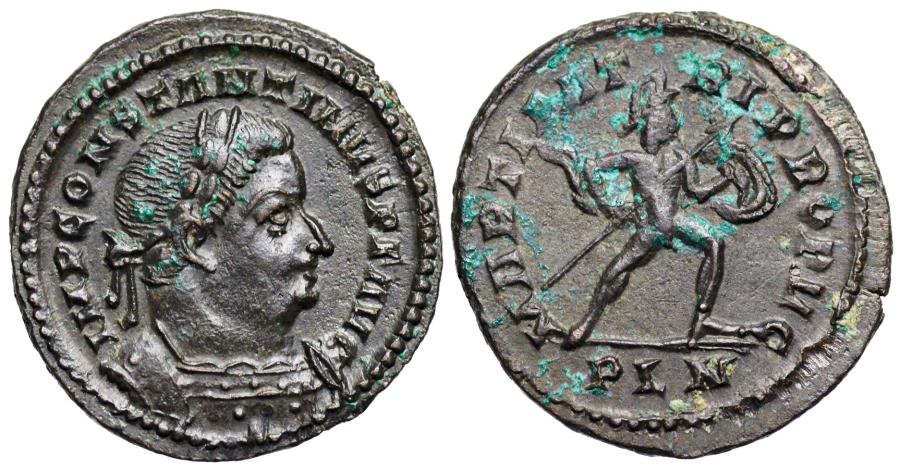
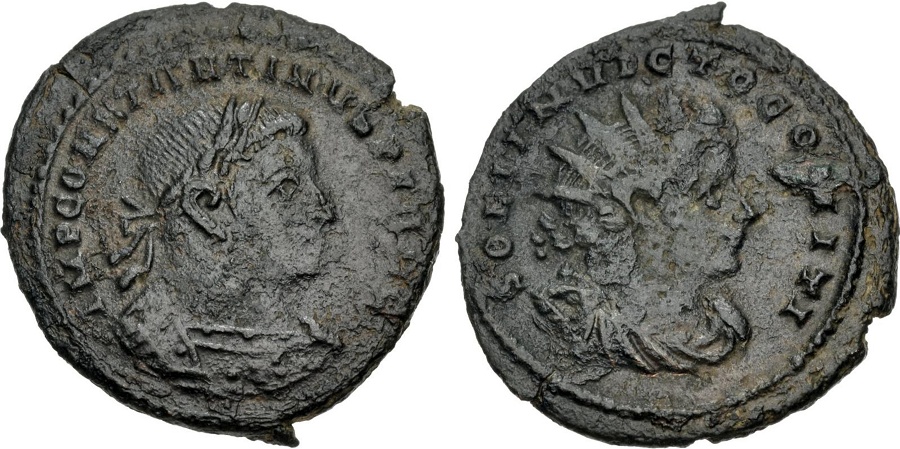
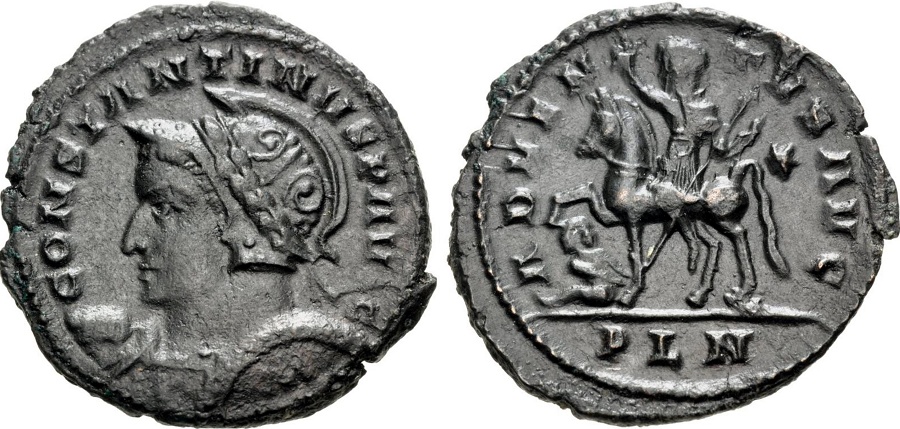
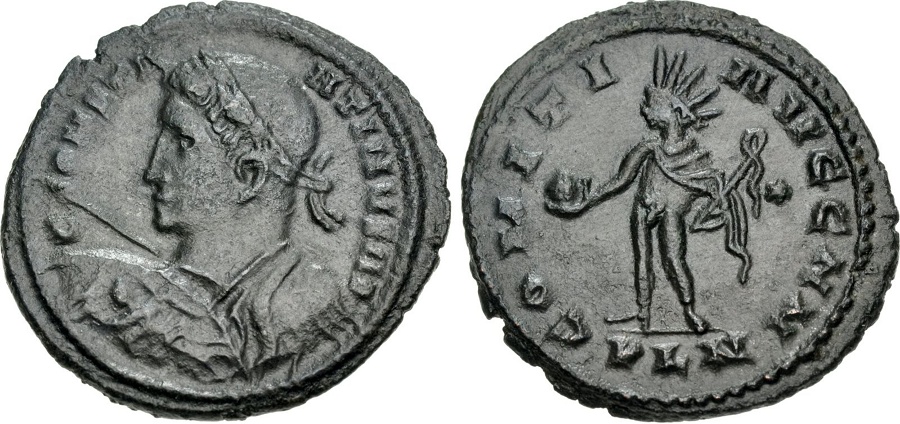
Constantine I
A.D. 306
28mm 9.1g
CONSTANTINVS NOBILI C; laureate, draped and cuirassed bust right.
GENIO POPVLI ROMANI; Genius standing left, tower on head, loins draped, r. holding patera, l. cornucopiae.
RIC VI London 66; LMCC 4.04.009
The two senior Emperors (Diocletian and Maximianus) abdicated; though Maximianus would eventually come back.
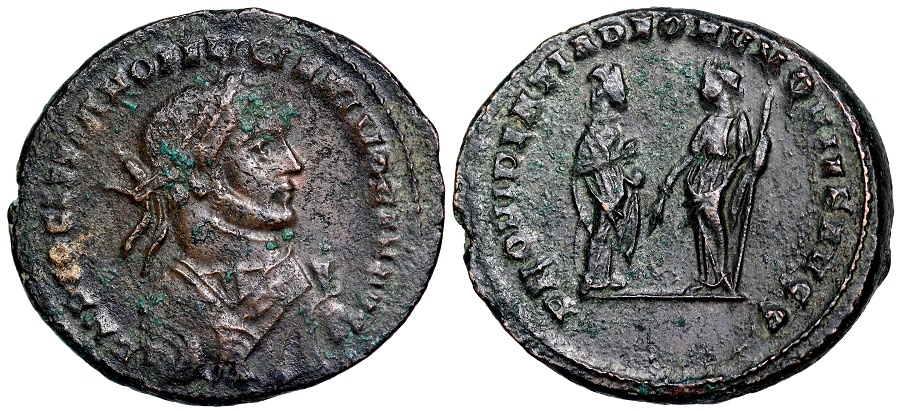
Diocletian
A.D. 305- 307
AE follis 26x28mm 9.9g
D N DIOCLETIANO FELICISSIMO SEN AVG; Laureate and mantled bust r., holding olive-branch and mappa.
PROVIDENTIA DEORVM QVIES AVGG; Providentia standing r., extending hand to Quies standing l., holding branch and leaning on scepter.
RIC VI London 77a; LLMC 4.01.002
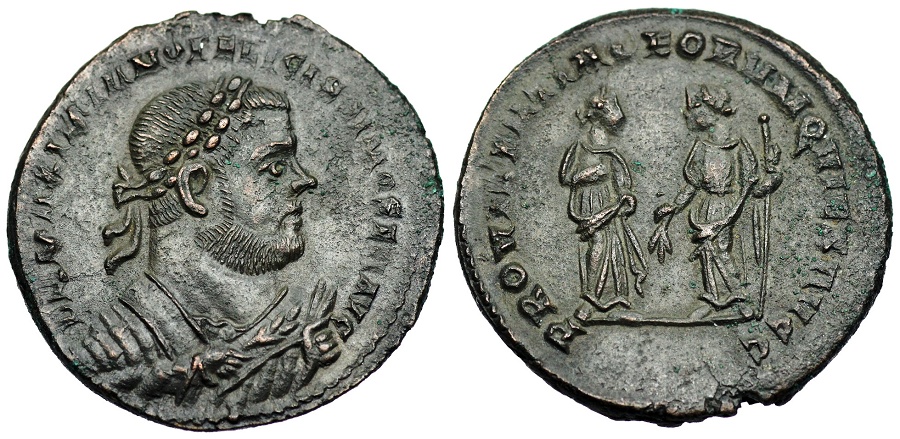
Maximianus
A.D. 305-307
AE follis 27x28mm 9.4gm
D N MAXIMIANO FELICISSIMO SEN AVG; Laureate and mantled bust r., holding olive-branch and mappa.
PROVIDENTIA DEORVM QVIES AVGG; Providentia standing r., extending hand to Quies standing l., holding branch and leaning on scepter.
No mintmark
RIC VI London 77b; LLMC 4.01.004




 Posted 01/02/2026 08:24 am