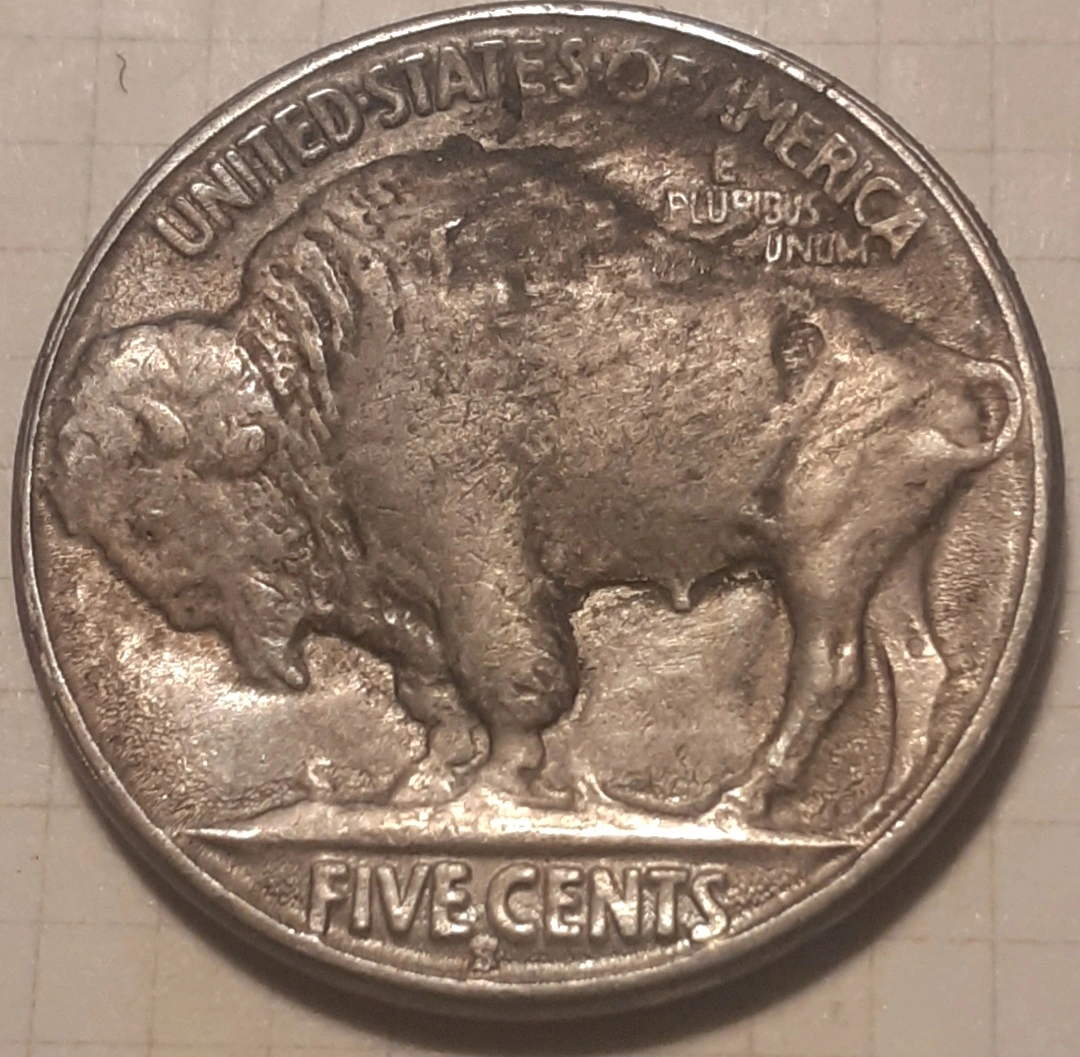
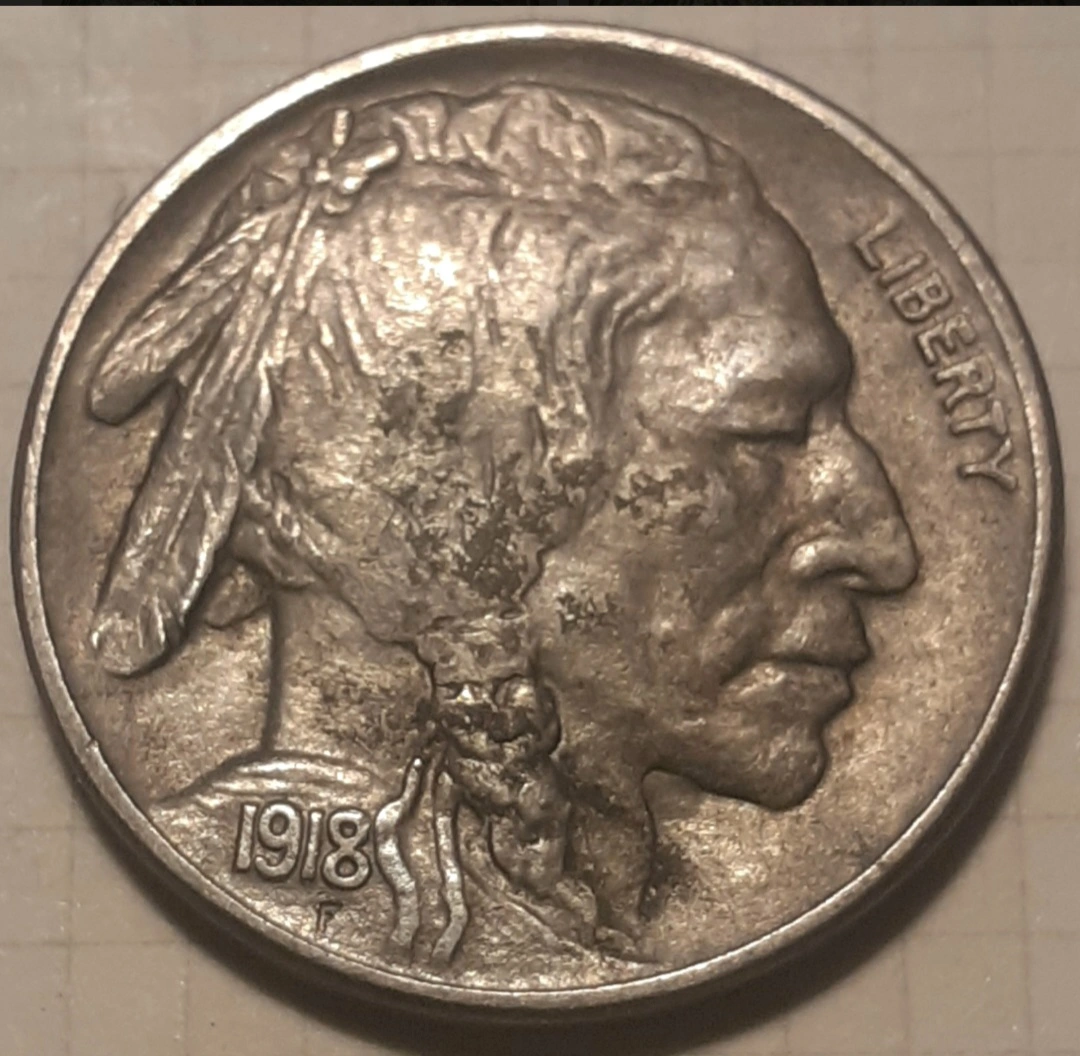
The 1918-S is generally one of the better struck San Francisco dates. This coin has five things going on: (1) a mismatched die pair (which is common), (2) die polishing, affecting the reverse more than the obverse (also common), (3) circulation wear, (4) environmental damage, and (5) scratches.
The obverse die looks to be MDS, and the reverse die looks to be LMDS, and maybe LDS. That explains some of the apparent wear differences between the obverse and reverse. There is average die clashing, visible on the obverse with the "LI" of LIBERTY / hoof clash, Indian's neck / buffalo's back clash, Indian's chin / EPU clash, and remnants of the second feather / "U" of UNITED clash. The reverse clashing has been polished extensively, explaining the lack of hair on the buffalo's head relative to the undamaged parts of the buffalo's back and legs and some of the loss of detail on the legs.
Both the obverse and reverse have environmental damage from whatever is adhering to the surfaces. There may be pitting beneath the globs of stuff on the surface. There are several deeper and longer scratches on this coin. On the obverse, there are vertical scratches in the hair above the braid and a light, but long, scratch beneath the second feather across the neck and lower chin. On the reverse, there are a number of contact marks on the buffalo's legs, but fairly heavy parallel horizontal scratches across the buffalo's midsection, maybe from the coin being scraped across a hard and rough surface. Together, these scratches and environmental issues detail the coin. I cannot determine from the photos whether the gouge in the buffalo's upper back is damage or a lamination, but that distinction won't alter the details designation from the other causes.
Excluding the strike and environmental issues, the grading should be weighed in favor of the obverse, because of the reverse die state and die polishing. The overall wear on the obverse is fairly light, and there is residual luster. The first and second feathers each have a complete rachis and the remaining hair, knot, braid, and ribbon detail is strong. Overall, the underlying grade appears to be AU-53.
Bottom line: AU details (scratches and environmental damage).
EDIT: I don't know if this is a coin you are considering for purchase, but I personally would avoid it. The 1918-S is an expensive coin in higher grades, but this one has serious issues, and would not bring a price anywhere near what an undamaged AU coin would bring. Despite the relatively lower mintage, nicer examples are available in all grades.
Edited by fortcollins
02/05/2026 11:55 am









 Posted 02/04/2026 8:01 pm





