| Author |
 Replies: 13 / Views: 576 Replies: 13 / Views: 576 |
|
|
Pillar of the Community
United States
2323 Posts |
I may be in a minority on this. But I don't care much for the current frosty finish on US proof and reverse proof coins or whatever people want to call it. When I was young my father was part owner of a monument business. I helped him cut the rubber templates with letters/designs, put them on the stones then sandblast the letters/designs into the stones. I helped him set them in concrete on the graves. To me the frosty finish on US coins is just too rough like they've been sandblasted. This is very obvious with magnifier. I assume the dies are made with lasers. I prefer the older proof coins with a more flat/satin smoother finish to compliment the proof finish, just my opinion. Light reflecting off the rough frosty makes it look like there are many tiny dark spots (shadows) on the surface. I'm sure there's online info about the mint changing finish designs, when they transitioned from flat/satin smooth to the rough frosty. I'll do some searching. Here's two of my older ones with the smoother finish and a newer one with rough frosty: 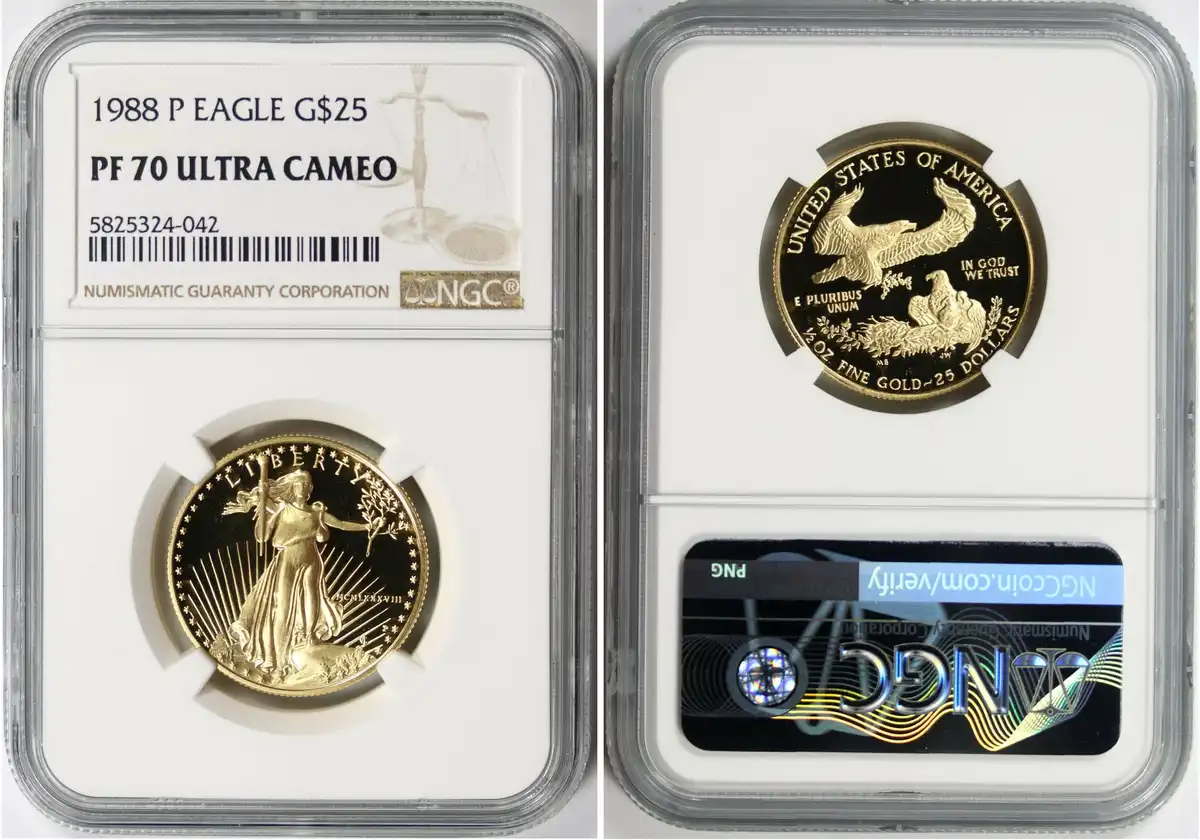 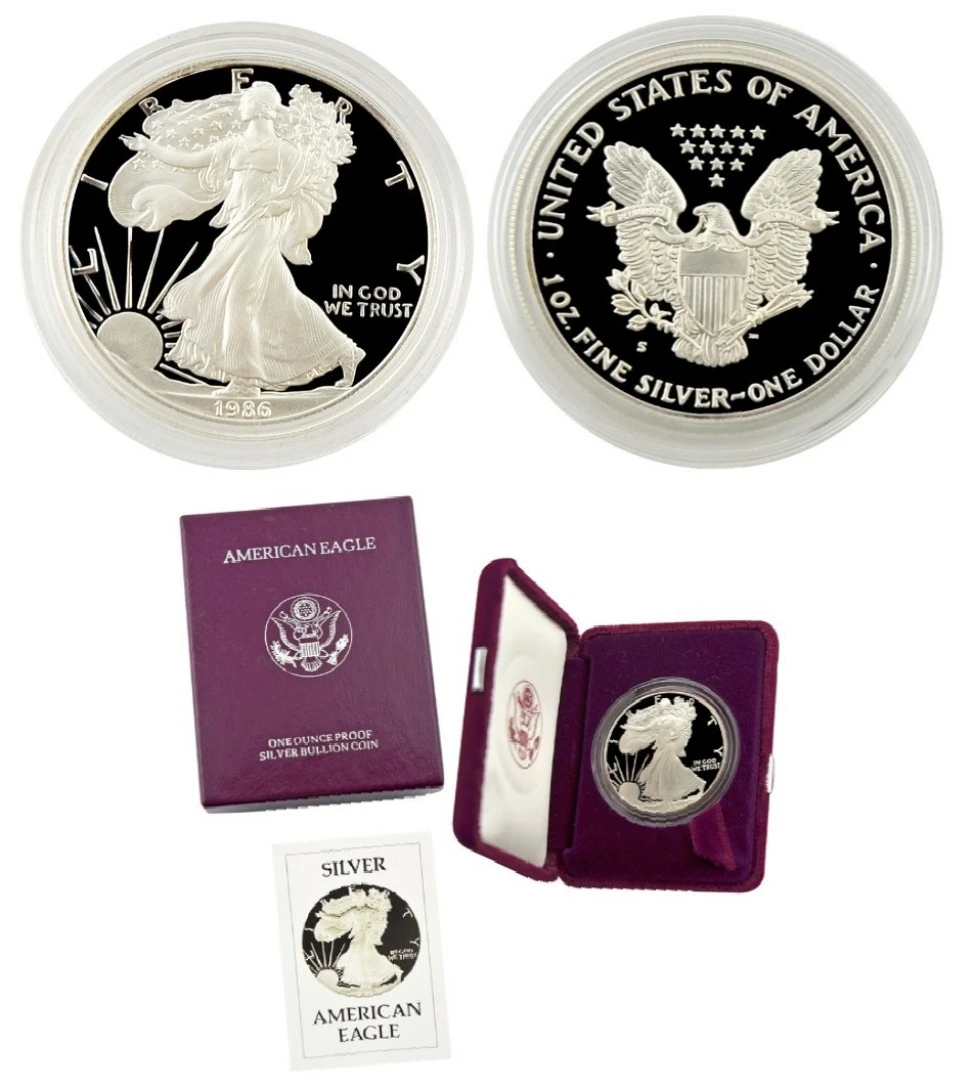 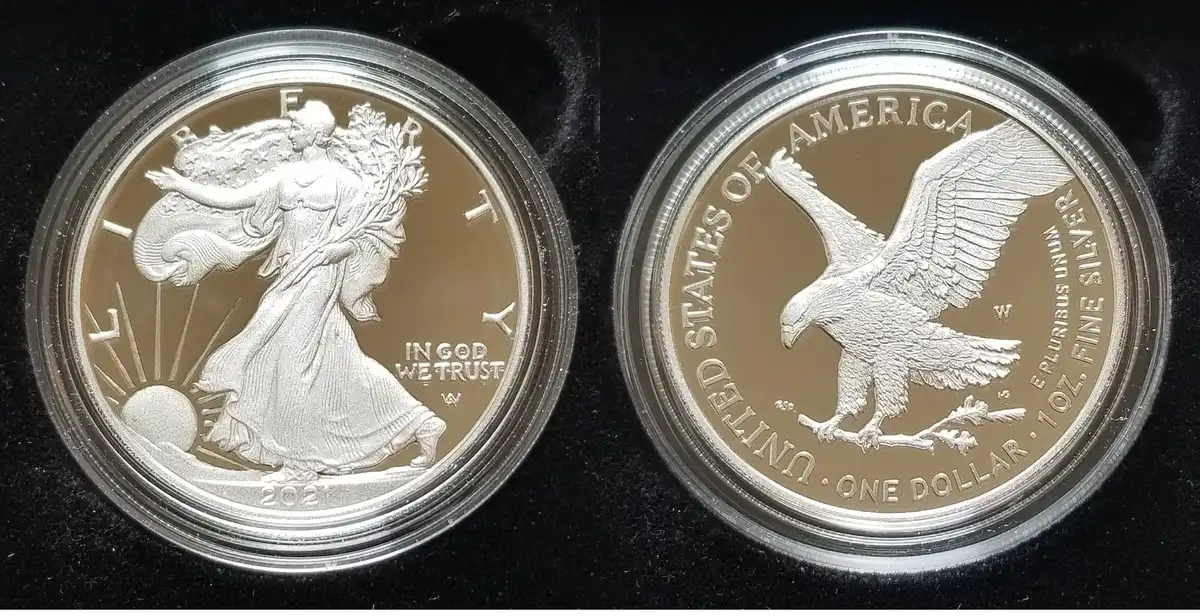 Edited by livingwater
04/19/2026 12:00 pm
|
|
|
|
Pillar of the Community
United States
5699 Posts |
Great Topic Livingwater, I am also Not a fan of " laser " cut dies finishes, I see your photos Clearly reflect the Differences between the 1986-San Francisco Proof along with the 2021-West Point Proof, ( Love the type 1 Reverse ). The U S Mints are doing More and More Finishes, To me it seems 2026 is the year of Enhanced Uncirculated finishes, I Like that!!!  2026 Some of the Morgan and Peace Silver dollars are Suppose to have a ? finish on them, What kind, I do not know.  Maybe the Old Style Dies Return,Along with the Old school Looks,.....  |
|
Pillar of the Community
 United States
2323 Posts |
Thanks Morgans Dad for commenting. Here's a close up pic of the 2026 1 oz gold proof I sent back to mint for refund due to a defect close to left star. I don't mind small imperfections but this one is easily visible with the eye, no magnification needed. I probably won't try getting another one. The pic shows the rough frosty finish on Liberty. I just don't like it as much as the older smooth satin finish. It may be easier, faster, cheaper for the mint to make the rough frosty finish. 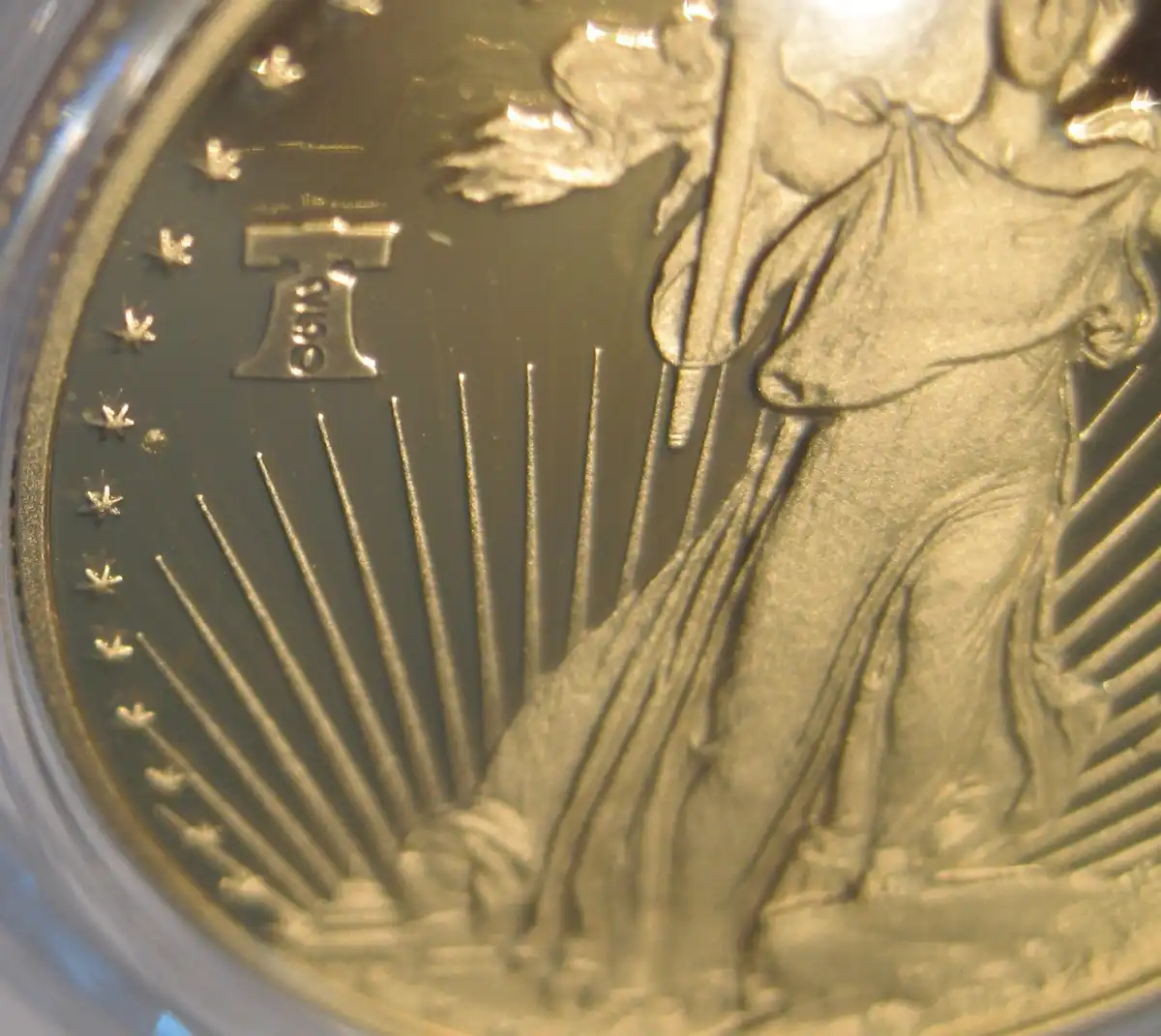 Edited by livingwater
04/21/2026 10:47 am
|
|
Pillar of the Community
United States
5699 Posts |
Sorry the U S DisapointMints did Not have your back, :(
Thanks for Sharing, ....
|
|
Moderator
 United States
194400 Posts |
My eyes are too old to tell the difference now.  |
|
Pillar of the Community
 United States
6877 Posts |
I think the laser pattern of frosting looks pixelated. The older proofs look better.
|
|
Pillar of the Community
United States
814 Posts |
To get a more accurate comparison of the difference in the finish I would think it would be best to use the same metal
Comparing the finish on a silver coin to gold coin is literally comparing apples to oranges
|
|
Pillar of the Community
United States
2323 Posts |
I already posted both versions of the silver eagle and also the gold eagle, I added a close up the 2026 gold so you have apples to apples for the gold too. I suppose I could have taken better close up pics of them but most readers will know what I'm talking about.
Edited by livingwater
04/21/2026 6:51 pm
|
|
Pillar of the Community
United States
5699 Posts |
Clearly Misunderstood, .....  The frosted look Differs Extraordinarily, With the Posted photos... Thanks for Throwing in the " Gold " Too. |
|
Moderator
Australia
16961 Posts |
It is ironic that you call the modern finish "sandblasted", as it is that older satin finish which you prefer that was in truth "sandblasted". Very fine sand, but sand noetheless. The modern process uses lasers.
The switch (taking place in US mints from 2005 to 2010) was for several reasons, notably lower cost, and more flexibiliity. Sandblasting tends to be an "all or nothing" affair. Traditional proof dies were sandblasted (the entire die) then the high points on the die (the fields) were re-polished. Laser etching allows for only small or selected areas of the die to be etched, thus in turn allowing the modern trends like "reverse proofs" to exist. Making a reverse-proof die using sandblasting would be very slow, time-consuming and expensive.
Don't say "infinitely" when you mean "very"; otherwise, you'll have no word left when you want to talk about something really infinite. - C. S. Lewis
|
|
Pillar of the Community
United States
6877 Posts |
Quote:
Making a reverse-proof die using sandblasting would be very slow, time-consuming and expensive. I'm not sure if that's entirely true, although it's probably a moot point. To create a reverse proof with sandblasting, you could produce a gleaming surface for fields and devices, fill the die cavities with a sturdy substance, sandblast the fields, and then dissolve the die fill. Lots of semiconductor deposition processes accomplish something similar. |
|
Moderator
United States
105104 Posts |
sorry to see that imperfection on that gold coin livingwater. and I'm not to sure I like the new process of adding the frosting on coins.  |
|
Pillar of the Community
United States
2323 Posts |
Sap, thanks for the info. I didn't know the mint used sandblasting. I'm glad they polished them to make a smoother satin surface.
I prefer the finishes of the Australia, Canada and Britian bullion over the US Mint. You get two finishes with the bullion like a reverse proof or enhanced look. They have better security features too.
Edited by livingwater
04/22/2026 08:50 am
|
|
Moderator
United States
194400 Posts |
Quote:
To create a reverse proof with sandblasting, you could produce a gleaming surface for fields and devices, fill the die cavities with a sturdy substance, sandblast the fields, and then dissolve the die fill. How is that not slow, time-consuming and expensive compared to regular proof?  Granted, it is not orders of magnitude more, but all values are still more. |
| |
Replies: 13 / Views: 576 |
|










 Posted 04/21/2026 08:05 am


