| Author |
 Replies: 15 / Views: 1,595 Replies: 15 / Views: 1,595 |
|
|
New Member
United States
3 Posts |
I am very new to the Coin World and wanted to ask a question. Is there such an existence of 1963 US Silver proof coin sets in sealed envelopes? And is there is and I had one, should I open it? Anyone's' vast knowledge on the subject would be greatly appreciated! Thank you |
|
|
|
Bedrock of the Community
United States
10982 Posts |
 to CCF plummerak! Yes - there were 1963 U.S. proof sets made by the U.S. Mint and yours might well be in it's original sealed envelope. All 1963 proof sets would be considered "Silver" sets because all contained 90% silver dimes, quarters and half dollars. These are very common sets with over 3 million made. I'd open it if it were mine. It is a low value set and being unopened doesn't make much difference to a collector. Be careful not to damage the inner cellophane "holder" when removing the outer envelope. Once again - welcome aboard! |
|
Valued Member
United States
323 Posts |
umm, yes they came from the mint in orange envelopes, as if to open it, some people say yes, some say no. if you are looking to make money, you shouldn't open it, if your just a collector don't hesitate to open it and see the beautiful coins, some might even have cameos. hope this helps- Brad P.S. that was the last year they made the benjamin Franklin half dollar |
|
Valued Member
United States
323 Posts |
haha bherring must have been writing while I was but he beat me to it Dangit! Lol
|
|
New Member
 United States
3 Posts |
Thank you both for your replies. I own an envelope and I don't know what to do with it. Is there any way I can look up the history of why they put proofs in sealed envelopes?
|
|
Pillar of the Community
United States
2335 Posts |
I'm not 100% sure, but I think the mint issued them in unsealed envelopes. Over the years humidity caused the envelopes to seal. At least that's what I was always told.
|
|
Pillar of the Community
United States
2150 Posts |
Quote:
I'm not 100% sure, but I think the mint issued them in unsealed envelopes. Over the years humidity caused the envelopes to seal. At least that's what I was always told. This is also what I have heard |
|
New Member
United States
3 Posts |
Coincollectingkid:
What does 'cameo' mean?
|
|
Valued Member
United States
323 Posts |
Cameo is a term reffered to the "depth" of the coin, if you look at jokingjokers coin in the post above me, it has cameo, it's the mirror like look in a coin. from what I've heard, the coins that have cameo are the first coins stuck from a certain die, also cameo coins tend to sell with higher prices. hoped this helped, -Brad
|
|
Pillar of the Community
United States
6428 Posts |
The cameo "look" is where the devices (portrait, date, bell, eagle, and lettering) have a white, frosted look which strongly contrasts with the mirrored fields. The fields of a cameo proof coin will appear almost black when the coin is tilted at certain angles under a light. Cameo is very desirable for proofs and for many dates the cameo coins sell for much higher prices than the normal "brilliant" proofs. FYI, here is a cameo proof 1963 Franklin half. This one is generously graded Proof-68 DCAM (deep cameo) by PCI. Deep cameo coins have more contrast than "ordinary" cameos; it's a matter of degree. The deeper the cameo, the better. The main reasons to open your set are 1) to appreciate the coins and 2) find out whether you have any CAM or DCAM coins which might have extra value. If you don't open it you'll never know! 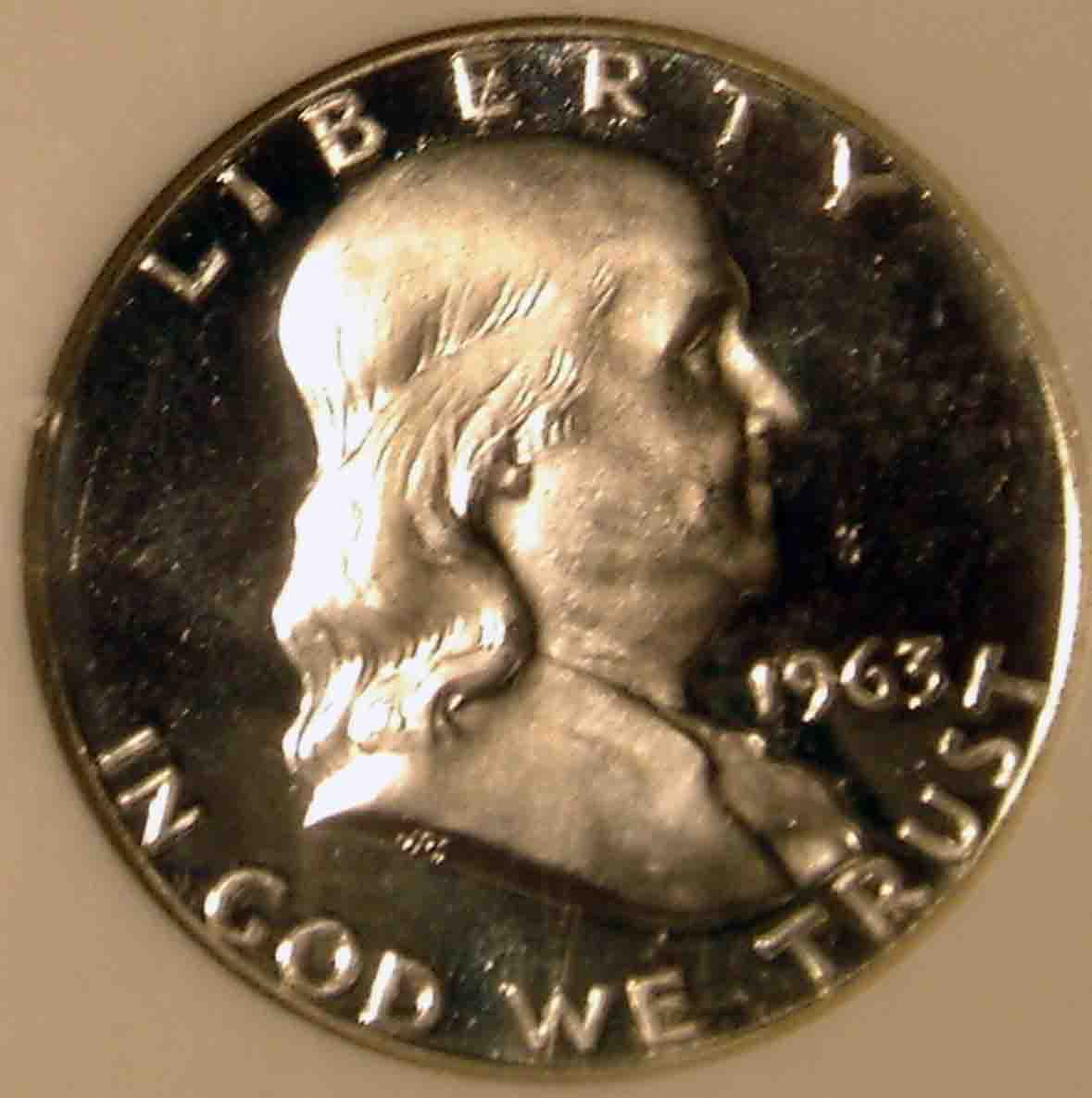 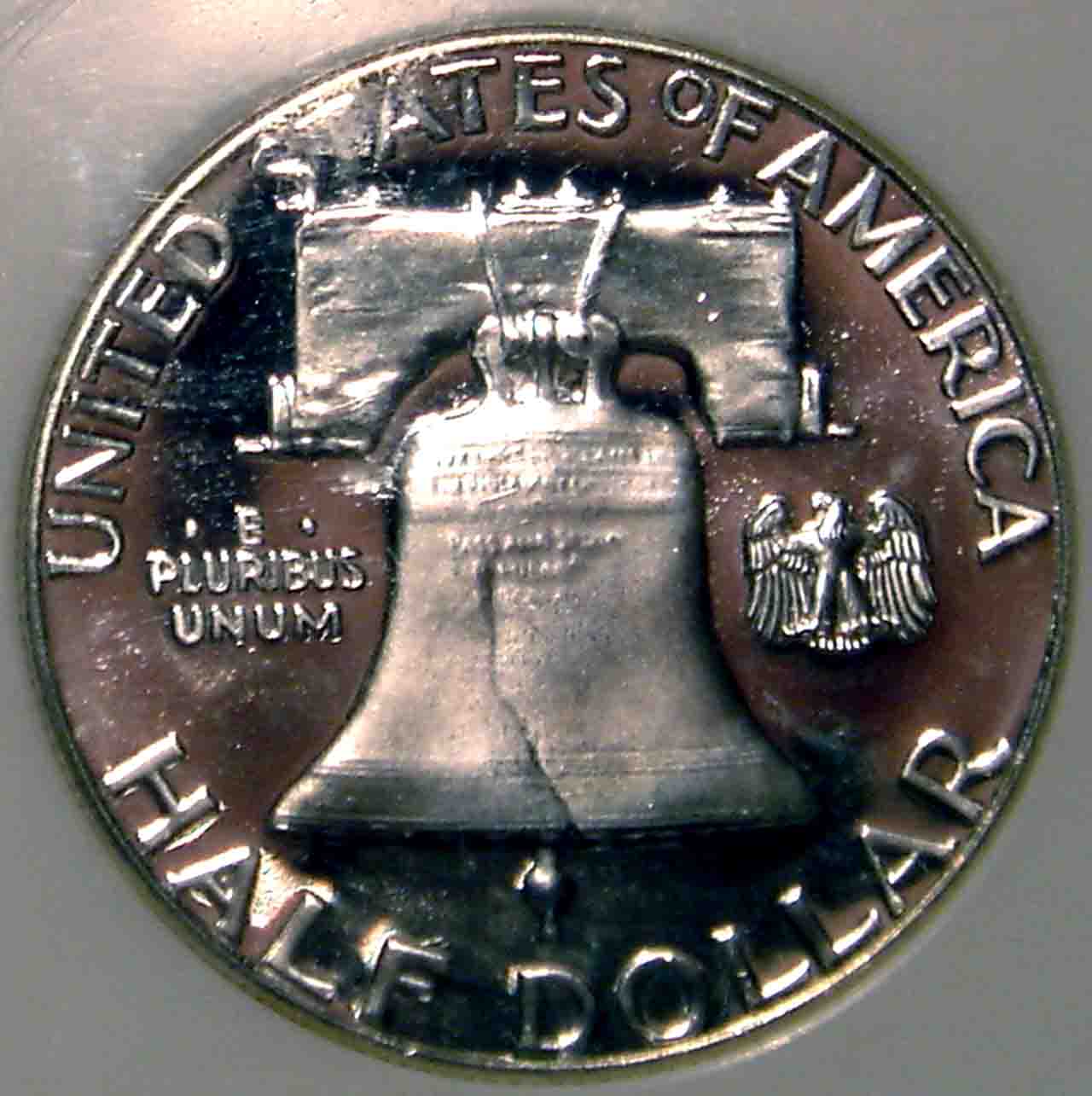 |
|
Valued Member
United States
436 Posts |
I'd open it just to look! The value is so low on these it would not be affected, and curiousity would get the best of me!  |
|
Bedrock of the Community
United States
17884 Posts |
Quote:
Cameo is a term reffered to the "depth" of the coin, if you look at jokingjokers coin in the post above me, it has cameo, it's the mirror like look in a coin. from what I've heard, the coins that have cameo are the first coins stuck from a certain die, also cameo coins tend to sell with higher prices. hoped this helped The term cameo actually comes from a type of jewelry. A cameo was a carved bust, usually in white stone or shell, set on a black onyx background. On a coin a cameo is a piece that shows a strong contrast between the bust and the fields around it. This usually occurs because the fields are reflective (from polishing)and the angle of the light results in most of it being reflected away from the eyes while the surfaces of the bust has a rougher surface which scatters the light and allows more of it to enter the eyes. On the finest cameo coins the fields reflect so much light away that that they appear black and the bust looks white and frosty making the coin look like the cameo jewelry. This is refered to as a blacka and white cameo. This is an example of a B&W cameo 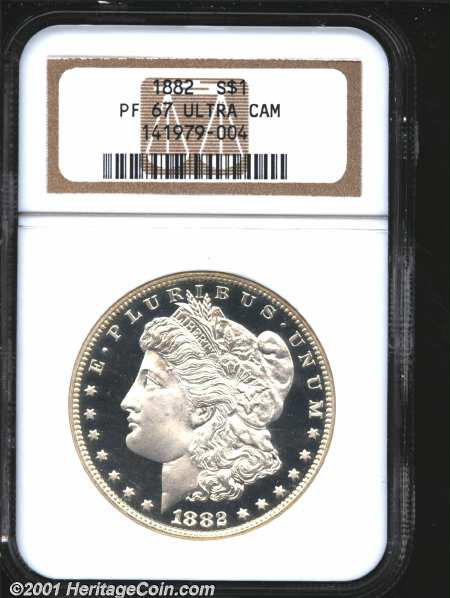 |
|
Moderator
 United States
23522 Posts |
Quote:
This is an example of a B&W cameo No, that's an example of a coin to die for. There's a difference.  |
|
Valued Member
United States
323 Posts |
|
|
Valued Member
United States
204 Posts |
dcam deep cameo
cam cameo
i think I can see a cameo
but how do tell for sure if is deep cameo?
sorry for the repeat question
i am new and wanting to learn
|
|
Pillar of the Community
United States
1571 Posts |
I might ad a third reason to open the envelope: There are coins in a proof set, that sometimes are worth much more as an individual coin, which looses the extra valu, if left in the proof set. it is call ed "breaking out", and is quite common.
Dick
|
| |
Replies: 15 / Views: 1,595 |
|










 Posted 08/04/2009 2:56 pm


