| Author |
 Replies: 10 / Views: 5,529 Replies: 10 / Views: 5,529 |
|
|
Pillar of the Community
United States
588 Posts |
what are counterstamps and chop marks? thank you
|
|
|
|
Pillar of the Community
United States
882 Posts |
They are defects on the coin. The most common counterstamp on a coin would be Abraham Lincoln smoking a pipe stamped onto the coin in front of his mouth. Or there could be a date stamped onto a coin with a punch.
Chop marks are stamps on the coin, like x marks, check marks, or anything that was marked onto the coin for one purpose or another.
|
|
Pillar of the Community
United States
882 Posts |
Examples 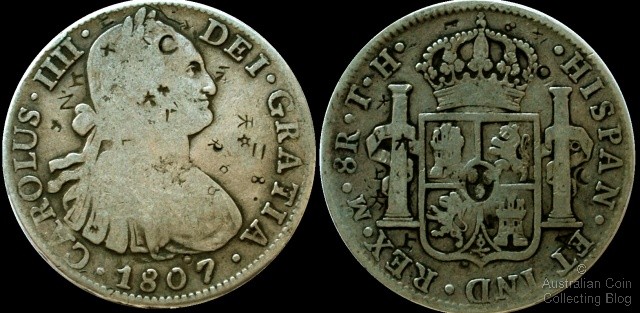 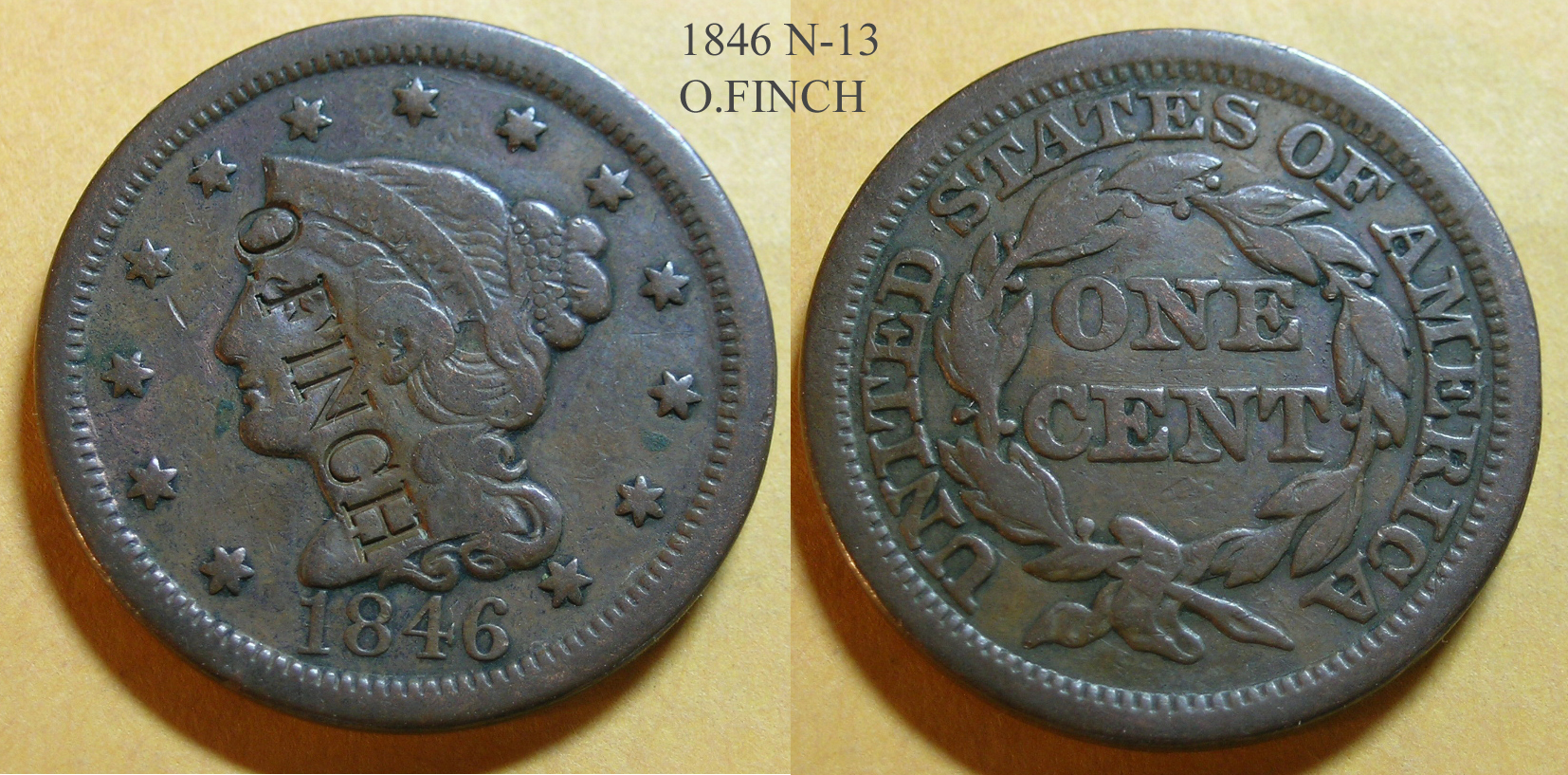 |
|
Bedrock of the Community
United States
12437 Posts |
Traditionally, counterstamps have been used for advertising purposes. Think of counterstamped large cents as early-mid 19th century business cards. Patent medicine vendors were particularly fond of them and there is even a reference book for them. In the modern era, counterstamps are basically just for novelty purposes. Chopmarks were typically applied to coins sent to the Far East. Merchants would chop mark a coin and that was the guarantee by that merchant that the coin was of a certain silver content. These marks are usually seen on Trade dollars and 8 Reales. Some people consider both types of marks to be just damage but IMO that is a simplistic view. The marks were made contemporaneously and for a specific purpose. In regards to counterstamped large cents, some of the more famous stamps add a significant premium to the coin. |
|
Pillar of the Community
United States
3499 Posts |
I really should add that some 8 Reales with chops are appreciated by collectors due to the view that the asian characters and other chops show the historical context of the coin's circulation. I personally really like it when a coin has chops that are clearly Chinese characters. It really gives character.
|
|
Moderator
 Australia
16982 Posts |
Counterstamps can also be applied officially, either by the country that originally issued the coin or by another country that used those coins. This form of counterstamping goes way back to ancient times; coins from one city might be counterstamped for use in a nearby city, or stamped with a legionary mark if used to pay Roman troops garrisoned nearby. For a more modern example, Spanish dollars and pieces thereof were counterstamped for use in Portugal, Brazil and in various British and French colonies in the Caribbean and elsewhere.
Don't say "infinitely" when you mean "very"; otherwise, you'll have no word left when you want to talk about something really infinite. - C. S. Lewis
|
|
Bedrock of the Community
United States
12437 Posts |
Sap brings up a good point. Even the US has done an official counterstamp, although it was actually applied to the die and not to the individual coins. The first shipment of California gold arrived at the Philadelphia Mint in 1848. To signify the importance of this event, a special mintage of 1,389 quarter eagles were minted with "CAL." stamped onto the reverse die. http://coins.ha.com/common/view_ite...&Lot_No=3411 |
|
Pillar of the Community
Australia
3841 Posts |
Here are three good examples to illustrate this situation in Japan. Around 1880s where Japanese silver yen was used for trade in the Far East, Chinese trade merchants would import Japanese yen for the price of silver. If I remember right, the silver yen coin was worth more than it's bullion content and hence something urgent had to be done to remediate this situation. This is what a normal silver yen would look like back then:  To determine if a coin was meant for overseas purpose and never to be returned back to Japan for redeemable purpose, it was "cancelled" as gin, and hence a counterstamp "gin" was struck in Osaka and Tokyo Mint. Here's an example struck by Tokyo Mint: 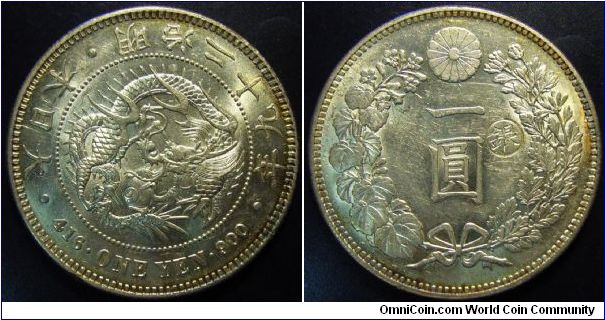 And it turns out when it lands over to the Far East, Chinese merchants would stamp the bullion coins to see if they had real silver in them, making them look really ugly like this:  Hope that helped. Edited by gxseries
10/13/2009 10:24 am
|
|
Pillar of the Community
 United States
588 Posts |
one more question gxseries. How would they know if its silver by making those stamps
|
|
Moderator
Australia
16982 Posts |
They could tell if it was a coppery fake that had been given a silver wash, because the punch would break through any silver plating and the underlying base metal would shine through. Punching into and chopping silver coins to see if they really were silver all the way through is also an ancient practice. The Egyptians used to do it to ancient Greek coins; example on Wildwinds of an Athenian tetradrachm with a deep test cut. Almost all the pre-Ptolemaic Greek silver coins found in Egypt have been mutilated in this way. Sometimes, they'd be so suspicious of a coin's silver content, they'd snip it clean in half. Don't say "infinitely" when you mean "very"; otherwise, you'll have no word left when you want to talk about something really infinite. - C. S. Lewis
|
|
Bedrock of the Community
United States
12437 Posts |
Counterstamps can also have a commemorative purpose, someone was celebrating the Centennial with this 1853 A&R quarter  |
| |
Replies: 10 / Views: 5,529 |
|






 Posted 10/11/2009 11:12 pm





