| Author |
 Replies: 12 / Views: 1,596 Replies: 12 / Views: 1,596 |
|
|
Bedrock of the Community
United States
20042 Posts |
Is there anything special about this coin? What is it worth? Thanks 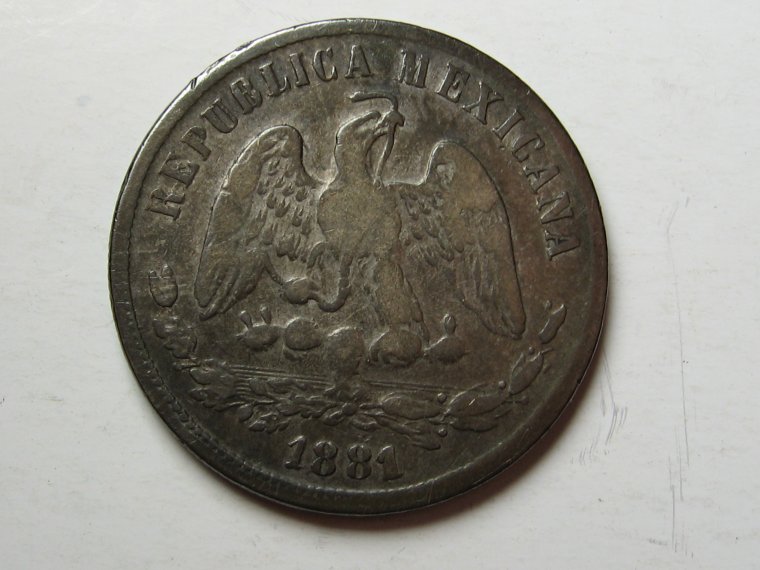 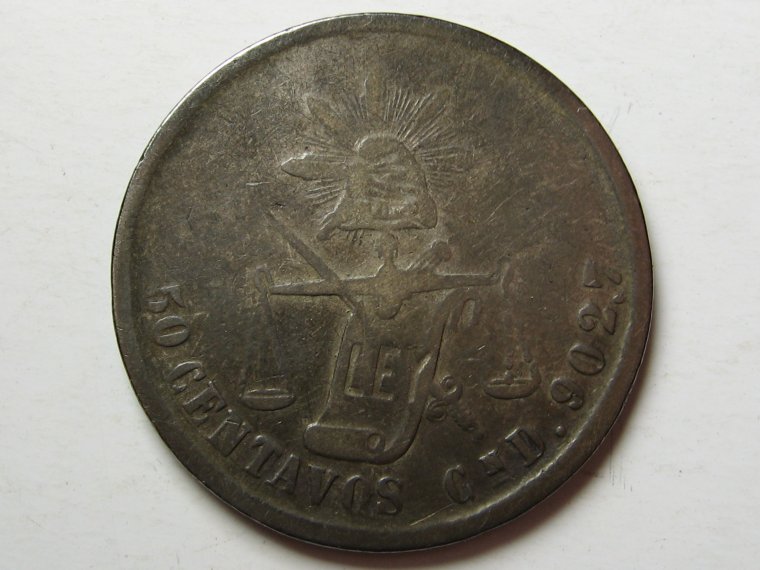 |
|
|
|
Valued Member
94 Posts |
My book says your coin is worth $15.00 in Fine or $30.00 in VF. I would go with the Fine grade though.
|
|
Pillar of the Community
United States
5362 Posts |
BadThad You have a very interesting coin there. This is one of those coins where a simple value is inadequate to describe the coin's actual historical value.
It is a 50 Centavo from the Culiacan mint from the period of time when it was operated by the Robert Symon Company. Many Mexican branch mints spent part of their existence as PRIVATE operations as opposed to State run facilities like we expect. It is also a coin with a very low mintage - total 188,000. It is 0.900 fine silver and is equivalent to a US 50 cent piece.
This coin is part of the early decimal series of coins used in the Republic of Mexico. The first decimal issues were coined during the reign of Maximilian 1864-1867. Since the French influence predominated at that time - decimalization was introduced. The government retained the decimal system even after they shot Max. It was a failure with the overseas trade coins (the Pesos) so the 8 Reals was reintroduced quickly for export. The Peso and Centavos (100ths of a Peso) were strictly for Mexican use.
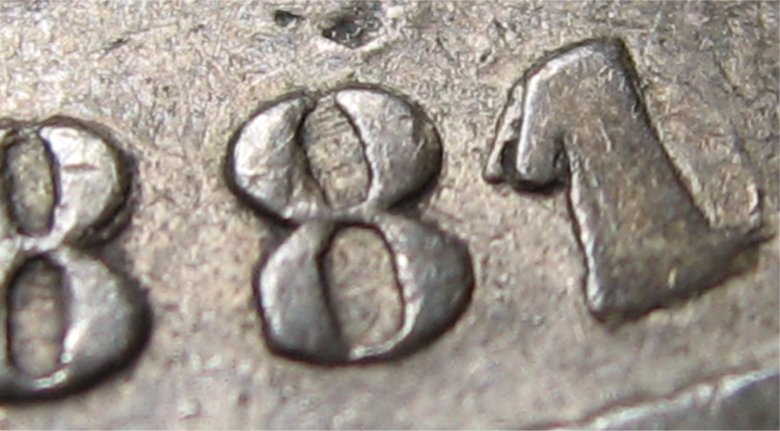
I also notice some very interesting anomalies in how the dies were made. This is to be expected since it is likely that the dies were made in Culiacan. Hubs were in use at this time in all branches but with varying degrees of expertise. There are two areas you should study. First the second 1 in the date is MUCH WIDER that the first 1. It could be an overdate or a redate - either way that is worth exploring. The use of two different die punch sets could have happened but other dies may have used a thin 1. Until you know which type predominates in 1881 - hold onto the coin. With a low mintage not too many dies would have been used so varieties may all be of equal value and rarity. But they are always interesting.
I was also interested in the mint mark - the C looks like it has a doubled lower serif. Could point to a double hub or a re-punched mint mark.
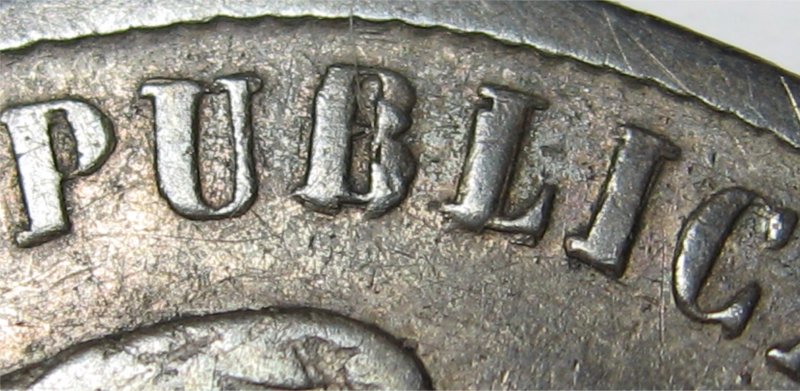
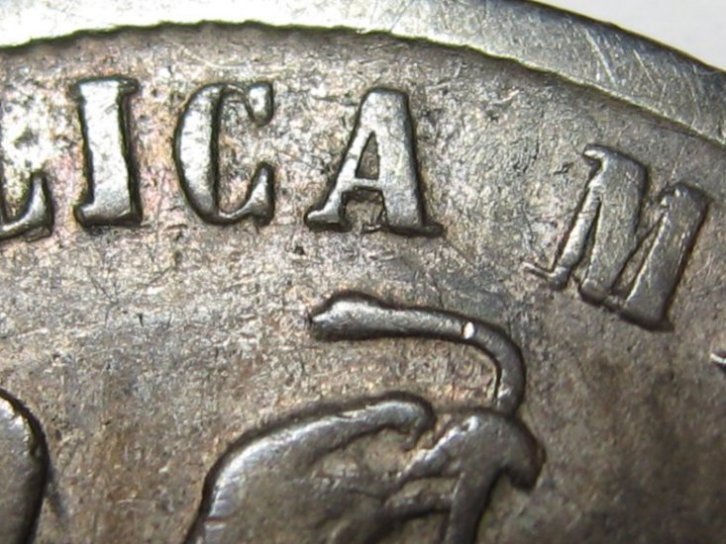
The last feature is the lettering around the eagle - that is messed up - missing serifs and odd looking letters - particularly the P, B, L, I and M. They all look like something strange happened during the die manufacture.
One caution when dealing with Mexican coins - all of the die varieties ARE NOT YET DOCUMENTED. There are many out there yet to be published. So I would look this one over closely - the monetary difference today may be small but the story the coin tells about how the dies were made is very interesting.
|
|
Pillar of the Community
United States
1801 Posts |
There is an 1881/0 overdate known for this date. I have never seen one in person so I can't tell you the diagnostic, but I would hold this coin as Swamperbob suggests until you can get more information. One of the joys of collecting early Mexican coins is all the new varieties being discovered. You have a nice coin there.
|
|
Bedrock of the Community
 United States
20042 Posts |
Quote:
BadThad You have a very interesting coin there. This is one of those coins where a simple value is inadequate to describe the coin's actual historical value.
It is a 50 Centavo from the Culiacan mint from the period of time when it was operated by the Robert Symon Company. Many Mexican branch mints spent part of their existence as PRIVATE operations as opposed to State run facilities like we expect. It is also a coin with a very low mintage - total 188,000. It is 0.900 fine silver and is equivalent to a US 50 cent piece.
This coin is part of the early decimal series of coins used in the Republic of Mexico. The first decimal issues were coined during the reign of Maximilian 1864-1867. Since the French influence predominated at that time - decimalization was introduced. The government retained the decimal system even after they shot Max. It was a failure with the overseas trade coins (the Pesos) so the 8 Reals was reintroduced quickly for export. The Peso and Centavos (100ths of a Peso) were strictly for Mexican use.
I also notice some very interesting anomalies in how the dies were made. This is to be expected since it is likely that the dies were made in Culiacan. Hubs were in use at this time in all branches but with varying degrees of expertise. There are two areas you should study. First the second 1 in the date is MUCH WIDER that the first 1. It could be an overdate or a redate - either way that is worth exploring. The use of two different die punch sets could have happened but other dies may have used a thin 1. Until you know which type predominates in 1881 - hold onto the coin. With a low mintage not too many dies would have been used so varieties may all be of equal value and rarity. But they are always interesting.
I was also interested in the mint mark - the C looks like it has a doubled lower serif. Could point to a double hub or a re-punched mint mark.
The last feature is the lettering around the eagle - that is messed up - missing serifs and odd looking letters - particularly the P, B, L, I and M. They all look like something strange happened during the die manufacture.
One caution when dealing with Mexican coins - all of the die varieties ARE NOT YET DOCUMENTED. There are many out there yet to be published. So I would look this one over closely - the monetary difference today may be small but the story the coin tells about how the dies were made is very interesting.
Now, that's some information! Thank you so much for all that. I have learned something today thanks to your post. I've printed your analysis and I'll store it with the coin. Thank you very, very much!  Lincoln Cent Lover!VERDI-CARE™ INVENTOR https://verdi.care/
|
|
Bedrock of the Community
United States
20042 Posts |
|
|
Pillar of the Community
United States
5362 Posts |
BadThad Well I for one see enough at the 1 to say it is both an overdate and a re-punched date. I clearly see the trace of the 0 to the right of the 1 and also a clear trace of 2 1's on top of one another. I would call it a 1/tilted 1/0 - a triple digit.
The letters on the top above the eagle look like the die was double hubbed. Clearly there is a B over B and each of the adjacent letters are similar but closer. I also noticed some doubling on the upper loop of the first 8.
So all in all a VERY interesting coin worth a bit over book in my opinion. That is a very unique die and easily identified.
Survival of coins from this era in decent shape is low. The early decimals were melted wholesale when silver became scarce during the Civil War so the numbers are way under 188,000 and you have an easily distinguished die. Contrast that with the value of a US 50 cent coin from the same era attributable to a unique die and I think you may have something.
Every time you go to shows start tracing how many 1881 Cn coins you spot and check each to see if it matches your die. That way you can make up your own population study and determine how truly rare this coin is.
|
|
Bedrock of the Community
United States
10045 Posts |
Quote:
...First the second 1 in the date is MUCH WIDER that the first 1. It could be an overdate or a redate - either way that is worth exploring.
I would call it a 1/tilted 1/0 - a triple digit.
 Wow...great info, and the new pics help a lot!  Definitely some repunching there. I see something on the first 8, and it appears an underlying 1 was at an angle to the final 1 punching? Cool...wish I knew exactly what happened here. Update: yeah...I thought there might be a 1/0 too.  Edited by DVCollector
10/17/2009 9:57 pm
|
|
Bedrock of the Community
United States
20042 Posts |
swamperbob - Thanks again! This is actually a friend of mines coin. I've printed out your analysis for him to keep with the coin. Sounds like attrition has actually made this coin fairly rare. To the right collector it could be quite valuable....well worth saving.
Lincoln Cent Lover!VERDI-CARE™ INVENTOR https://verdi.care/
|
|
Pillar of the Community
United States
3499 Posts |
swamperbob- Very interesting information. So why is it that the surviving pieces are hard to find in higher grades. You did mention that there were frequently melted during the war, but were these sorts of coins also rarely saved, which resulted in nearly all known examples being heavily circulated? It seems as though I have yet to see one of this type that is better than, say, fine.
|
|
Pillar of the Community
United States
3499 Posts |
BadThad- Out of curiosity, just how pronounced is the reeding on the edge of this example? I know that these coins were a bit inconsistent in their quality, but I am noticing on the couple of 50 centevos that I own that the edging was not very well done.
|
|
Pillar of the Community
United States
5362 Posts |
Archraz I believe it was Richard Long or perhaps Clyde Hubbard that put forth the best hypothesis for why so few minor Mexican coins have survived in high grades. The reasoning goes, that the average Mexican did not collect coins in this period - even fewer than for US coinage. The Peso and 8R coins were held mostly by banks for the intrinsic value so some of those have survived in high grade. But the lower denominations circulated until they were worn out. In fact, the only thing that preserved most low denomination coins was the wear. When the Civil War caused coin shortages a worn coin was worth less as a melt item than a new one, so the worn coins tended to survive while the higher grade coins were melted.
|
|
Pillar of the Community
United States
4212 Posts |
I'd say overdate, with selective doubling.
|
| |
Replies: 12 / Views: 1,596 |
|










 Posted 10/17/2009 10:39 am