| Author |
 Replies: 19 / Views: 10,866 Replies: 19 / Views: 10,866 |
|
Pillar of the Community
United States
2365 Posts |
I'm sure that most of you have seen this coin in the front pages of Whitman's Red Book. We've had this one in the family for probably 60 years or so and now it's in my collection. Fake or not it has familial "value". 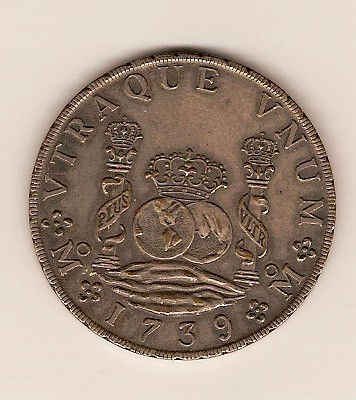 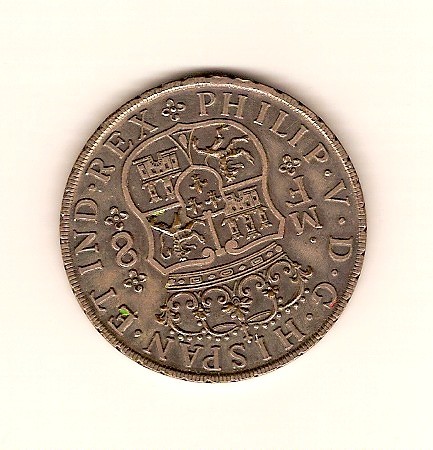 Edited by dsking
09/10/2006 09:59 am
|
|
|
|
Forum Kid
Kuwait
1523 Posts |
You lucky lucky person!!!!
Thats such fine detail, How did you get it at first(60 years ago)
Its hard not to get a fake!
THANKS!!
AWSM COIN!
|
|
New Member
United Kingdom
41 Posts |
Wow, can't believe your 8 reales is 250+ years old. Nice coin in great condition
|
|
New Member
United States
20 Posts |
dsking, I seriously hate to even bring it up, but I would have another expert look at this coin. The globes trouble me, because of the details of the continents. It appears too 'modern'. http://www.sedwickcoins.com/050606678004.jpgThere's an image of what a coin like this should appear like in the globes on the reverse. The image is taken from the website of Dan Sedwick, and he's one of the foremost expert on these coins and the cob types that were issued prior to the process of milling. Swamperbob would probably be able to weigh in and correct me, if I am wrong - he knows more on this subject than I do. |
|
Pillar of the Community
United States
5362 Posts |
Sorry to rain on the parade - but there is no doubt whatsoever that this one is a relatively Modern Numismatic forgery made perhaps in the 1950s when I was first in the business of hunting fakes. It was treated as a replica for the most part and seldom has a very good edge detail. There are varieties using the same dies in Copper and Nickel. I have never seen an actual silver strike but I do suspect that they were made. Some of the newer copies actually have the COPY stamp required by the Hobby Protection Act of 1974 so they were still in production at least through that date.
|
|
Pillar of the Community
 United States
2365 Posts |
OK then...I'll have it looked at again. The photo shows it much lighter than it really is. My brother was born in the early 40's and I know that he found this when he was just little...perhaps before 1950, but it's worth it to have it looked at again. He was digging in the dirt to find it...I'll find out and let you all know. Thanks again! It's still means a great deal to me real or not.
|
|
Pillar of the Community
Australia
3841 Posts |
Indeed I was very worried over the extreme high details of that particular coin. What made me doubtful was the sharp edge of the globe.
My partial coin collection http://www.omnicoin.com/collection/gxseriesMy numismatics articles and collection: http://www.gxseries.com/numis/numis_index.htmRegularly updated at least once a month. |
|
Pillar of the Community
United States
5362 Posts |
The dies used for this particular coin were manufactured using techniques not available in the 1700s. Real 8R Pillar dies were made using individual punches for each letter and most of the other details. That makes each die an individual and they have a "character" not seen on a modern hubbed die. Because they were not finished like modern dies the fields are NOT as smooth as you see here and the letter depths always vary. The sharpness of this die and the absolute "regularity" of the lettering is modern not 18th century. Also the high rim here is indicative of a collared strike. The collar die is the third die in a modern coin press. It forms the edge of the coin in the same operation as the strike. It produces a "round" coin with a very regular diameter. The originals were struck in an open sided screw press operated by hand and they NEVER produced the raised rim visible on this coin. Originals are rarely perfectly round. Many of the counterfeit copies are re-edged after the strike to provide a more proper looking edge detail (lotus flower). This is usually done with a roller die and the post-strike edging process often distorts the rim or the design of the dentils. Most originals were edged BEFORE the strike. This step provided the upset rim needed for the open press strike and it also produced a better edge design since the blank was perfectly round before the strike but not after.
I can also be 100% sure this is not an original because I own several copies of this coin myself.
I am not seeking to be argumentative - I am merely trying to point out the clues used to establish authenticity of coins like this. If all collectors educated themselves about how particular coins were made they would not be defrauded as often as they are.
If you happen to get an "expert" that says this one is real ask him if he would agree to a bet. Bet him the cost of third party grading that it will not be certified by ANACS and then submit it using his funds. I would suggest that you submit it directly, but I know that would be a waste of your money.
|
|
Pillar of the Community
United States
4589 Posts |
wow swamperbob to the rescue good job swamperbob and sorry dsking
|
|
Rest in Peace
Philippines
73 Posts |
quote:
Originally posted by swamperbob
The dies used for this particular coin were manufactured using techniques not available in the 1700s. Real 8R Pillar dies were made using individual punches for each letter and most of the other details. That makes each die an individual and they have a "character" not seen on a modern hubbed die. Because they were not finished like modern dies the fields are NOT as smooth as you see here and the letter depths always vary. The sharpness of this die and the absolute "regularity" of the lettering is modern not 18th century. Also the high rim here is indicative of a collared strike. The collar die is the third die in a modern coin press. It forms the edge of the coin in the same operation as the strike. It produces a "round" coin with a very regular diameter. The originals were struck in an open sided screw press operated by hand and they NEVER produced the raised rim visible on this coin. Originals are rarely perfectly round. Many of the counterfeit copies are re-edged after the strike to provide a more proper looking edge detail (lotus flower). This is usually done with a roller die and the post-strike edging process often distorts the rim or the design of the dentils. Most originals were edged BEFORE the strike. This step provided the upset rim needed for the open press strike and it also produced a better edge design since the blank was perfectly round before the strike but not after.
I can also be 100% sure this is not an original because I own several copies of this coin myself.
I am not seeking to be argumentative - I am merely trying to point out the clues used to establish authenticity of coins like this. If all collectors educated themselves about how particular coins were made they would not be defrauded as often as they are.
If you happen to get an "expert" that says this one is real ask him if he would agree to a bet. Bet him the cost of third party grading that it will not be certified by ANACS and then submit it using his funds. I would suggest that you submit it directly, but I know that would be a waste of your money.
That is very interesting. I didn't know that fakes of these existed until I saw the above photo. My dad inherited my grandfather's collection and it's only now that we're really spending time with it after my grandfather passed away 40 years ago. Is this an example of an original? I'll try and get a better pic tomorrow with the milk bottle technique. I'm glad that I saw this thread. Thank you for the info and wish you can comment on my thread.   |
|
Rest in Peace
United States
2684 Posts |
quote:
Originally posted by swamperbob
The dies used for this particular coin were manufactured using techniques not available in the 1700s. Real 8R Pillar dies were made using individual punches for each letter and most of the other details. That makes each die an individual and they have a "character" not seen on a modern hubbed die. Because they were not finished like modern dies the fields are NOT as smooth as you see here and the letter depths always vary. The sharpness of this die and the absolute "regularity" of the lettering is modern not 18th century. Also the high rim here is indicative of a collared strike. The collar die is the third die in a modern coin press. It forms the edge of the coin in the same operation as the strike. It produces a "round" coin with a very regular diameter. The originals were struck in an open sided screw press operated by hand and they NEVER produced the raised rim visible on this coin. Originals are rarely perfectly round. Many of the counterfeit copies are re-edged after the strike to provide a more proper looking edge detail (lotus flower). This is usually done with a roller die and the post-strike edging process often distorts the rim or the design of the dentils. Most originals were edged BEFORE the strike. This step provided the upset rim needed for the open press strike and it also produced a better edge design since the blank was perfectly round before the strike but not after.
It is always a pleasure watching a true master and professional at work. Very thorough explanation, Bob. My hat is off to you and  I wouldn't mind having a separate section on forgeries except that such coins pop up in all topics, so your expertise would be scattered all over the place. But maybe post a few of your exceptional forgeries in an appropriate area, perhaps exonumia (I was thinking of those which might be most difficult to detect as fakes). Fred |
|
Pillar of the Community
United States
5362 Posts |
edreyes - Hello - I don't recall seeing your name before so welcome and I hope you enjoy your experience here.
I have been collecting coins since shortly before 1957, Mexican 8R coins since about 1960 and counterfeit coins since about the same time. At present, I own over 1,700 counterfeit 8R coins and I am adding to that total weekly.
Mexican 8R forgeries like all other counterfeits come is two major varieties - those made to circulate at face value (Contemporary Circulating Counterfeits) and those made to fool collectors (Numismatic Counterfeits).
The quick answer is that your coin is a counterfeit. I believe it is a Numismatic Counterfeit of the second general type I note above. It was meant to be sold to tourists at flea markets and Bazaars in the orient. The age of the coin is rather hard to establish but the method of manufacture is critical in that regard - so I have a couple simple questions.
1. What does the coin weigh? If you can find a 1/10th gram scale that will be accurate enough for my purposes.
2. What EXACTLY does the edge look like? - a photo would help.
3. Are there overlaps or the indication of a seal on the edge of the coin?
4. Does the coin ring like a US silver dollar when balanced on the tip of your finger and tapped lightly with a wooden pencil or plastic pen? Duration and pitch are both critical - 90% silver coins of dollar size will ALL ring with the identical pitch and for the same duration.
The problems here - other than the fact that I also own a few of these copies are:
1. The very irregular dentils (tooth like devices used around the edge of many coins to prevent shaving) especially the ones that look like they have concave centers. For example, look at the dentils on the shield side over the letters D.G.. If you notice, several look hollow - a feature seen on castings because of a failure of the mold to exactly reproduce the fine details of the host being copied.
2. In this case, the host coin used to make the mold was not real either because this coin simply does not match what a real 1743 8R coins looked like. For a couple of the many examples I could cite - look at the castles in the shield. On originals there are lines indicative of stone blocks forming the walls around the windows in the lower part of the castle. Here the wall is smooth with a window outline. The wall is the oiginal die field not raised above it. The Lions in the other quadrants - do not match. These were punched into the dies with ONE puncheon - so with some very minor exceptions the two Lions ALWAYS MATCH.
3. The surface of the coin itself is porous an indication of being a casting.
4. Look at the mint marks - the M with the small o above it on both sides of the date. They should match. Look at the first letters of the two words VTRAQUE and VNUM - those two letters are NOT the same shape the first V has sides of the same thickness and the V in VNUM has unbalanced sides. Letters were individually punched with puncheons.
There are other clues but those should suffice. I would not suggest sending it for grading because it will return in a body bag from any of the reputable services. If anyone suggests or insists that this is real offer them the same bet that I spoke of up above.
|
|
Rest in Peace
Philippines
73 Posts |
quote:
Originally posted by swamperbob
edreyes - Hello - I don't recall seeing your name before so welcome and I hope you enjoy your experience here.
Hi and thank you, I am enjoying my stay here and find numismatics very educational. I'm thankful too that you responded to my post and promise not to be arguementative for I am here to learn.
I have been collecting coins since shortly before 1957, Mexican 8R coins since about 1960 and counterfeit coins since about the same time. At present, I own over 1,700 counterfeit 8R coins and I am adding to that total weekly.
This coin belongs in the Don Pio M. Reyes collection, my late grandfather, where most of were willed to him in the early 1900s by his mother. Thus the collection started in the late 1800s.
Mexican 8R forgeries like all other counterfeits come is two major varieties - those made to circulate at face value (Contemporary Circulating Counterfeits) and those made to fool collectors (Numismatic Counterfeits).
That's very good to know and really got me started going deeper in researching this collection.
The quick answer is that your coin is a counterfeit. I believe it is a Numismatic Counterfeit of the second general type I note above. It was meant to be sold to tourists at flea markets and Bazaars in the orient. The age of the coin is rather hard to establish but the method of manufacture is critical in that regard - so I have a couple simple questions.
1. What does the coin weigh? If you can find a 1/10th gram scale that will be accurate enough for my purposes.
I have to apologize but I don't possess a weigh scale of that accuracy. However, I do have a digital scale, that I use for pool cues, though not certified accurate. I can use it to at least show weight differences if you wish.
2. What EXACTLY does the edge look like? - a photo would help.
3. Are there overlaps or the indication of a seal on the edge of the coin?
I did not find an overlap nor anything that resembles a seal. All they look to me are a chain of flower buds.

4. Does the coin ring like a US silver dollar when balanced on the tip of your finger and tapped lightly with a wooden pencil or plastic pen? Duration and pitch are both critical - 90% silver coins of dollar size will ALL ring with the identical pitch and for the same duration.
It did take some practice, and over the bed to protect the coin when dropped, but a nice hold on the pen between the thumb and middle finger coupled with a decisive tap does produce great results. My estimate for audible reverberation duration is around 4 seconds after the coin is tapped. "Estimate" as I was only counting "one one thousand, two one thousand, etc with the test specimen around 9-10 inches from my ear. The Morgan, Pillar and some others in the test gave out nice solid tones of pitch close to the others except for the 10z .999 silver World Trade Unit (coin#1). This gave out the high pitch but shorter duration and this possibly can be because of its thickness. WTU=2.92mm, 1921 Morgan=2.82mm and the 1743 Pillars= 2.42 at its thickest and 2.20mm at its thiness. The WTU diameter is 39.13mm, the Morgan's is 38.13mm and the Pillar's is 40.36-40.94mm.
The problems here - other than the fact that I also own a few of these copies are:
1. The very irregular dentils (tooth like devices used around the edge of many coins to prevent shaving) especially the ones that look like they have concave centers. For example, look at the dentils on the shield side over the letters D.G.. If you notice, several look hollow - a feature seen on castings because of a failure of the mold to exactly reproduce the fine details of the host being copied.
2. In this case, the host coin used to make the mold was not real either because this coin simply does not match what a real 1743 8R coins looked like. For a couple of the many examples I could cite - look at the castles in the shield. On originals there are lines indicative of stone blocks forming the walls around the windows in the lower part of the castle. Here the wall is smooth with a window outline. The wall is the oiginal die field not raised above it. The Lions in the other quadrants - do not match. These were punched into the dies with ONE puncheon - so with some very minor exceptions the two Lions ALWAYS MATCH.
This info sure made me look closer at the photos in the 1939 Wayte Raymond book "The Silver Dollars of North and South America". Didn't you mention above though that they may not at that era have the capability of aithful reproduction? So wouldn't this element, in this case the lion and castles, be just as close as the punch artisan can make it?
3. The surface of the coin itself is porous an indication of being a casting.
4. Look at the mint marks - the M with the small o above it on both sides of the date. They should match. Look at the first letters of the two words VTRAQUE and VNUM - those two letters are NOT the same shape the first V has sides of the same thickness and the V in VNUM has unbalanced sides. Letters were individually punched with puncheons.
If the letters are individually punched, as you stated, with puncheons then they would most likely exhibit differences due to different punching force applied and use of different puncheons. Don't those puncheons wear-out or don't they use several puncheons in the event that one wears out or breaks? Are the manufacture of the puncheons always true to the letter's dimensions? Could it also be possible that that area of the coin received force enough to deform that area while it was already in circulation? Just some questions that popped up in my mind after reading up on this and playing detective.
There are other clues but those should suffice. I would not suggest sending it for grading because it will return in a body bag from any of the reputable services. If anyone suggests or insists that this is real offer them the same bet that I spoke of up above.
To this point, I'm tending to agree with you, because of the lion and windows detail, but will still do some research on the manufacture of the milled dollar. I hope too that you found my questions with merit and valid and not confrontational.Again thank you, Edwin Reyes Following are more photos of the test specimens I used. I included the 2 rightmost modern specimens, #5 1971 US Dollar(38.1mm dia. & 2.55mm thick) and #10 1970 Philippine peso(38.15 mm dia & 2.6mm thick), plus the #1 International World Trade Unit for 1oz. .999 pure silver just to give me baselines for audible differences. Edited by edreyes
09/10/2006 05:40 am
|
|
Rest in Peace
Philippines
73 Posts |
Here's a couple of photos of the specimens I used to do the pitch and duration test. It also shows how the Milled Pillars actually looks in relation to the other specimens, not like the PhotoShop version as initially posted, from different countries of origin of different era. What's constant is the lighting (same time of day. same camera and photographer and all went through, except for the post-WWII specimens, the horrors of World War II during the US Forces Liberation of Manila. FAce view  Edge view  Edited by edreyes
09/10/2006 06:03 am
|
|
Rest in Peace
Philippines
73 Posts |
SwamperBob, Can you please look at the other coins I posted here https://goccf.com/t/7501&whichpage=1 , there are a few that I don't have a clue on. Specially that dark colored Liberty obv and eagle rev the size of a Lincoln. It has no date, origin or amount stated. |
|
Pillar of the Community
United States
5362 Posts |
edreyes Lots of issues to address on this one.
Below are my original comments (black) - your reply (blue) - my response to your reply (red). I will skip areas where no conclusions can be drawn.
I have been collecting coins since shortly before 1957, Mexican 8R coins since about 1960 and counterfeit coins since about the same time. At present, I own over 1,700 counterfeit 8R coins and I am adding to that total weekly.
This coin belongs in the Don Pio M. Reyes collection, my late grandfather, where most of were willed to him in the early 1900s by his mother. Thus the collection started in the late 1800s.
The fact that many coins were counterfeited prior to 1900 is very well established (for example see Riddell's "Monograph of the Silver Dollar" published in 1845 for 282 examples of Mexican 8R forgeries that were known to have been in circulation in the US between 1839 and 1844). Also the silver price drop in the 1890s lead to a massive counterfeiting operation based in the US to make Spanish coins for use in China. So the conclusion to be drawn is that the date of the collection and even the fact that a coin might be full weight silver is no guarantee of authenticity.
The quick answer is that your coin is a counterfeit. I believe it is a Numismatic Counterfeit of the second general type I note above. It was meant to be sold to tourists at flea markets and Bazaars in the orient. The age of the coin is rather hard to establish but the method of manufacture is critical in that regard - so I have a couple simple questions.
1. What does the coin weigh? If you can find a 1/10th gram scale that will be accurate enough for my purposes.
I have to apologize but I don't possess a weigh scale of that accuracy. However, I do have a digital scale, that I use for pool cues, though not certified accurate. I can use it to at least show weight differences if you wish. Yes, a weight to the nearest gram is good for a rough estimate and would eliminate most white metal copies.
2. What EXACTLY does the edge look like? - a photo would help.
3. Are there overlaps or the indication of a seam [my error here I should read seam not seal] on the edge of the coin?
I did not find an overlap nor anything that resembles a seal. All they look to me are a chain of flower buds. The lotus flowers on the edge are not correct in my opinion - they are cut too deeply, lack the appropriate detail and to me show indications of being applied to the coin after it was cast to destroy the evidence of a casting seam. Some coins from the early part of the 1700s were edged after the strike but because that caused problems due to coins being struck out of round a PRE-STRIKE edging was adopted in Mexico City certainly before 1750.
2. In this case, the host coin used to make the mold was not real either because this coin simply does not match what a real 1743 8R coins looked like. For a couple of the many examples I could cite - look at the castles in the shield. On originals there are lines indicative of stone blocks forming the walls around the windows in the lower part of the castle. Here the wall is smooth with a window outline. The wall is the orginal die field not raised above it. The Lions in the other quadrants - do not match. These were punched into the dies with ONE puncheon - so with some very minor exceptions the two Lions ALWAYS MATCH.
This info sure made me look closer at the photos in the 1939 Wayte Raymond book "The Silver Dollars of North and South America". Didn't you mention above though that they may not at that era have the capability of aithful reproduction? So wouldn't this element, in this case the lion and castles, be just as close as the punch artisan can make it?
When doing research on this series of 8R coins you should try to get a copy of "The Columnarios of Central and South America" by Gilboy. It has totally superceeded Wayte Raymonds book in both clarity and number of examples photographed. I think the difference will be quite obvious if you compare the photos. I don't quite understand your comment about making a faithful reproduction. Counterfeiters in the early 1700s were limited by technology but by about 1795 there were numerous forgers capable of making rather precise copies of Spanish American coins - the Birmingham Forgery operation of 1796 is just one of several quite capable of duplication. If you meant could the mint make two duplicate punches that were identical - the best answer is "almost". The punches used to make the dies were made from master molds produced usually in Spain - see Gilboy for the particulars. But suffice it to say that Spain was quite advanced for the era in crafting "standardized" coins EVEN in the 1740s. They would never and ABSOLUTELY did never use a punch resembling what I see on your coin.
4. Look at the mint marks - the M with the small o above it on both sides of the date. They should match. Look at the first letters of the two words VTRAQUE and VNUM - those two letters are NOT the same shape the first V has sides of the same thickness and the V in VNUM has unbalanced sides. Letters were individually punched with puncheons.
If the letters are individually punched, as you stated, with puncheons then they would most likely exhibit differences due to different punching force applied and use of different puncheons. Don't those puncheons wear-out or don't they use several puncheons in the event that one wears out or breaks? Are the manufacture of the puncheons always true to the letter's dimensions? Could it also be possible that that area of the coin received force enough to deform that area while it was already in circulation? Just some questions that popped up in my mind after reading up on this and playing detective.
There are a very few cases where two different punches were used on one die for making multiple rxamples of one letter or figure. But in the vast majority of cases, each letter (or punch element) used on an individual die will be made using ONE punch. Many coins are authenticated because of damaged punches - a chip here or a gouge there which makes the coin far more believable. But the individual punches as noted above were castings made from Master sets - so each V punch will have identical dimensions. This applies to the other letters and figures as well. The lettering on your coin is simply not well executed - it falls far short of the quality seem on real dies made in Mexico City in 1743. There of course can and should be some variation in the setting of each punch (distance between letters, the tilt of the letter and distance from the rim but not in size or shape of the letter itself) - the depth of the set might show a reinforcing bar on the punch if it is set too deeply, or a shallow set punch would show thinner lines or a punch might be hit more than once or may be hit eccentrically. However, that is not what I see on your coin - I would hazard a guess that this coin was made from an engraved mold or from a mold made from a master positive hub engraved from scratch and not transferred from a real host coin - the letters and many other features look engraved to me NOT punched. The shapes of the letters and thicknesses of the individual lines and shapes of the serifs all point in that direction.
|
| |
Replies: 19 / Views: 10,866 |
To participate in the forum you must log in or register.
 
- The Tyrant Collector - PCGS Youtube Interview
- Counterfeit Detection: ANA Video - Introduction, With Brian Silliman And Jim Robinson Ep. 1
- Counterfeit Detection: ANA Video - Mistakes, Risk Factors, And Counterfeits & Alterations, Ep. 2
- Counterfeit Detection: ANA Video - Pimples And Pits, Looking At Cast Counterfeits, Ep. 4
- Counterfeit Detection: ANA Video - What Year Is That Cent? Key Date Coins, Ep. 5
- Counterfeit Detection: ANA Video - Diagnostics Of The 3, 5, And 10 Cent Coins, Ep. 6
- Counterfeit Detection: ANA Video, Counterfeit Quarter Dollar Diagnostics, Ep. 7
- Counterfeit Detection: ANA Video, Counterfeit Classic Commemorative Coins Diagnostics, Ep. 8
- Counterfeit Detection: ANA Video, Counterfeit Silver Dollar Diagnostics, Ep. 9
- Counterfeit Detectection: ANA Video, Classic US Gold Coin Diagnostics, Ep. 10
- Counterfeit Detection: ANA Video, Diagnostics Of Chinese Made Counterfeits Of US Coins, Ep. 11
- Counterfeit Detection: ANA Video - Wrap Up Recap With Brian Silliman And Jim Robinson Ep. 12
- 2026-P Jefferson Nickel Possible Die Chips, Die Cracks And Other Anomalies
- Commems Collection Modern: What If? 1993 Bill Of Rights Circulating Coinage - A 1990 Attempt
- Split Grading - An Idea That Would Drive Collectors Mad
- 1960 D Lincoln Memorial Cent (Small Date) BIE
- Is This 1888-S A VAM-10, 10A Or Something Else?
- 1994 Brazil 10 Centavo - With Die Clash
- US 1 Cent 1856 Altered From 1858?
- 2009-P Quarter, Puerto Rico, Reed / Edge Error Or PMD?
Disclaimer: While a tremendous amount of effort goes into ensuring the accuracy of the information contained in this site, Coin Community assumes no liability for errors. Copyright 2005 - 2026 Coin Community Family- all rights reserved worldwide. Use of any images or content on this website without prior written permission of Coin Community or the original lender is strictly prohibited.
Contact Us | Advertise Here | Privacy Policy / Terms of Use
|
| Coin Community Forum |
© 2005 - 2026 Coin Community Forums |
| It took 0.63 seconds to rattle this change. |
 |
|







 Posted 06/08/2006 04:53 am





